A capital DE is demonstration mode — lights and controls alive, cooling switched off deliberately, which is how a showroom floor model runs and how one occasionally arrives in a house. A lower-case dE is the defrost system not having run in 24 hours, and that is a repair. One is cleared by unplugging for two minutes; the other is a heater, a sensor and a control. They are separate pages here, named in words, because lower-casing a URL collapses them into one address.
52 codes · 13 signals · 0 invented
Where the manufacturer publishes nothing, this site publishes nothing.
Monogram's own support routes owners to GE Appliances' answer base and to Bodewell, their service brand — so that base is the manufacturer's documentation for a Monogram appliance, and it is where every page here comes from. Eight articles were archived before a single code was written, and each entry names the one it was read in. Where no table exists, the appliance gets a symptom page instead.
- 52 codes with a published meaning
- 13 signals that are not errors
- 6 appliances with no published table
- 0 codes we made up
The whole archive
Every code and signal, by appliance
Filter by the appliance before you read the characters. Both filters matter and the appliance matters more: F3 is the oven temperature sensor on a range and a shorted touch pad on a microwave.
- FF the freezer is warming and the food is at risk
- PF the power was interrupted
- CI the ice maker is not operating
- DE demonstration mode — cooling is off on purpose
- dE the defrost system has not run in 24 hours
- CC the temperature is not what it was set to
- tC TurboCool is running
- tF TurboFreeze is running
- C1 the drain took longer than two minutes
- C2 the pump-out ran past seven minutes
- C3 the machine will not drain at all
- C4 it filled twice after a power cut
- C5 the drain finished too quickly
- C6 the water arriving is too cold
- C7 the water temperature sensor circuit has failed
- C8 the detergent cup cannot open
- PF the power was interrupted
- Cup Open the detergent cup is open
- FTD or F56 failure to drain
- LEAK DETECTED a leak has been detected and the cycle stopped
- 999 a leak on Floor Protect machines, a control reset on all others
- H2O not enough water is arriving
- PrS the pressure sensor signal is invalid
- F0 a stuck or shorted key on the control panel
- F1 a stuck or shorted key on the control panel
- F6 a stuck or shorted key on the control panel
- F7 a stuck or shorted key on the control panel
- F2 or F20 the oven went over temperature
- F3 the oven temperature sensor circuit is open
- F4 the oven temperature sensor circuit is shorted
- F5 the electronic control has failed
- F8 the electronic control has failed
- F9 a failure in the door lock circuit
- FC a failure in the door lock circuit
- FD the temperature probe or its socket has failed
- FF the electronic control has failed
- F96 an internal component has failed
- F97 an internal component has failed
- F7X an internal component has failed
- F350 the upper cooling fan circuit or an obstruction
- Bad Line the electrical supply is wrong
- Loc Door the self-clean lock is engaged
- Unlock Door the door needs unlocking
- LOC child lockout is switched on
- ERR an invalid control entry
- OFF the oven is too hot for the requested function
- F1 an open thermal sensor from excessive cavity heat
- F2 a shorted thermal sensor
- F3 a shorted touch pad panel
- F4 an open humidity sensor
- F5 a shorted humidity sensor
- F6 a shorted temperature probe
- F10 a shorted touch screen
- Probe the probe is not connected
- PF the power was interrupted
- 18 the Power Watch indicator
- F1 an open thermal sensor
- F2 a shorted thermal sensor
- F3 a shorted touch pad panel
- F4 an open or shorted humidity sensor
- F1 an open thermal sensor
- F2 a shorted thermal sensor
- F3 a shorted touch pad panel
- F4 an open or shorted humidity sensor
- F6 high cavity temperature detected
No code here matches that. Codes differ between series, and some are only shown on the service display — call (305) 614-3572 with the model number and what the display is doing.
The appliance comes first on this make, and so does the case. FF is the electronic control on an oven and a warming freezer on refrigeration; a capital DE is demonstration mode and a lower-case dE is the defrost system. The archive is keyed on appliance and code together for exactly that reason.
The distinction that costs the most
Case carries meaning, and so does the appliance
Demonstration mode
Half of what people report
Thirteen of these are not errors at all
tC and tF are TurboCool and TurboFreeze running. LOC is child lockout, switched on more often by a cloth wiped across a panel than by anybody deciding to use it. ERR is an invalid entry. OFF means the oven is too hot for self-clean. Cup Open is a reminder to add detergent. Publishing those as errors would be the same offense as inventing one, in the other direction — so they are marked as signals and the pages say plainly that nothing has failed.
Before you book
Three minutes that change the visit
The model number, off the plate
- Refrigeration: inside the fresh-food compartment, usually on the left wall.
- Dishwasher: on the tub edge, behind the door.
- Ranges and wall ovens: on the frame behind the door, and on some ranges behind the bottom drawer.
- Photograph it. These numbers are long and one wrong character sends us to the wrong parts list.
Whatever the appliance is showing
- On the fully integrated dishwasher the display is on the TOP EDGE of the door. Open the door and look — most owners have never seen it.
- Case matters on refrigeration: DE is demonstration mode and dE is the defrost system.
- tC, tF, LOC and OFF are not errors at all, and our archive says which is which.
How the appliance is installed
- Built-in, integrated column, undercounter or free-standing.
- Panel-ready or stainless — it decides how the door comes apart.
- Whether two tall doors are one appliance or two columns. That one answer changes the whole visit.
Nothing on the display to look up
Then the behavior is the way in
Six of the appliances in a Monogram kitchen publish no code table at all — wine cabinets, beverage centers, standalone ice makers, warming drawers, ventilation and the hearth oven. Where that is true the behavior is not a hint towards the diagnosis, it is the diagnosis.
-
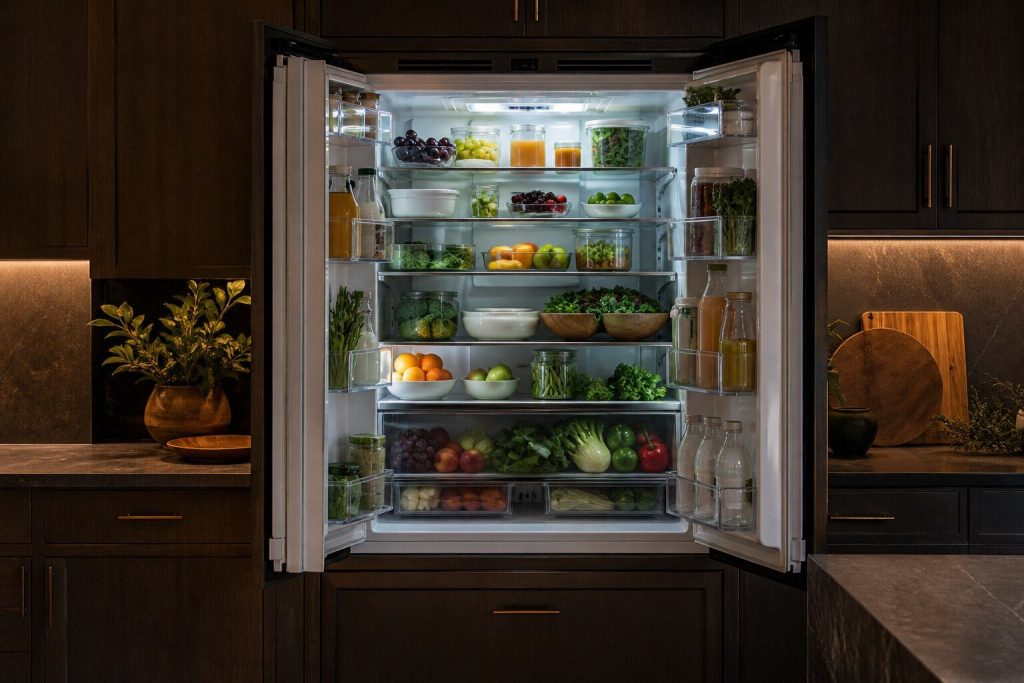
Everything works except the cold Refrigerator not cooling
The call we take more often than any other. On built-in refrigeration the first suspect is almost never the compressor — it is the condenser behind the grille above the door, which in a Miami kitchen collects salt, cooking aerosol and dust until it can no longer shed heat, with nothing on the display to say so.
- The condenser is the first suspect and it is free to check
- A dropped door panel produces this too
- The sealed system is last, not first
-
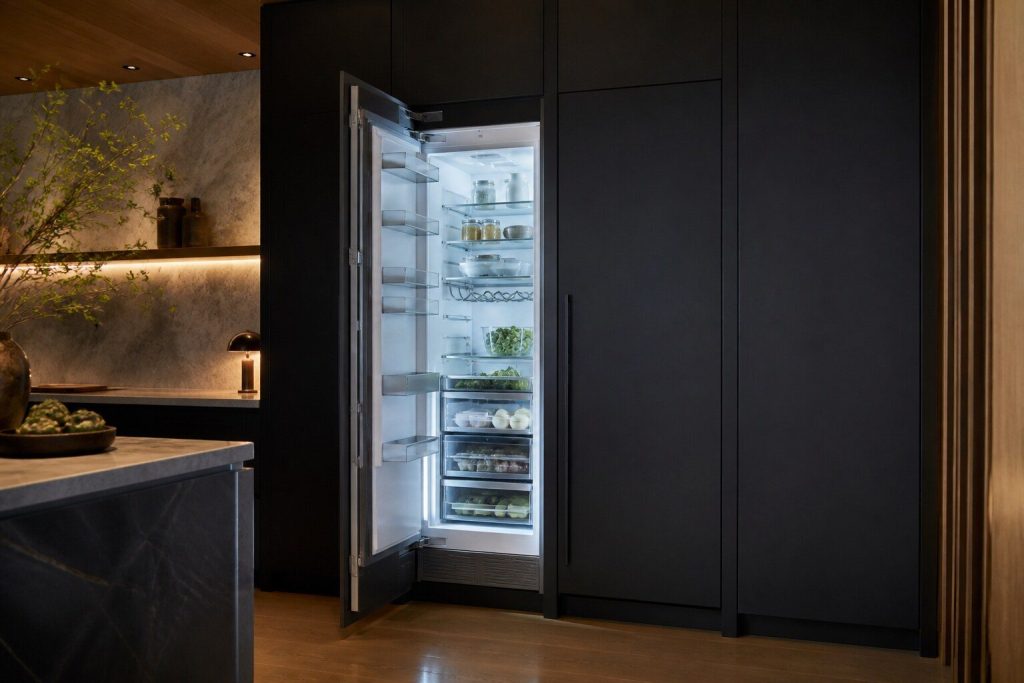
One compartment fine, the other not Refrigerator warm and freezer cold
A cabinet where one side holds and the other does not. On a built-in side-by-side that is one machine with a delivery problem; on a pair of integrated columns it is two machines and only one of them is unwell. Which of those you have decides the entire diagnosis.
- On a column pair, this is two appliances
- On one cabinet, it is airflow before it is refrigeration
- The damper between compartments is a real part
-
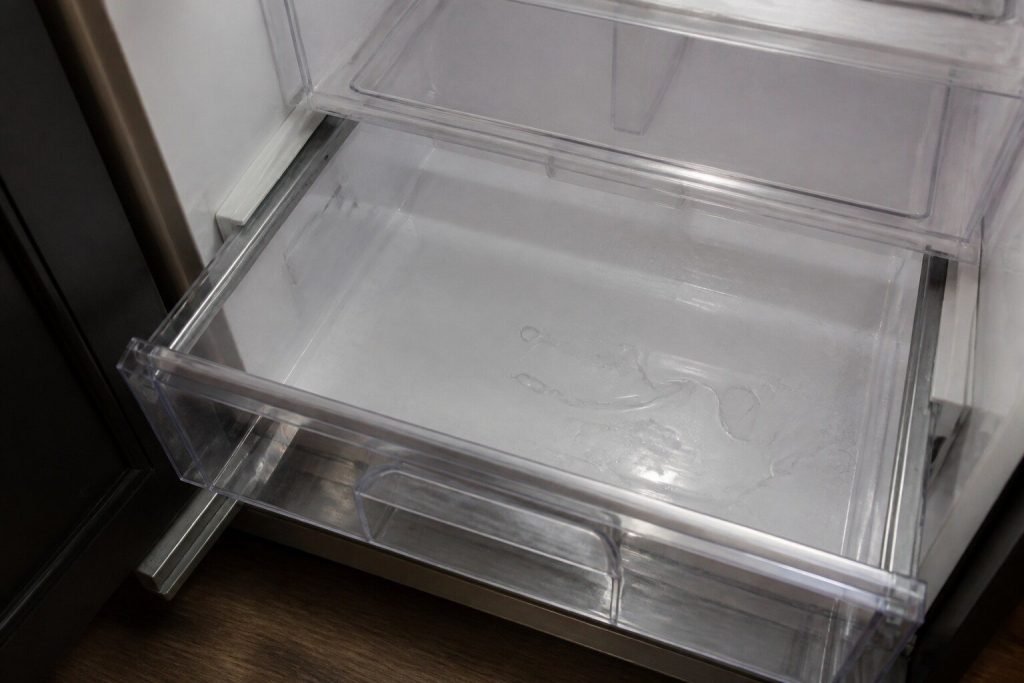
Water inside, underneath or on the floor Refrigerator leaking water
Where the water is tells you most of what you need to know. Inside the cabinet points at the defrost drain; underneath points at the drain pan or a supply connection; in front of the door on a dispenser model points at the line in the door. On integrated cabinetry it matters more than usual, because the floor is often the expensive part of the room.
- Where the water is names the cause
- A blocked defrost drain is the commonest by far
- On integrated kitchens, deal with it quickly
-
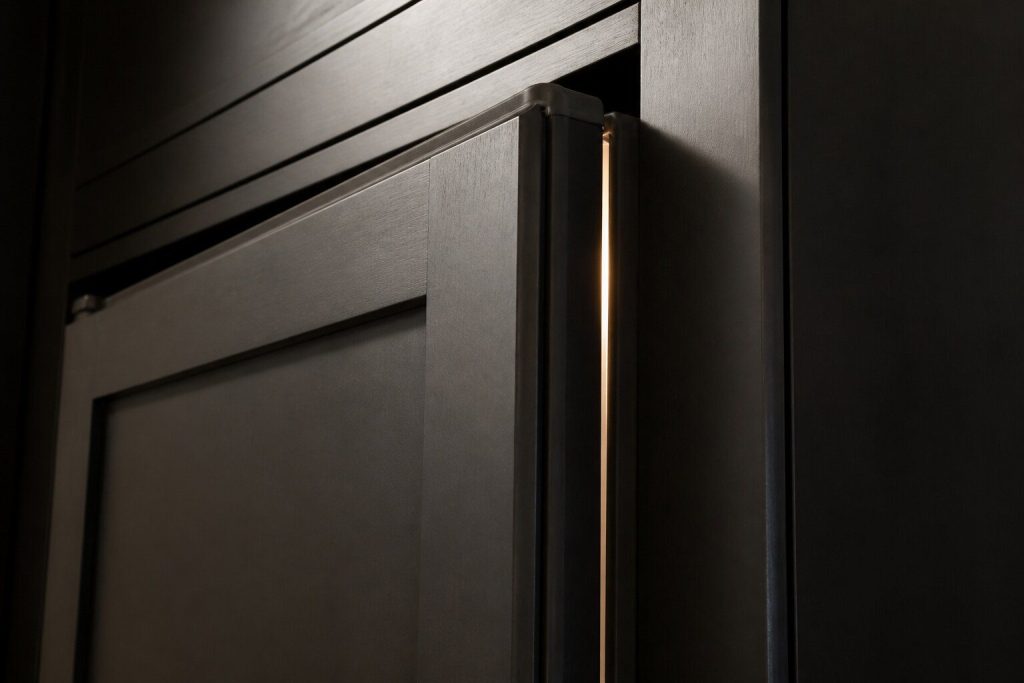
A line of light, a panel out of true, a gasket that has given up Refrigerator door not sealing
The problem that almost nobody calls about and that causes several of the problems people do call about. On integrated cabinetry the door carries a custom panel on hinges shimmed for its weight, and doors settle. What you see is a line that no longer matches the run; what the appliance sees is humid air, all day, every day.
- A dropped door is behind many defrost calls
- Panels changed in a remodel are a common cause
- The paper test settles it in two minutes
-
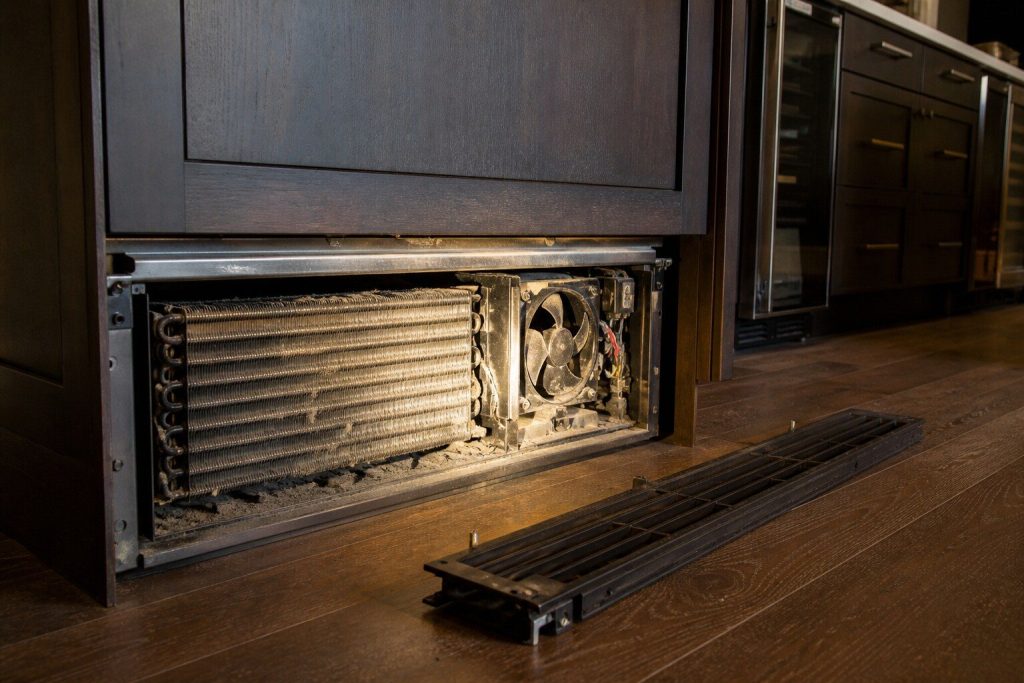
New sounds from a cabinet that used to be quiet Refrigerator making noise
Built-in refrigeration is designed to be unobtrusive, so a sound that is new is worth investigating even when the cabinet is still cold. Most of these are fans and mountings — inexpensive on their own, and cheaper before they take something else with them.
- A new sound usually names its own part
- Fans and mountings before compressors
- On wine cabinets, vibration reaches the bottles
-
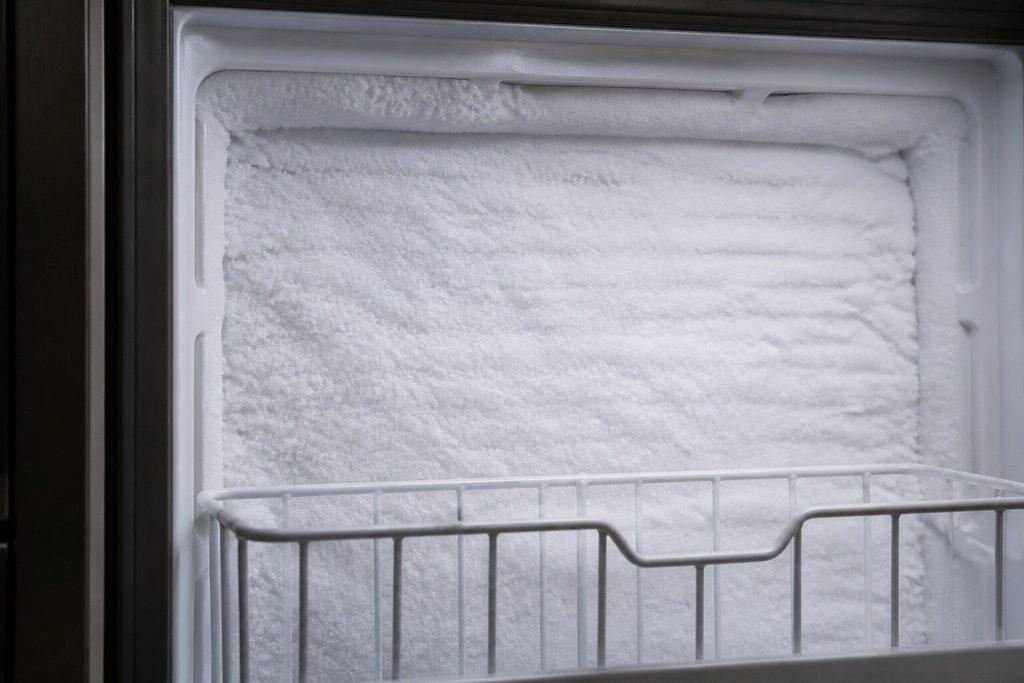
Ice that comes back after you clear it Frost building up in the freezer
Frost you clear and that returns within days is a defrost cycle that is no longer completing, or humid air getting in faster than the cycle can remove it. Both are ordinary and both are fixable, but they are different jobs — and where the frost sits is what tells them apart.
- An even coat on the back wall is the circuit
- A patch by one edge of the door is the seal
- Photograph it before you clear it
-
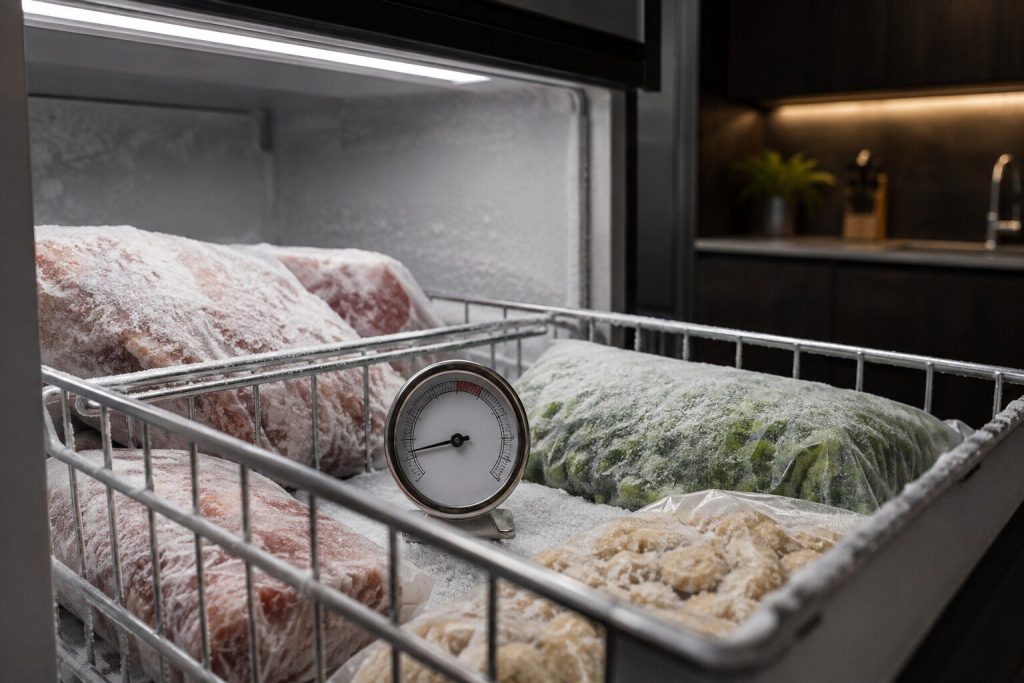
A column holding above zero while the one beside it is fine Freezer column not cold enough
A freezer column that has drifted up while the refrigerator column beside it is perfect. It is the clearest illustration of what a paired column installation actually is: two independent machines behind one wall of matched panels, sharing nothing but an opening.
- Paired columns are two appliances
- Zero Fahrenheit is the number to hold
- Ice cream is usually what reports it
If the code is on the dishwasher
You have probably never seen it
On a fully integrated dishwasher the control panel is on the top edge of the door, facing upward, visible only when the door is open. A machine that has stopped mid-cycle looks like a cabinet door to the room, and the code that would explain everything is sitting there where nobody looks. Open the door and read it before you call anybody.
Before you call
Questions we are asked about the work
Is my code definitely on this list?
Not necessarily. The manufacturer says plainly in its own range and wall oven table that it cannot provide every code for every model past and present. We publish what is published. Send a photograph of anything that is not here.
Why is there no table for my wine cabinet?
Because none is published. Wine cabinets, beverage centers, standalone ice makers, warming drawers, ventilation and the hearth oven have no code table at all, and inventing one is exactly what we will not do. Those appliances have symptom pages instead.
Will unplugging it clear the code?
Sometimes, and the manufacturer's own documents say so for several of them — thirty seconds to two minutes at the breaker. Where that is the right first move our page says so. Where it only hides something, our page says that too.
Are these Monogram codes or GE codes?
They are GE Appliances' published tables, and that is the manufacturer's documentation for a Monogram appliance — Monogram's own support sends owners to that base and to Bodewell, GE Appliances' service brand. We say so rather than presenting it as our own research.
In more detail
How this archive is built, and what it refuses to do
Documents first, codes second
Sixteen support articles were pulled and archived before a single code page was written, and every entry on this site names the article it was read in. That order is deliberate: a code may be published only if it can be pointed at a document that says so. A sibling network in this industry published about 38 invented codes for another brand that were really symptoms, and this rule is what that cost.
Keyed on the appliance
F3 on a range is an open oven temperature sensor circuit. F3 on a microwave is a shorted touch pad. FF on an oven is the electronic control; FF on a refrigerator means the freezer is warming and the food is what to check first. Same characters, different appliances, different urgencies — so every page names its appliance and the address carries it.
Two Advantium ovens, two tables
The 120-volt and 240-volt speed ovens are not trim levels of one appliance. They deliver power differently, carry different components and publish different code sets — F6, high cavity temperature, exists on the 240-volt oven and not on the other. Reading one against the other’s table is the commonest way these get misdiagnosed, and the model number is what prevents it.
The model number, and a sentence about what it is doing.
Add a photograph of anything on the display. That is usually enough for us to name the likely part and the band it falls in before anybody leaves the house.
This article is based on:
- Official manufacturer documentation
- Internal repair procedures
- Technician repair history
- Company quality standards