Appliance
Monogram range hoods
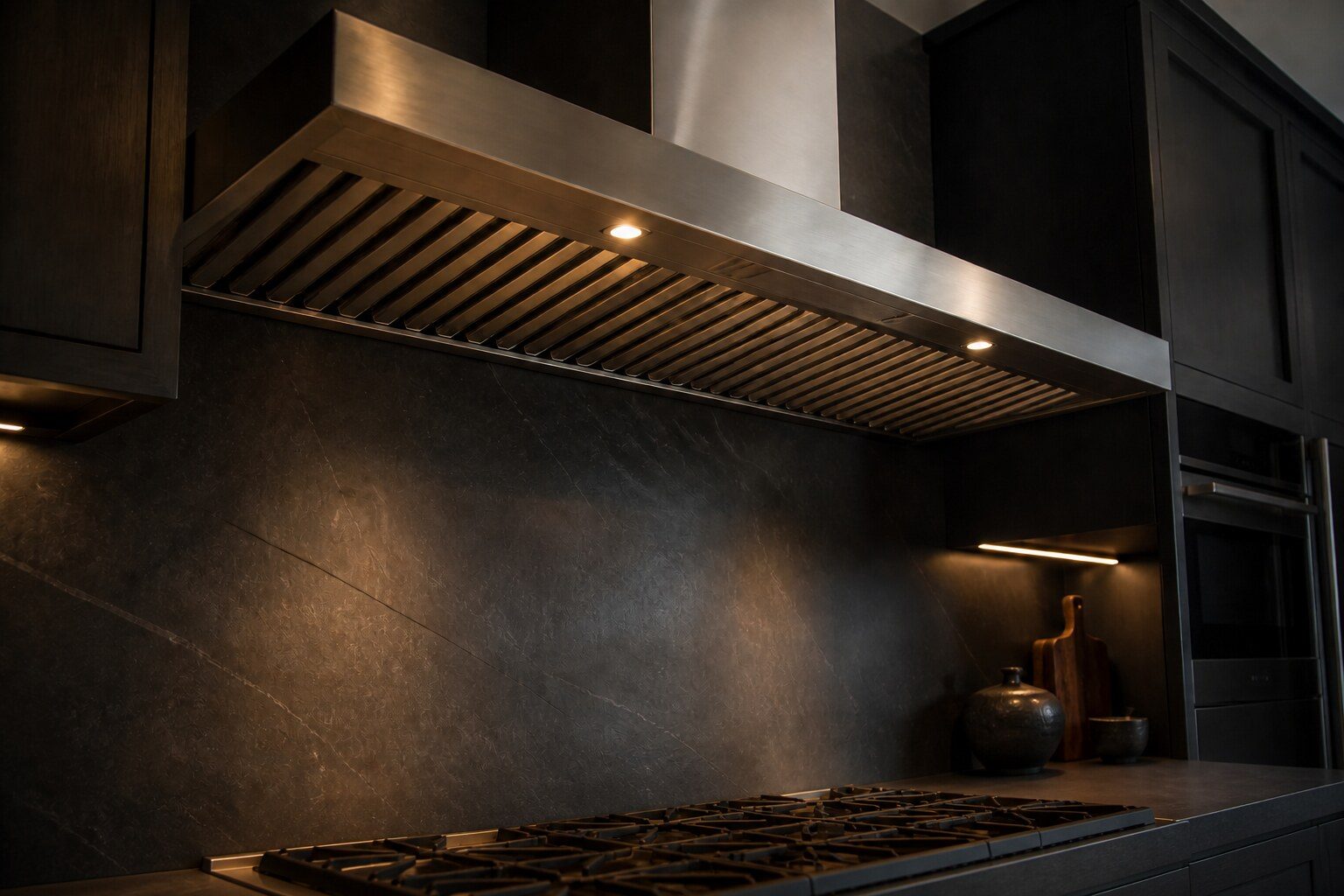
Ventilation is the appliance most likely to be quietly failing in a house that has no complaints about it. Monogram's hoods run from 30-inch wall-mounted chimneys with air quality sensors up to 48-inch professional hoods and custom inserts in brass and titanium — and over a professional range in a closed-up Florida house, a hood that has lost half its airflow is a problem for the whole kitchen.
- 1 symptoms we are called out to
- From $95 diagnostic, credited to the repair
- 59 cities and neighborhoods covered
- OEM parts available on order
The short version
What this equipment is, for a repair
Configurations
Wall chimney · island · professional · custom brass and titanium inserts
Access
Planned before the visit, not discovered on arrival
Parts
OEM, available on order
Diagnostic
From $95, credited to the repair
What goes wrong with it
Symptoms we are called out to on Monogram range hoods
Each one covers the likely causes in the order they are worth checking, and what to do in five minutes before booking anything.
-
The fan runs and the kitchen still smells Range hood not pulling air
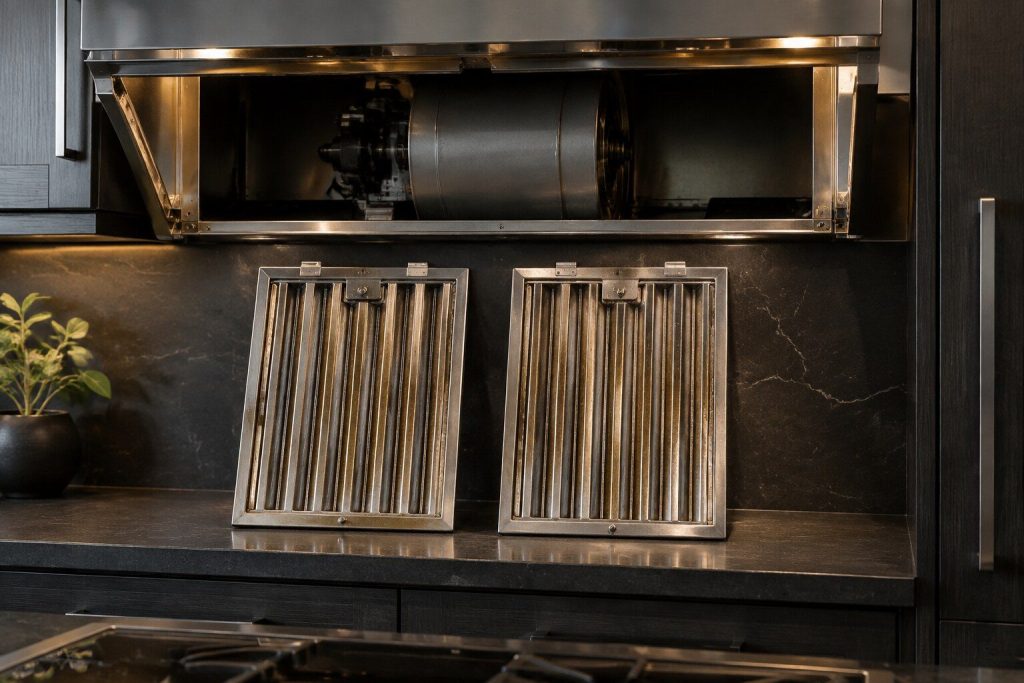
Airflow goes missing in three places and only one of them is the appliance: the filters, the duct and the cap at the end of it, and the make-up air that a tightly sealed air-conditioned house cannot supply. Nothing on the hood reports any of it.
- Filters lose airflow long before they look dirty
- The termination outside is invisible from inside
- A sealed house cannot supply the air
What we do on it
Repairs we carry out on Monogram range hoods
Starting figures for this equipment in South Florida. The exact cost is confirmed after an on-site diagnostic — and this is not the whole list of what can go wrong, so call if your problem is not here.
-
from $95 Diagnostic visit
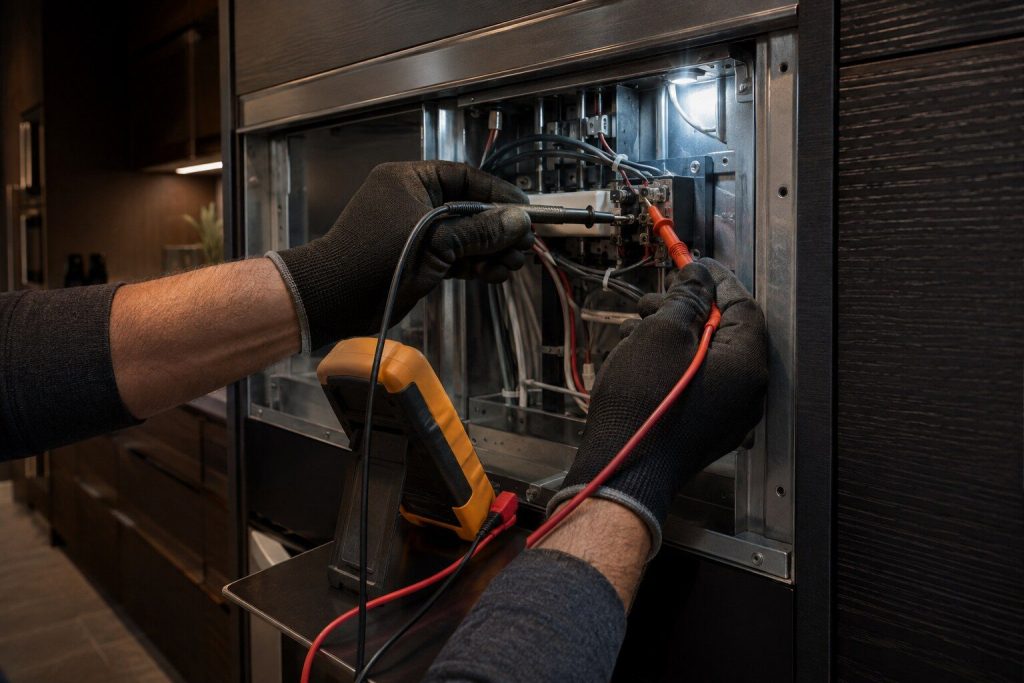
Nothing is named until something has been measured. On built-in appliances the visit also has to plan its own access before it starts: a column comes out from the front, a panel-ready door comes apart in an order, and a wall oven that has to move needs two people and a plan. We do that thinking before we arrive rather than in your kitchen.
- The model number first, because it decides the access
- What the appliance reports, read against the published table
- Credited toward the repair when you go ahead
-
from $145 Appliance maintenance
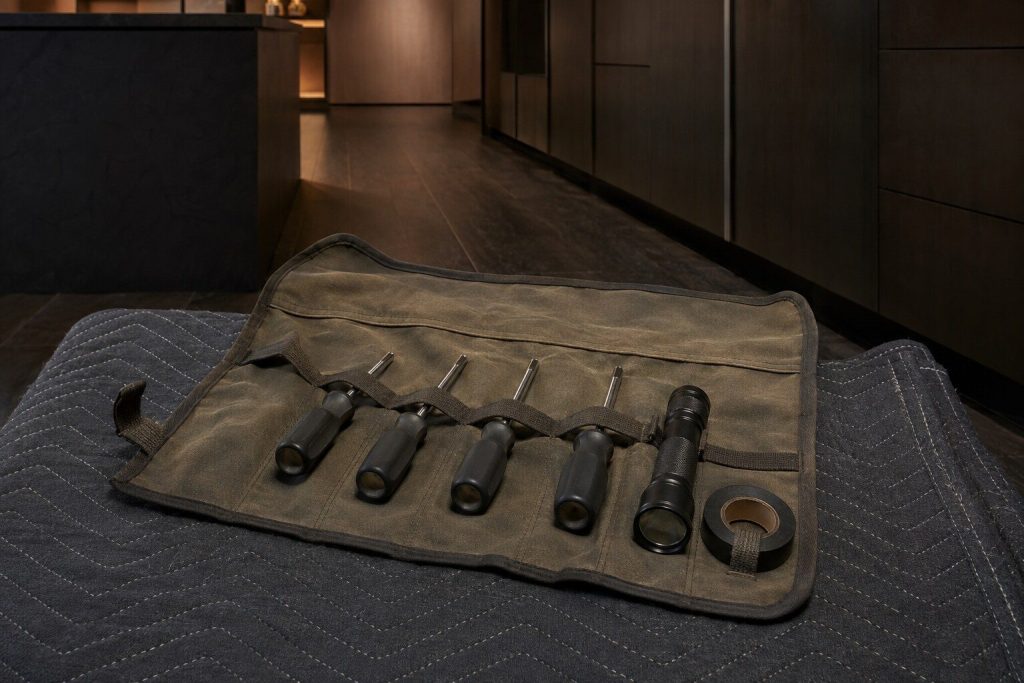
The visit that exists to stop the other visits. On built-in appliances in a salt-air climate the two things that shorten life are both invisible: a condenser that has silted up behind its grille, and door seals that have quietly stopped sealing. Neither shows on a display. Both are cheap to deal with and expensive to ignore.
- Condensers cleaned and airflow checked
- Seals, hinges and panel alignment across the kitchen
- Filters, drains and water circuits attended to
-
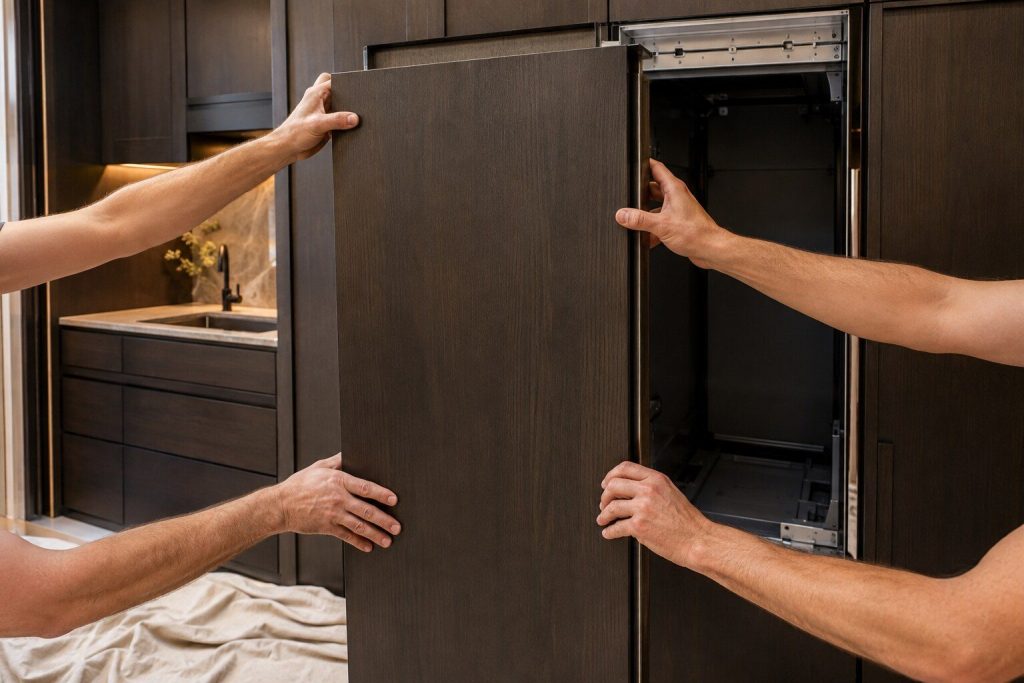
from $175 Appliance installation
Built-in appliances are installed once and lived with for twenty years, and most of the long-term problems we are called to were decided on installation day: a clearance that was shaved, a drain that has no fall, a hood ducted through one elbow too many. Getting it right the first time is cheaper than any of the repairs it prevents.
- Clearances and ventilation to the specification, not to the opening
- Water, gas and drain connections tested under pressure
- Panels hung and doors set level with the run
-
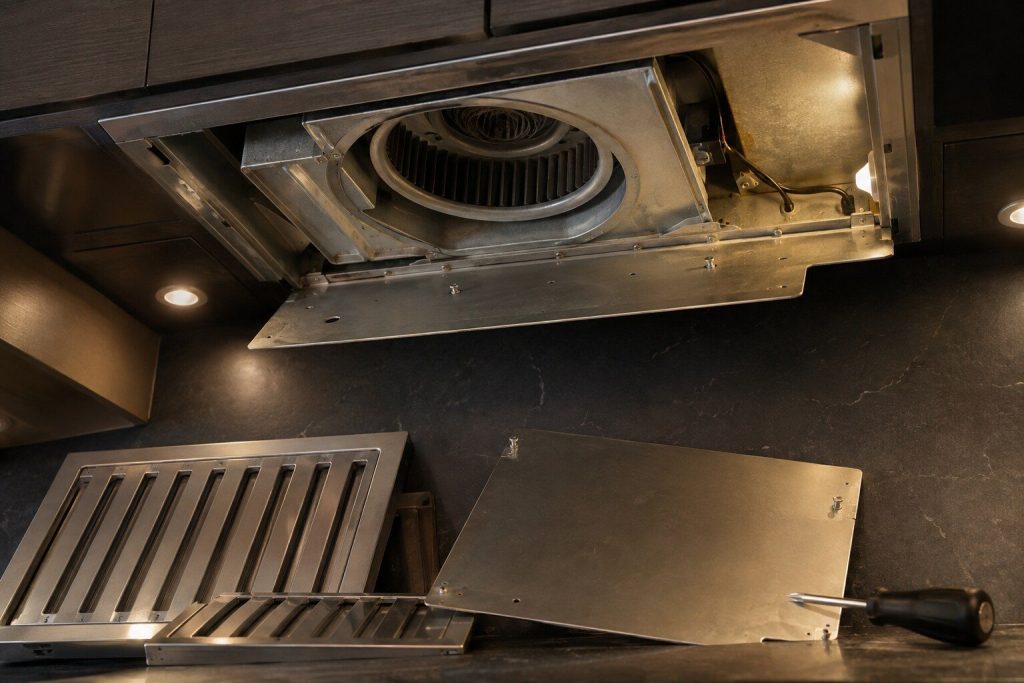
from $155 Range hood blower and light repair
The fan is dead, the lights are out, or the controls have stopped responding. On the current chimney hoods there is one more possibility worth knowing before booking: automatic mode can be holding the fan off because the air quality sensor believes the air is clean, which reads exactly like a dead blower.
- Automatic mode ruled out first
- Blower, capacitor and speed control measured
- Lights and fan are separate circuits
-
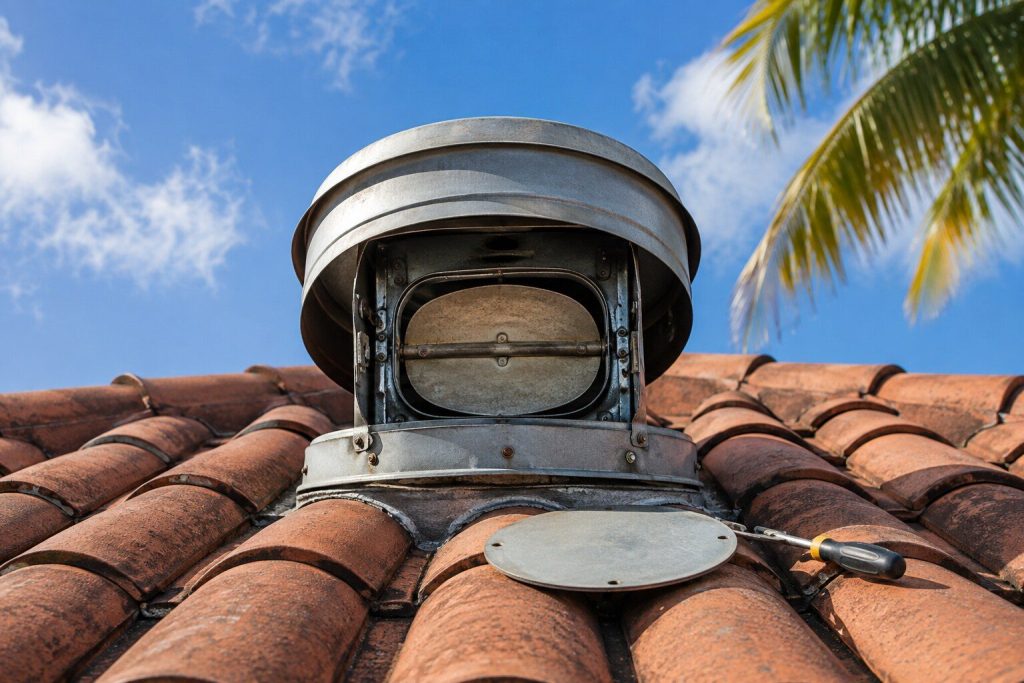
from $175 Range hood duct and airflow service
The hood runs and the kitchen still smells of last night. Airflow goes missing in three places and only one of them is the appliance: the filters, the duct and the cap at the end of it, and the make-up air a tightly sealed air-conditioned house cannot supply.
- Filters, duct and termination all checked
- Make-up air treated as a real cause
- Airflow measured rather than judged by ear
-
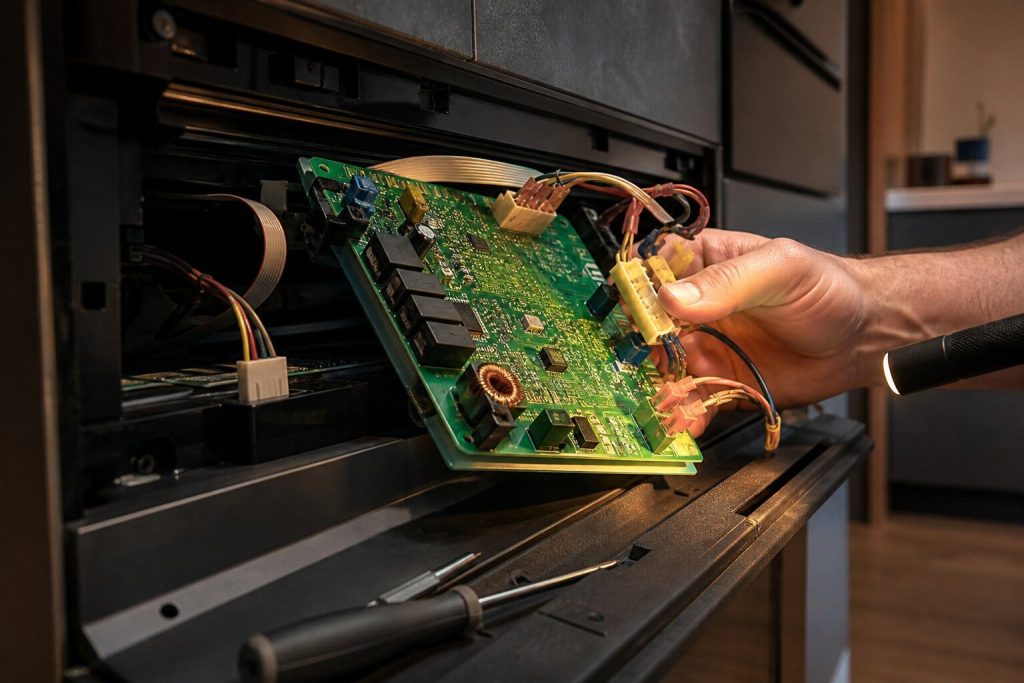
from $295 Appliance control board repair
The repair reached last and reached for first by the internet. A control board is expensive, frequently blamed and comparatively rarely the problem — most of what gets called a board failure is a sensor, a harness or a connector that has corroded in coastal air. Boards are condemned here by measurement.
- Everything the board depends on tested first
- Connectors and harnesses are the usual real cause
- Codes that name the control taken seriously, not literally
In more detail
About Monogram range hoods
The quietest failure in the kitchen
Nothing on a range hood tells you it has lost half its airflow. The fan sounds the same, the lights work, and the only evidence is a film that starts appearing on the cabinet doors next to the range and a kitchen that smells of last night. Monogram's line covers wall-mounted pyramid chimneys in 30, 36 and 48 inches with air quality sensors, island hoods, 36 and 48-inch professional hoods, and custom inserts including the brass and titanium Designer pieces — a range of shapes over one basic job.
Three places airflow goes missing
The filters. Baffle filters lose throughput long before they look dirty, and over a grill or a griddle they load fast. The duct. Every elbow costs airflow, and the roof or wall cap at the end of it has a damper that can stick shut, seize with corrosion in salt air, or become a bird's nest. The make-up air. A powerful hood in a tightly sealed, air-conditioned house is trying to remove air that nothing is replacing. That is not a problem in the appliance, but it is why the appliance is not working, and it is common in newer construction here.
Air quality sensors, and the problem that is not one
The current chimney hoods sense the air and run themselves. It is a genuinely useful feature and it generates a specific false alarm: an owner who has left the hood in automatic reports that the fan does not come on, when the hood has decided it does not need to. Before anything else, run it manually at the top speed and see what happens.
Before you book
Model number, whether the lights work, whether the fan runs at all, and when the filters were last cleaned. If you know where the duct goes and roughly how long the run is, that is worth telling us too — on this appliance the installation is very often the diagnosis.
This article is based on:
- Official manufacturer documentation
- Internal repair procedures
- Technician repair history
- Company quality standards
Before you book
Questions about Monogram range hoods
The fan runs but it does not seem to pull anything.
Airflow is lost in three places and only one of them is the hood. First the filters: baffle and mesh filters lose a startling amount of their throughput before they look bad, and they are dishwasher-safe on most of these. Second the duct: a run that is long, full of elbows, or terminating at a roof cap whose damper has stuck shut will strangle a perfectly healthy blower. Third the make-up air — a tight modern house with the doors shut and the air conditioning on cannot supply what a 1200 CFM professional hood wants to remove, and the hood simply cannot pull against it.
The lights work and the fan is dead.
Then power is reaching the hood and the problem is downstream of the control: the blower motor, its capacitor or the speed control. On models with an air quality sensor there is one more possibility worth knowing — the automatic mode can be holding the fan off because the sensor believes the air is clean, which reads exactly like a dead fan. Try it on manual at full speed before you book.
How often should the filters really be cleaned in this climate?
More often than the manual assumes, and much more often over a professional range with a grill or a griddle. Grease plus humidity is a worse combination than grease alone: it stays tacky, it collects dust, and it migrates past a saturated filter into the blower housing and the duct, where cleaning it is a job rather than a chore. Every few weeks through the dishwasher for a heavily used hood is not excessive here.
Where we do it
Across Miami-Dade, Broward, and Palm Beach
Same terms everywhere we go: an on-site diagnostic first, the price agreed in writing, and the exact figure confirmed once we have seen the unit.
Neighborhoods people ask for by name