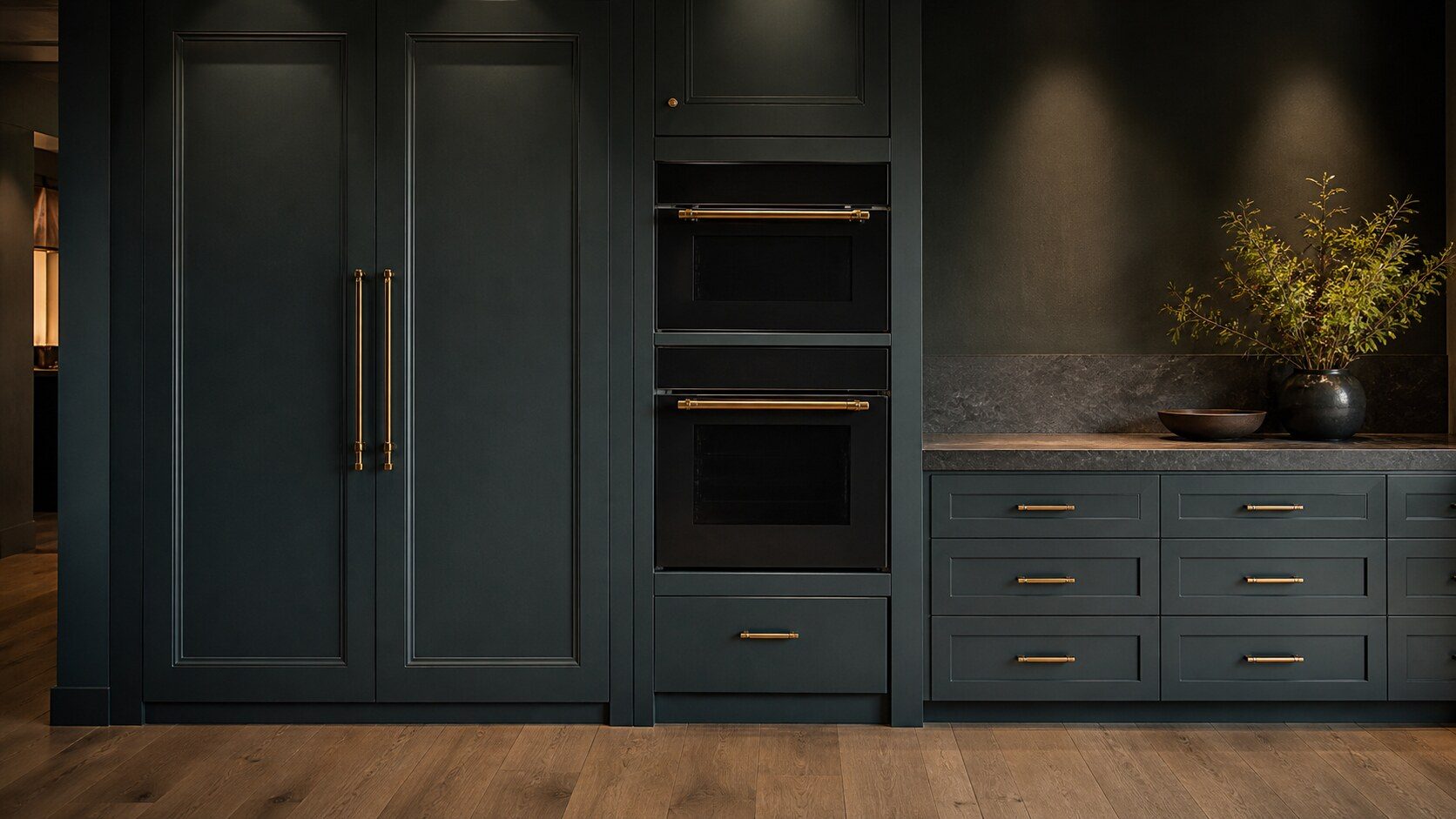
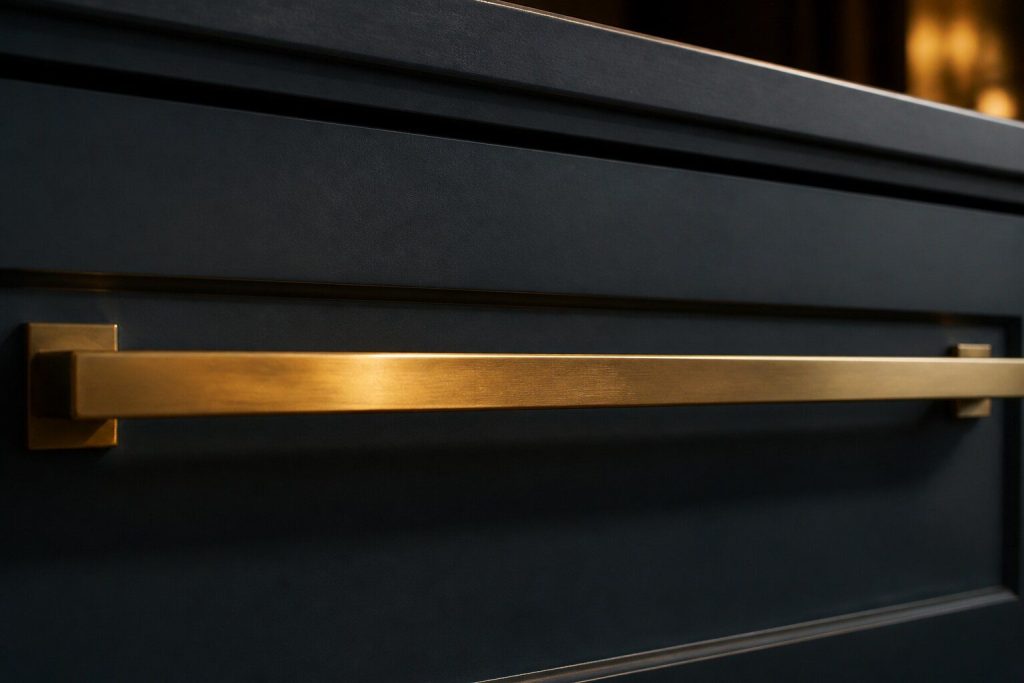
Statement has the heavy edge-to-edge handles and the brass. Minimalist is flush, handle-less and opens to a push. Designer is custom brass and titanium with floor-to-ceiling panels. Professional is the commercial-inspired cooking line. They are four fronts over shared engineering, which is genuinely good news for repair: the parts, the failure patterns and the code tables are consistent across a line rather than varying model by model.
12 appliances · 4 collections
Twelve appliances, and not one of them is a washing machine.
Monogram is a kitchen brand and only a kitchen brand. What it does build it builds in four collections — Statement, Minimalist, Designer and Professional — that differ in the front and share what is behind it. This page is the whole of what wears this badge in a South Florida kitchen, including the hearth oven, which nothing else in this city is set up to look at.
- 12 appliance types
- 43 product families with a page
- 0 laundry appliances, because there are none
- from $95 diagnostic, credited to the repair
Start from the appliance
What each one is, and what usually goes wrong with it
Every card leads to the jobs, the symptoms, the codes where a table exists, and the model families that belong to it.
-
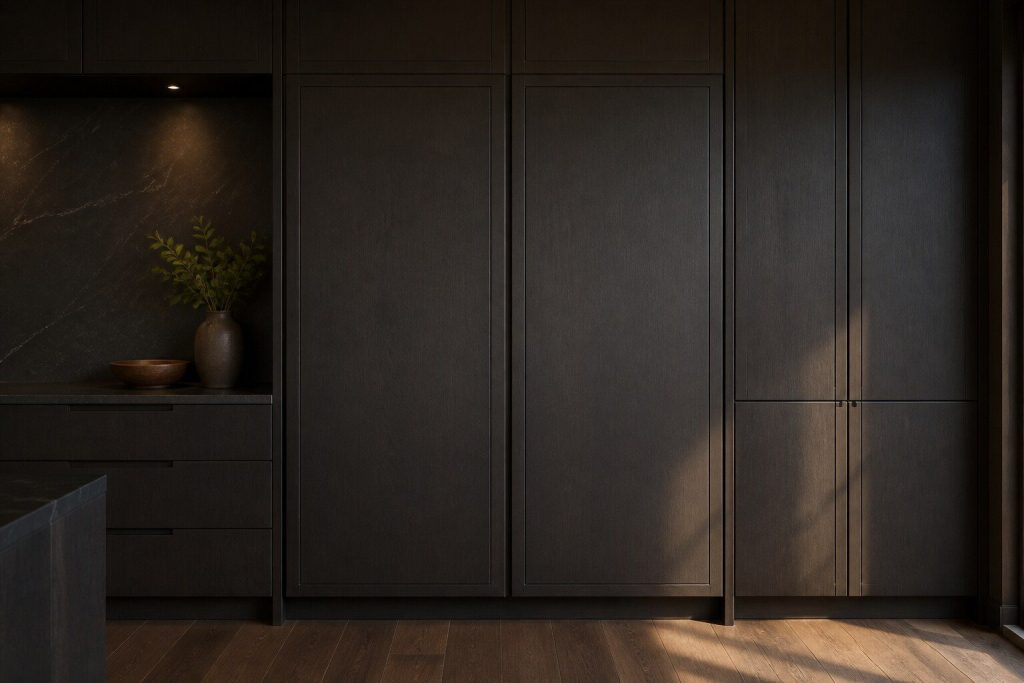
Built-in side-by-side · integrated column · French door · bottom freezer Monogram refrigerator
Monogram refrigeration is built in, and on this make that is not a styling word — it is what the repair has to work around. A 48-inch side-by-side is bolted into cabinetry, a column is flush with the run and carries a custom door panel, and the machinery is reached from the front because there is no behind. The failures are ordinary refrigeration failures. Getting to them, and putting the kitchen back the way the cabinetmaker left it, is the part that takes the skill.
- Built-in and panel-ready models are serviced from the front
- Door panels and alignment are part of the job, not an extra
- Sealed-system work is measured, never guessed at
-
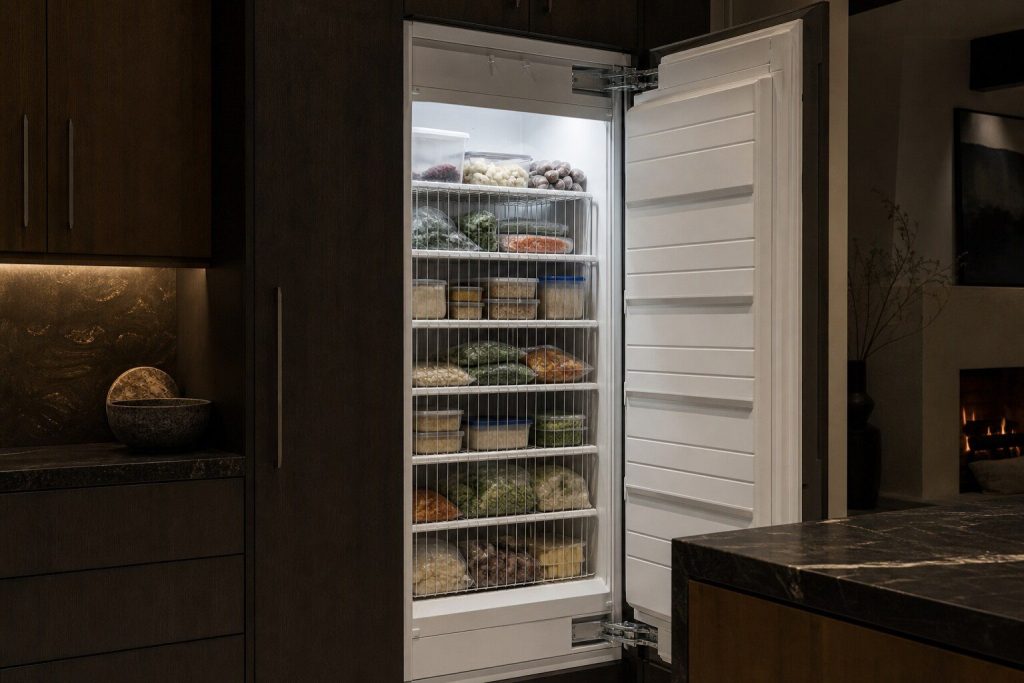
18, 24, 30 and 36-inch integrated columns · panel-ready Monogram freezer
A Monogram freezer is a column: one cabinet, one temperature, flush with the cabinetry and usually standing beside a refrigerator column that looks identical from the front. That pairing is where most calls start, because when one of the two stops behaving the other is still perfect, and the two cabinets have separate machinery, separate sensors and separate problems.
- All-freezer columns in 18, 24, 30 and 36 inches
- Paired columns are two machines, not one
- Ice build-up is a defrost question before it is a door question
-
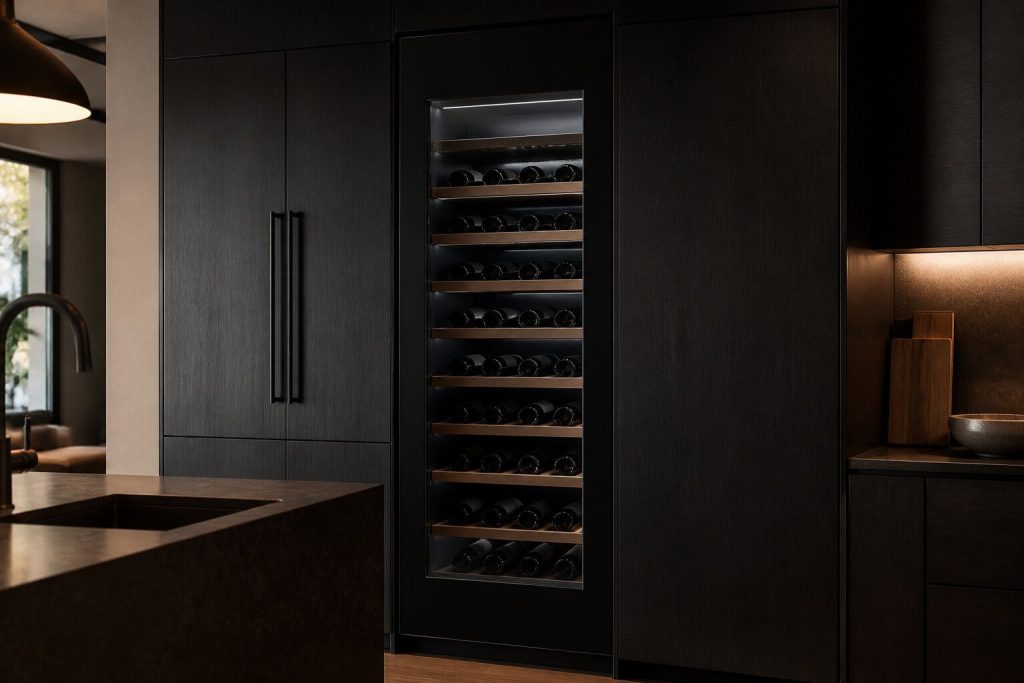
24-inch wine column · 30-inch wine sommelier · panel-ready wine reserve Monogram wine cabinet
Wine storage is the appliance where a small problem is an expensive one, because the damage happens to the contents rather than to the machine. A cabinet that has drifted four degrees or lost its humidity will look and sound completely normal for months. Monogram's wine storage runs from a 24-inch panel-ready reserve up to a 30-inch fully-integrated sommelier cabinet, and all of it is built in.
- 24-inch wine columns and reserves, and a 30-inch sommelier cabinet
- Temperature stability matters more than the number itself
- Vibration and light are part of the diagnosis
-
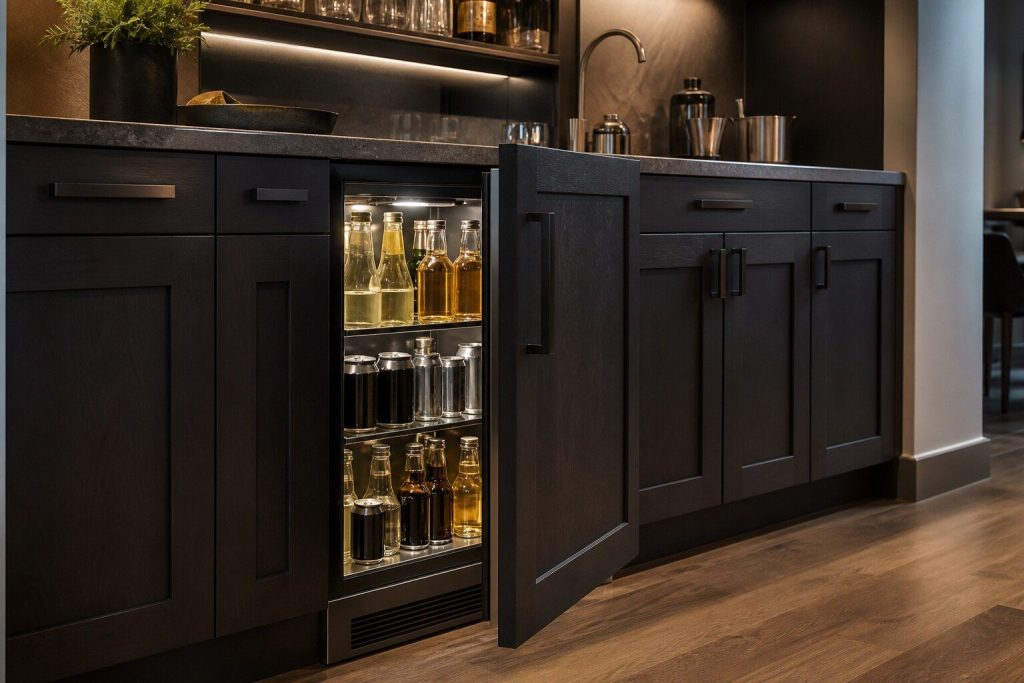
24-inch panel-ready beverage centers · bar refrigerators with ice makers Monogram beverage center
The undercounter appliance that works hardest and gets thought about least. A beverage center in a South Florida house is opened dozens of times a day, often sits in a bar or a covered outdoor kitchen rather than in the conditioned part of the house, and is expected to hold temperature through all of it. Monogram builds these as 24-inch panel-ready units, some with an ice maker inside.
- 24-inch panel-ready beverage centers and bar refrigerators
- Ambient temperature is part of the problem, not an excuse
- Units with an ice maker inside have two things to check
-
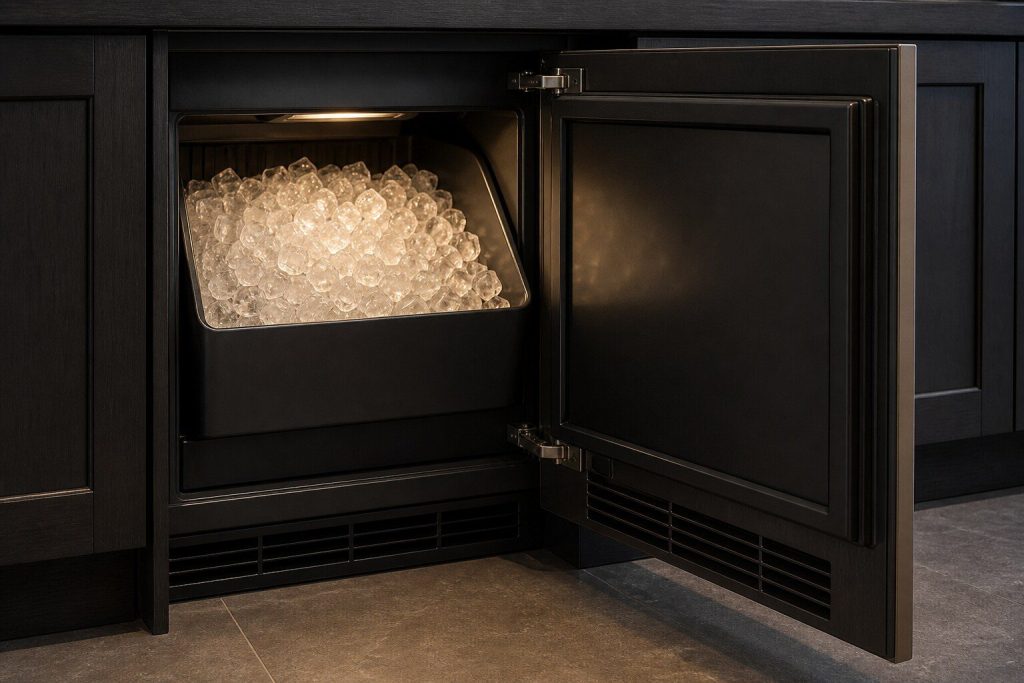
15-inch undercounter clear ice and nugget ice · in-cabinet ice makers Monogram ice maker
A dedicated ice maker is a small refrigeration plant with a water circuit running through it, and in Miami the water circuit is what fails. Monogram kitchens take 15-inch undercounter units — clear ice and nugget ice — alongside the ice makers built into refrigerators and bar cabinets, and the two kinds fail in completely different ways.
- 15-inch undercounter clear-ice and nugget-ice machines
- Local water is hard on every part of the water circuit
- A drain that does not drain is the commonest undercounter problem
-
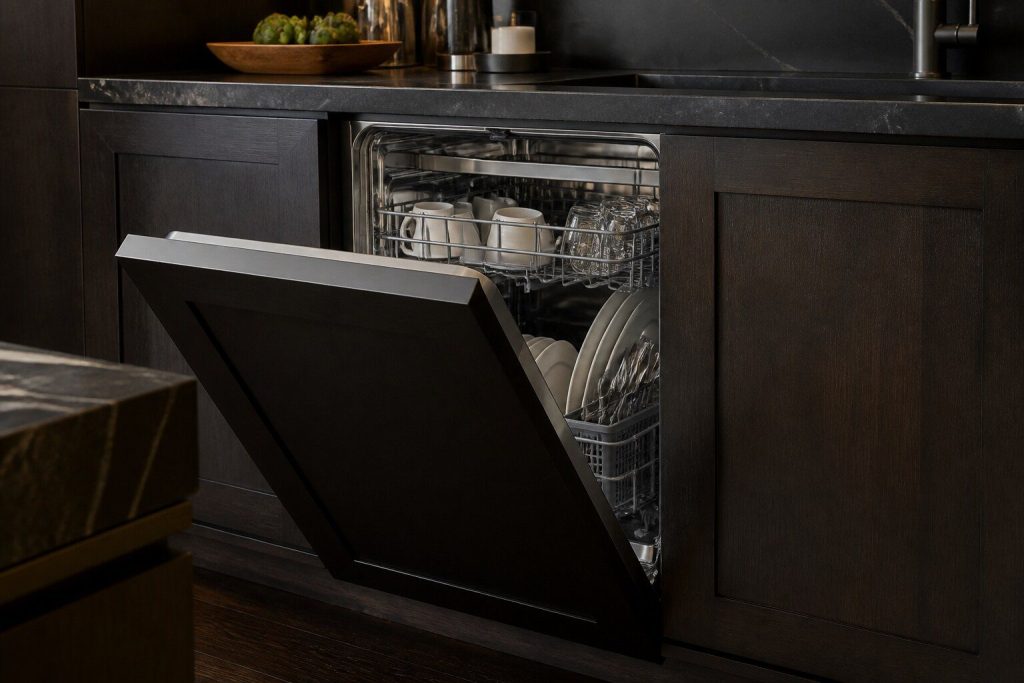
24-inch fully integrated · panel-ready and stainless Monogram dishwasher
Monogram's dishwasher line is short and consistent: 24-inch fully integrated machines, panel-ready or stainless, with the controls hidden on the top edge of the door. That hidden control panel is the reason most owners never see the code their machine is showing — it is displayed while the door is open, which is exactly when nobody is looking.
- 24-inch fully integrated, panel-ready or stainless
- The C-code family is displayed on the top edge of the door
- Drainage is the largest single category of call
-
30, 36 and 48-inch · dual-fuel, all-gas and induction Monogram range
Monogram does not make an ordinary range. The line is professional: 30, 36 and 48 inches, dual-fuel with a gas top over an electric oven, all-gas throughout, or induction — with griddles and grills on the wider models. A 48-inch dual-fuel range is a gas appliance, an electric appliance and a ventilation problem in one piece of steel, and the diagnosis starts by working out which of the three is talking.
- Dual-fuel, all-gas and induction, 30 to 48 inches
- Griddle and grill sections are their own repair
- The F-code family covers the oven side, not the burners
-
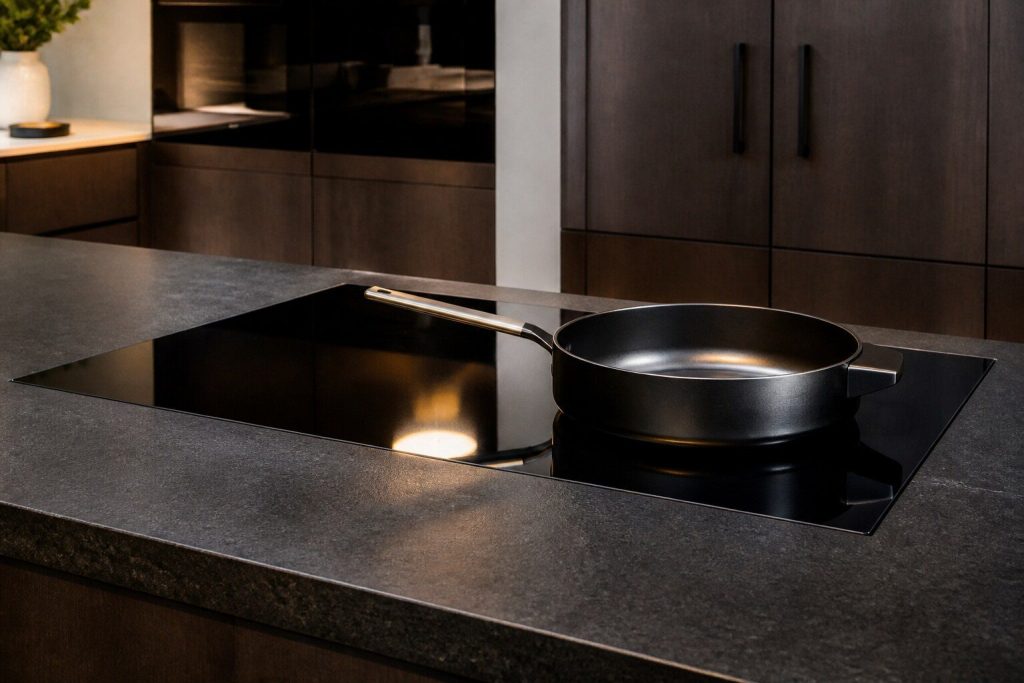
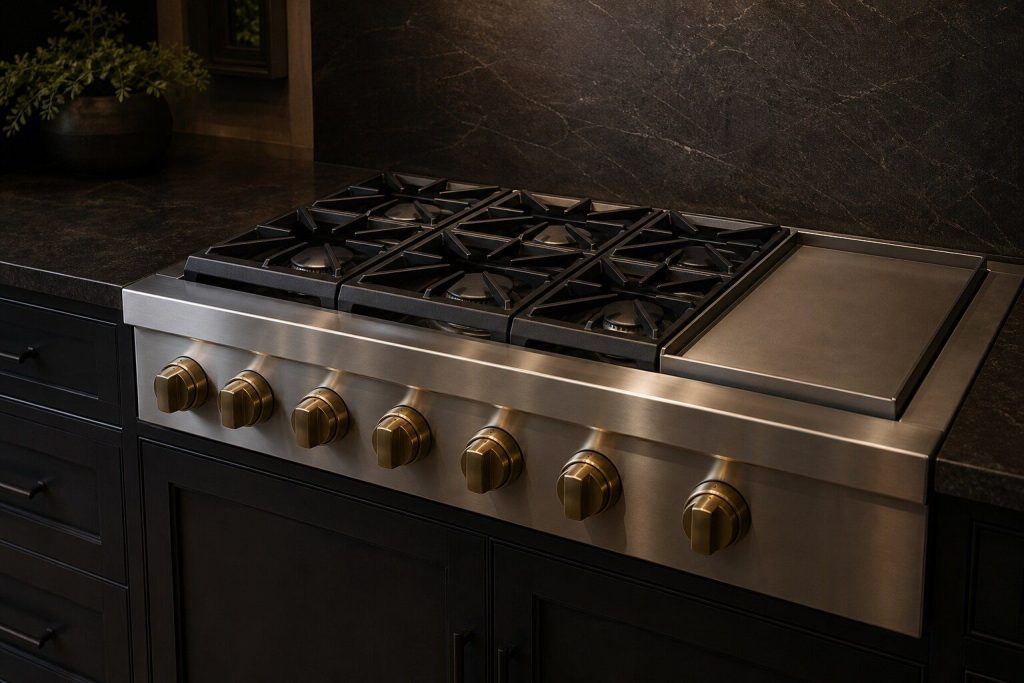
Deep-recessed gas · induction · 36 and 48-inch professional rangetops Monogram cooktop
Two appliances that people describe with the same word. A cooktop drops into the counter and has nothing underneath it; a rangetop is a professional cooking surface with a finished front and a wall oven or cabinetry below. Monogram builds both — deep-recessed gas and induction cooktops in 30 and 36 inches, and 36 and 48-inch gas rangetops with griddles.
- Gas and induction cooktops, 30 and 36 inches
- 36 and 48-inch professional gas rangetops with griddle options
- Induction problems are electronic and heat-related
-
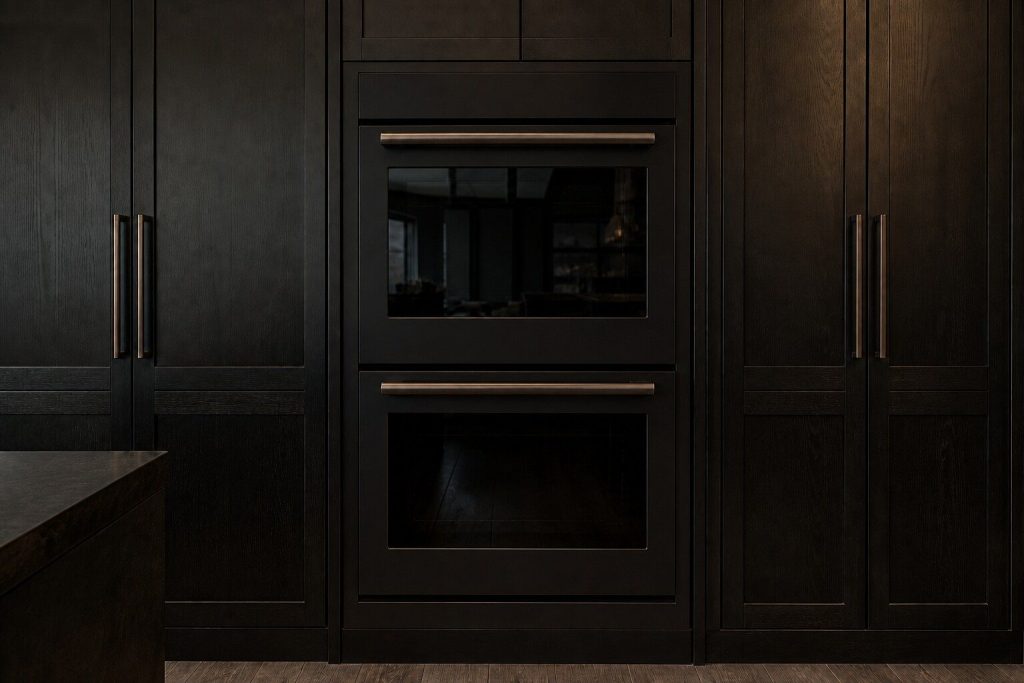
Statement and Minimalist · single, double and French door · Advantium 5-in-1 Monogram wall oven
Monogram's wall ovens come in two design languages — Statement, with its heavy handles and brass, and Minimalist, which is flush and handle-less — plus French-door models, in-oven cameras, warming drawers, and the Advantium 5-in-1 that cooks with halogen light as well as microwave energy. They share a control platform and an F-code family, and they are all installed into cabinetry, which is where the repair difficulty lives.
- Single, double and French-door wall ovens in 27 and 30 inches
- Advantium 5-in-1 comes in 120 V and 240 V versions that fail differently
- F codes name the sensor, the keypad or the door latch
-
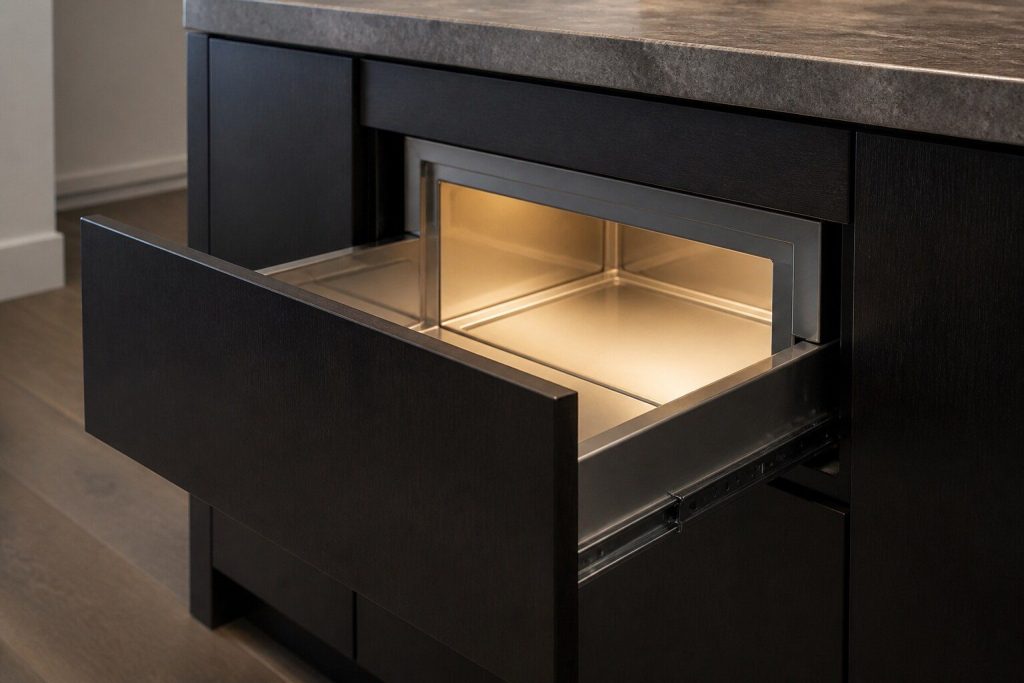
Built-in microwaves · 24-inch microwave drawers Monogram microwave
Monogram builds microwaves into cabinetry and into islands: a built-in unit that sits in a wall run, and a drawer model that opens downward from under a counter. The drawer is the one with its own repair profile, because it is the only microwave in the kitchen with a motorized opening mechanism that people lean on.
- Built-in microwaves and 24-inch microwave drawers
- The drawer mechanism is its own set of problems
- A microwave that runs and does not heat is a specific repair
-
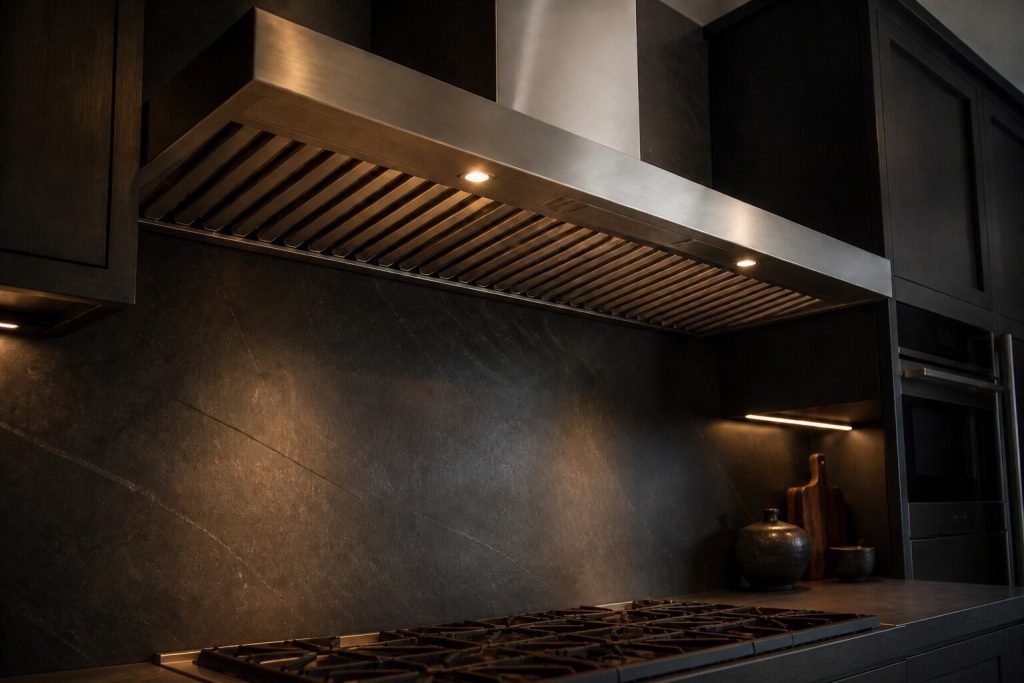
Wall chimney · island · professional · custom brass and titanium inserts Monogram range hood
Ventilation is the appliance most likely to be quietly failing in a house that has no complaints about it. Monogram's hoods run from 30-inch wall-mounted chimneys with air quality sensors up to 48-inch professional hoods and custom inserts in brass and titanium — and over a professional range in a closed-up Florida house, a hood that has lost half its airflow is a problem for the whole kitchen.
- Wall chimney, island, professional and custom insert hoods
- Air quality sensors on the current chimney models
- Grease-laden filters cost airflow long before they look dirty
-
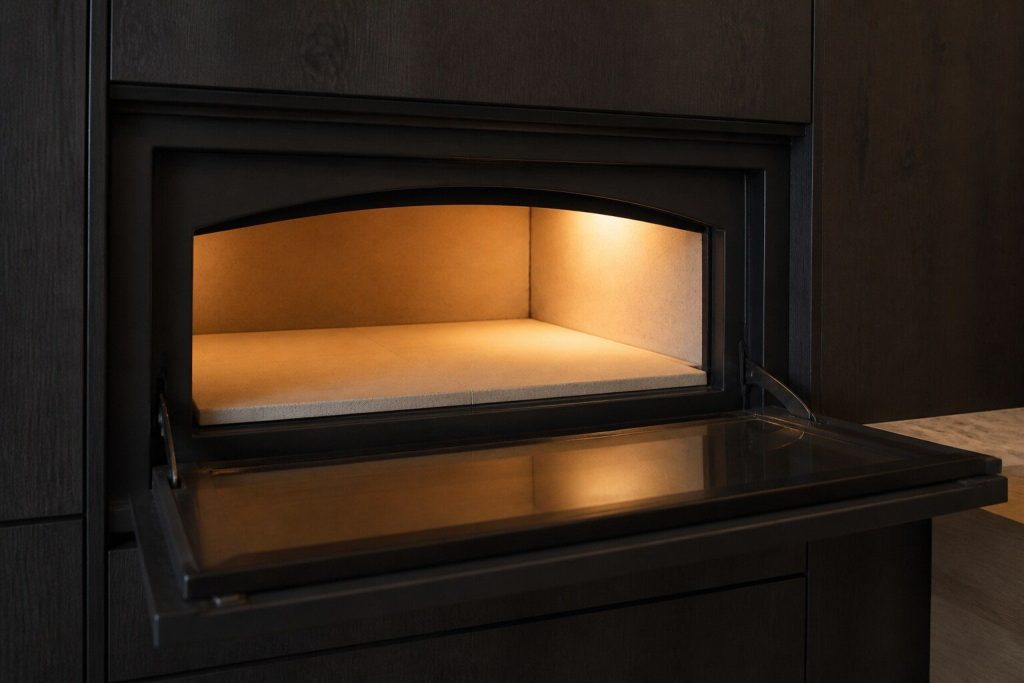
30-inch indoor hearth oven · stone floor, high heat Monogram hearth oven
The newest and rarest appliance in a Monogram kitchen: a 30-inch indoor hearth oven with a stone floor, built to reach the temperatures a pizza actually needs. Very few technicians in South Florida have opened one. It is a high-heat appliance in a cabinet run, and the things that go wrong with it are the things that go wrong when heat and electronics live close together.
- 30-inch indoor hearth oven with a stone floor
- High-heat cycling is hard on seals, elements and controls
- A cracked stone is a part, not a failure of the oven
The one nobody else has
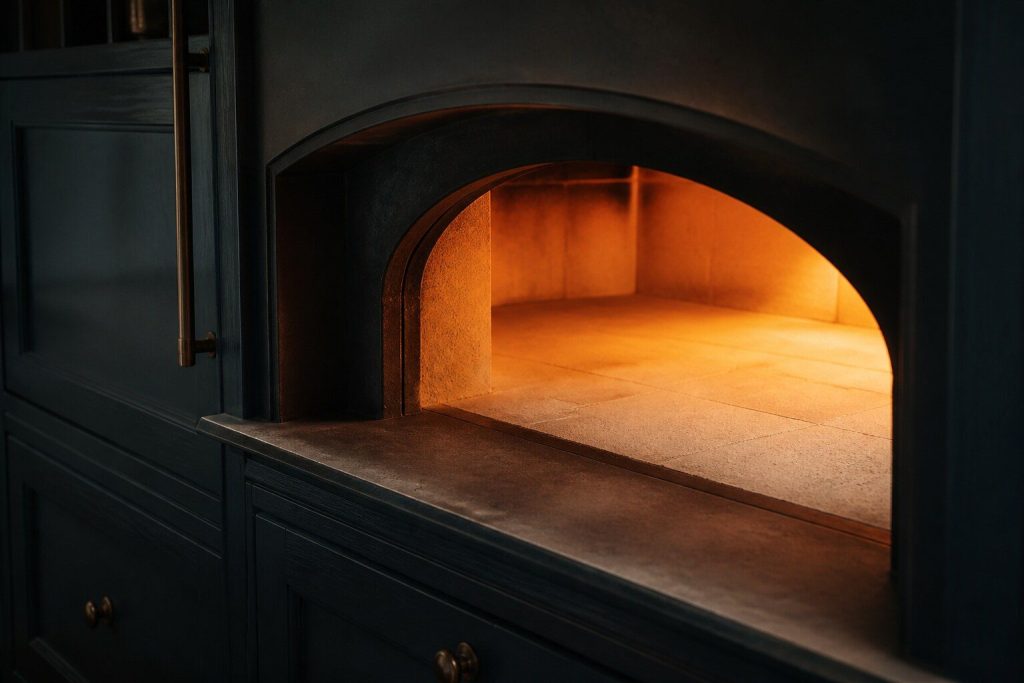
A hearth oven is not a pizza stone in a wall oven
It is a 30-inch indoor oven with a stone floor built to run at temperatures nothing else in the kitchen sees, and that single fact drives everything about servicing it: seals harden, terminals suffer, sensing drifts and stone cracks under thermal shock. It is a recent appliance with a small installed base here, so parts lead times are part of the quote rather than a surprise afterwards. We say that before the repair, not after.
Before you book
Three minutes that change the visit
The model number, off the plate
- Refrigeration: inside the fresh-food compartment, usually on the left wall.
- Dishwasher: on the tub edge, behind the door.
- Ranges and wall ovens: on the frame behind the door, and on some ranges behind the bottom drawer.
- Photograph it. These numbers are long and one wrong character sends us to the wrong parts list.
Whatever the appliance is showing
- On the fully integrated dishwasher the display is on the TOP EDGE of the door. Open the door and look — most owners have never seen it.
- Case matters on refrigeration: DE is demonstration mode and dE is the defrost system.
- tC, tF, LOC and OFF are not errors at all, and our archive says which is which.
How the appliance is installed
- Built-in, integrated column, undercounter or free-standing.
- Panel-ready or stainless — it decides how the door comes apart.
- Whether two tall doors are one appliance or two columns. That one answer changes the whole visit.
By job
The work each appliance needs
If you already know what has to be done rather than what has failed, start here.
-
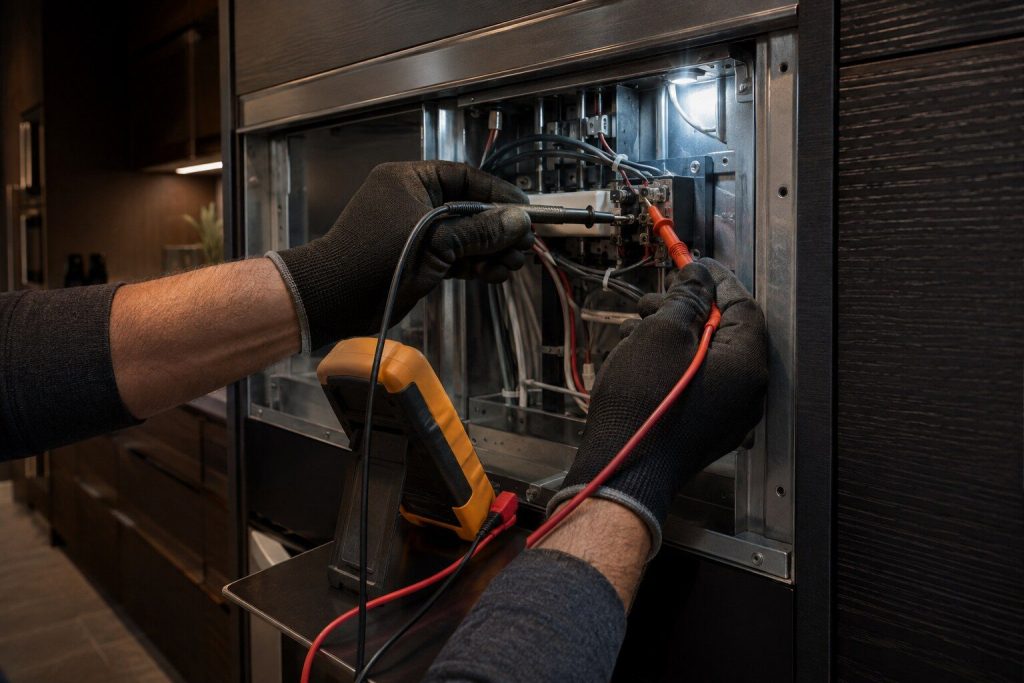
from $95 Diagnostic visit
Nothing is named until something has been measured. On built-in appliances the visit also has to plan its own access before it starts: a column comes out from the front, a panel-ready door comes apart in an order, and a wall oven that has to move needs two people and a plan. We do that thinking before we arrive rather than in your kitchen.
- The model number first, because it decides the access
- What the appliance reports, read against the published table
- Credited toward the repair when you go ahead
-
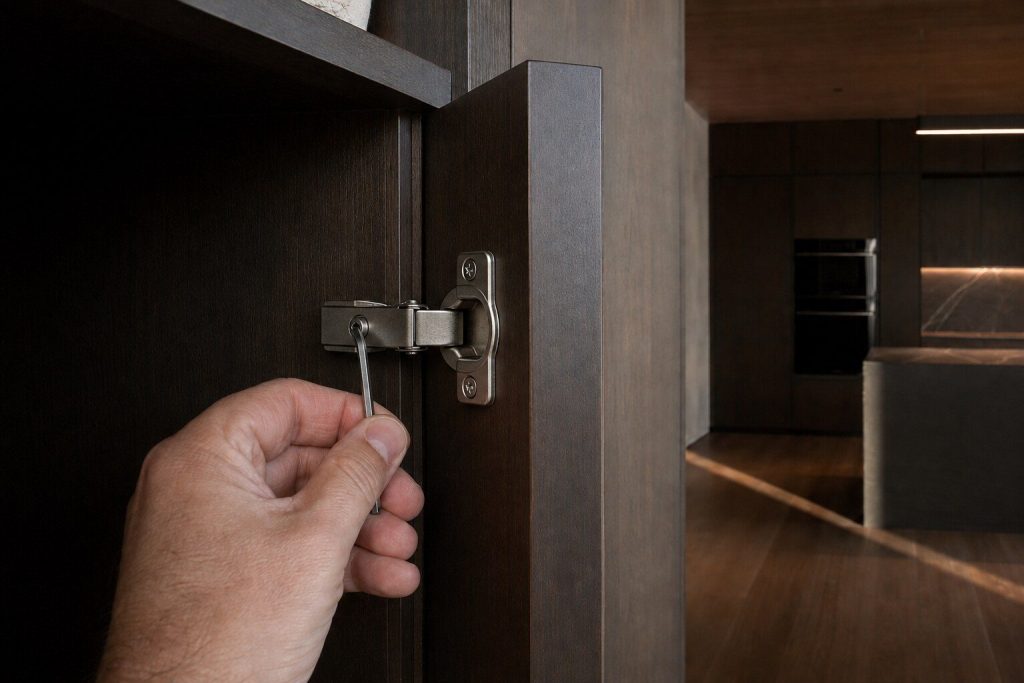
from $145 Panel alignment and door adjustment
The job that only exists on built-in kitchens, and the one owners most often wait too long to book. A custom door panel is heavy, the hinges were shimmed for it on installation day, and over years the door settles. What starts as a line of light along a cabinet becomes humid Florida air walking into a refrigerator all day, and then a defrost circuit that never catches up.
- Hinges, springs and shims set back to specification
- The seal checked along its whole length, not by eye
- Panel lines put back level with the run
-
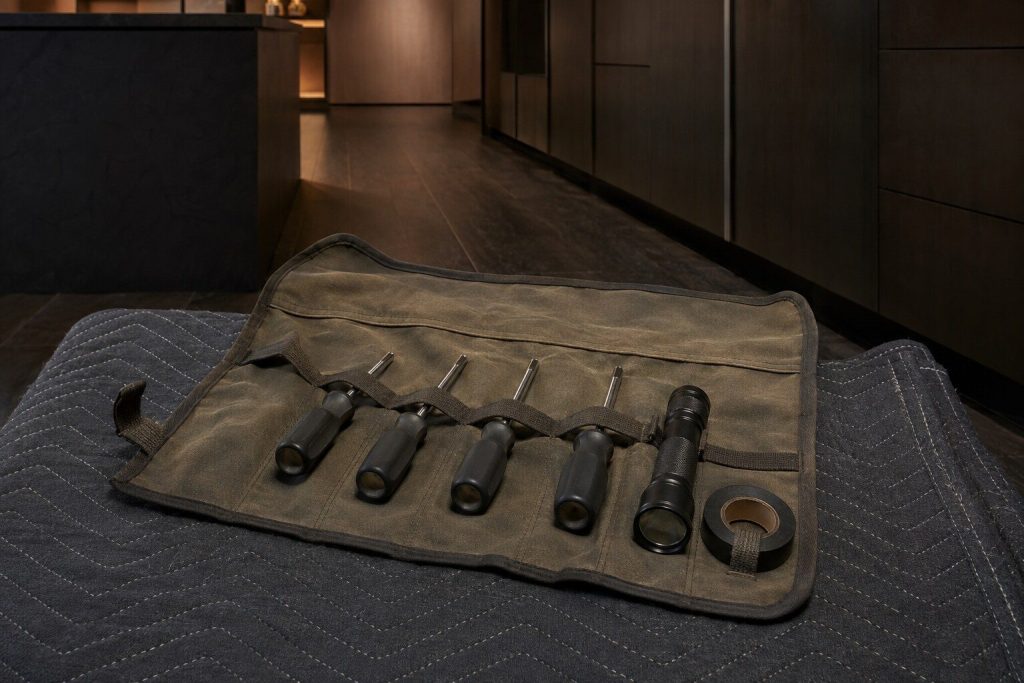
from $145 Appliance maintenance
The visit that exists to stop the other visits. On built-in appliances in a salt-air climate the two things that shorten life are both invisible: a condenser that has silted up behind its grille, and door seals that have quietly stopped sealing. Neither shows on a display. Both are cheap to deal with and expensive to ignore.
- Condensers cleaned and airflow checked
- Seals, hinges and panel alignment across the kitchen
- Filters, drains and water circuits attended to
-
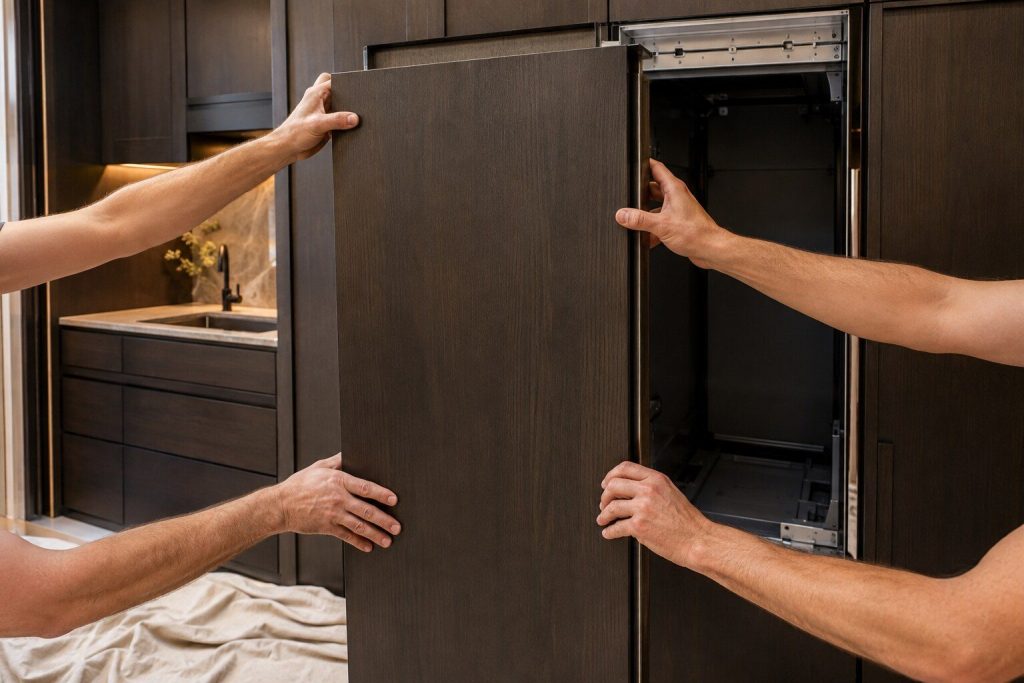
from $175 Appliance installation
Built-in appliances are installed once and lived with for twenty years, and most of the long-term problems we are called to were decided on installation day: a clearance that was shaved, a drain that has no fall, a hood ducted through one elbow too many. Getting it right the first time is cheaper than any of the repairs it prevents.
- Clearances and ventilation to the specification, not to the opening
- Water, gas and drain connections tested under pressure
- Panels hung and doors set level with the run
-
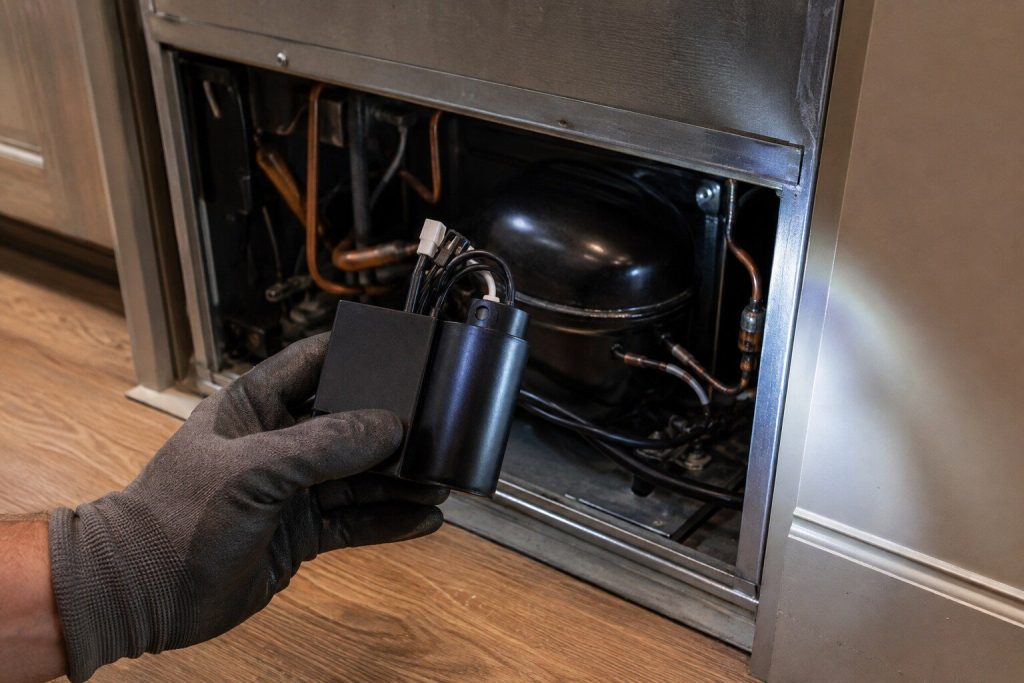
from $175 Refrigerator not cooling repair
The largest single category of call and the one with the widest range of causes underneath it. A built-in that has stopped holding temperature can be an airflow problem, a defrost problem, a control problem or a sealed-system problem, and the four are separated by measurement rather than by opinion.
- Airflow and condenser ruled out first, because they are cheapest
- Defrost circuit measured, not inferred
- Sealed-system work only when the readings say so
-
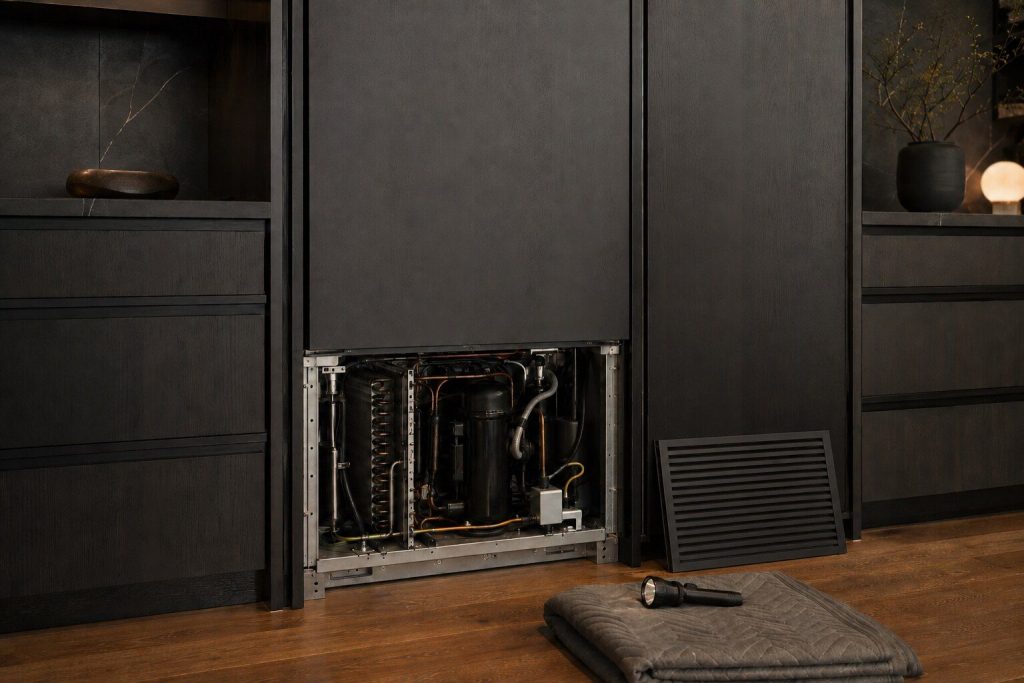
from $195 Column refrigeration repair
Integrated columns are their own service situation. They are single-temperature cabinets installed flush, usually in pairs, carrying custom panels, and they come apart in an order. The refrigeration inside is ordinary; reaching it without leaving marks on a kitchen is not.
- Panels and trim removed and refitted in order
- Paired columns diagnosed as two machines
- Everything serviced from the front
-
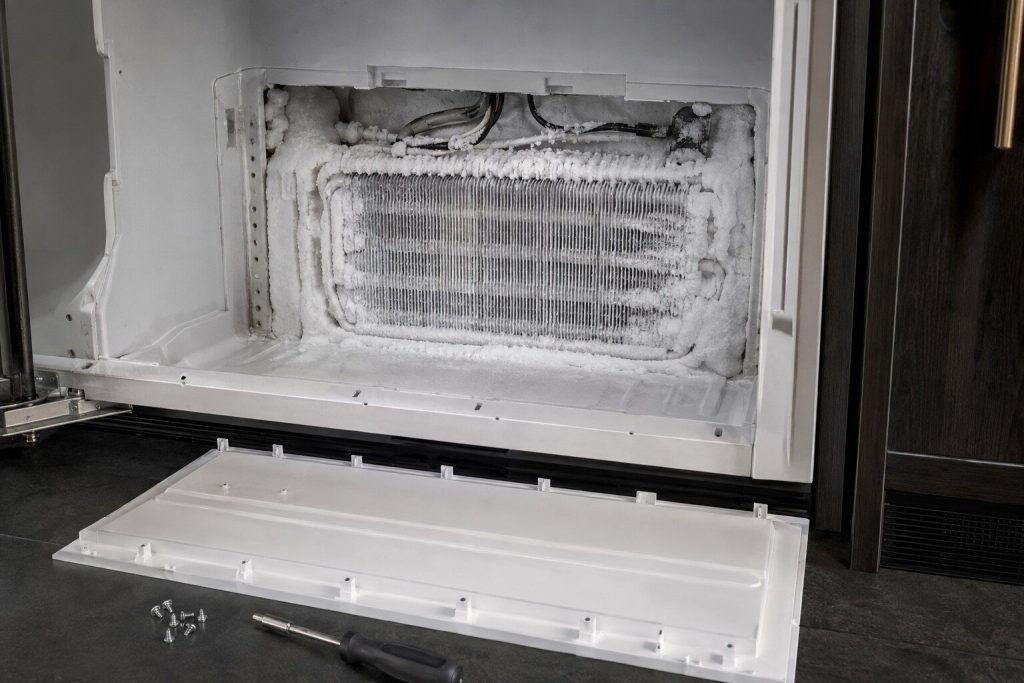
from $195 Defrost system repair
Frost that keeps coming back is not a cleaning problem. It is a defrost cycle that is no longer completing, and in a climate where every door opening adds moisture, a cabinet whose defrost circuit has quit fills with ice quickly and then warms up while running constantly.
- Heater, sensor and control tested individually
- The evaporator seen, not guessed at
- The door checked, because half of these start there
Not sure which you have
Two tall doors can be one appliance or two
It is the single most useful thing to establish before you call. Monogram builds built-in side-by-side cabinets and it builds integrated columns that are installed in pairs, and from the front of a finished kitchen they look the same. One is a single machine. The other is two complete refrigerators sharing an opening and a pair of matched panels, with two model plates, two compressors and two sets of parts. Look for two plates.
Before you call
Questions we are asked about the work
Do you repair every appliance on this page?
Yes, including the hearth oven and the Advantium speed ovens, and we will be straight with you about parts availability on the rarer ones before you commit to a repair.
Why is there no washer or dryer page?
Because Monogram does not make one. The manufacturer's catalog has no laundry in it at all, and a repair company advertising Monogram laundry would be telling you something untrue before it arrived.
What is the difference between a cooktop and a rangetop?
A cooktop drops into a counter with cabinetry underneath. A rangetop is a professional appliance with a finished front and its controls on that front, usually sitting over a wall oven. Same burners, very different access, and it changes the visit.
Is a beverage center just a small refrigerator?
Mechanically it is close. In practice it is opened dozens of times a day, it usually lives in a bar rather than in the conditioned part of the house, and it breathes through a grille a few inches tall — so most of what goes wrong with it is about air rather than about refrigeration.
In more detail
What Monogram builds, and how that decides the repair
Refrigeration that does not come out
Built-in side-by-sides from 36 to 48 inches, integrated columns in 18, 24, 30 and 36, bottom-freezer and French-door cabinets designed to sit flush, and undercounter and drawer units for the island. Most of it is panel-ready. All of it is served from the front, and the pairing of two columns is the thing most often misunderstood on a service call.
Cooking that is professional by default
There is no ordinary Monogram range. The line is 30, 36 and 48-inch professional ranges in dual-fuel, all-gas and induction, with griddles and grills on the wider models — and each of those sections is its own repair. Above them: Statement and Minimalist wall ovens, French-door ovens, in-oven cameras, warming drawers, and the Advantium 5-in-1, which exists in two versions that are different appliances underneath.
And the things that have no code table
Wine cabinets, beverage centers, standalone ice makers, warming drawers, ventilation and the hearth oven publish no codes at all. On those appliances what they are doing is the whole diagnosis, which is why the symptom pages on this site carry more weight than they do on most.
The model number, and a sentence about what it is doing.
Add a photograph of anything on the display. That is usually enough for us to name the likely part and the band it falls in before anybody leaves the house.
This article is based on:
- Official manufacturer documentation
- Internal repair procedures
- Technician repair history
- Company quality standards