Appliance
Monogram hearth ovens
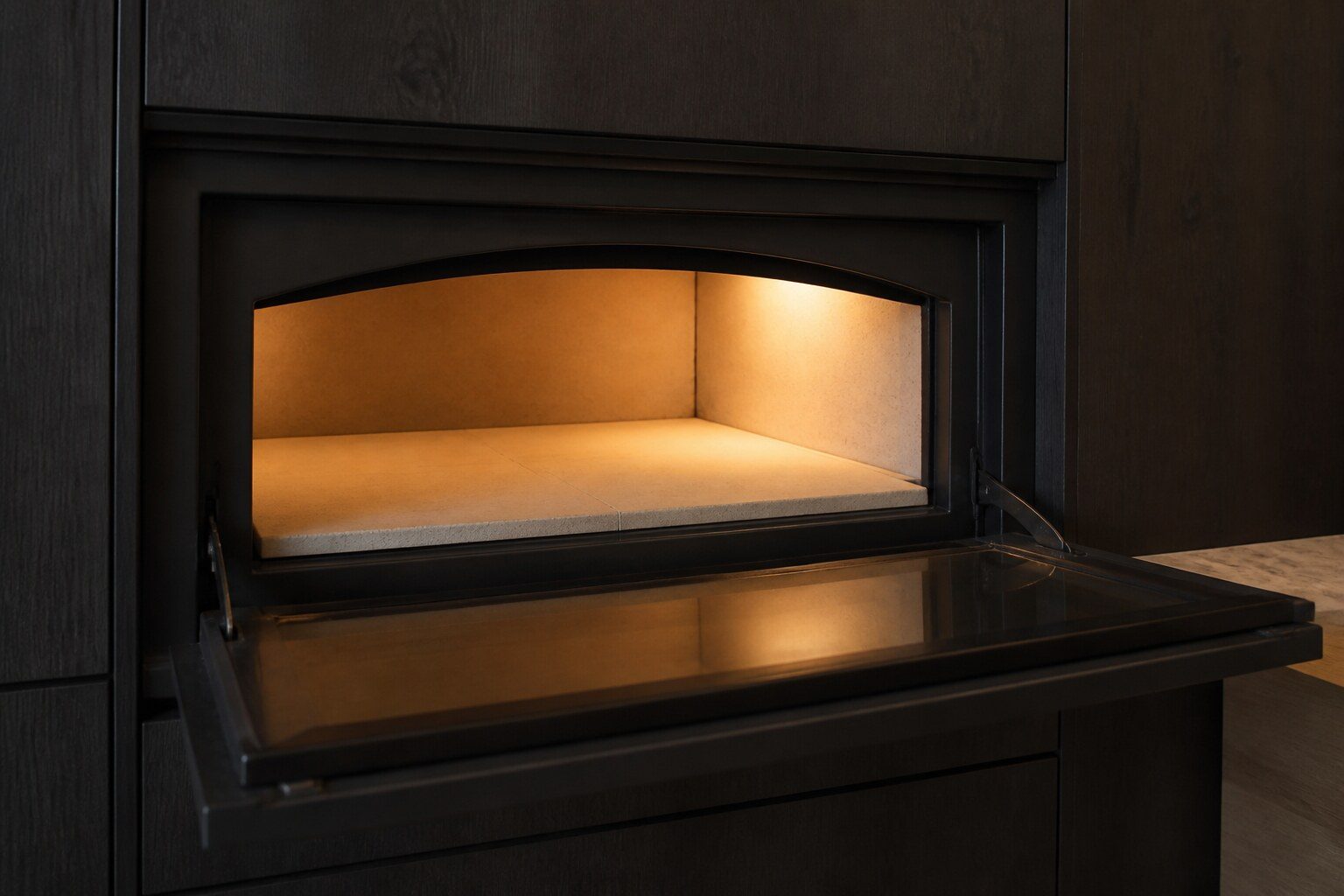
The newest and rarest appliance in a Monogram kitchen: a 30-inch indoor hearth oven with a stone floor, built to reach the temperatures a pizza actually needs. Very few technicians in South Florida have opened one. It is a high-heat appliance in a cabinet run, and the things that go wrong with it are the things that go wrong when heat and electronics live close together.
- 1 symptoms we are called out to
- From $95 diagnostic, credited to the repair
- 59 cities and neighborhoods covered
- OEM parts available on order
The short version
What this equipment is, for a repair
Configurations
30-inch indoor hearth oven · stone floor, high heat
Access
Planned before the visit, not discovered on arrival
Parts
OEM, available on order
Diagnostic
From $95, credited to the repair
What goes wrong with it
Symptoms we are called out to on Monogram hearth ovens
Each one covers the likely causes in the order they are worth checking, and what to do in five minutes before booking anything.
-
A high-heat oven that has stopped getting hot Hearth oven not reaching temperature
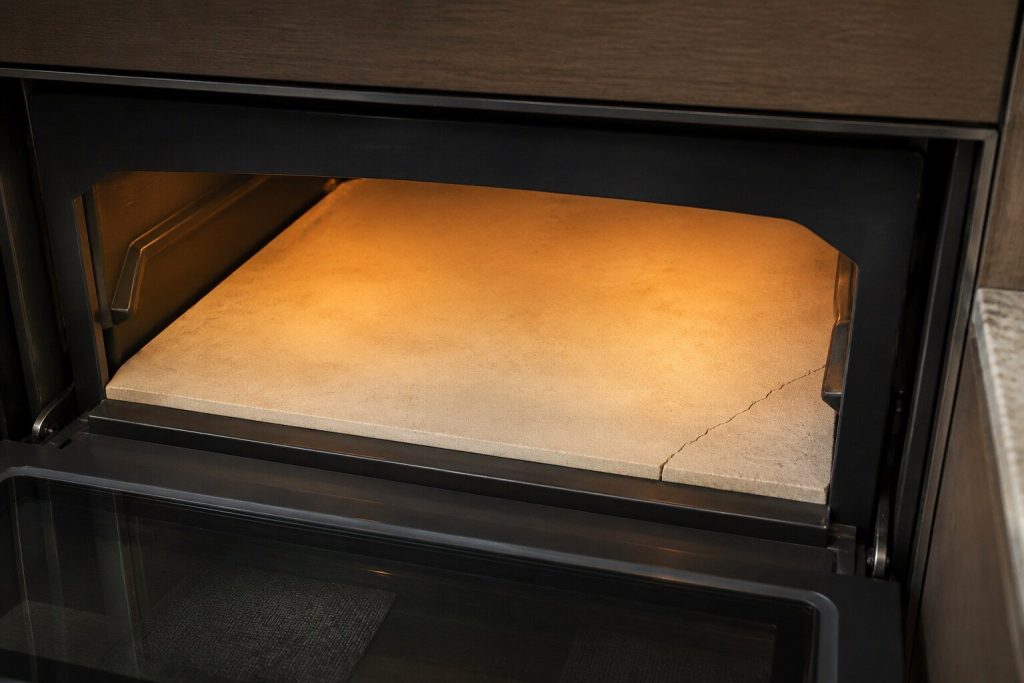
The hearth oven runs at temperatures nothing else in the kitchen sees, and when it stops reaching them the causes are the ones high heat produces: seals that have hardened, elements that have failed partially, and sensing that has drifted. There is no published code table for this appliance, so what it is doing is the whole diagnosis.
- No code table exists for this appliance
- A small loss of sealing costs a lot at these temperatures
- Slow to temperature and never reaching it are different
What we do on it
Repairs we carry out on Monogram hearth ovens
Starting figures for this equipment in South Florida. The exact cost is confirmed after an on-site diagnostic — and this is not the whole list of what can go wrong, so call if your problem is not here.
-
from $95 Diagnostic visit
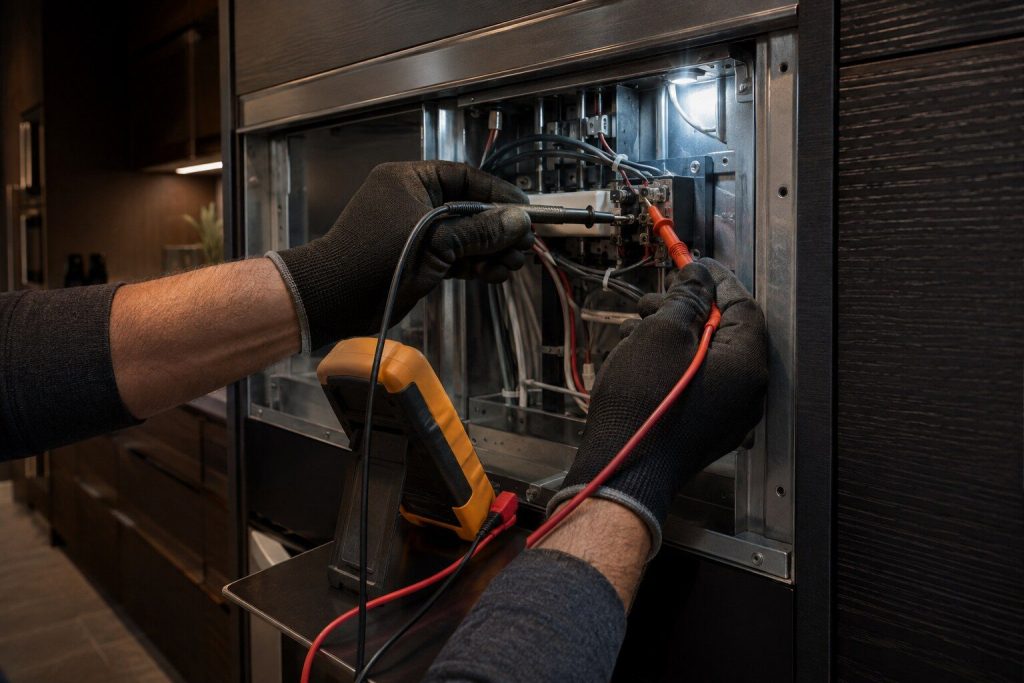
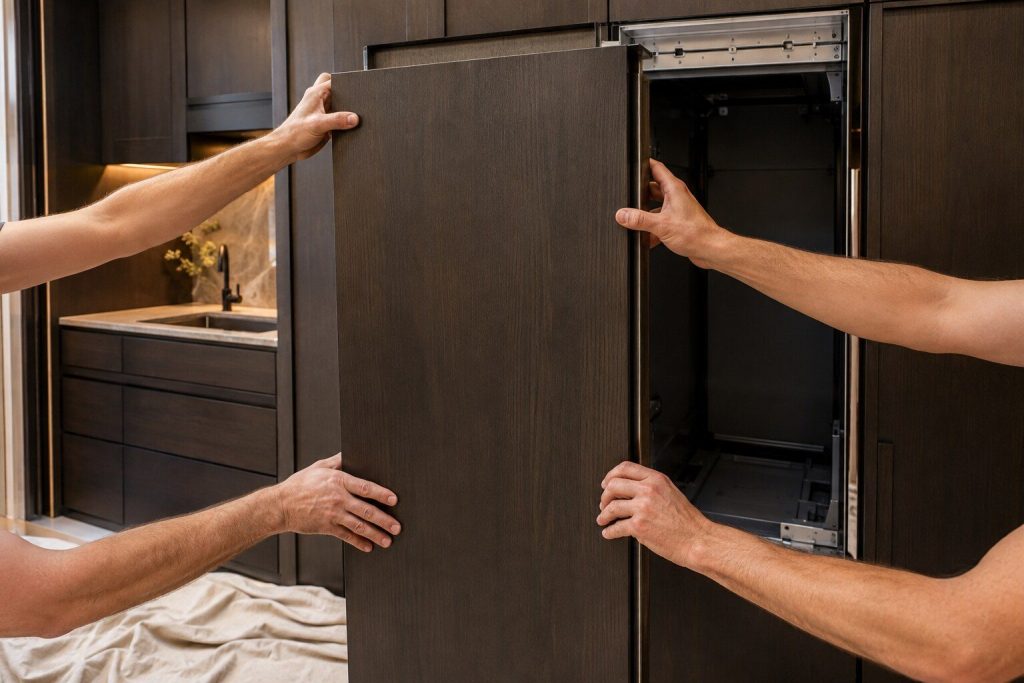
Nothing is named until something has been measured. On built-in appliances the visit also has to plan its own access before it starts: a column comes out from the front, a panel-ready door comes apart in an order, and a wall oven that has to move needs two people and a plan. We do that thinking before we arrive rather than in your kitchen.
- The model number first, because it decides the access
- What the appliance reports, read against the published table
- Credited toward the repair when you go ahead
-
from $145 Appliance maintenance
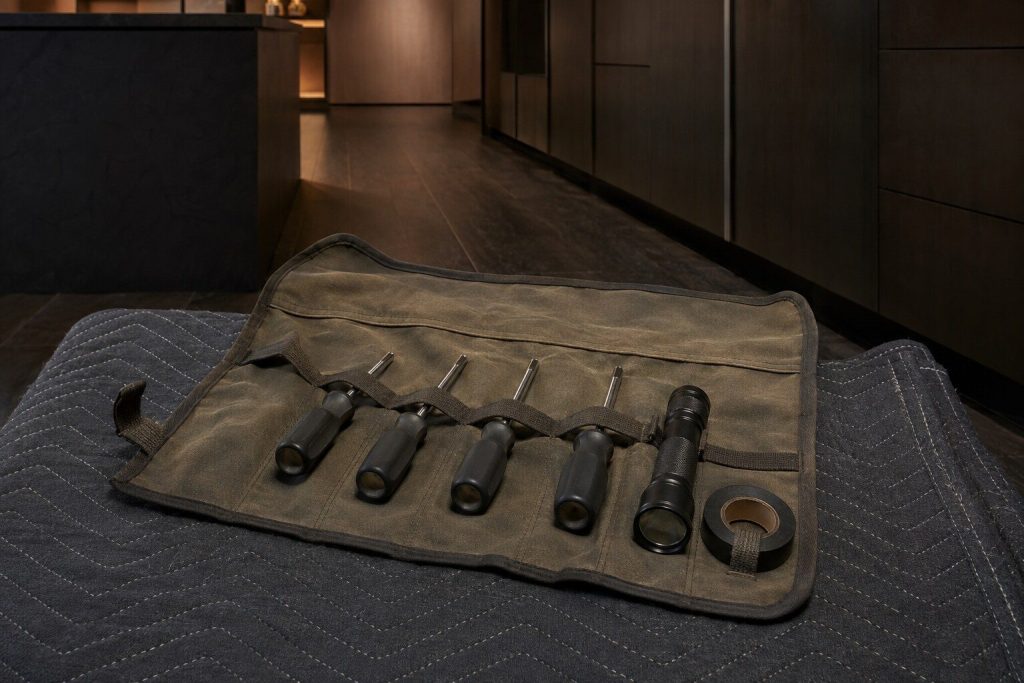
The visit that exists to stop the other visits. On built-in appliances in a salt-air climate the two things that shorten life are both invisible: a condenser that has silted up behind its grille, and door seals that have quietly stopped sealing. Neither shows on a display. Both are cheap to deal with and expensive to ignore.
- Condensers cleaned and airflow checked
- Seals, hinges and panel alignment across the kitchen
- Filters, drains and water circuits attended to
-
from $175 Appliance installation
Built-in appliances are installed once and lived with for twenty years, and most of the long-term problems we are called to were decided on installation day: a clearance that was shaved, a drain that has no fall, a hood ducted through one elbow too many. Getting it right the first time is cheaper than any of the repairs it prevents.
- Clearances and ventilation to the specification, not to the opening
- Water, gas and drain connections tested under pressure
- Panels hung and doors set level with the run
-
from $245 Hearth oven service
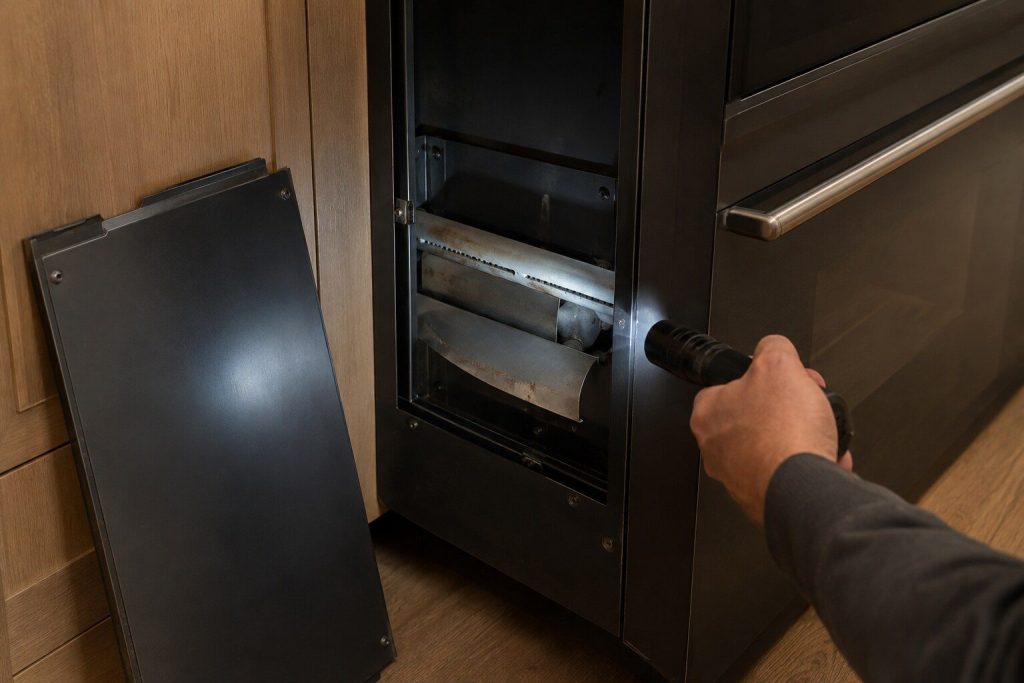
A 30-inch indoor oven with a stone floor that runs at temperatures no other appliance in the kitchen sees. That single fact drives everything: seals harden, elements and their wiring take punishment, sensing drifts, and the stone cracks under thermal shock. Parts for a low-volume appliance also take longer to arrive, and we say so before the repair rather than after.
- High-heat cycling is the cause of most of it
- A cracked stone is a part, not a failure
- Parts availability discussed before you commit
In more detail
About Monogram hearth ovens
A high-heat appliance in a kitchen cabinet
Monogram's hearth oven is a 30-inch indoor oven with a stone floor, designed to run at the temperatures that make a pizza a pizza rather than a flatbread. That single fact drives everything about servicing it. Heat that high, cycled repeatedly, is hard on door seals, on elements, on the wiring near them and on any electronics that share the cabinet. The appliance is built for it; the wear is real anyway.
What we see, and what we expect to see
This is a recent appliance and the installed base in South Florida is small, so honesty about experience matters more than a confident list. What the physics predicts, and what high-heat ovens of every kind do: seals harden and stop sealing, elements fail or fail partially and leave one side cooler, temperature sensing drifts, and the stone cracks under thermal shock. Parts for a low-volume appliance take longer to arrive than parts for a dishwasher, and we will say so before you commit to a repair rather than after.
The things an owner can do
Let the stone come up to temperature with the oven rather than putting anything cold or wet on a hot one. Keep the door seal clean, because burnt-on residue is what stops it sealing. And do not use water on a hot stone, ever — that is the single most common way a hearth stone is destroyed, in a restaurant or a house.
Before you book
Model number, whether the complaint is temperature, the stone, the door or the controls, and how the oven is used — a hearth oven run twice a week and one run every night are different appliances by year three.
This article is based on:
- Official manufacturer documentation
- Internal repair procedures
- Technician repair history
- Company quality standards
Before you book
Questions about Monogram hearth ovens
The stone has cracked. Is the oven finished?
No. A hearth stone is a consumable in the way a shelf is not — it takes enormous thermal cycling, and a crack after some years of hard use is wear rather than a problem in the appliance. It is also the one thing on this oven most likely to be damaged by the cook: a cold stone hit with a wet dough or a splash of liquid at full temperature can crack in one go. Replacing it is straightforward. What we would check at the same time is whether anything caused the crack — an element running hot on one side, for example.
It will not reach the temperature it used to.
On a high-heat oven that is usually the elements or the control that manages them, and occasionally the door seal. These ovens work at temperatures where a small loss of sealing costs a lot of performance — much more than the same leak would cost a conventional oven at baking temperature. It is worth measuring rather than guessing: an oven that reaches temperature slowly and one that never reaches it are different problems.
Will you actually work on one of these?
Yes, and we will also tell you honestly when a part has to come from the manufacturer and what that means for the timeline. This is a new appliance with a small installed base, so parts availability is a real part of the conversation rather than a formality. We would rather set that expectation on the phone than discover it after the diagnostic.
Where we do it
Across Miami-Dade, Broward, and Palm Beach
Same terms everywhere we go: an on-site diagnostic first, the price agreed in writing, and the exact figure confirmed once we have seen the unit.
Neighborhoods people ask for by name