Appliance
Monogram beverage centers
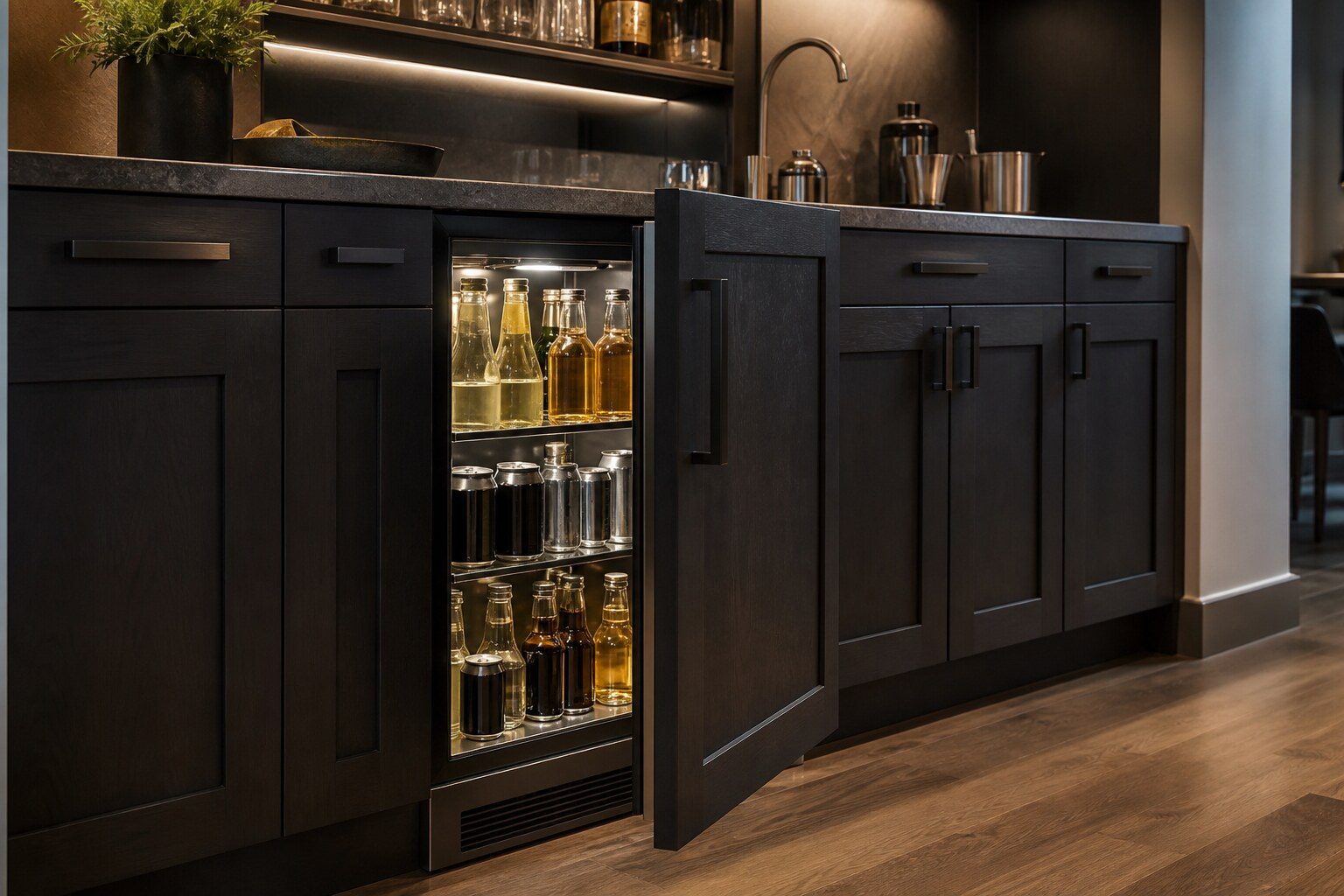
The undercounter appliance that works hardest and gets thought about least. A beverage center in a South Florida house is opened dozens of times a day, often sits in a bar or a covered outdoor kitchen rather than in the conditioned part of the house, and is expected to hold temperature through all of it. Monogram builds these as 24-inch panel-ready units, some with an ice maker inside.
- 5 symptoms we are called out to
- From $95 diagnostic, credited to the repair
- 59 cities and neighborhoods covered
- OEM parts available on order
The short version
What this equipment is, for a repair
Configurations
24-inch panel-ready beverage centers · bar refrigerators with ice makers
Access
Planned before the visit, not discovered on arrival
Parts
OEM, available on order
Diagnostic
From $95, credited to the repair
What goes wrong with it
Symptoms we are called out to on Monogram beverage centers
Each one covers the likely causes in the order they are worth checking, and what to do in five minutes before booking anything.
-
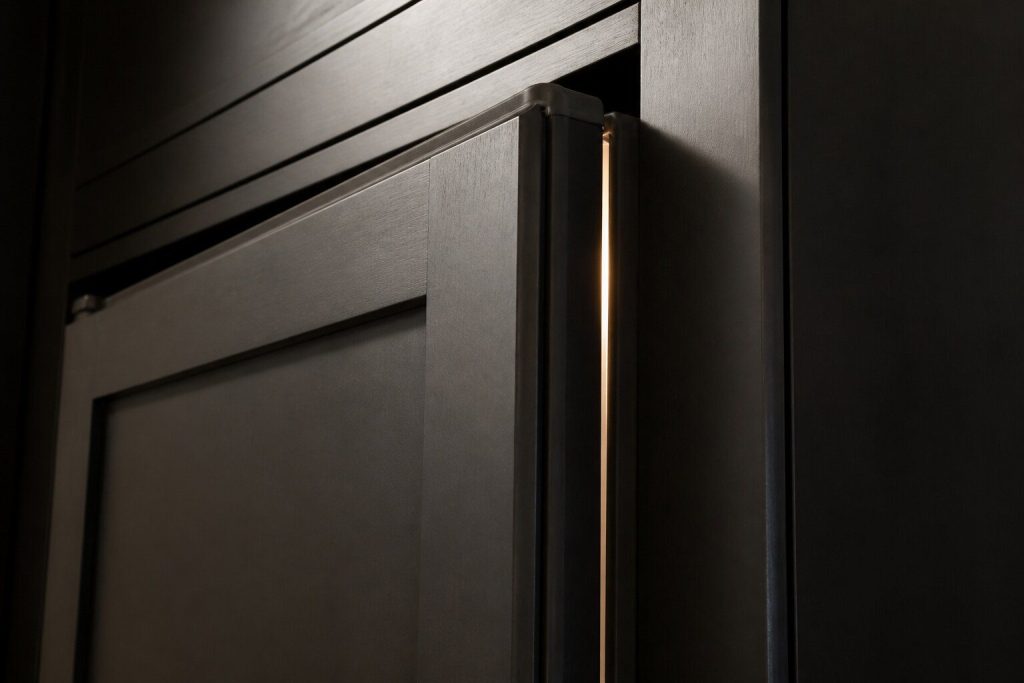
A line of light, a panel out of true, a gasket that has given up Refrigerator door not sealing
The problem that almost nobody calls about and that causes several of the problems people do call about. On integrated cabinetry the door carries a custom panel on hinges shimmed for its weight, and doors settle. What you see is a line that no longer matches the run; what the appliance sees is humid air, all day, every day.
- A dropped door is behind many defrost calls
- Panels changed in a remodel are a common cause
- The paper test settles it in two minutes
-
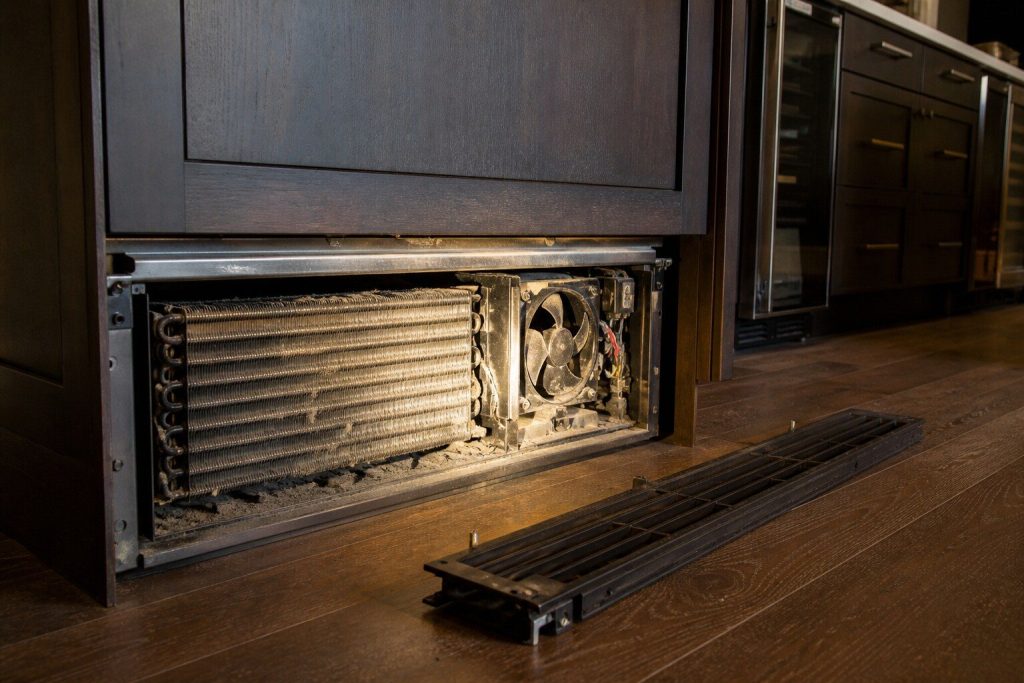
New sounds from a cabinet that used to be quiet Refrigerator making noise
Built-in refrigeration is designed to be unobtrusive, so a sound that is new is worth investigating even when the cabinet is still cold. Most of these are fans and mountings — inexpensive on their own, and cheaper before they take something else with them.
- A new sound usually names its own part
- Fans and mountings before compressors
- On wine cabinets, vibration reaches the bottles
-
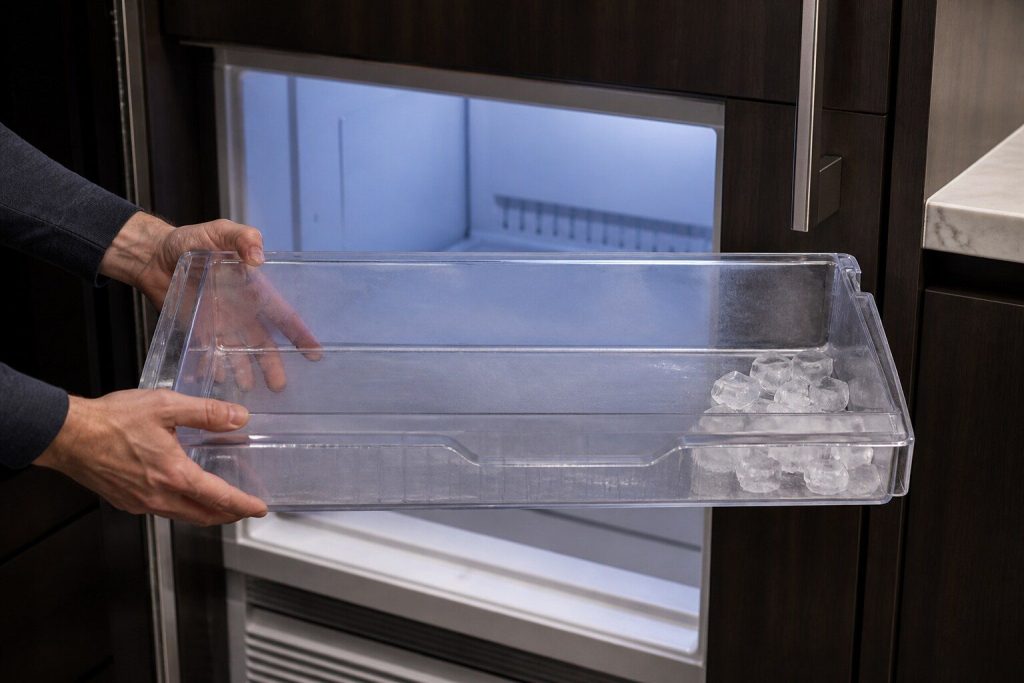
The bin is empty and nothing is happening Ice maker not making ice
An ice maker that has stopped completely. Half of these are not ice maker problems at all — production is a function of how cold the host cabinet is, and a module fitted into a cabinet that has drifted warm makes exactly as much ice as the one it replaced.
- Check the cabinet temperature first
- Then prove the water actually arrives
- CI on the display is a starting point
-
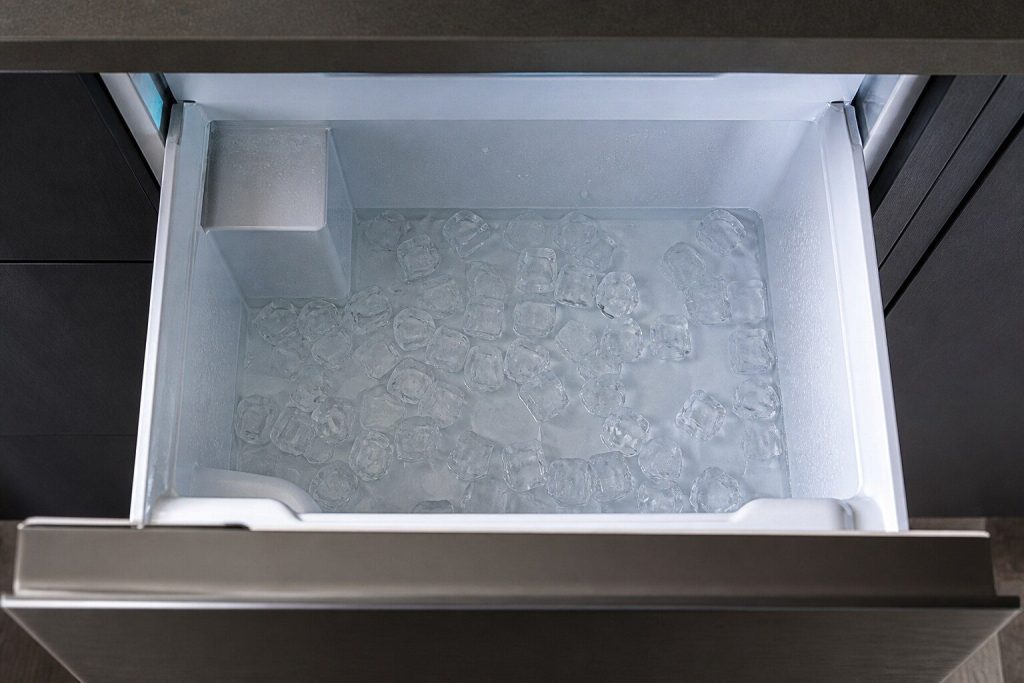
The ice is melting and not going anywhere Water standing in the ice bin
Meltwater in an ice bin is normal — a bin is not a freezer and the machine expects to drain continuously. A level that does not go down is not normal, and in a warm cabinet it becomes a smell and then a hygiene job on top of a repair.
- Some meltwater is normal, a level is not
- Gravity drains lose their fall over years
- Deal with it before it becomes a smell
-
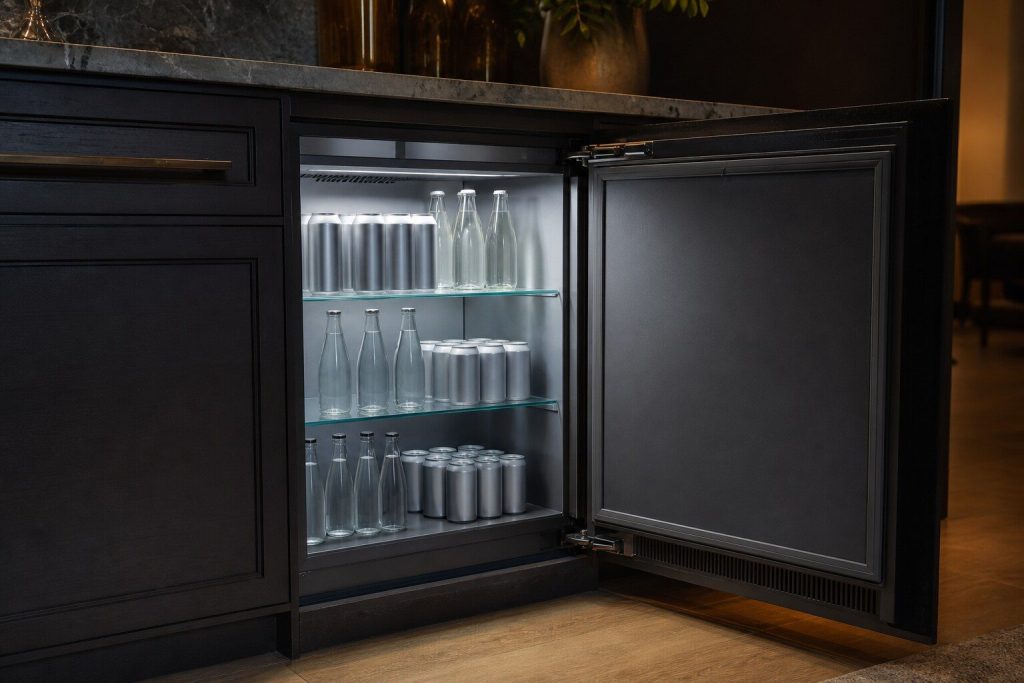
Fine overnight and struggling by the afternoon Beverage center not cold enough
The undercounter appliance that works hardest and is thought about least. It is opened dozens of times a day, it usually lives in a bar rather than in the conditioned part of the house, and it breathes through a grille a few inches tall. Most of these calls are decided by air before they are decided by parts.
- The grille is the whole ventilation system
- Ambient is a cause, not an excuse
- Cleaning and clearance fix a real share of these
What we do on it
Repairs we carry out on Monogram beverage centers
Starting figures for this equipment in South Florida. The exact cost is confirmed after an on-site diagnostic — and this is not the whole list of what can go wrong, so call if your problem is not here.
-
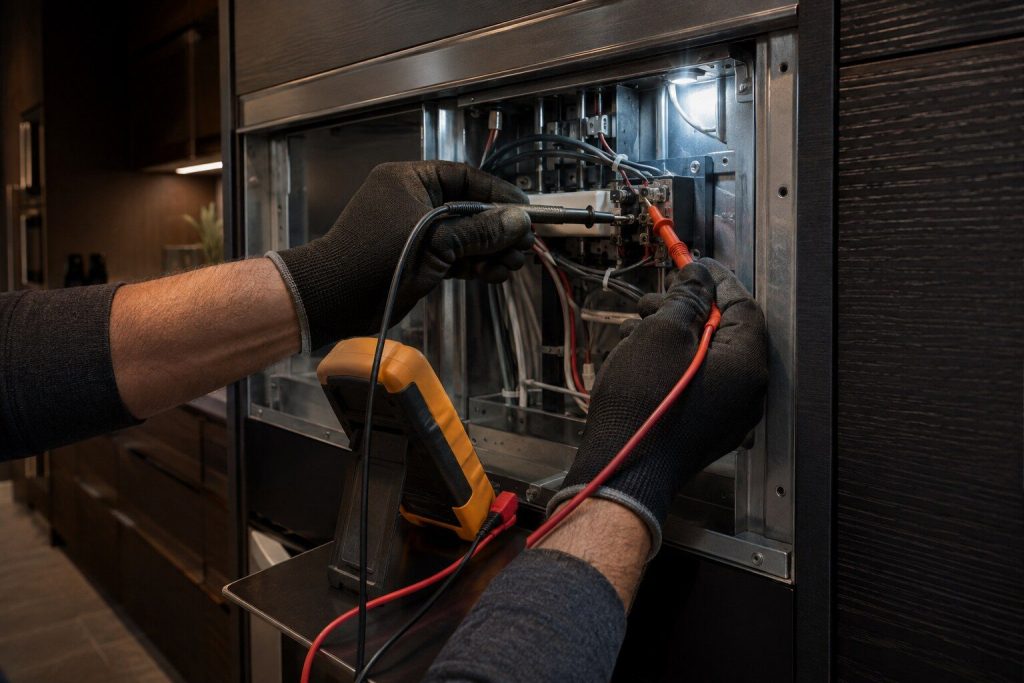
from $95 Diagnostic visit
Nothing is named until something has been measured. On built-in appliances the visit also has to plan its own access before it starts: a column comes out from the front, a panel-ready door comes apart in an order, and a wall oven that has to move needs two people and a plan. We do that thinking before we arrive rather than in your kitchen.
- The model number first, because it decides the access
- What the appliance reports, read against the published table
- Credited toward the repair when you go ahead
-
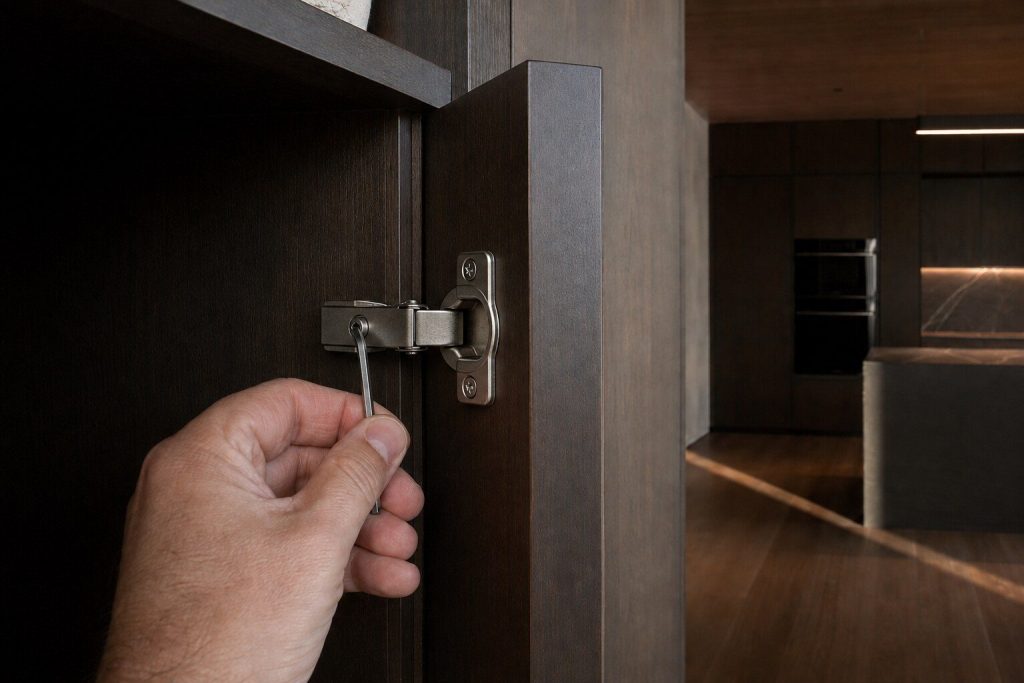
from $145 Panel alignment and door adjustment
The job that only exists on built-in kitchens, and the one owners most often wait too long to book. A custom door panel is heavy, the hinges were shimmed for it on installation day, and over years the door settles. What starts as a line of light along a cabinet becomes humid Florida air walking into a refrigerator all day, and then a defrost circuit that never catches up.
- Hinges, springs and shims set back to specification
- The seal checked along its whole length, not by eye
- Panel lines put back level with the run
-
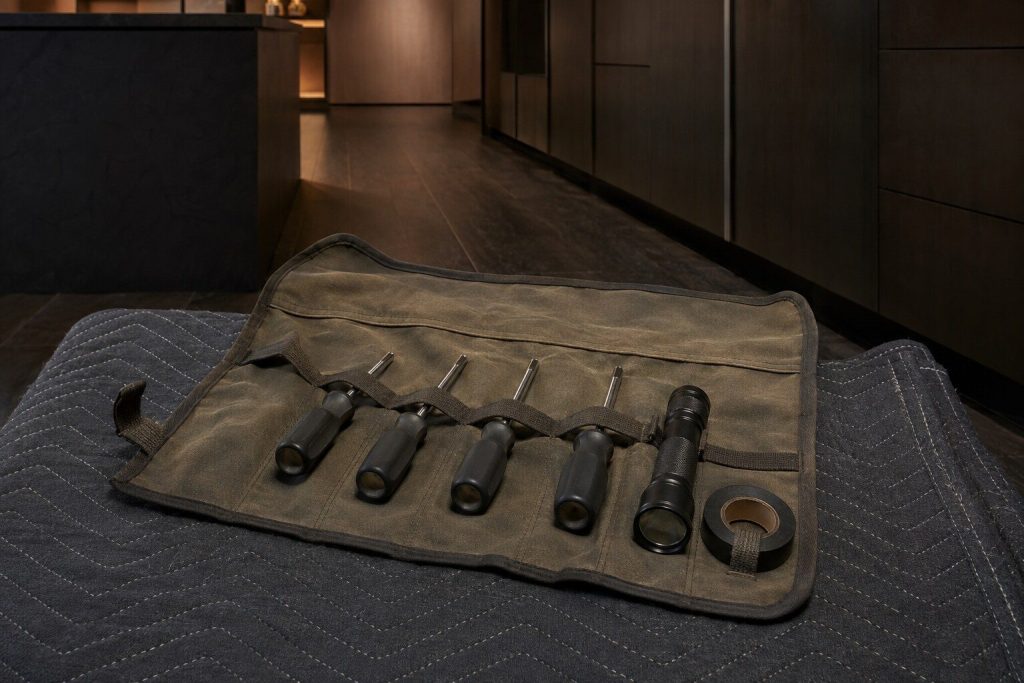
from $145 Appliance maintenance
The visit that exists to stop the other visits. On built-in appliances in a salt-air climate the two things that shorten life are both invisible: a condenser that has silted up behind its grille, and door seals that have quietly stopped sealing. Neither shows on a display. Both are cheap to deal with and expensive to ignore.
- Condensers cleaned and airflow checked
- Seals, hinges and panel alignment across the kitchen
- Filters, drains and water circuits attended to
-
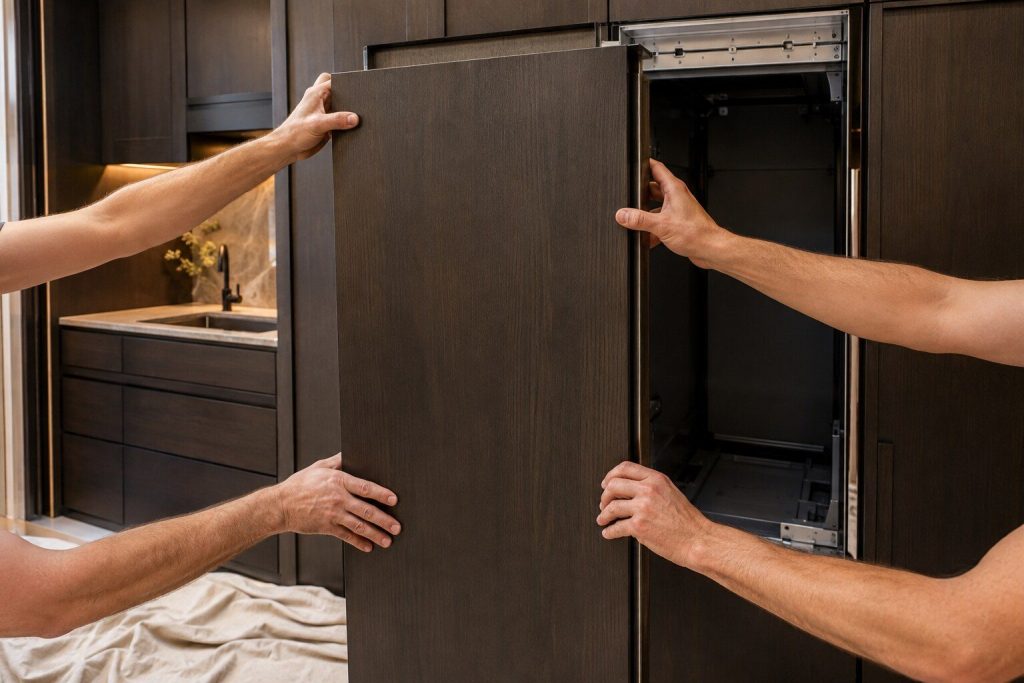
from $175 Appliance installation
Built-in appliances are installed once and lived with for twenty years, and most of the long-term problems we are called to were decided on installation day: a clearance that was shaved, a drain that has no fall, a hood ducted through one elbow too many. Getting it right the first time is cheaper than any of the repairs it prevents.
- Clearances and ventilation to the specification, not to the opening
- Water, gas and drain connections tested under pressure
- Panels hung and doors set level with the run
-
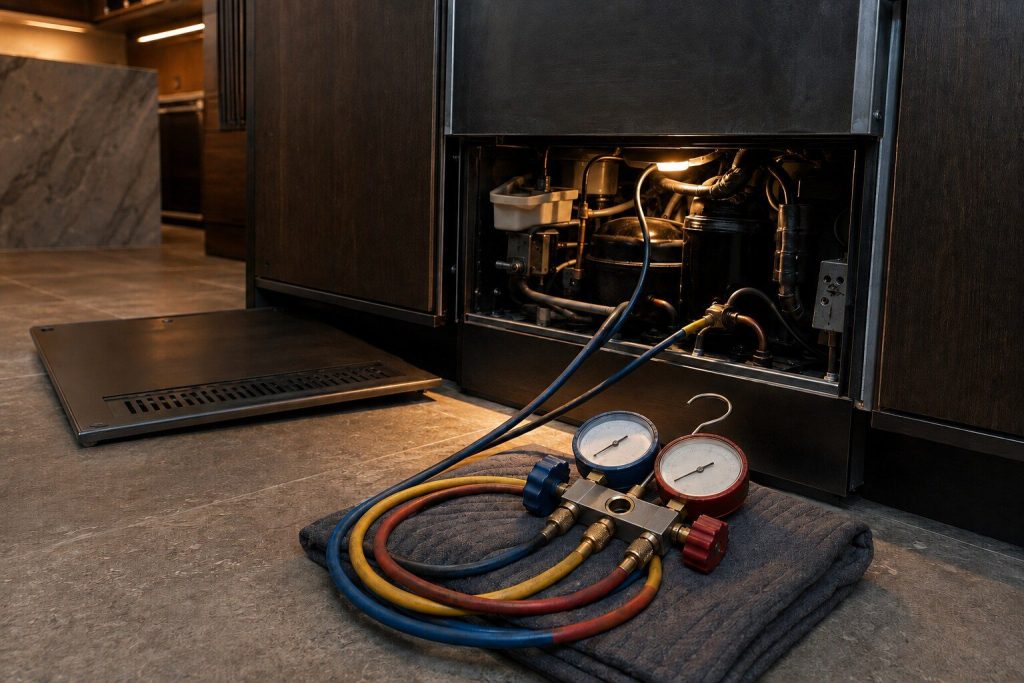
from $695 Sealed system repair
The refrigeration circuit itself — compressor, condenser, evaporator and the refrigerant between them. It is the largest repair on a cold appliance and the one most often reached for too early. On a built-in cabinet worth five figures it is usually still the right thing to do, which is not true of every make in this fleet.
- Reached by measurement, never by elimination
- Pressures and temperatures on the report
- Honest about when a cabinet is not worth it
-
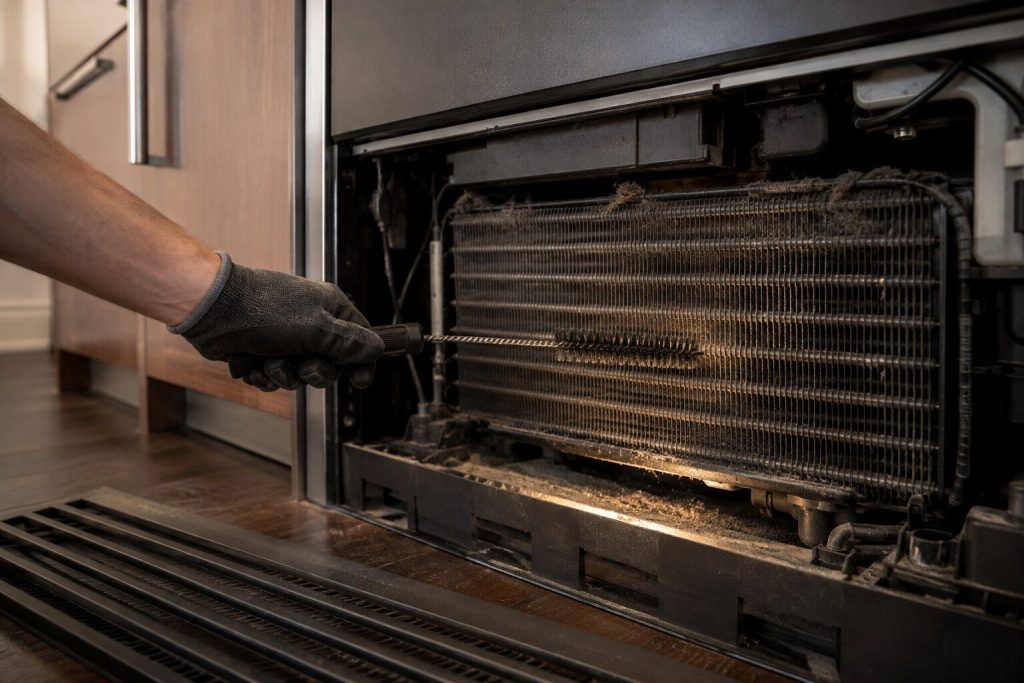
from $135 Condenser cleaning service
The cheapest service on this list and the one that prevents the most expensive one. A built-in condenser sits behind a grille in the kitchen, and in South Florida it collects salt, cooking aerosol and dust at a rate that surprises people. The appliance never complains. It just runs longer, hotter and shorter-lived.
- Coil, fan and air path on every cold appliance
- Nothing on the display ever reports this
- Directly extends compressor life
-
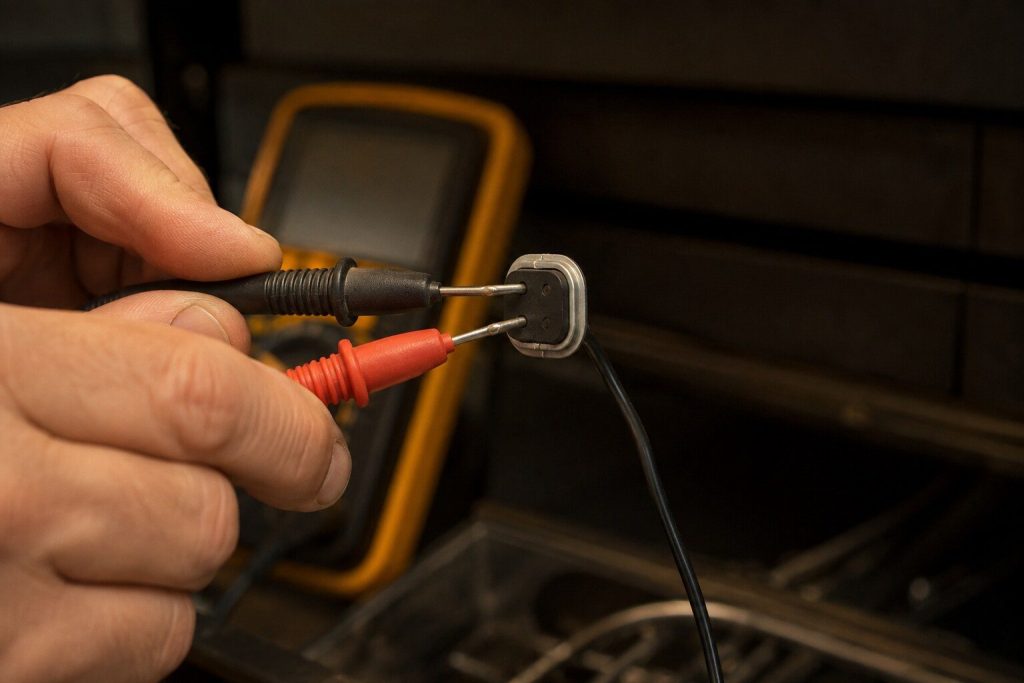
from $165 Temperature sensor replacement
A sensor is a resistor that reports temperature, and when it drifts the appliance obeys it faithfully — running a cabinet warm, an oven cold, or throwing a code that names the circuit outright. It is one of the most satisfying repairs on the list because the part is measurable: either it reads what it should at a known temperature or it does not.
- Measured against specification, not swapped on suspicion
- The wiring between sensor and control checked too
- Covers both refrigeration and cooking
-
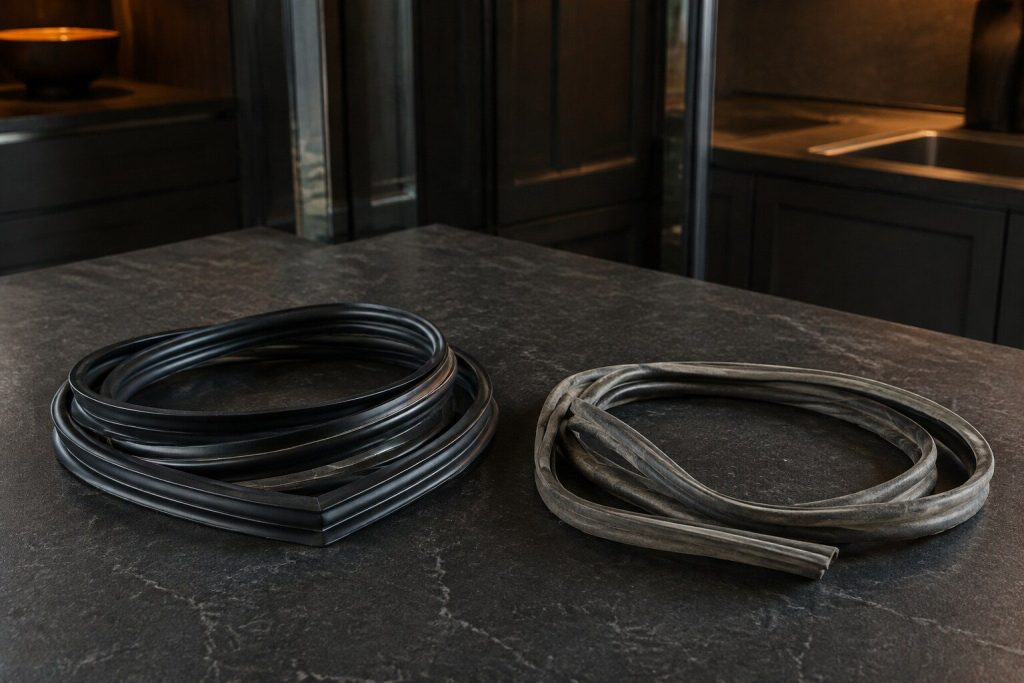
from $165 Door seal replacement
A gasket is a wear part and it fails gradually, which is why it is almost never the thing people call about. It hardens, it takes a permanent set where it has been folded, and it stops meeting the cabinet along part of its length. On a cold appliance that is a defrost problem in waiting; on an oven it is heat and money going into the room.
- Tested along the whole length, not eyeballed
- Hinge and alignment checked at the same time
- The commonest cause of a defrost circuit that never rests
-
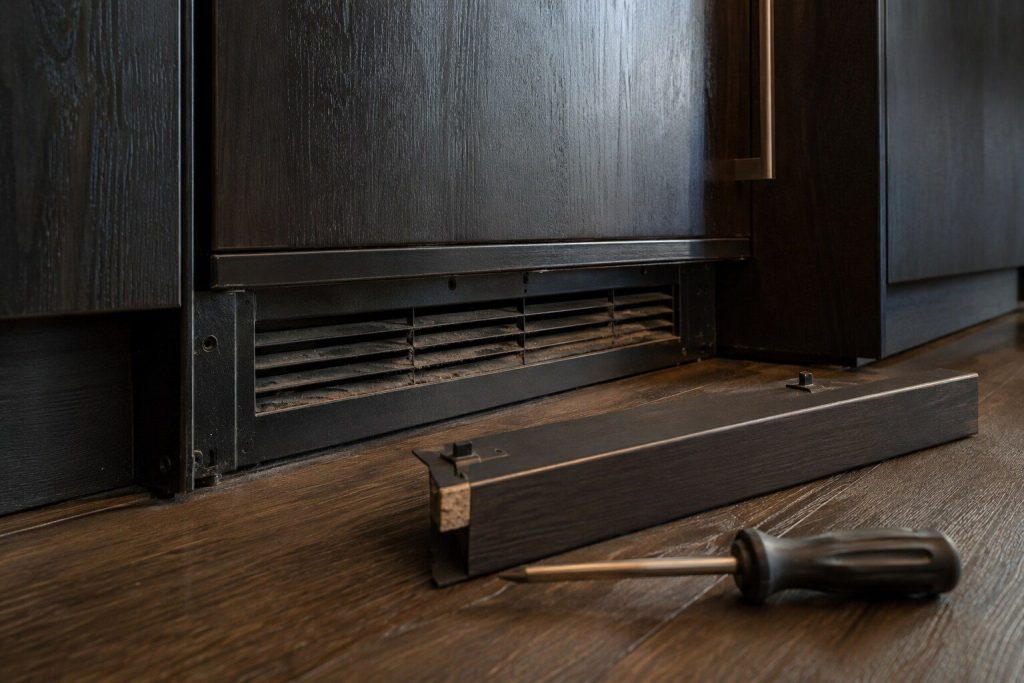
from $175 Undercounter refrigeration repair
Bar refrigerators, beverage centers, double-drawer units and undercounter cabinets share one engineering problem: they breathe through a grille a few inches tall at the bottom of a door, and they are very often installed somewhere warmer than a kitchen. Most of these calls are decided by air before they are decided by parts.
- Ventilation treated as part of the diagnosis
- Ambient temperature measured where the unit actually lives
- Drawer runners and seals on the drawer models
-
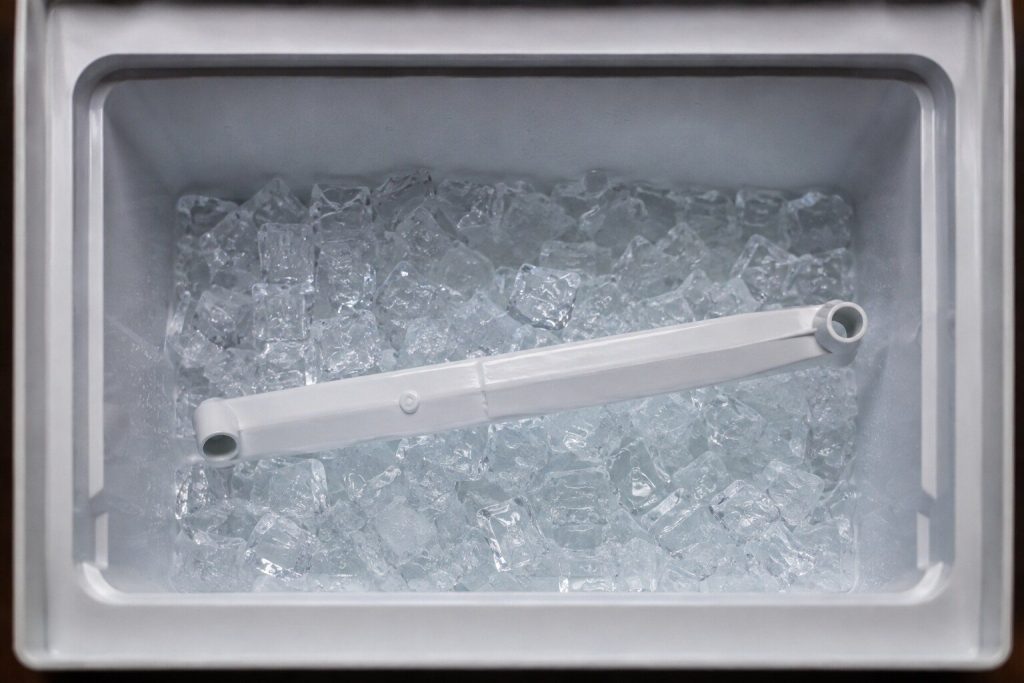
from $175 Ice maker repair
Ice makers built into a refrigerator or a bar cabinet borrow their cold from the cabinet they live in, so a good proportion of these calls are really temperature calls. The rest are water: the supply, the valve, the fill tube and the module, in that order of how often they are the answer.
- Cabinet temperature checked before the module
- The water supply proved rather than assumed
- CI on the display is a starting point, not a diagnosis
-
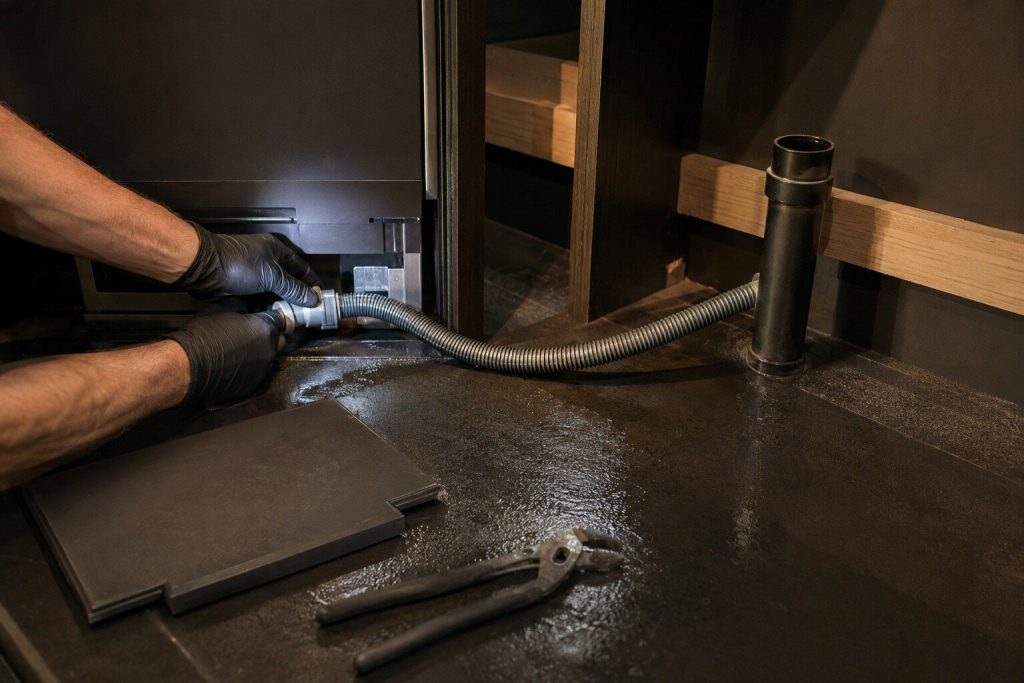
from $155 Ice maker drain and pump service
An undercounter ice machine has to get rid of meltwater, and most installations do it by gravity with a fall that was marginal on the day it was built. When the drain blocks or the pump stops, water stands in the bin — and standing water in a warm cabinet turns into a smell and then a hygiene job on top of a repair.
- Drain line, fall and pump all checked
- The commonest undercounter finding in this climate
- Deal with it before it becomes a smell
In more detail
About Monogram beverage centers
The hardest-working refrigeration in the house
A beverage center is opened more often than a refrigerator and given less thought than any appliance in the kitchen. Monogram builds them as 24-inch panel-ready undercounter cabinets, and in some versions with an ice maker inside — which makes one cabinet into two machines that can fail independently. They are installed in islands, in butler's pantries, and very often in bar areas that are only air-conditioned when somebody is standing in them.
Why so many of these calls are really about air
Undercounter refrigeration takes its air in and pushes it out through a grille a few inches tall at the bottom of the door. That is the whole ventilation system. If a cabinetmaker has run a plinth across it, if the grille has filled with dust and pet hair, or if the space it is drawing from is a warm bar rather than a cool kitchen, the machine loses the temperature margin it was designed with. The symptom is a cabinet that copes overnight and gives up in the afternoon — and the fix is often cleaning and clearance rather than parts.
Ice, when there is ice
Bar refrigerators with an ice maker inside bring their own short list: the water supply, the inlet valve, the fill tube and the module. On local water, mineral is the usual villain and the supply valve is the usual place it wins. When a unit cools perfectly and makes no ice, the refrigeration is not the problem, and telling us that on the phone changes what the technician brings.
Before you book
Model number, where the cabinet is installed, whether that room is cooled all day, and whether the complaint is temperature, ice or noise. On this appliance the installation is half the diagnosis.
This article is based on:
- Official manufacturer documentation
- Internal repair procedures
- Technician repair history
- Company quality standards
Before you book
Questions about Monogram beverage centers
It struggles in the afternoon and is fine at night.
That is the classic ambient complaint and it is a real problem, not something to live with. An undercounter cabinet vents through a narrow grille at the bottom of the door, and if the air in front of that grille is already warm — a bar that catches the afternoon sun, an island with the dishwasher running beside it, a covered terrace — the machine loses the margin it needs. Sometimes the answer is a clean condenser and a clear grille, which restores the margin. Sometimes it is that the cabinet's opening has been closed in over the years by a cabinetmaker who did not know it needed to breathe.
The ice maker in my bar refrigerator has stopped and the cooling is fine.
Then you have two appliances in one cabinet and only one of them is unwell. On these units ice production depends on the water supply, the fill valve and the module, and any of the three can quit while the refrigeration carries on perfectly. Start with the supply: a saddle valve that has silted closed on Miami water is the single most common cause we find, and it costs nothing to rule out before booking anything.
Can these be installed outdoors?
Only if the unit is specified for it, and most indoor beverage centers are not. This matters here more than almost anywhere. An indoor-rated cabinet installed in an outdoor kitchen will work for a season or two and then fail in ways that are not really repairs — corrosion at the condenser, control boards that have lived in salt air, a compressor that has never had a cool night. If you are planning a bar area, the rating of the cabinet is worth checking before it is built in.
Where we do it
Across Miami-Dade, Broward, and Palm Beach
Same terms everywhere we go: an on-site diagnostic first, the price agreed in writing, and the exact figure confirmed once we have seen the unit.
Neighborhoods people ask for by name