Diagnostic visit
from $95
Credited toward the repair. It opens with the model number and how the appliance is installed, because on built-in equipment the access has to be planned before the visit rather than during it.
Miami-Dade · Broward · Palm Beach
Monogram makes nothing you can roll out of the way. The refrigeration is built in or integrated, the dishwashers are fully integrated, most doors carry a panel that belongs to the kitchen rather than to the appliance, and everything is served from the front. That does not change what fails. It changes how the work has to be planned — which is why we ask for the model number and how the appliance is installed before anything else.
What we repair
Monogram is a kitchen brand and only a kitchen brand — the manufacturer's own catalog has no laundry in it at all. What it does build, it builds in four collections that differ in the front and share what is behind it: Statement, Minimalist, Designer and Professional.
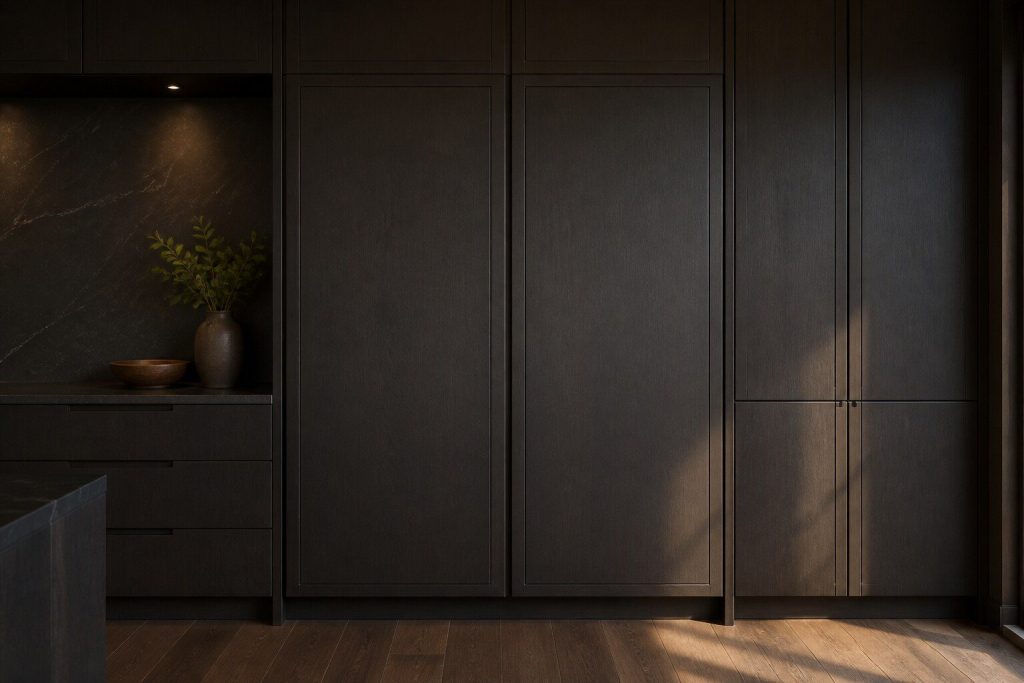
Monogram refrigeration is built in, and on this make that is not a styling word — it is what the repair has to work around. A 48-inch side-by-side is bolted into cabinetry, a column is flush with the run and carries a custom door panel, and the machinery is reached from the front because there is no behind. The failures are ordinary refrigeration failures. Getting to them, and putting the kitchen back the way the cabinetmaker left it, is the part that takes the skill.
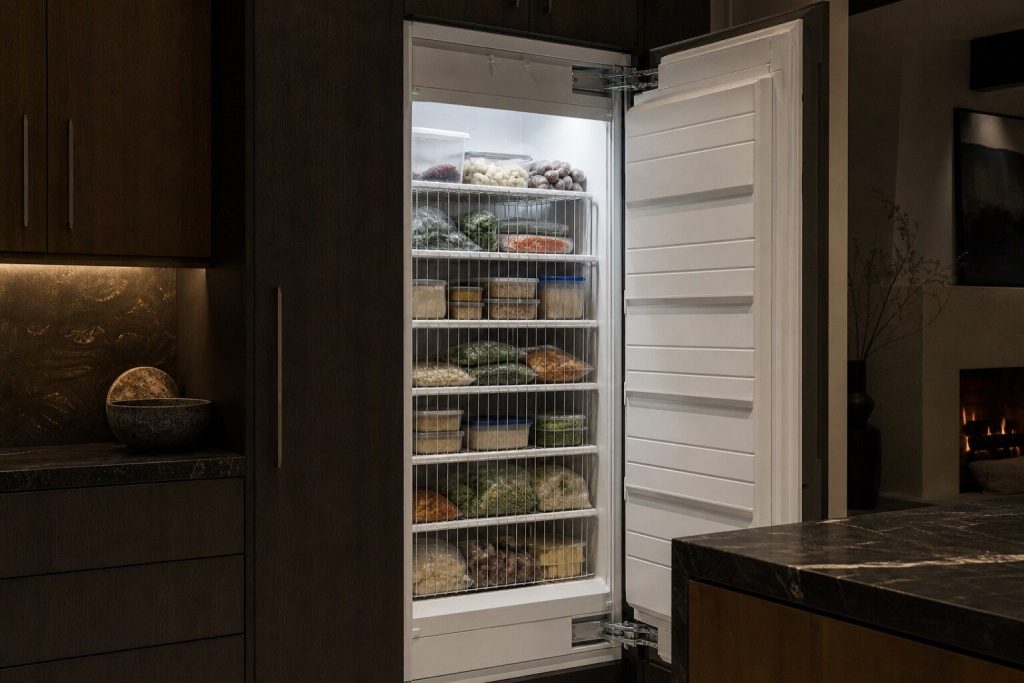
A Monogram freezer is a column: one cabinet, one temperature, flush with the cabinetry and usually standing beside a refrigerator column that looks identical from the front. That pairing is where most calls start, because when one of the two stops behaving the other is still perfect, and the two cabinets have separate machinery, separate sensors and separate problems.
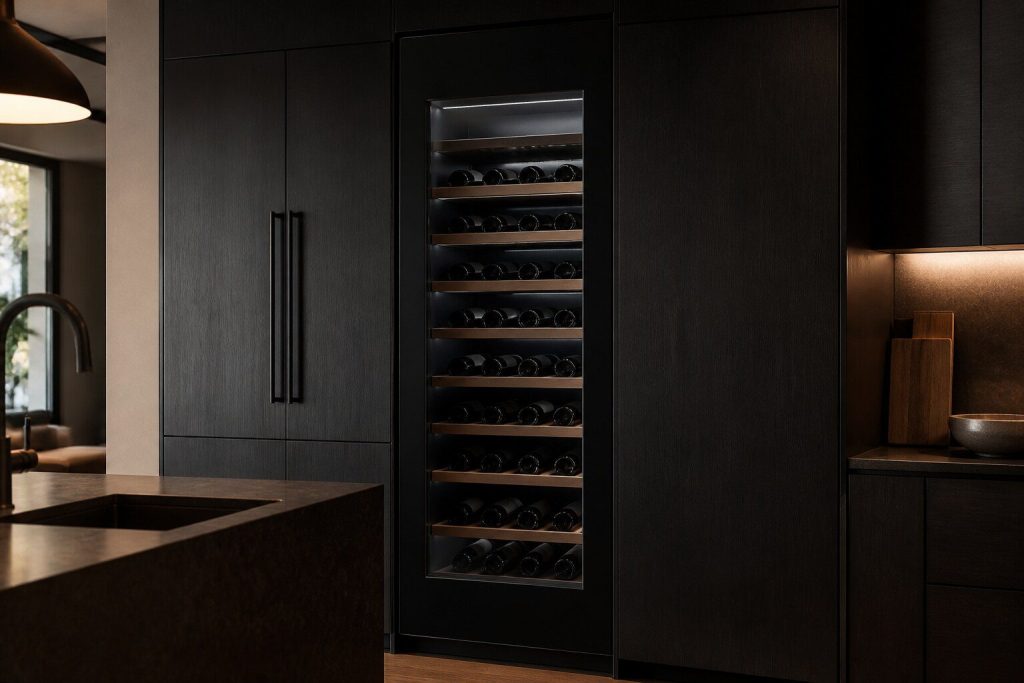
Wine storage is the appliance where a small problem is an expensive one, because the damage happens to the contents rather than to the machine. A cabinet that has drifted four degrees or lost its humidity will look and sound completely normal for months. Monogram's wine storage runs from a 24-inch panel-ready reserve up to a 30-inch fully-integrated sommelier cabinet, and all of it is built in.
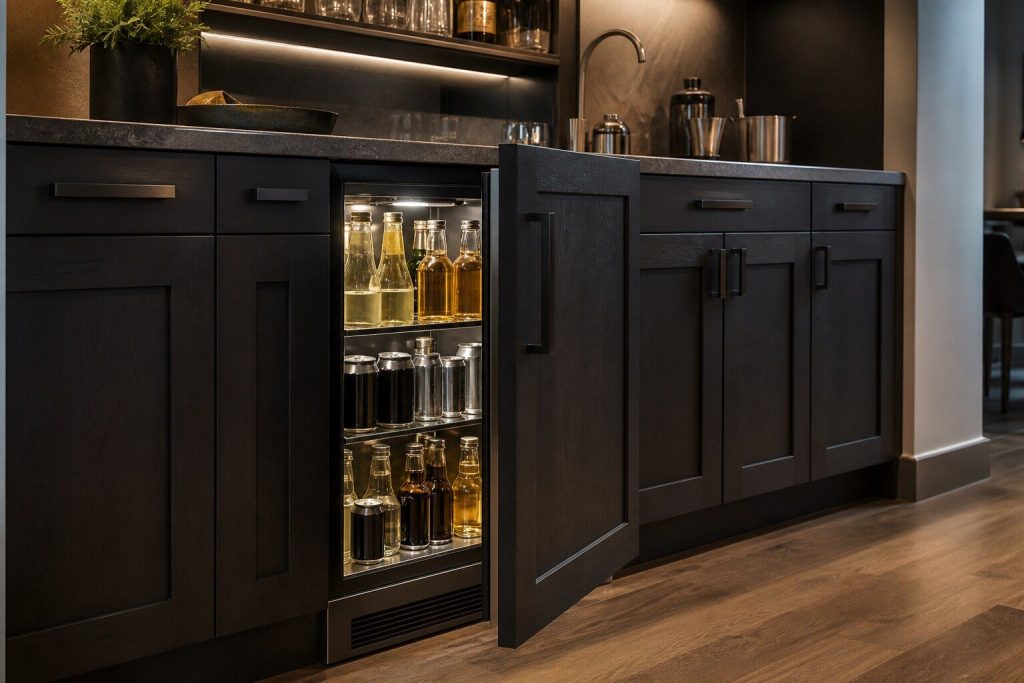
The undercounter appliance that works hardest and gets thought about least. A beverage center in a South Florida house is opened dozens of times a day, often sits in a bar or a covered outdoor kitchen rather than in the conditioned part of the house, and is expected to hold temperature through all of it. Monogram builds these as 24-inch panel-ready units, some with an ice maker inside.
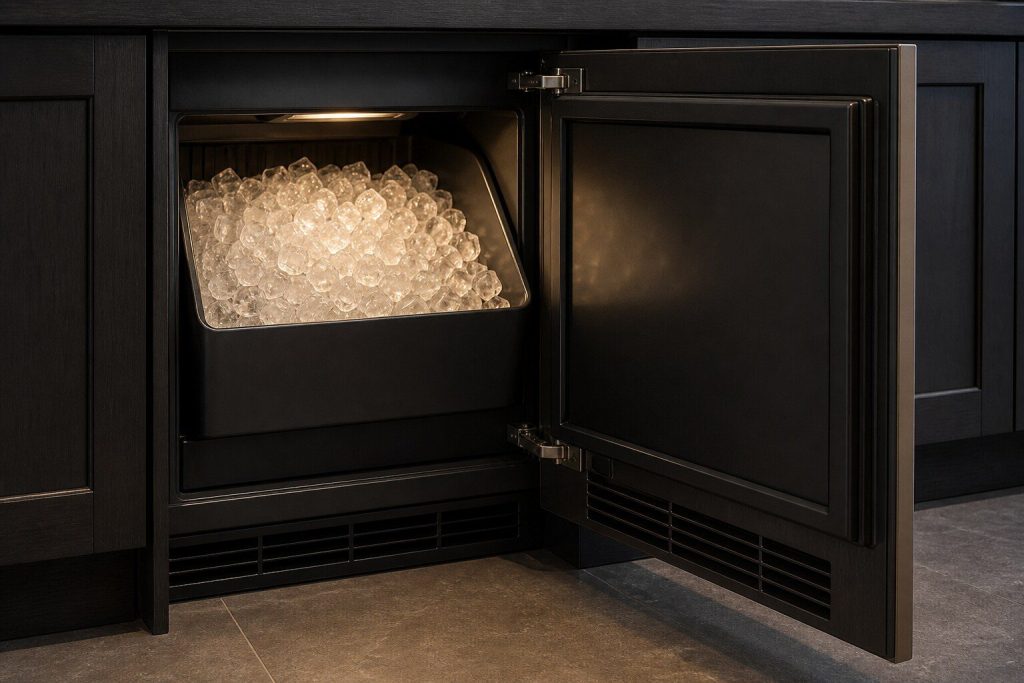
A dedicated ice maker is a small refrigeration plant with a water circuit running through it, and in Miami the water circuit is what fails. Monogram kitchens take 15-inch undercounter units — clear ice and nugget ice — alongside the ice makers built into refrigerators and bar cabinets, and the two kinds fail in completely different ways.
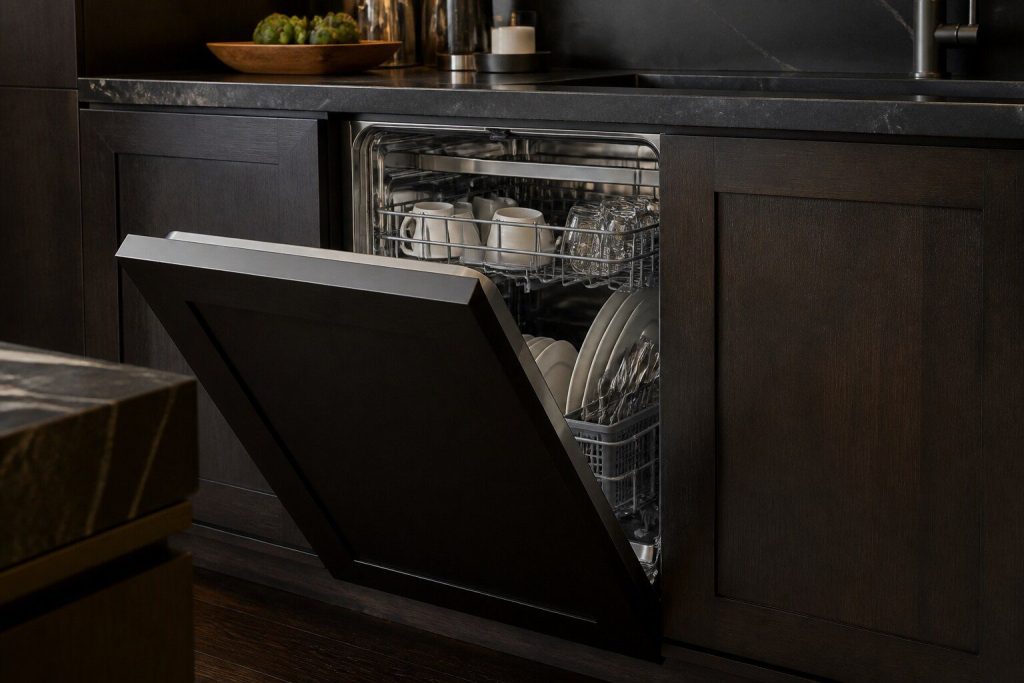
Monogram's dishwasher line is short and consistent: 24-inch fully integrated machines, panel-ready or stainless, with the controls hidden on the top edge of the door. That hidden control panel is the reason most owners never see the code their machine is showing — it is displayed while the door is open, which is exactly when nobody is looking.
South Florida
Read the appliance before the characters
Monogram runs on GE Appliances' control platform, and Monogram's own support routes owners to that company's answer base and to Bodewell, their service brand. That is the manufacturer's documentation for a Monogram appliance and it is where all 65 entries here come from — sixteen support articles archived before a single page was written, each entry naming the one it was read in.
The rating plate — inside the fresh-food compartment, on the dishwasher tub edge, or on the frame behind an oven door
The manufacturer says on its own range and wall oven table that it cannot provide every code for every model past and present. This site publishes what is published, and says where nothing is — rather than filling the gap, which is how a sibling network came to publish about 38 invented codes for another brand.
What a display can show you, and which appliance the format belongs to
F0 to F97
Ranges and wall ovens. The number names the circuit: F3 and F4 are the temperature sensor open and shorted, F9 and FC the door latch, F5 and F8 the control.
C1 to C8
Dishwashers, and almost all of them are about water — how long the drain took, whether it drained at all, whether the water arriving is too cold.
FF, PF, CI, CC
Refrigeration. Two letters, and one of them — FF — means the freezer is warming and the food is what to check first.
tC, LOC, OFF
Not errors at all. TurboCool running, child lockout switched on, an oven too hot for self-clean. Nothing has failed.
The collisions worth knowing before you look anything up
| FF | On an oven it means the electronic control has failed. On refrigeration it means the freezer is warming and the frozen food is at risk right now. Same two characters, two completely different urgencies. |
|---|---|
| F3 | An open oven temperature sensor circuit on a range or wall oven. A shorted touch pad on a microwave. This is why every code page here names its appliance. |
| DE and dE | Demonstration mode and the defrost system. Lower-casing a web address collapses them into one page, so this site names them in words instead. |
| PF | A power failure notice on refrigeration, dishwashers and microwaves alike. Not a problem: a record that the supply went away. After a summer storm it is the commonest thing on any display in this city. |
| F6 | High cavity temperature on the 240-volt Advantium, and absent from the 120-volt table altogether. The clearest single reason the two ovens are kept apart here. |
Every row here comes from the manufacturer's own documentation, and each of the 65 entries on this site names the article it was read from.
Photograph the display, then photograph the plate. On the fully integrated dishwasher the display is on the TOP EDGE of the door and is only visible with the door open, which is why most owners have never seen it.
Every code and signal, by applianceNothing on the display, or an appliance that has none? Wine cabinets, beverage centers, standalone ice makers, warming drawers, range hoods and the hearth oven publish no code table at all — so this site publishes none for them. Start from what the appliance is doing instead.
How a visit runs
On this make those two are one question. A 36-inch column, a 48-inch built-in side-by-side and a 24-inch undercounter unit are three different jobs before anything is opened, and a technician who works that out in your kitchen is working it out too late.
Which panel, which trim, in what order, and what has to be supported while it is off. Seals, sensors, elements, igniters, pumps and switches travel with us; where a part is a lower-volume order rather than a stocked item we say so before the visit rather than after.
The free causes get ruled out first because they are free — a magnet on a pan, a strip of paper in a door, demonstration mode, a delay start, a blocked grille. Then the measurement. Nothing is opened until you have the scope and the figure, and the diagnostic comes off the bill when you go ahead.
Panels rehung, alignment checked against the run rather than against the appliance, and the floor protected while we are in it. On integrated cabinetry that is part of the job rather than a courtesy, because the joinery is part of the value of the room.
What it costs
Every figure here is a starting point for this equipment in South Florida, researched rather than invented, with the reasons attached. All 35 of them have a cost page with the evidence beside it.
from $95
Credited toward the repair. It opens with the model number and how the appliance is installed, because on built-in equipment the access has to be planned before the visit rather than during it.
from $125
The lowest figure on the site and deliberately so. Most of this visit is testing, and on local water the filter is frequently the whole answer.
from $145
The job that only exists on kitchens like these, and the one nobody books. A door that has settled is behind a good share of the frost and running-constantly calls people do make.
from $195
The refrigeration is ordinary; reaching it is not. Panels and trim come off in an order and the kitchen goes back the way the cabinetmaker left it.
from $245
Nothing else in this fleet has one. A high-heat appliance with a small installed base, so parts lead times are part of the quote rather than a surprise afterwards.
from $695
The largest repair on a cold appliance, reached with gauges rather than by elimination. On a five-figure integrated cabinet it is usually still the right decision, which is not true of every make.
Every figure here is a starting point and a researched market band for South Florida, never a quote and never an invoice. The exact cost is confirmed after an on-site diagnostic and agreed in writing before anything is opened.
Every figure, and what moves itWhere we work
59 cities and neighborhoods, each with a page saying what we actually see there. Tell us where you are when you book and we will come back with the earliest slot we can genuinely keep.
Neighborhoods people ask for by name
Coverage is the whole of Miami-Dade, Broward and Palm Beach — the pages below are the places people search for by name, not the edge of where we drive.
Add a photograph of whatever the display is showing, and tell us whether the appliance is built in, an integrated column or undercounter. Between them we can usually name a likely part before anybody sets off, and you get the scope and the price in writing before anything is opened.
This article is based on:
Before you call
It is the single most useful thing to establish before you call. Monogram builds built-in side-by-side cabinets and it builds integrated columns installed in pairs, and from the front of a finished kitchen they look the same. One is a single machine. The other is two complete refrigerators sharing an opening and a pair of matched panels, with two model plates, two compressors and two sets of parts. Look for two plates.
Before anything else, look for DE on the display in capitals. That is demonstration mode: lights and controls work and the cooling system is switched off on purpose, which is how showroom floor models run and how one occasionally arrives in a house. Unplugging for a minute or two clears most of them. It costs nothing to check and it gets quoted as a sealed system by people who do not.
Constantly — most of what this site covers is built in or integrated. Panels and trim come off in an order and go back the same way, hinges are set for the weight of the panel that is actually on the door, and putting the kitchen back is part of the job rather than a favor. There are 46 model pages here across the current catalog.
Because Monogram does not make one. The manufacturer's own catalog has no laundry in it at all, and a repair company advertising Monogram laundry would be telling you something untrue before it arrived. What we do cover is on the appliances page, including the hearth oven and both Advantium speed ovens.
From $95, and it comes off the bill when you go ahead with the repair. It pays for the diagnosis, which is the work — and it is what makes it possible for us to tell you that nothing needs replacing.
No. We are an independent repair company working in Miami, not affiliated with, authorized by or endorsed by any manufacturer, and we warrant our own workmanship. What we have is 25 symptom pages and 65 code and signal pages, every one of the latter read from an archived manufacturer document and naming it.