Appliance
Monogram wall ovens
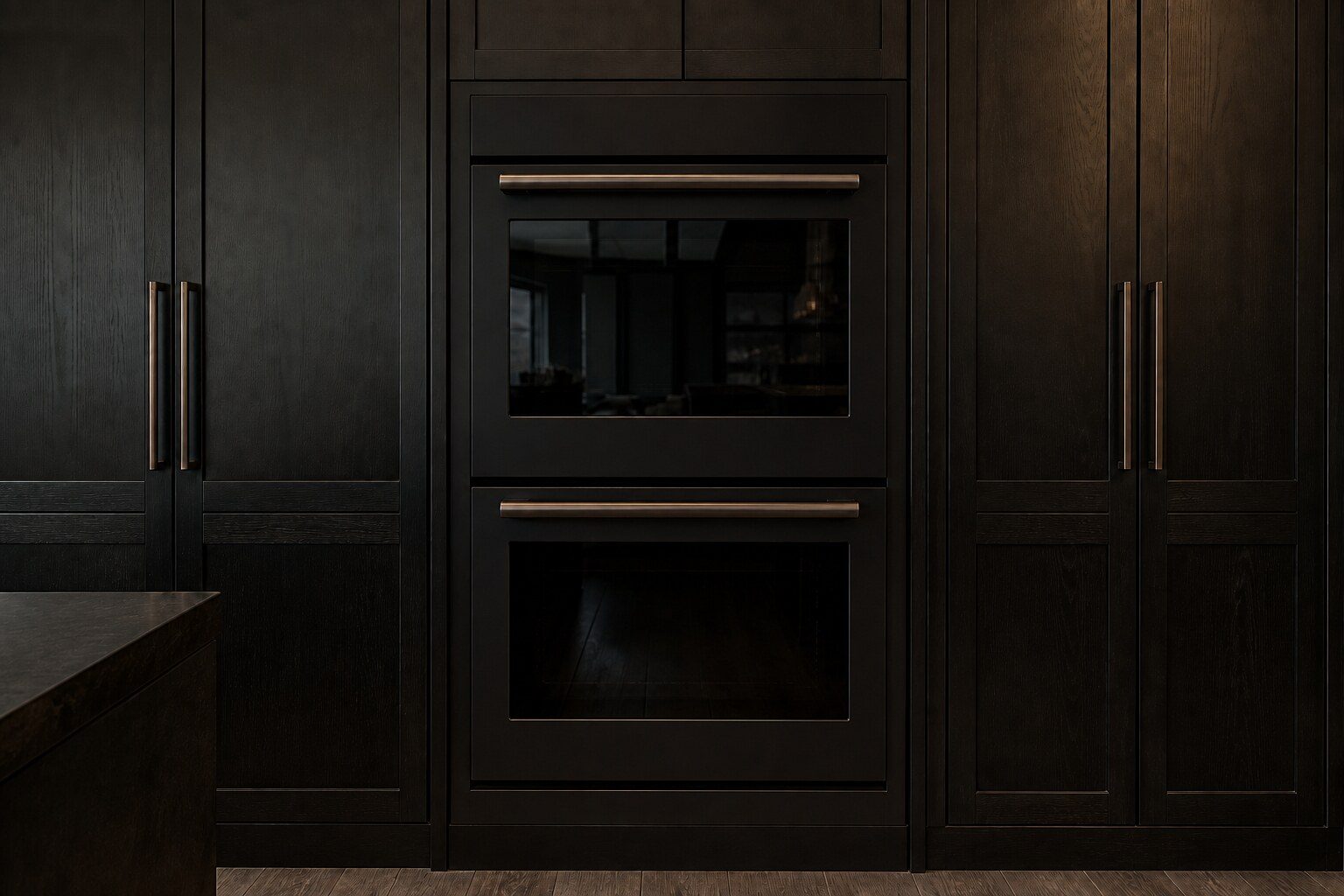
Monogram's wall ovens come in two design languages — Statement, with its heavy handles and brass, and Minimalist, which is flush and handle-less — plus French-door models, in-oven cameras, warming drawers, and the Advantium 5-in-1 that cooks with halogen light as well as microwave energy. They share a control platform and an F-code family, and they are all installed into cabinetry, which is where the repair difficulty lives.
- 4 symptoms we are called out to
- From $95 diagnostic, credited to the repair
- 59 cities and neighborhoods covered
- OEM parts available on order
The short version
What this equipment is, for a repair
Configurations
Statement and Minimalist · single, double and French door · Advantium 5-in-1
Access
Planned before the visit, not discovered on arrival
Parts
OEM, available on order
Diagnostic
From $95, credited to the repair
What goes wrong with it
Symptoms we are called out to on Monogram wall ovens
Each one covers the likely causes in the order they are worth checking, and what to do in five minutes before booking anything.
-
It lights up, and nothing gets hot Oven not heating
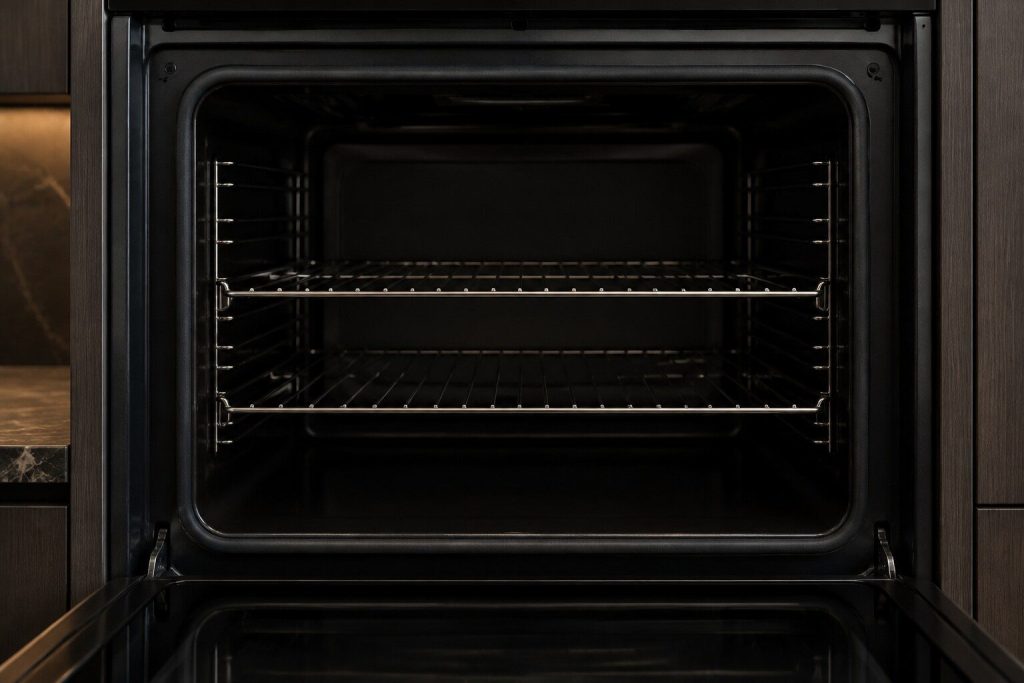
An oven that responds to the controls and produces no heat. On a dual-fuel range this affects the electric oven while every gas burner keeps working perfectly, which confuses people into thinking half the appliance is fine. It is.
- Bake and broil are different elements
- On a dual-fuel range the top is unaffected
- F codes name the circuit that is talking
-
After a self-clean cycle, usually Oven door locked and will not open
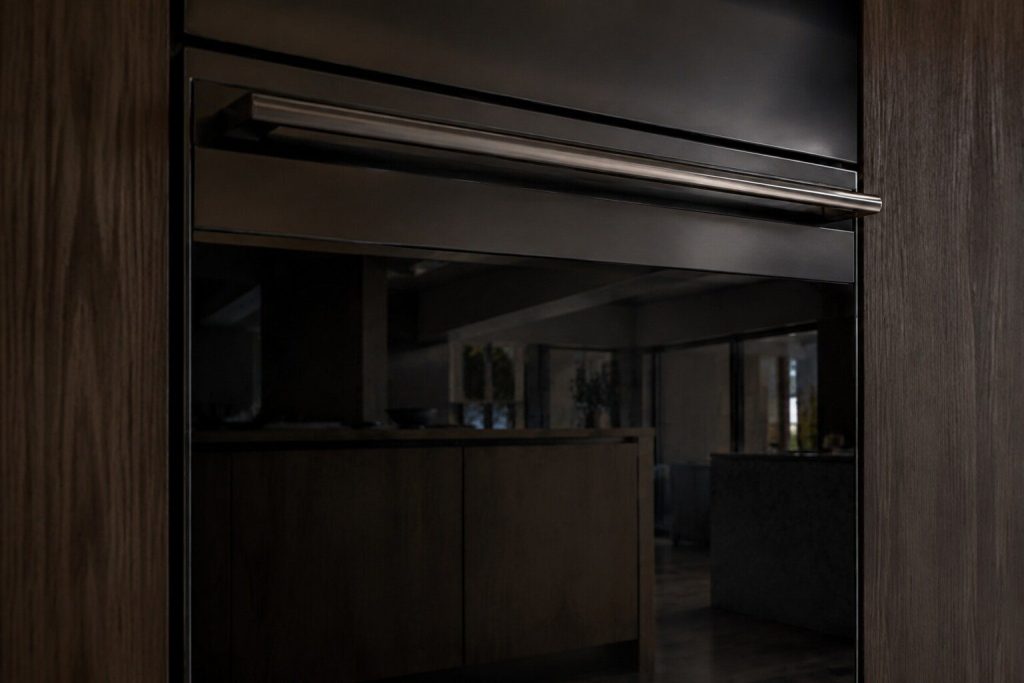
The door locked during self-clean and has not released. A large share of these calls end with the honest answer that the cavity is still too warm — the lock releases on temperature, not on time, and after a full cycle that can take hours.
- It releases on temperature, not on time
- F9 and FC name the latch circuit
- Never force it
-
It heats, but not to the number on the dial Oven cooking too hot or too cold
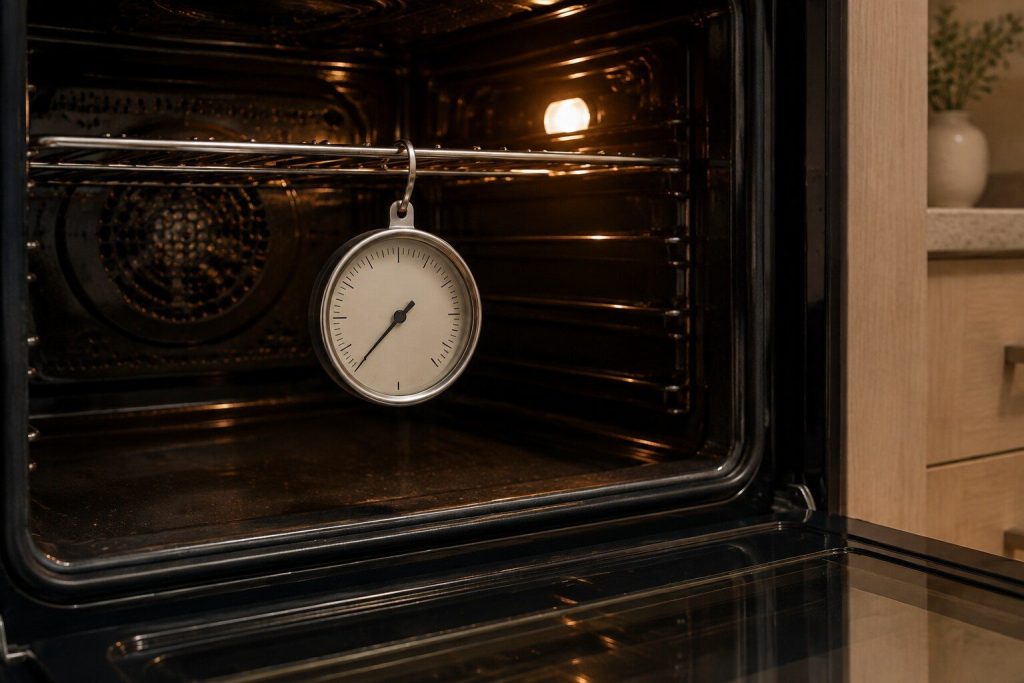
An oven that is consistently out by 25 or 30 degrees does not need a part; it needs the calibration offset it already has. An oven that swings, overshoots or throws a code is a different conversation. Telling those two apart before touching anything is most of this job.
- A steady offset is calibration
- A swing is the sensor or the control
- Measure after a full preheat, not two minutes in
-
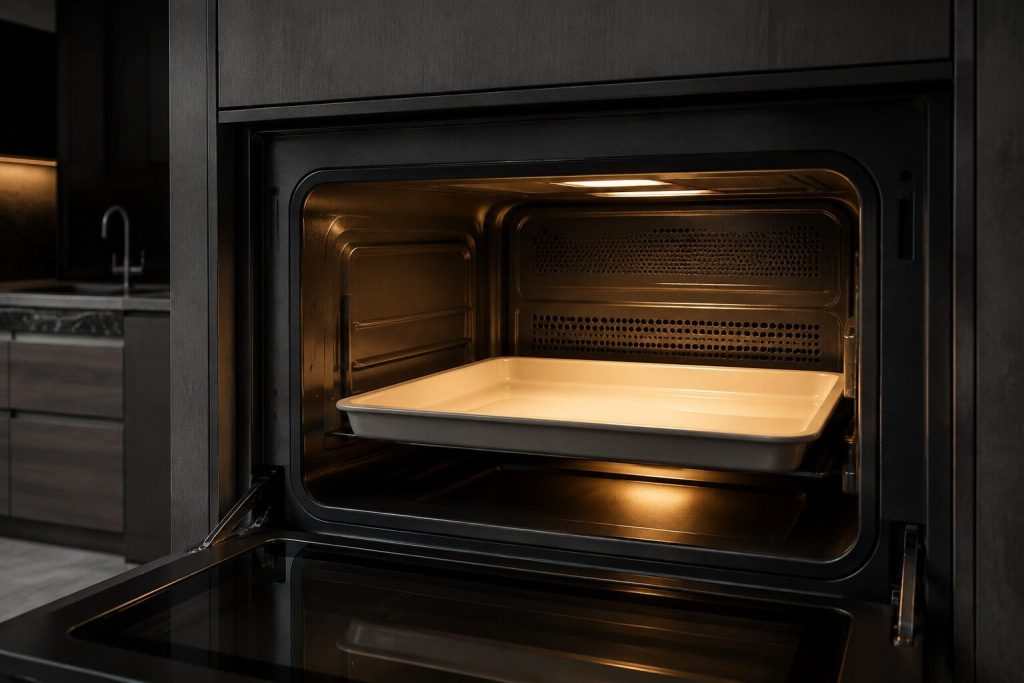
It runs, and the results are pale Advantium not browning or cooking slowly
The Advantium cooks with halogen lamps above and below the food as well as with microwave energy, and the browning is the lamps. When one goes the oven still works — it just produces pale, slow results — which is why this goes unreported for months.
- The lamps are what brown, and they are serviceable
- 120 V and 240 V are different appliances
- Runs and does not heat at all is a different page
What we do on it
Repairs we carry out on Monogram wall ovens
Starting figures for this equipment in South Florida. The exact cost is confirmed after an on-site diagnostic — and this is not the whole list of what can go wrong, so call if your problem is not here.
-
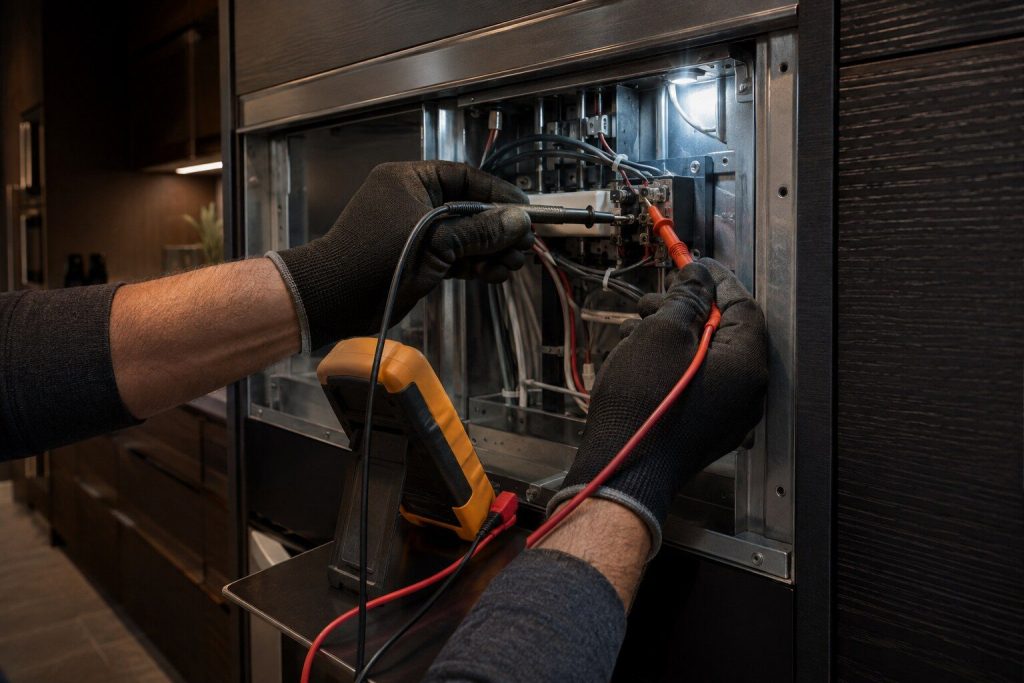
from $95 Diagnostic visit
Nothing is named until something has been measured. On built-in appliances the visit also has to plan its own access before it starts: a column comes out from the front, a panel-ready door comes apart in an order, and a wall oven that has to move needs two people and a plan. We do that thinking before we arrive rather than in your kitchen.
- The model number first, because it decides the access
- What the appliance reports, read against the published table
- Credited toward the repair when you go ahead
-
from $145 Appliance maintenance
The visit that exists to stop the other visits. On built-in appliances in a salt-air climate the two things that shorten life are both invisible: a condenser that has silted up behind its grille, and door seals that have quietly stopped sealing. Neither shows on a display. Both are cheap to deal with and expensive to ignore.
- Condensers cleaned and airflow checked
- Seals, hinges and panel alignment across the kitchen
- Filters, drains and water circuits attended to
-
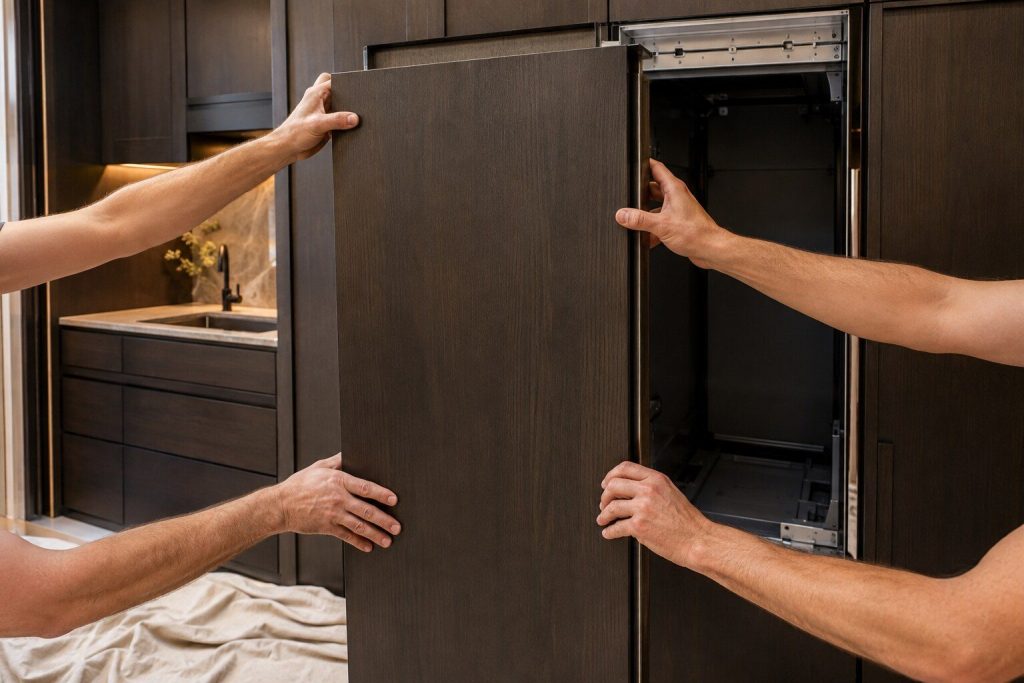
from $175 Appliance installation
Built-in appliances are installed once and lived with for twenty years, and most of the long-term problems we are called to were decided on installation day: a clearance that was shaved, a drain that has no fall, a hood ducted through one elbow too many. Getting it right the first time is cheaper than any of the repairs it prevents.
- Clearances and ventilation to the specification, not to the opening
- Water, gas and drain connections tested under pressure
- Panels hung and doors set level with the run
-
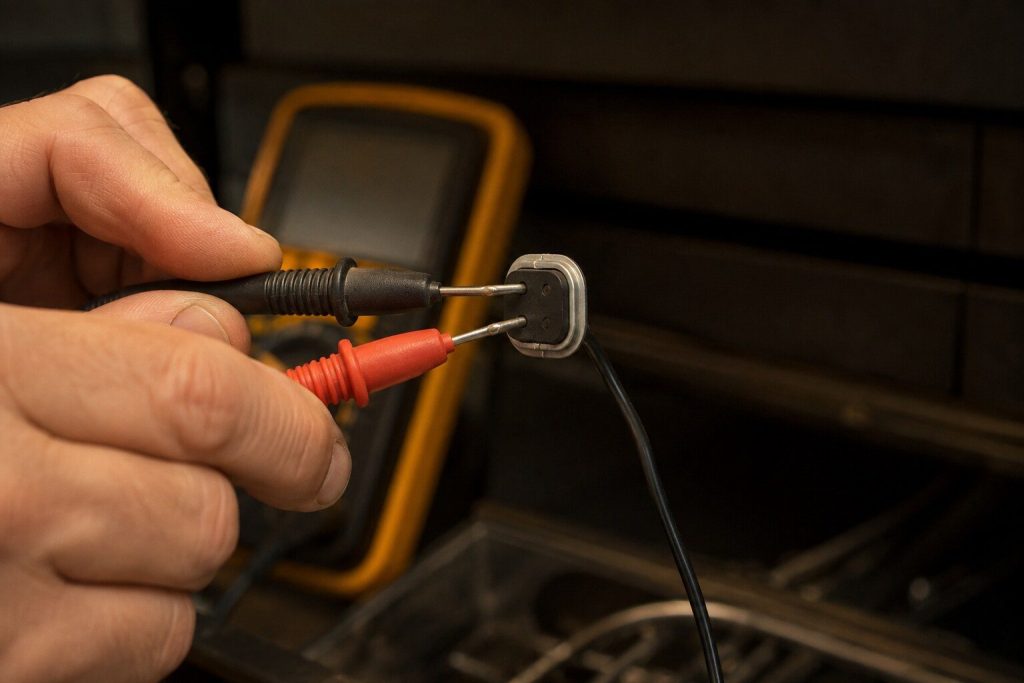
from $165 Temperature sensor replacement
A sensor is a resistor that reports temperature, and when it drifts the appliance obeys it faithfully — running a cabinet warm, an oven cold, or throwing a code that names the circuit outright. It is one of the most satisfying repairs on the list because the part is measurable: either it reads what it should at a known temperature or it does not.
- Measured against specification, not swapped on suspicion
- The wiring between sensor and control checked too
- Covers both refrigeration and cooking
-
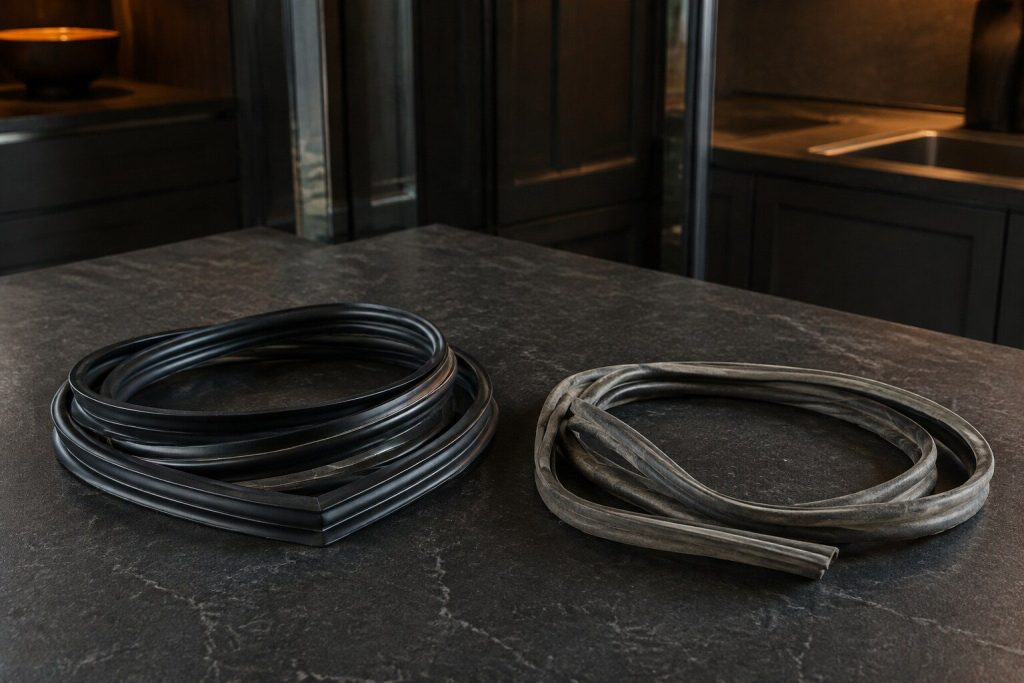
from $165 Door seal replacement
A gasket is a wear part and it fails gradually, which is why it is almost never the thing people call about. It hardens, it takes a permanent set where it has been folded, and it stops meeting the cabinet along part of its length. On a cold appliance that is a defrost problem in waiting; on an oven it is heat and money going into the room.
- Tested along the whole length, not eyeballed
- Hinge and alignment checked at the same time
- The commonest cause of a defrost circuit that never rests
-
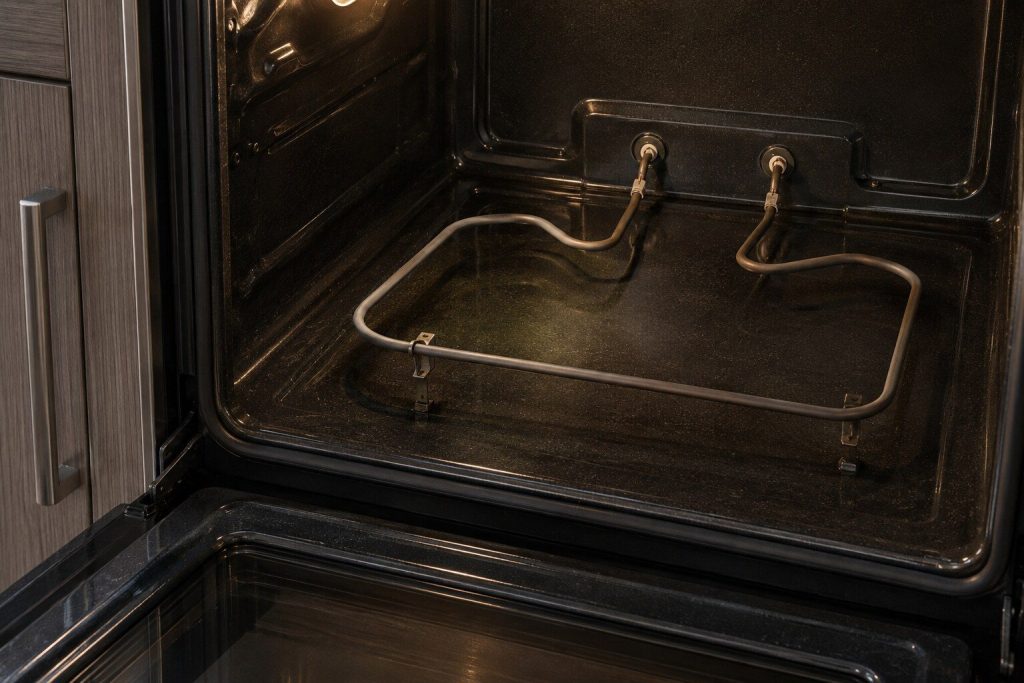
from $185 Oven element replacement
An oven that will not reach temperature, browns on one side, or has visibly failed at a connection. Bake and broil elements are measurable parts — either the resistance is in specification or it is not — which makes this one of the few problems where the diagnosis is unambiguous.
- Elements measured, not swapped on suspicion
- The wiring and terminals checked as well
- Calibration verified afterwards
-
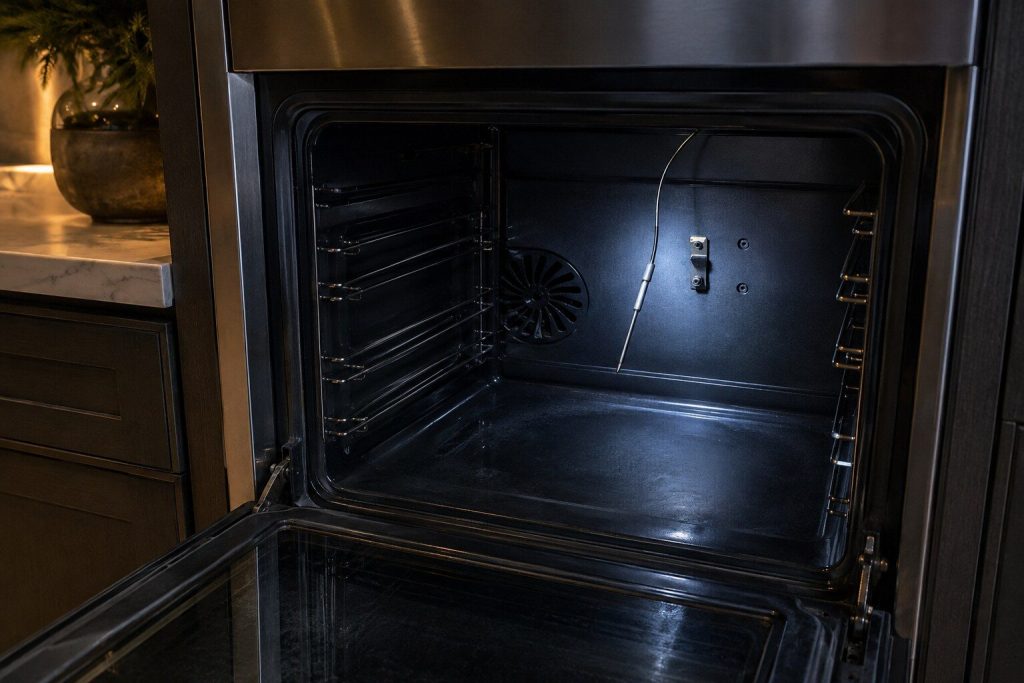
from $155 Oven sensor and calibration service
An oven that is consistently out by 25 or 30 degrees is a calibration question. An oven that swings, overshoots or throws F2, F3 or F4 is a sensor and control question. Telling those two apart before touching anything is most of this job.
- Drift and swing treated as different problems
- F3 and F4 name this circuit directly
- Offset set against a reference, not by feel
-
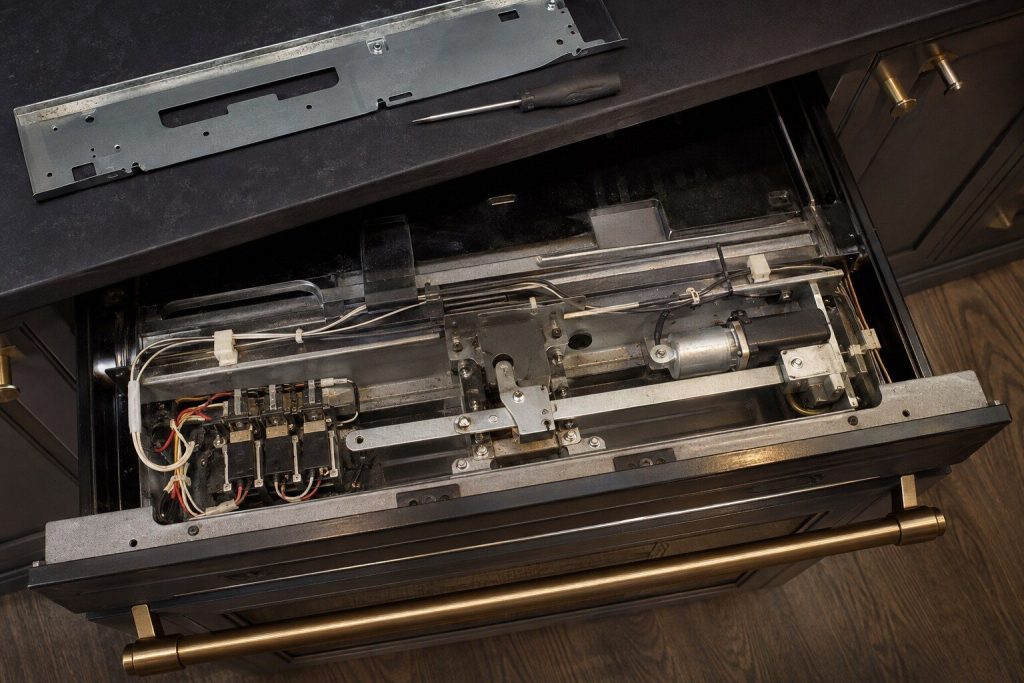
from $195 Oven door lock repair
The door locked during self-clean and has not released, or the oven refuses to run because it believes the door is not shut. On these ovens the latch is a motorized assembly reported by F9 and FC, and forcing a locked door turns a modest repair into an expensive one.
- F9 and FC name the latch circuit
- Almost always appears after a self-clean cycle
- Never forced open
-
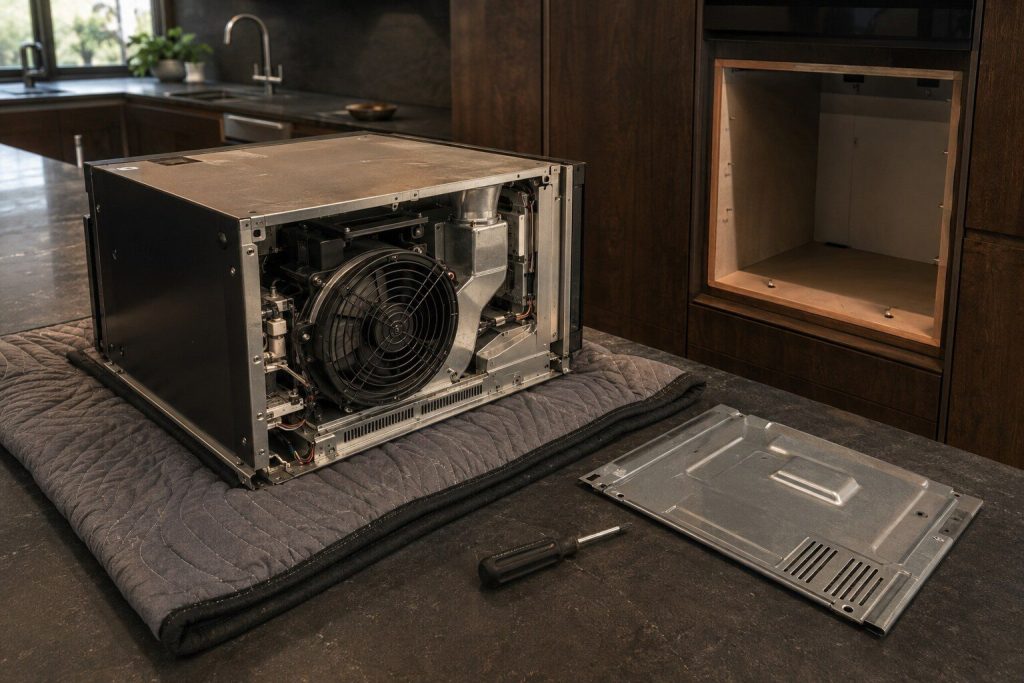
from $245 Advantium speed oven repair
The 5-in-1 speed oven cooks with halogen lamps above and below the food as well as with microwave energy, and it exists in a 120-volt and a 240-volt version that are genuinely different appliances with different code sets. The lamps are the part that most often needs attention.
- 120 V and 240 V read against different tables
- Halogen lamps are a serviceable part
- The high voltage side is never a home repair
-
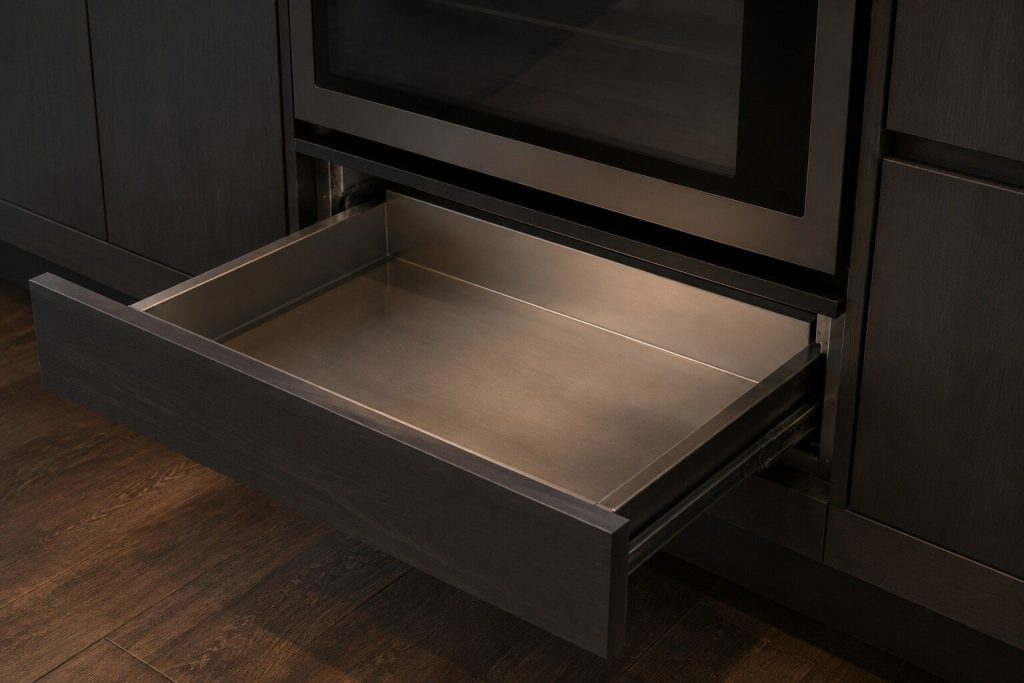
from $165 Warming drawer repair
A drawer with a heating element, a thermostat and a humidity setting, installed under an oven or in an island. It fails quietly — it stops getting warm, or it stops holding, and the food is what reports it. The runners and the seal are as often the cause as the element.
- Element, control and thermostat measured
- Runners and the drawer seal included
- Humidity setting checked as well as heat
-
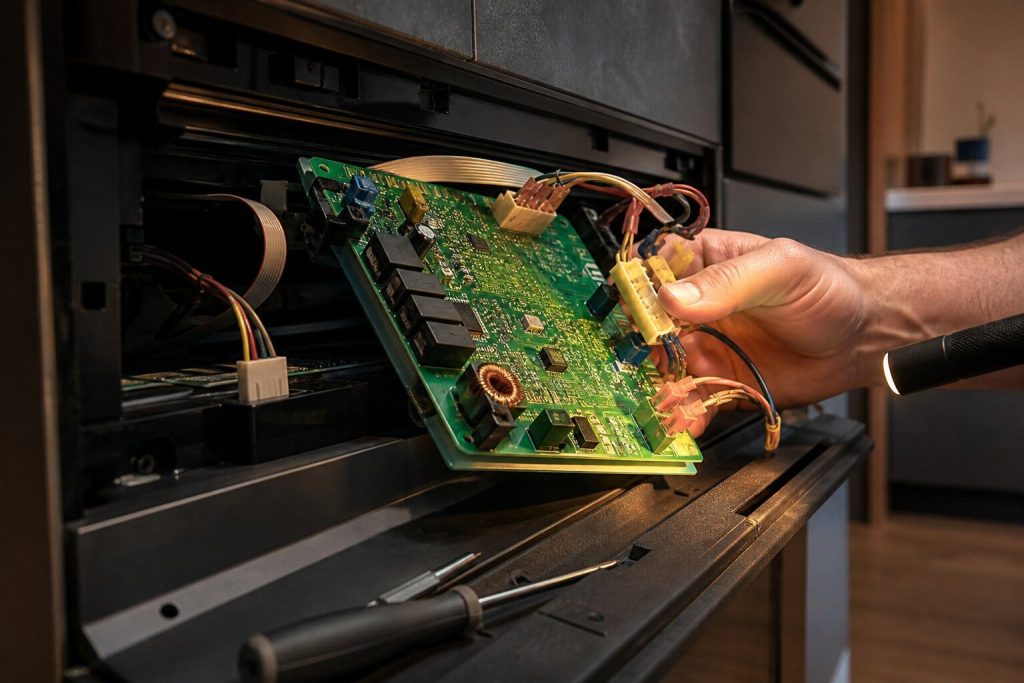
from $295 Appliance control board repair
The repair reached last and reached for first by the internet. A control board is expensive, frequently blamed and comparatively rarely the problem — most of what gets called a board failure is a sensor, a harness or a connector that has corroded in coastal air. Boards are condemned here by measurement.
- Everything the board depends on tested first
- Connectors and harnesses are the usual real cause
- Codes that name the control taken seriously, not literally
In more detail
About Monogram wall ovens
Two design languages, one platform underneath
Statement and Minimalist are the two ways Monogram builds a wall oven. Statement has the heavy edge-to-edge handles and the brass; Minimalist is flush, handle-less and opens to a push. There are single and double ovens in 27 and 30 inches, French-door models that swing open from the center, versions with a camera inside the cavity, warming drawers to match, and the Advantium 5-in-1 speed oven. The finishes are different and the control platform is shared, which is why the same F-code family applies across the line.
The codes worth knowing
F3 and F4 are the oven temperature sensor, open and shorted. F2 is a genuine over-temperature event. F0 and F7 are a stuck or shorted key on the touch panel — annoying, rarely serious. F5 and F8 are the control board. F9 and FC are the door lock and the motorized latch, which is why they turn up after a self-clean cycle rather than in the middle of a Tuesday. FD is the meat probe circuit. Each of those has a page of its own in our archive, because the code tells you which part of the oven is talking and that is most of the diagnosis.
Advantium is not a microwave with a fancy name
It cooks with halogen lamps above and below the food as well as with microwave energy, and it comes in a 120-volt version and a 240-volt version. They are different appliances: different power delivery, different elements and different error codes. The lamps are a serviceable part and they are the part that most often needs attention. If you have one, the model number is what tells us which of the two code sets to read.
Built in, and what that means for a visit
A wall oven is heavy, it is screwed into a cabinet, and on a double oven the assembly weighs more than two people should lift casually. Most repairs are done in place. The ones that are not — a control board behind the fascia, a fan at the back of the cavity — mean the oven comes forward on its runners or out of the cabinet, and doing that without marking the surround is a skill. It is also why we ask about the installation before quoting.
Before you book
Model number, the code if there is one, whether it is a single, double or Advantium, and whether the problem appeared after a self-clean cycle. That last question resolves a surprising number of these calls on the phone.
This article is based on:
- Official manufacturer documentation
- Internal repair procedures
- Technician repair history
- Company quality standards
Before you book
Questions about Monogram wall ovens
The oven is showing F3 or F4.
Those two are the oven temperature sensor circuit — F3 is open, F4 is shorted — and between them they cover most of the temperature complaints that arrive with a code. It is an ordinary repair and a well-defined one: the sensor is a measurable part, the reading either matches the specification or it does not, and the wiring between it and the control is the other half of the check. What matters is not confusing these with F2, which is the oven having actually gone over temperature, or with F5 and F8, which point at the control board itself.
The door locked during self-clean and will not open.
Common, and usually not a broken appliance. A self-clean cycle locks the door mechanically and will not release it until the cavity is below a safe temperature — which after a full cycle can take a couple of hours. If it is still locked long after the oven is cool, that is the motorized latch or its circuit, and it shows as F9 or FC. Do not force it: on these the latch is a motorized assembly and forcing a locked door turns a modest repair into a large one.
What is Advantium and why does it matter which one I have?
Advantium is Monogram's speed-cooking oven — it cooks with halogen light from above and below as well as with microwave energy, which is how it browns food in a fraction of the usual time. It exists in a 120-volt version and a 240-volt version, and they are genuinely different appliances underneath with different error codes. The 240-volt ovens carry a proper convection element and a wider code set. When you call, the model number tells us which one is in your wall, and that decides which code table applies.
It is out by 25 degrees but showing no code.
That is a calibration question before it is a repair. These ovens can be offset in the settings, and a drift of 20 or 30 degrees is within what calibration is meant to absorb. Check it with a decent oven thermometer at a couple of temperatures before assuming a part has failed — and check it after a stable preheat, not two minutes in. If the drift is much larger than that, or if it swings, the sensor and the control are the next stop and there is usually a code to go with it.
Where we do it
Across Miami-Dade, Broward, and Palm Beach
Same terms everywhere we go: an on-site diagnostic first, the price agreed in writing, and the exact figure confirmed once we have seen the unit.
Neighborhoods people ask for by name