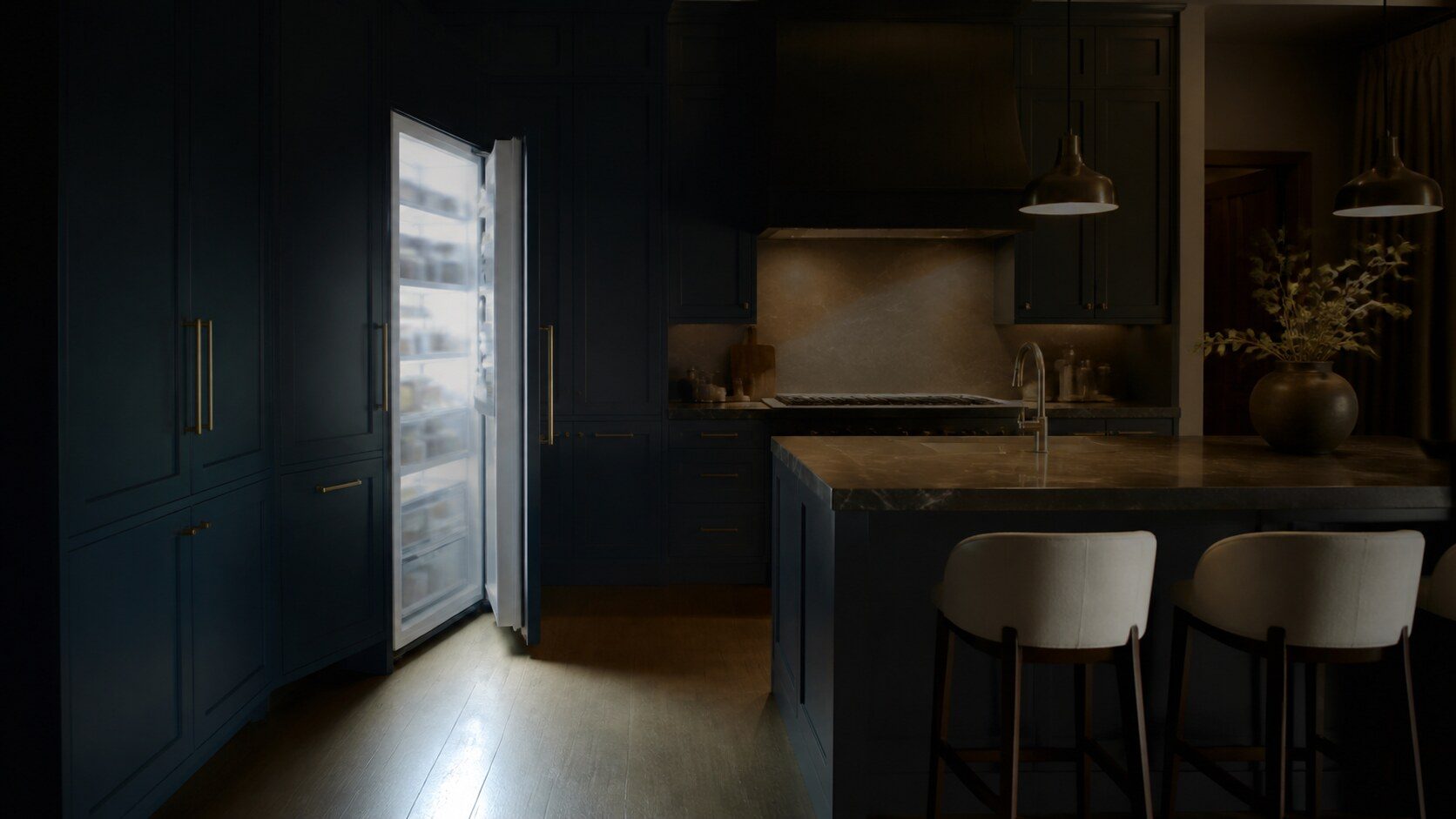
A warm cabinet on a built-in side-by-side is one machine with a delivery problem. The same complaint on a pair of integrated columns is one healthy appliance standing next to one that needs work. An oven that will not heat on a dual-fuel range is electric; on an all-gas range it is a burner and an igniter. Every page here says which form of the appliance it is talking about, because the parts and the price are different.
25 behaviors · 12 appliances
Start from what it is doing, not from what it is showing.
Half the appliances in a Monogram kitchen have no published code table — wine cabinets, beverage centers, standalone ice makers, warming drawers, hoods and the hearth oven. On those, behavior is not a hint towards the diagnosis, it is the diagnosis. And on the ones that do report codes, plenty of what appears on the display is not an error at all.
- 25 behaviors with a page
- 6 appliances with no published codes
- 13 display messages that are not errors
- from $95 diagnostic, credited to the repair
Start from the behavior
What it usually means, and what to check first
Every page names the free checks before the paid ones, and says what the same behavior means on a built-in, on a column and on an undercounter unit — because they are not the same appliance.
-
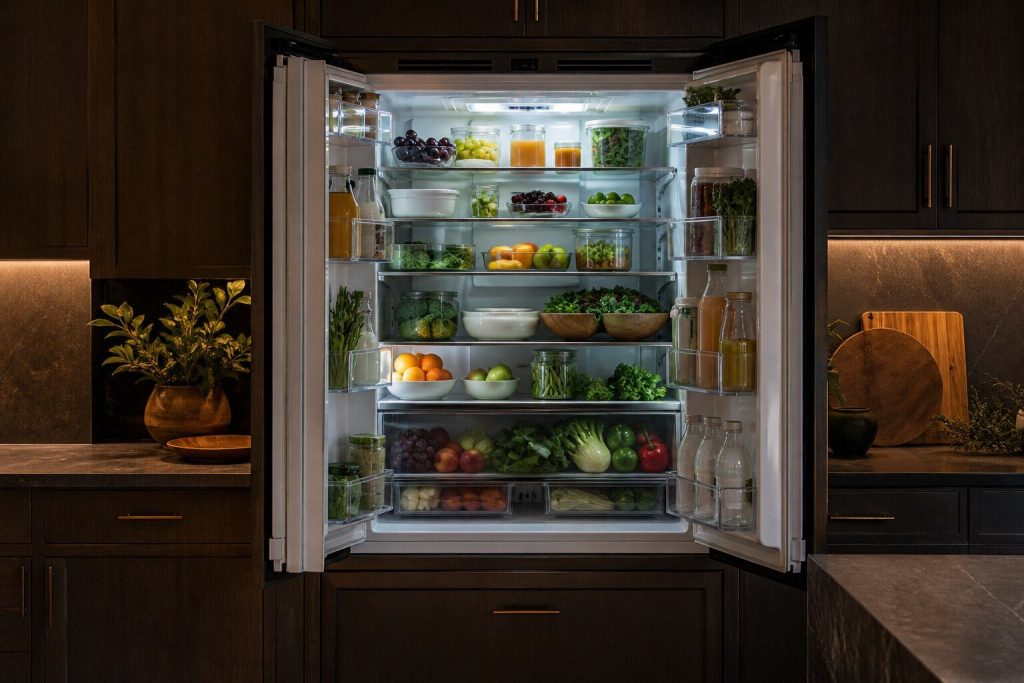
Everything works except the cold Refrigerator not cooling
The call we take more often than any other. On built-in refrigeration the first suspect is almost never the compressor — it is the condenser behind the grille above the door, which in a Miami kitchen collects salt, cooking aerosol and dust until it can no longer shed heat, with nothing on the display to say so.
- The condenser is the first suspect and it is free to check
- A dropped door panel produces this too
- The sealed system is last, not first
-
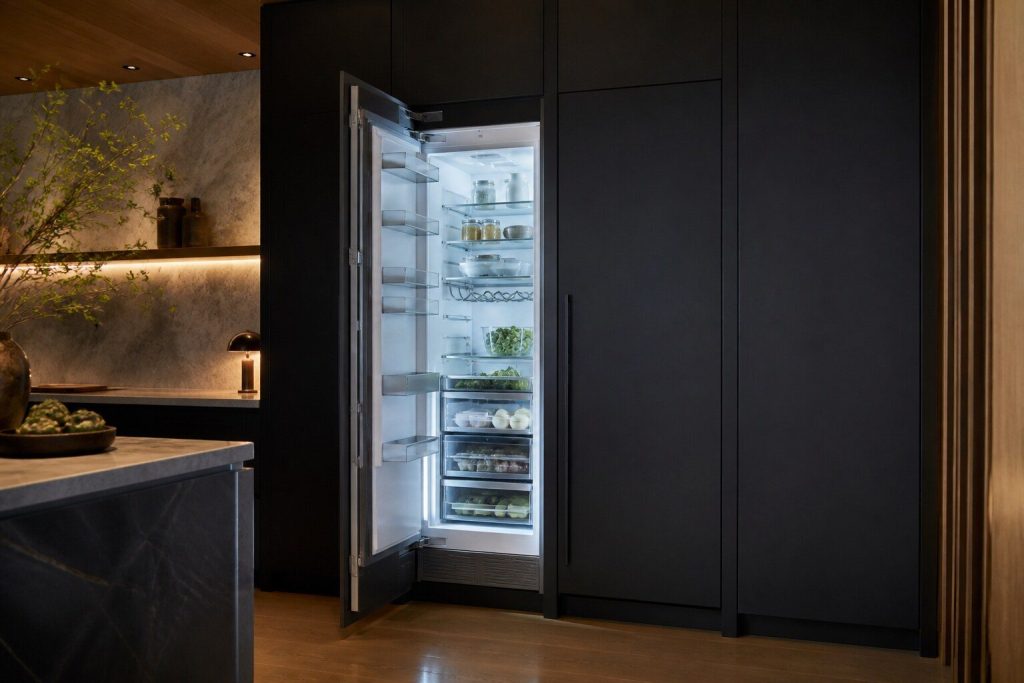
One compartment fine, the other not Refrigerator warm and freezer cold
A cabinet where one side holds and the other does not. On a built-in side-by-side that is one machine with a delivery problem; on a pair of integrated columns it is two machines and only one of them is unwell. Which of those you have decides the entire diagnosis.
- On a column pair, this is two appliances
- On one cabinet, it is airflow before it is refrigeration
- The damper between compartments is a real part
-
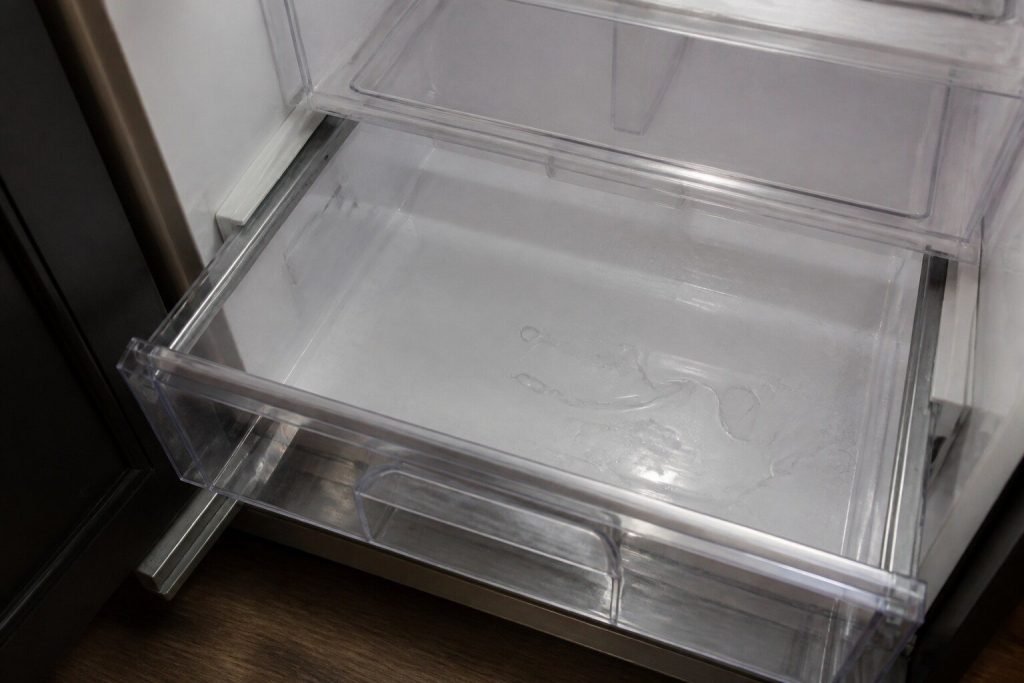
Water inside, underneath or on the floor Refrigerator leaking water
Where the water is tells you most of what you need to know. Inside the cabinet points at the defrost drain; underneath points at the drain pan or a supply connection; in front of the door on a dispenser model points at the line in the door. On integrated cabinetry it matters more than usual, because the floor is often the expensive part of the room.
- Where the water is names the cause
- A blocked defrost drain is the commonest by far
- On integrated kitchens, deal with it quickly
-
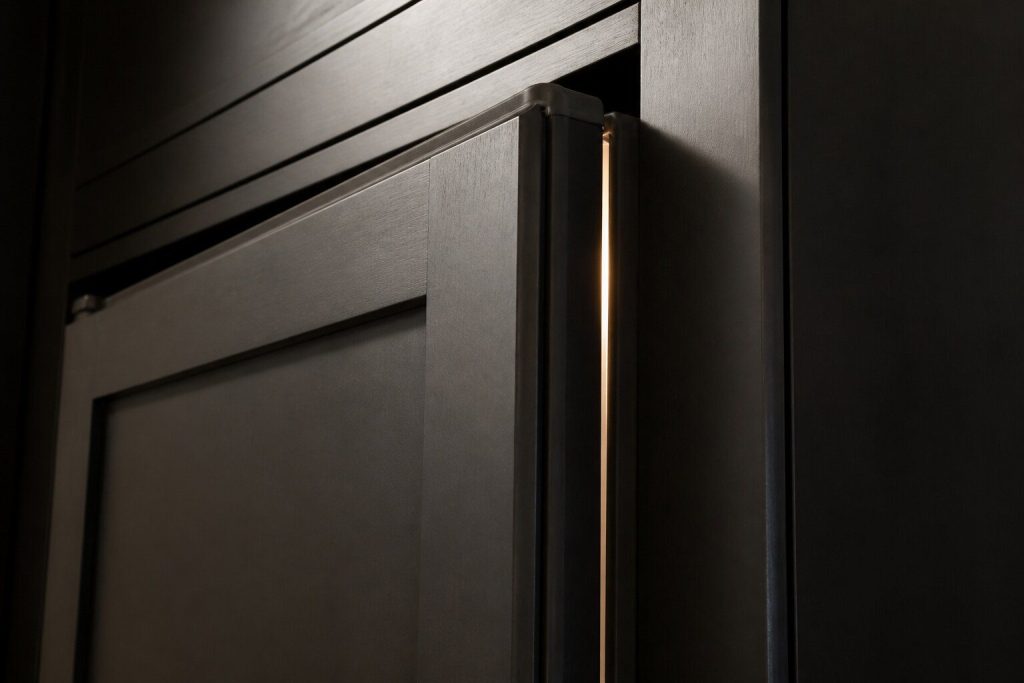
A line of light, a panel out of true, a gasket that has given up Refrigerator door not sealing
The problem that almost nobody calls about and that causes several of the problems people do call about. On integrated cabinetry the door carries a custom panel on hinges shimmed for its weight, and doors settle. What you see is a line that no longer matches the run; what the appliance sees is humid air, all day, every day.
- A dropped door is behind many defrost calls
- Panels changed in a remodel are a common cause
- The paper test settles it in two minutes
-
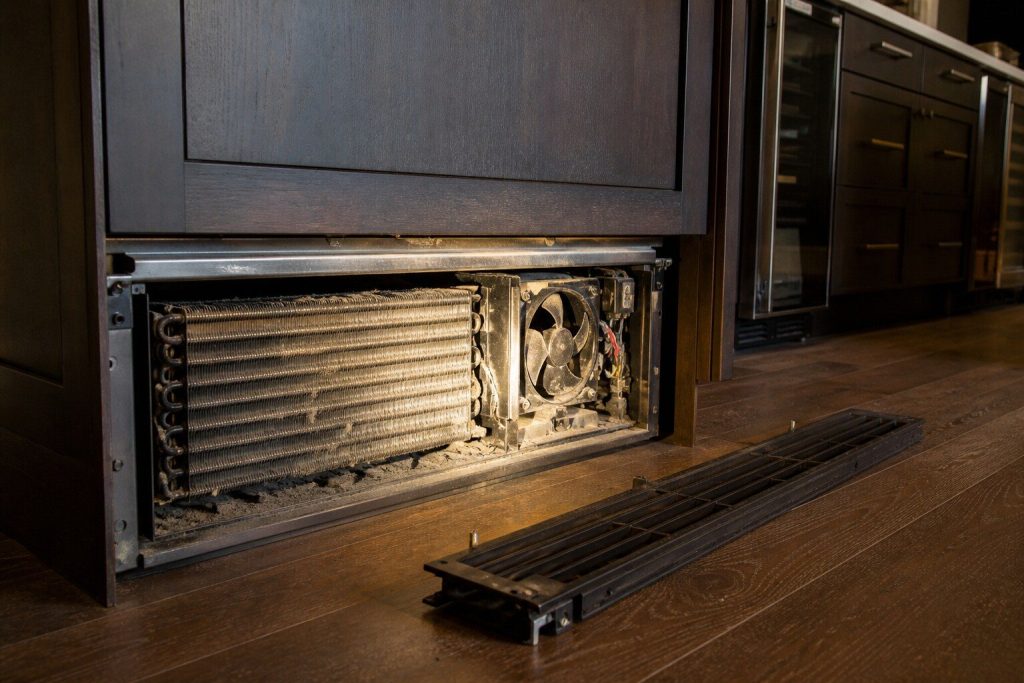
New sounds from a cabinet that used to be quiet Refrigerator making noise
Built-in refrigeration is designed to be unobtrusive, so a sound that is new is worth investigating even when the cabinet is still cold. Most of these are fans and mountings — inexpensive on their own, and cheaper before they take something else with them.
- A new sound usually names its own part
- Fans and mountings before compressors
- On wine cabinets, vibration reaches the bottles
-
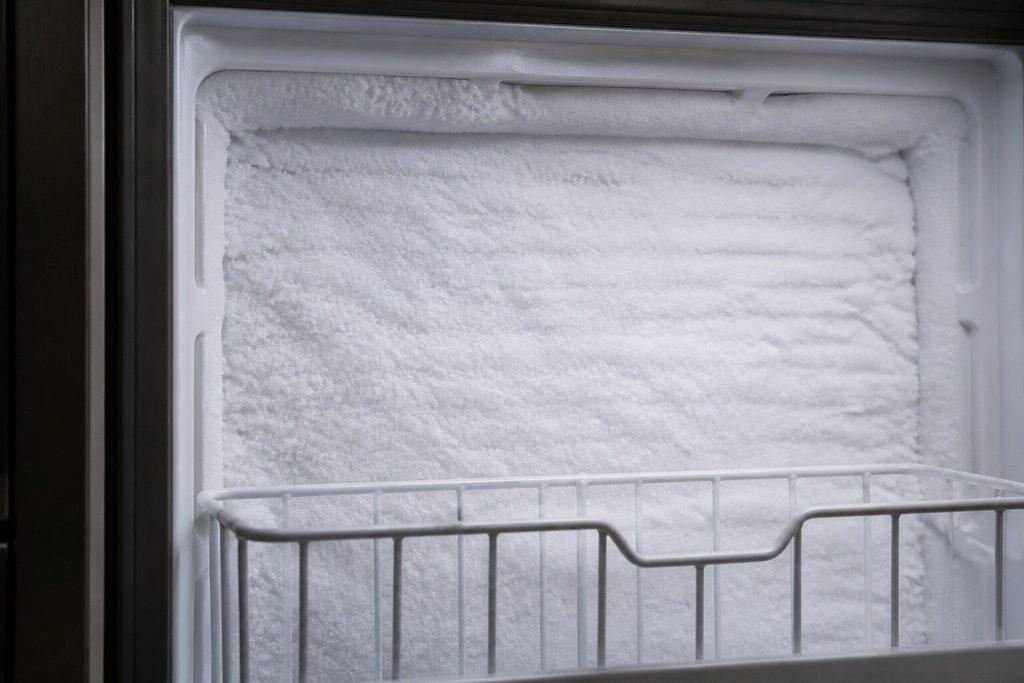
Ice that comes back after you clear it Frost building up in the freezer
Frost you clear and that returns within days is a defrost cycle that is no longer completing, or humid air getting in faster than the cycle can remove it. Both are ordinary and both are fixable, but they are different jobs — and where the frost sits is what tells them apart.
- An even coat on the back wall is the circuit
- A patch by one edge of the door is the seal
- Photograph it before you clear it
-
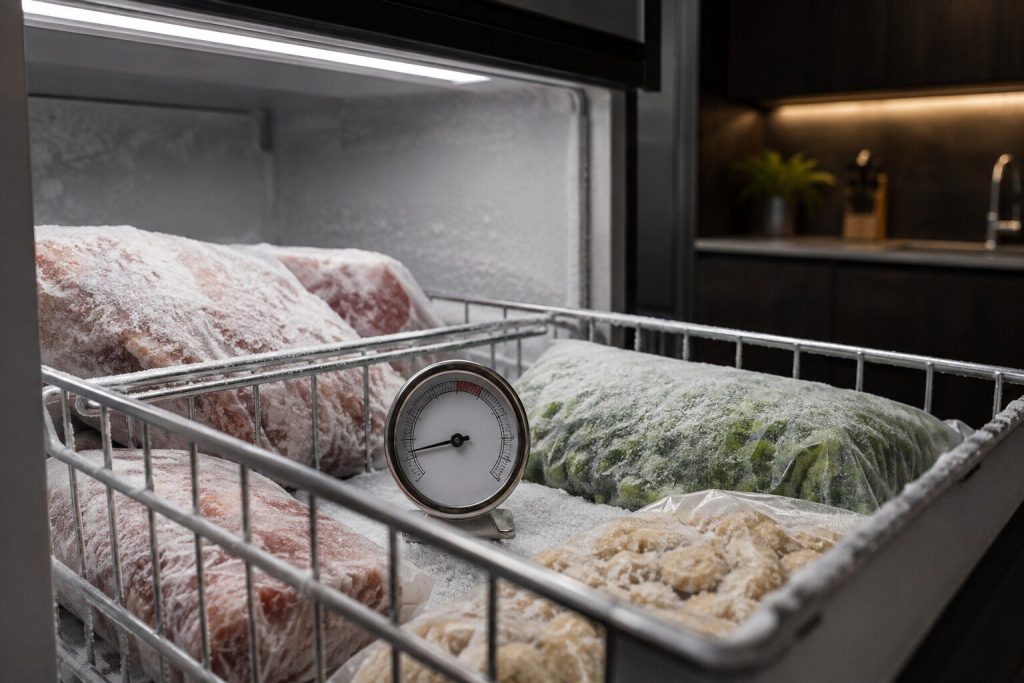
A column holding above zero while the one beside it is fine Freezer column not cold enough
A freezer column that has drifted up while the refrigerator column beside it is perfect. It is the clearest illustration of what a paired column installation actually is: two independent machines behind one wall of matched panels, sharing nothing but an opening.
- Paired columns are two appliances
- Zero Fahrenheit is the number to hold
- Ice cream is usually what reports it
-
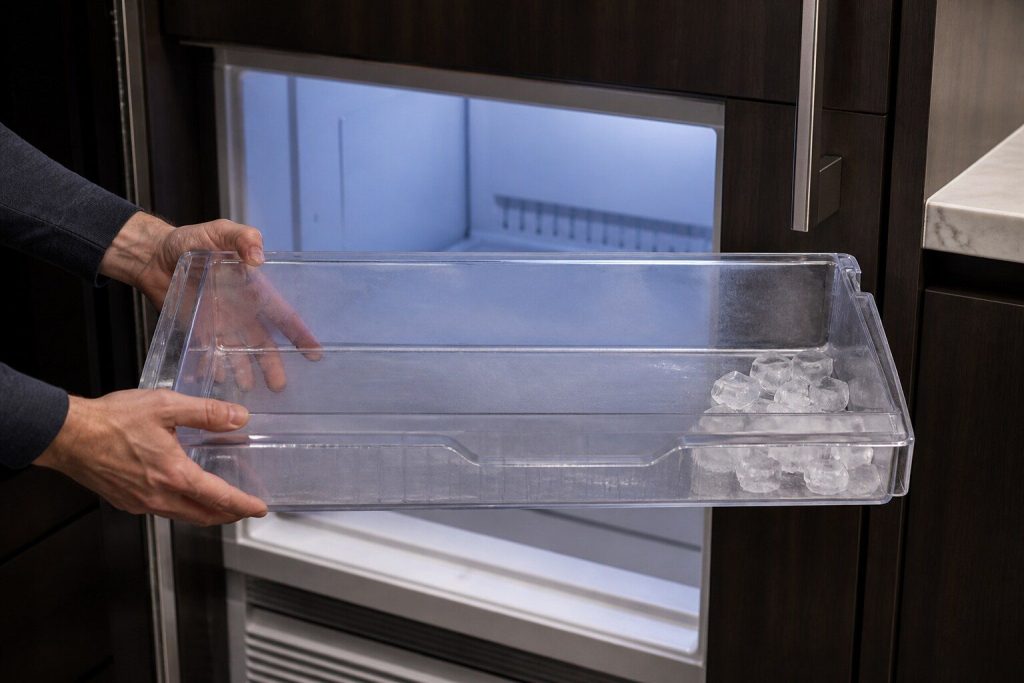
The bin is empty and nothing is happening Ice maker not making ice
An ice maker that has stopped completely. Half of these are not ice maker problems at all — production is a function of how cold the host cabinet is, and a module fitted into a cabinet that has drifted warm makes exactly as much ice as the one it replaced.
- Check the cabinet temperature first
- Then prove the water actually arrives
- CI on the display is a starting point
-
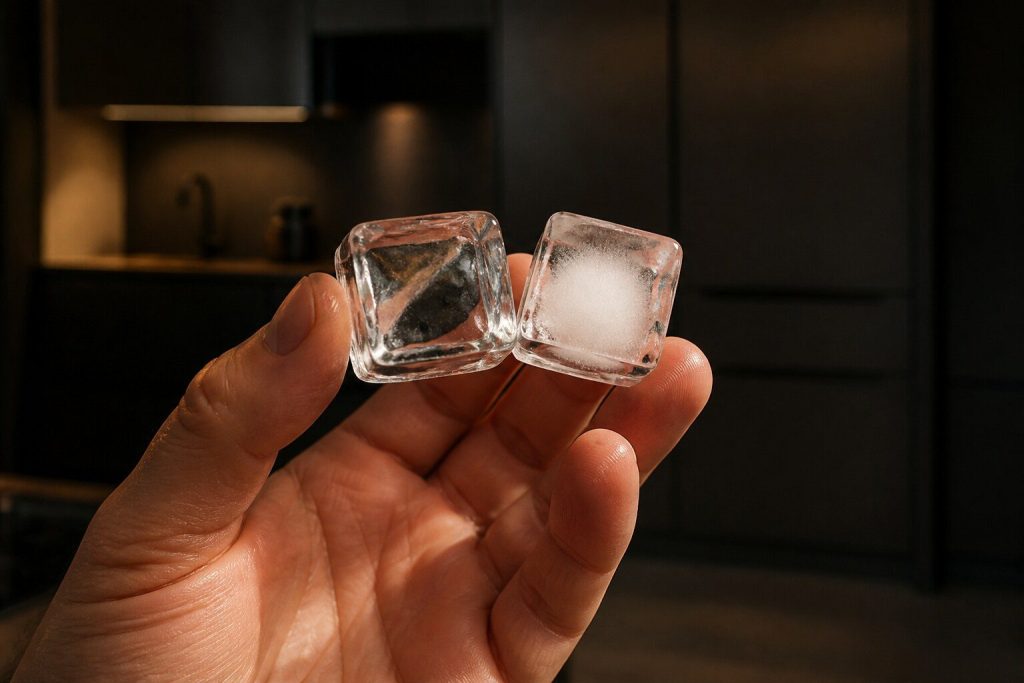
It works, but not properly Ice that is small cloudy or slow
Production that has tapered rather than stopped, with cubes that have got smaller and cloudier. On a standalone machine that is the signature of scale in the water circuit, and on local water it is not a matter of if but of when.
- Small and cloudy is scale, almost always
- Clear ice depends on moving water
- Descaling restores output without parts
-
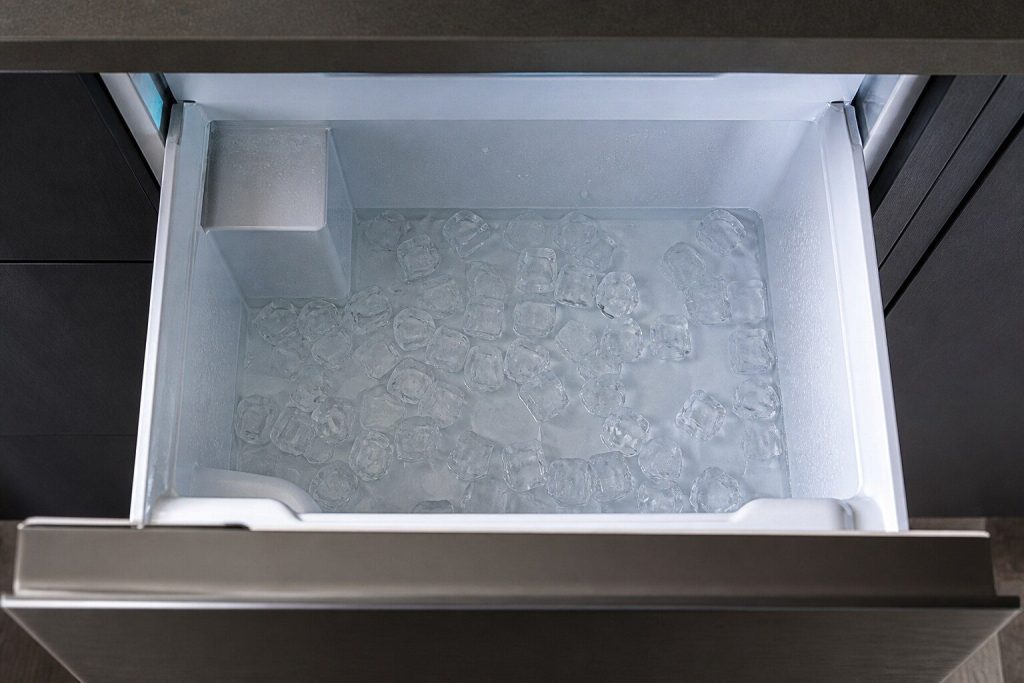
The ice is melting and not going anywhere Water standing in the ice bin
Meltwater in an ice bin is normal — a bin is not a freezer and the machine expects to drain continuously. A level that does not go down is not normal, and in a warm cabinet it becomes a smell and then a hygiene job on top of a repair.
- Some meltwater is normal, a level is not
- Gravity drains lose their fall over years
- Deal with it before it becomes a smell
-
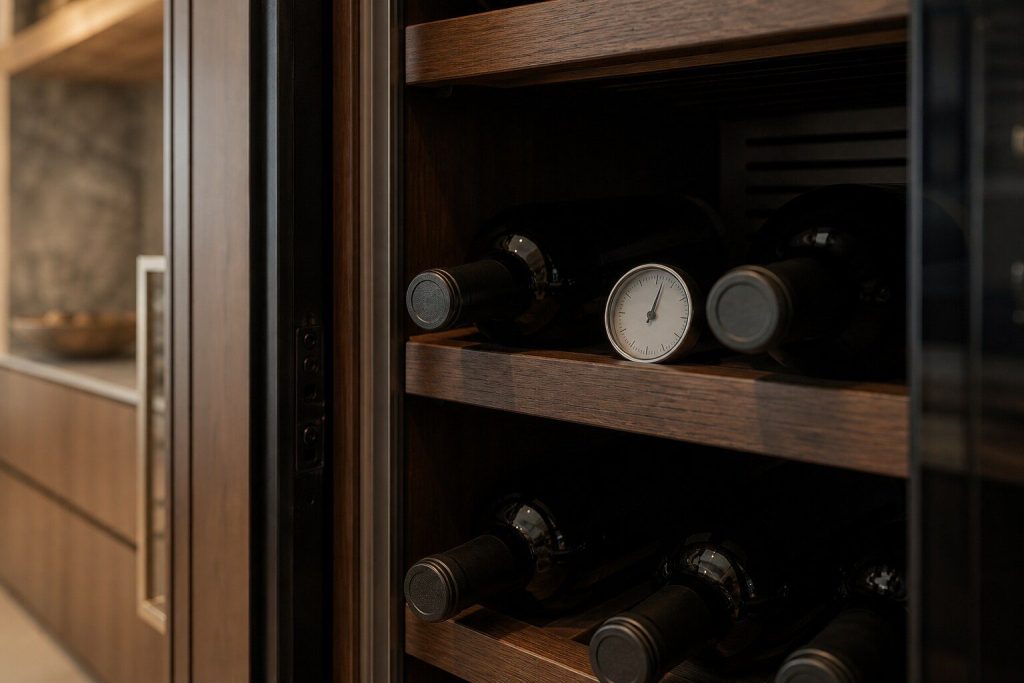
It holds, then it does not, and then it does again Wine cabinet temperature swinging
A wine cabinet is a stability machine, and a swing is worse for the bottles than a steady number a little off target. The whole point of the appliance is that the contents never see a cycle, so repeated movement is a genuine problem even when the average looks right.
- Swinging and drifting are different problems
- Measure at the shelf, not on the display
- Where the cabinet lives is part of the diagnosis
-
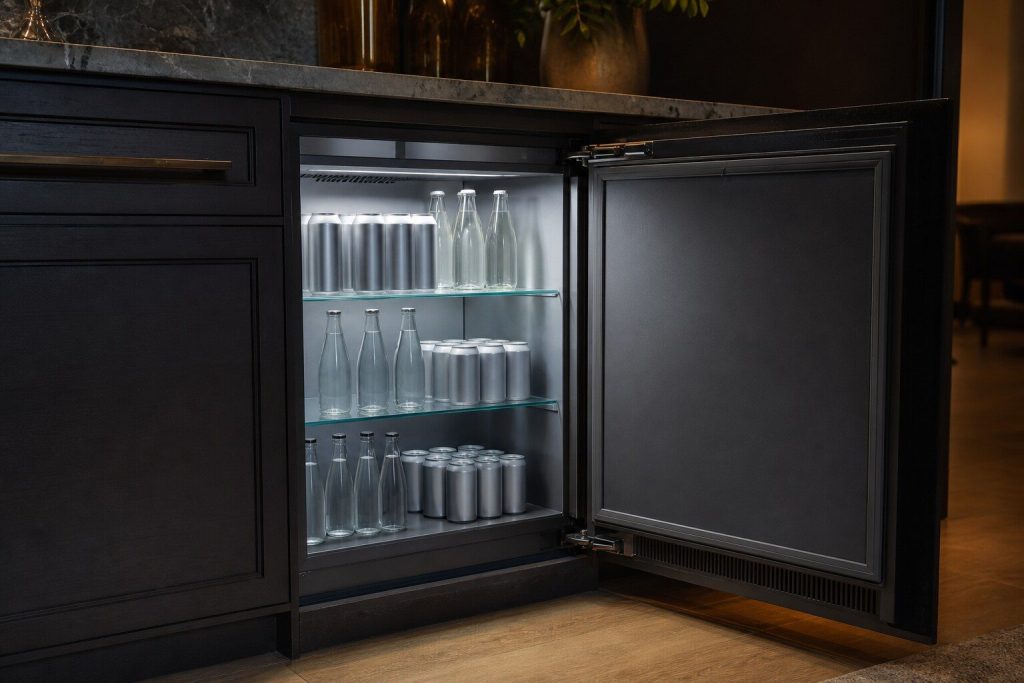
Fine overnight and struggling by the afternoon Beverage center not cold enough
The undercounter appliance that works hardest and is thought about least. It is opened dozens of times a day, it usually lives in a bar rather than in the conditioned part of the house, and it breathes through a grille a few inches tall. Most of these calls are decided by air before they are decided by parts.
- The grille is the whole ventilation system
- Ambient is a cause, not an excuse
- Cleaning and clearance fix a real share of these
-
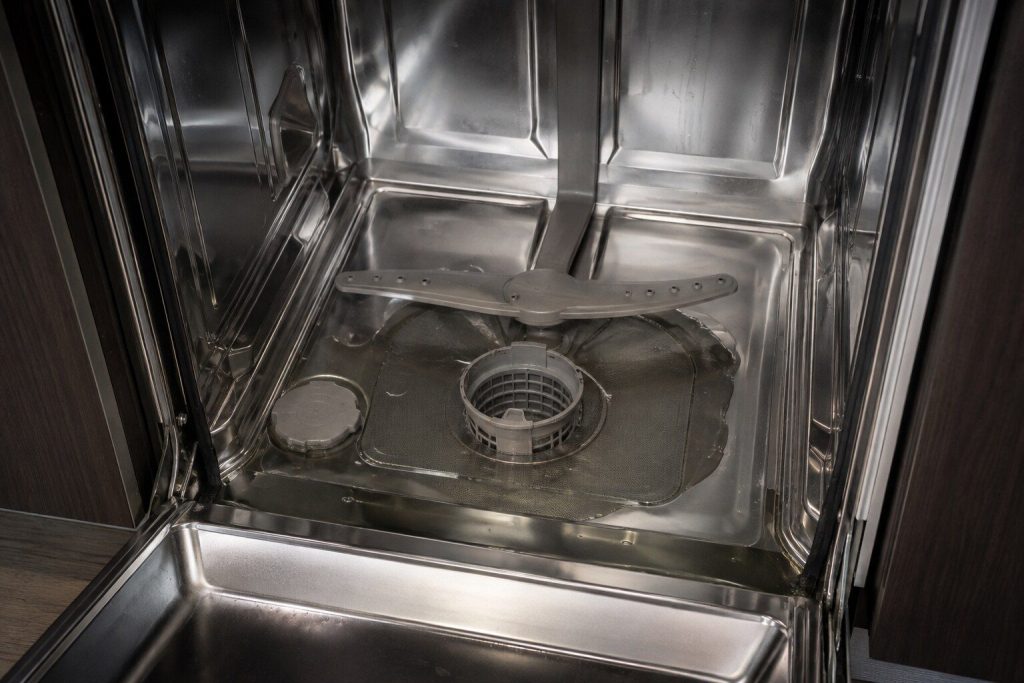
Water standing in the bottom at the end of a cycle Dishwasher not draining
The most common dishwasher call there is, and on these machines it usually comes with a code nobody has seen — the display is on the top edge of the door, visible only when the door is open. C1, C2, C3 and C5 all describe drainage and they mean different things.
- Read the top edge of the door first
- The filter unscrews and most owners never have
- A disposal knockout plug is a real cause
-

It runs, and the load is not clean Dishes not coming out clean
When a dishwasher stops washing well the cause is usually water rather than the machine: spray arms scaled so they turn slowly, a filter that has never been removed, hard water filming the glassware, or inlet water too cold for the detergent to activate.
- Hard water is the local villain
- The spray arms come out and should
- C6 means the water arriving is too cold
-
Nothing happens when you press start Dishwasher will not start
On a fully integrated machine a dishwasher that will not start looks exactly like a cabinet door doing nothing, and the reason is usually that the appliance does not believe its door is shut. The latch is what fails; the door balance is usually why.
- The machine will not run on a door it does not trust
- A delay start reads as a dead machine
- Panel weight is part of the diagnosis
-
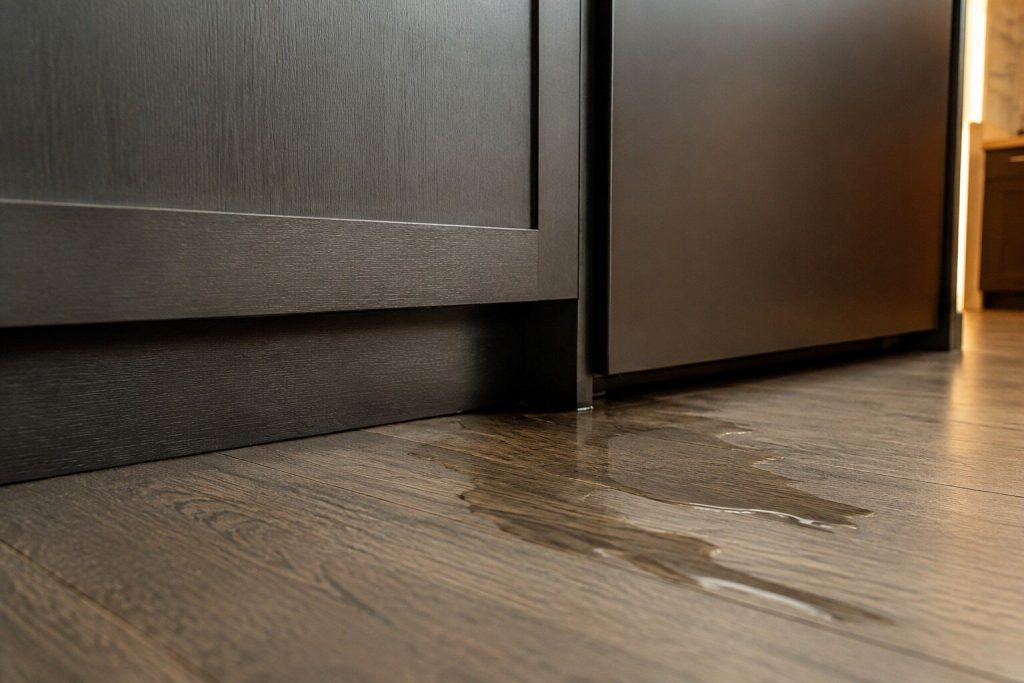
Water where a fully integrated machine hides it Dishwasher leaking
On a fully integrated dishwasher a leak is invisible until the cabinetry has taken it, and in these kitchens the flooring and the joinery are the expensive part of the room. A door that has dropped is the most common cause and the least dramatic one.
- A dropped door seals unevenly along the bottom
- LEAK DETECTED means the machine canceled on purpose
- This is the one not to leave
-
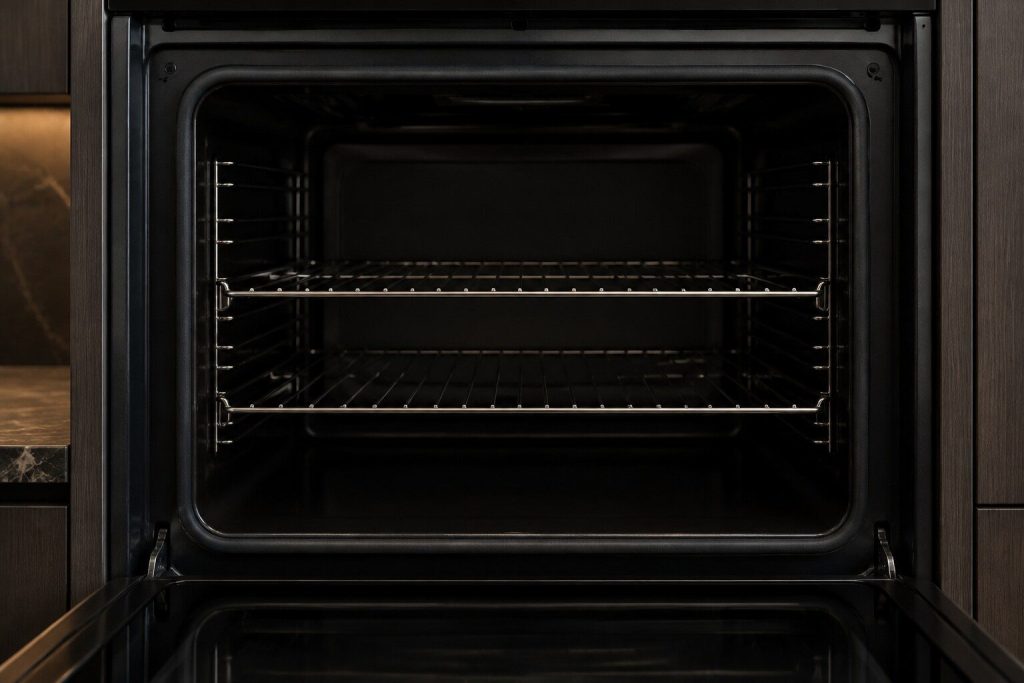
It lights up, and nothing gets hot Oven not heating
An oven that responds to the controls and produces no heat. On a dual-fuel range this affects the electric oven while every gas burner keeps working perfectly, which confuses people into thinking half the appliance is fine. It is.
- Bake and broil are different elements
- On a dual-fuel range the top is unaffected
- F codes name the circuit that is talking
-
After a self-clean cycle, usually Oven door locked and will not open
The door locked during self-clean and has not released. A large share of these calls end with the honest answer that the cavity is still too warm — the lock releases on temperature, not on time, and after a full cycle that can take hours.
- It releases on temperature, not on time
- F9 and FC name the latch circuit
- Never force it
-
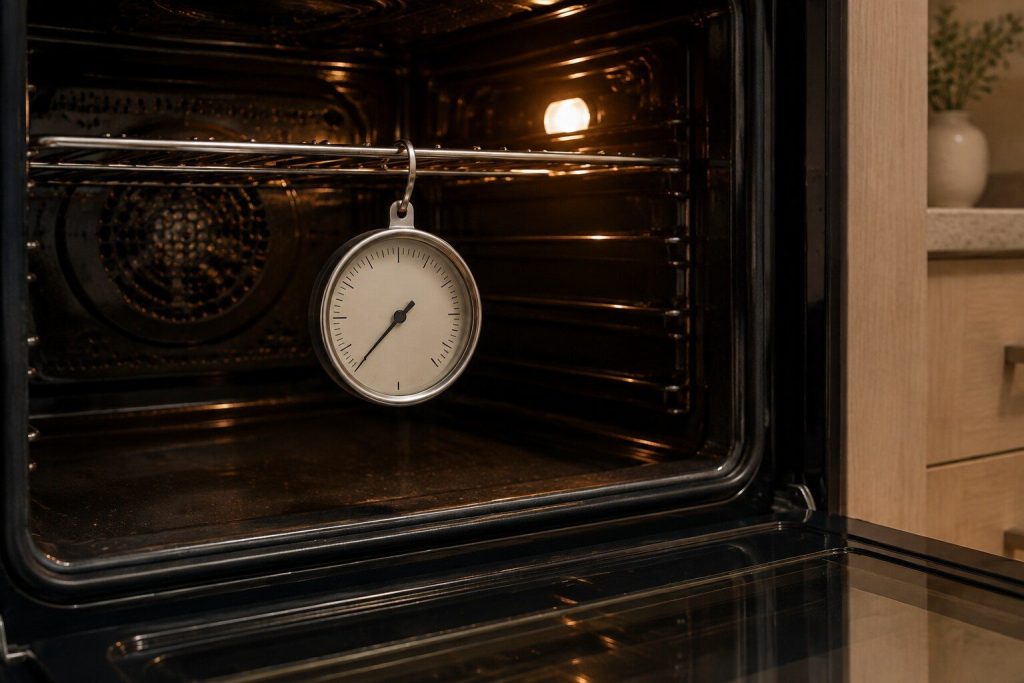
It heats, but not to the number on the dial Oven cooking too hot or too cold
An oven that is consistently out by 25 or 30 degrees does not need a part; it needs the calibration offset it already has. An oven that swings, overshoots or throws a code is a different conversation. Telling those two apart before touching anything is most of this job.
- A steady offset is calibration
- A swing is the sensor or the control
- Measure after a full preheat, not two minutes in
-
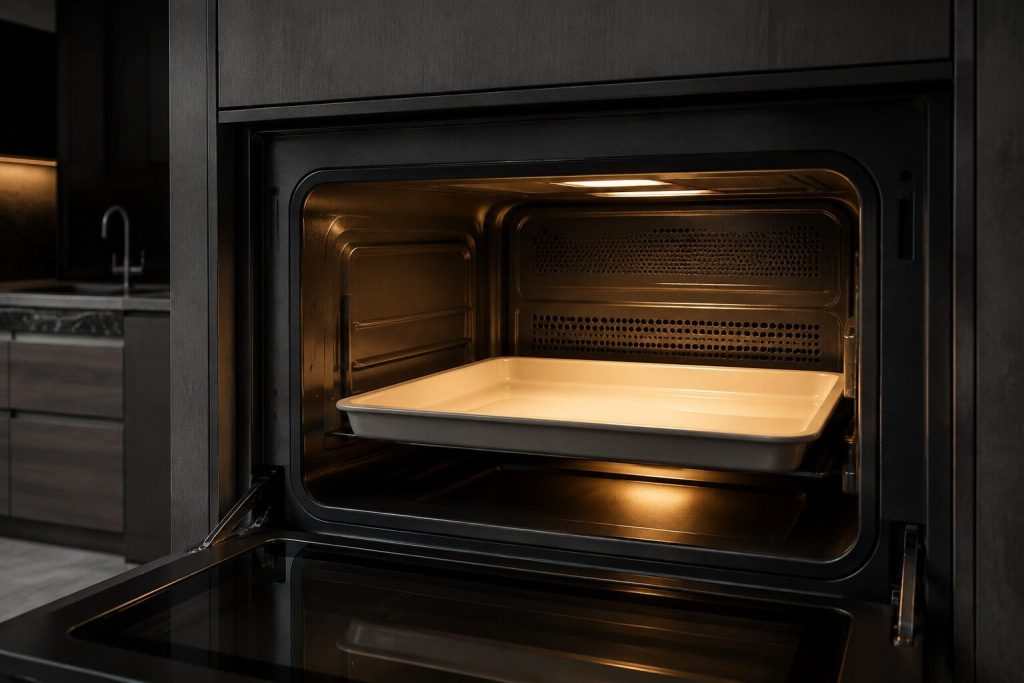
It runs, and the results are pale Advantium not browning or cooking slowly
The Advantium cooks with halogen lamps above and below the food as well as with microwave energy, and the browning is the lamps. When one goes the oven still works — it just produces pale, slow results — which is why this goes unreported for months.
- The lamps are what brown, and they are serviceable
- 120 V and 240 V are different appliances
- Runs and does not heat at all is a different page
-
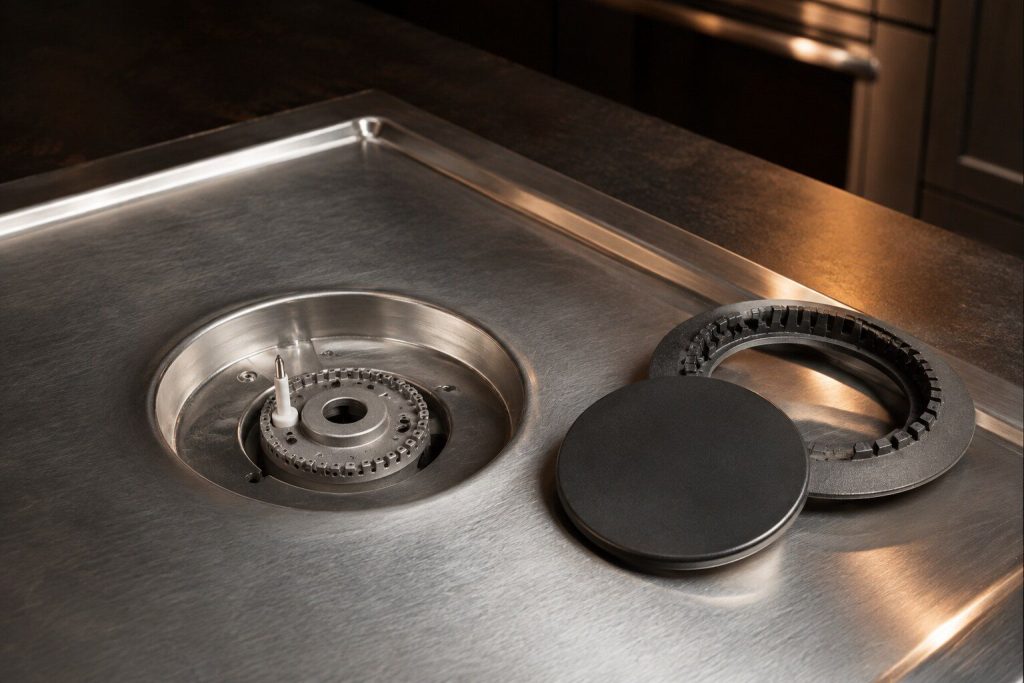
It clicks and clicks and nothing happens Burner will not light
One burner that sparks and will not light while the others are fine. Before any part is ordered there is a check that resolves a large share of these for nothing: the burner cap, which comes off for cleaning and goes back in an orientation that matters.
- Re-seat the cap before ordering anything
- One burner and all burners are different problems
- Continuous clicking is usually moisture
-
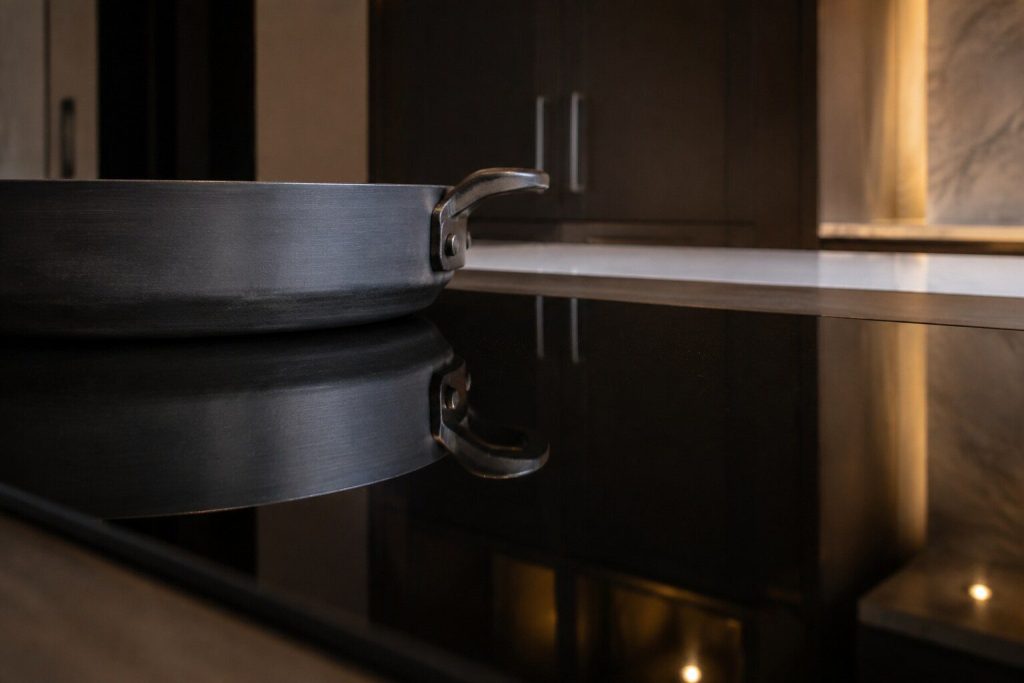
One zone dead, or the power dropping by itself Induction zone not working
Induction has no flame and no element — each position is a coil and a power module underneath, so the problems are electronic and heat-related. And it has the cheapest possible outcome of any call on this site: a pan that is not magnetic.
- A magnet settles it in five seconds
- One zone and one side are different problems
- Power dropping by itself is thermal protection
-
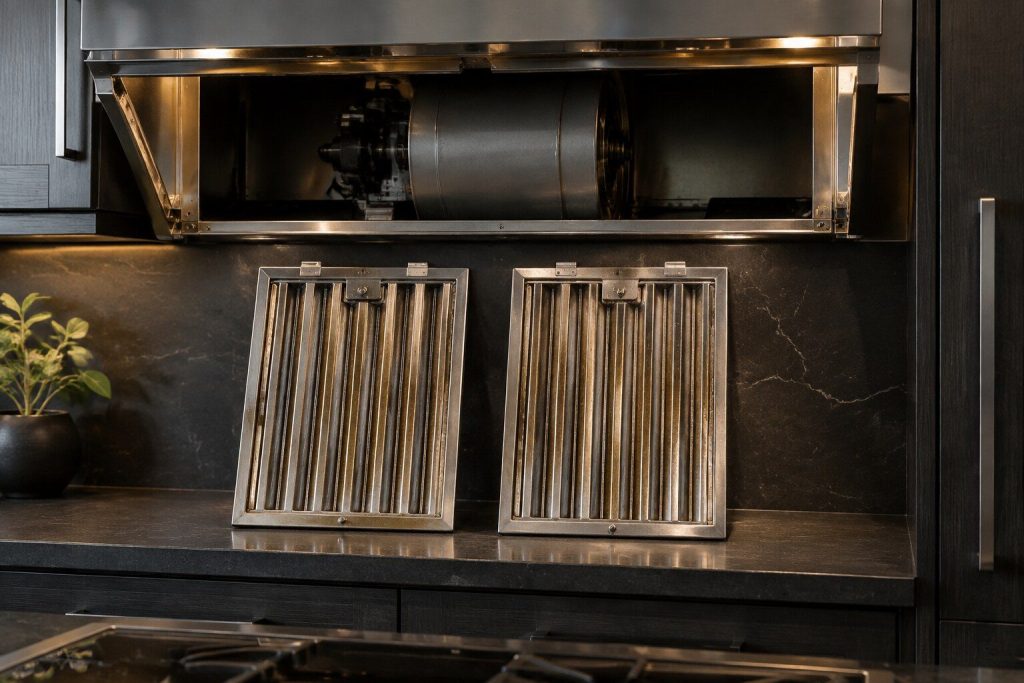
The fan runs and the kitchen still smells Range hood not pulling air
Airflow goes missing in three places and only one of them is the appliance: the filters, the duct and the cap at the end of it, and the make-up air that a tightly sealed air-conditioned house cannot supply. Nothing on the hood reports any of it.
- Filters lose airflow long before they look dirty
- The termination outside is invisible from inside
- A sealed house cannot supply the air
-
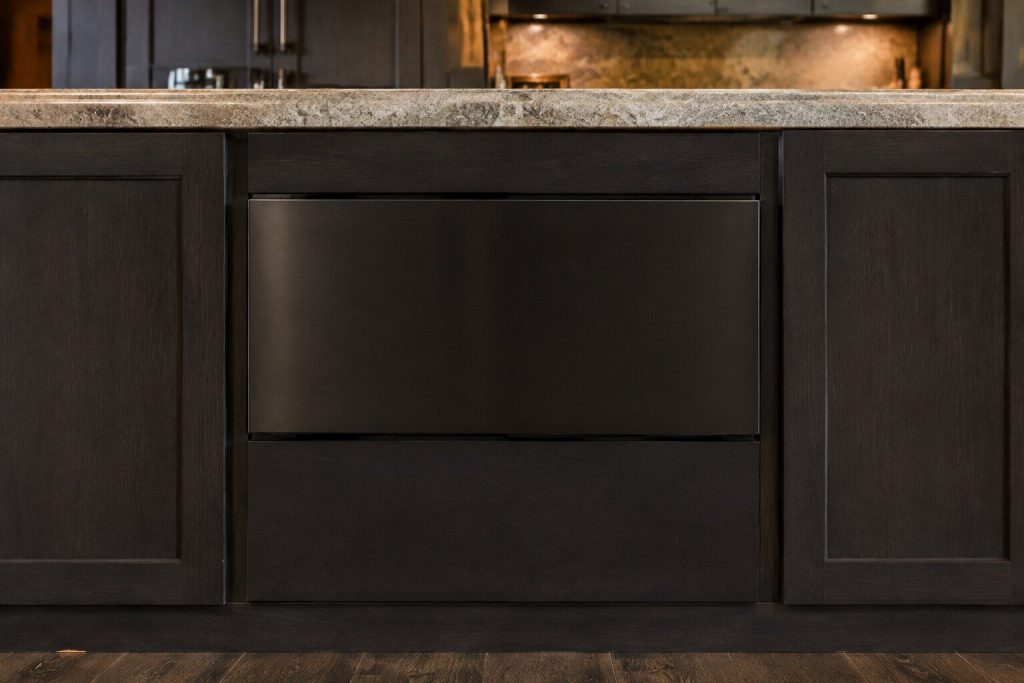
It will not open, or it opens partway Microwave drawer will not open
A microwave drawer opens on a motor and a drive, and it is the only microwave in the kitchen with a moving mechanism people lean on. Three complaints — will not open, opens partway, opens and will not run — and three different places to look.
- Rule out an obstruction first, for nothing
- A drawer not fully closed refuses to run
- Separate from anything on the cooking side
-
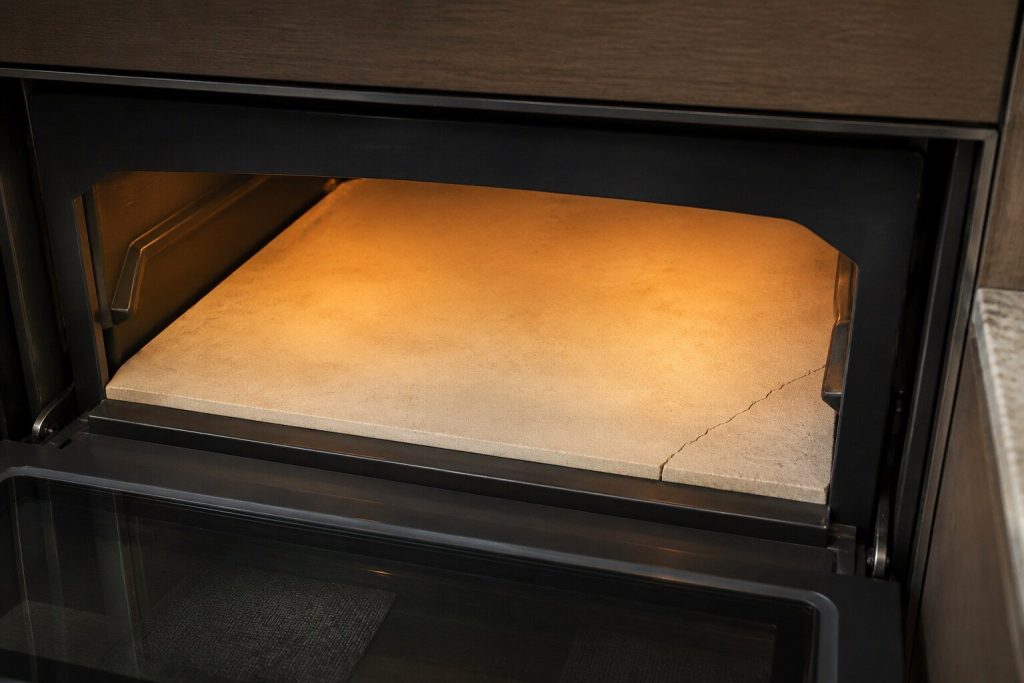
A high-heat oven that has stopped getting hot Hearth oven not reaching temperature
The hearth oven runs at temperatures nothing else in the kitchen sees, and when it stops reaching them the causes are the ones high heat produces: seals that have hardened, elements that have failed partially, and sensing that has drifted. There is no published code table for this appliance, so what it is doing is the whole diagnosis.
- No code table exists for this appliance
- A small loss of sealing costs a lot at these temperatures
- Slow to temperature and never reaching it are different
The block no sibling site has
The same behavior means different things on different Monogram appliances
The appliances
Where there is no code to look up
Six appliances that report nothing at all
Wine cabinets, beverage centers, standalone ice makers, warming drawers, ventilation and the hearth oven publish no code table. That is not a gap in this site; it is a gap in what the manufacturer publishes, and inventing a table to fill it is exactly what a sibling network did with about 38 made-up codes. So those appliances get symptom pages instead, and the pages say what to measure rather than what to read.
Before you book
Three minutes that change the visit
The model number, off the plate
- Refrigeration: inside the fresh-food compartment, usually on the left wall.
- Dishwasher: on the tub edge, behind the door.
- Ranges and wall ovens: on the frame behind the door, and on some ranges behind the bottom drawer.
- Photograph it. These numbers are long and one wrong character sends us to the wrong parts list.
Whatever the appliance is showing
- On the fully integrated dishwasher the display is on the TOP EDGE of the door. Open the door and look — most owners have never seen it.
- Case matters on refrigeration: DE is demonstration mode and dE is the defrost system.
- tC, tF, LOC and OFF are not errors at all, and our archive says which is which.
How the appliance is installed
- Built-in, integrated column, undercounter or free-standing.
- Panel-ready or stainless — it decides how the door comes apart.
- Whether two tall doors are one appliance or two columns. That one answer changes the whole visit.
By appliance
Which appliance is doing it
If you would rather start from the appliance than from the behavior.
-
Built-in side-by-side · integrated column · French door · bottom freezer Refrigerators
Monogram refrigeration is built in, and on this make that is not a styling word — it is what the repair has to work around. A 48-inch side-by-side is bolted into cabinetry, a column is flush with the run and carries a custom door panel, and the machinery is reached from the front because there is no behind. The failures are ordinary refrigeration failures. Getting to them, and putting the kitchen back the way the cabinetmaker left it, is the part that takes the skill.
- Built-in and panel-ready models are serviced from the front
- Door panels and alignment are part of the job, not an extra
- Sealed-system work is measured, never guessed at
-
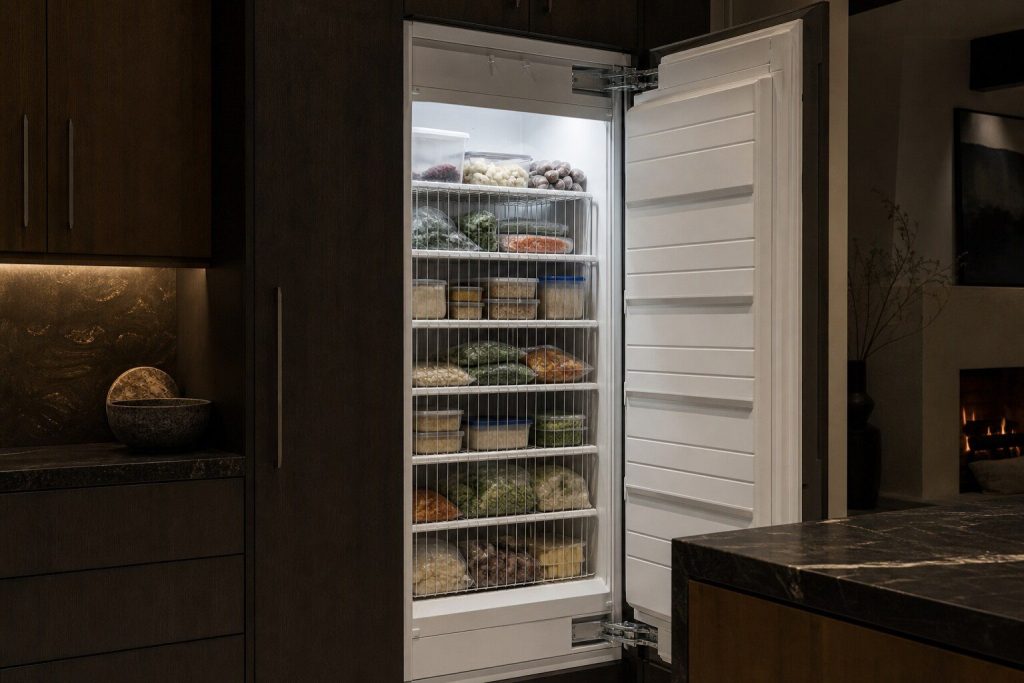
18, 24, 30 and 36-inch integrated columns · panel-ready Freezers
A Monogram freezer is a column: one cabinet, one temperature, flush with the cabinetry and usually standing beside a refrigerator column that looks identical from the front. That pairing is where most calls start, because when one of the two stops behaving the other is still perfect, and the two cabinets have separate machinery, separate sensors and separate problems.
- All-freezer columns in 18, 24, 30 and 36 inches
- Paired columns are two machines, not one
- Ice build-up is a defrost question before it is a door question
-
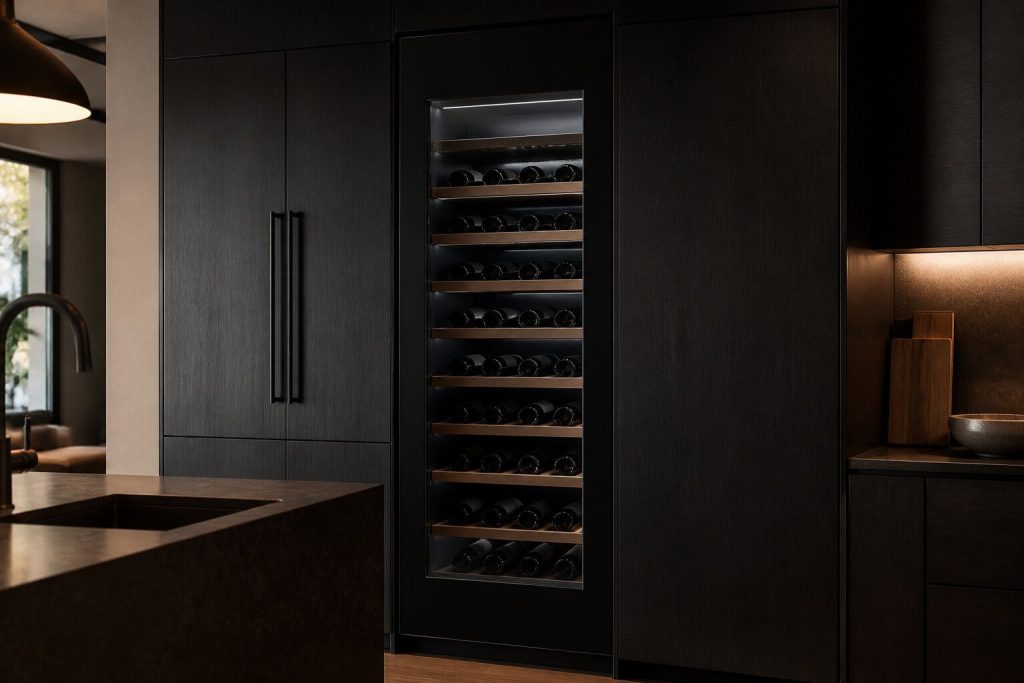
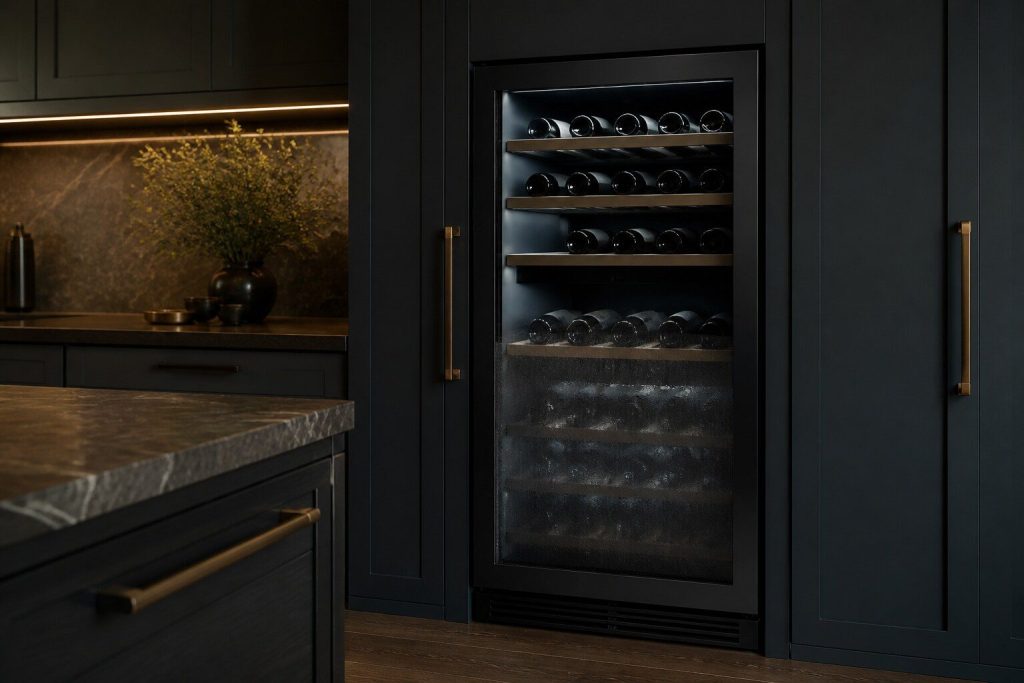
24-inch wine column · 30-inch wine sommelier · panel-ready wine reserve Wine storage
Wine storage is the appliance where a small problem is an expensive one, because the damage happens to the contents rather than to the machine. A cabinet that has drifted four degrees or lost its humidity will look and sound completely normal for months. Monogram's wine storage runs from a 24-inch panel-ready reserve up to a 30-inch fully-integrated sommelier cabinet, and all of it is built in.
- 24-inch wine columns and reserves, and a 30-inch sommelier cabinet
- Temperature stability matters more than the number itself
- Vibration and light are part of the diagnosis
-
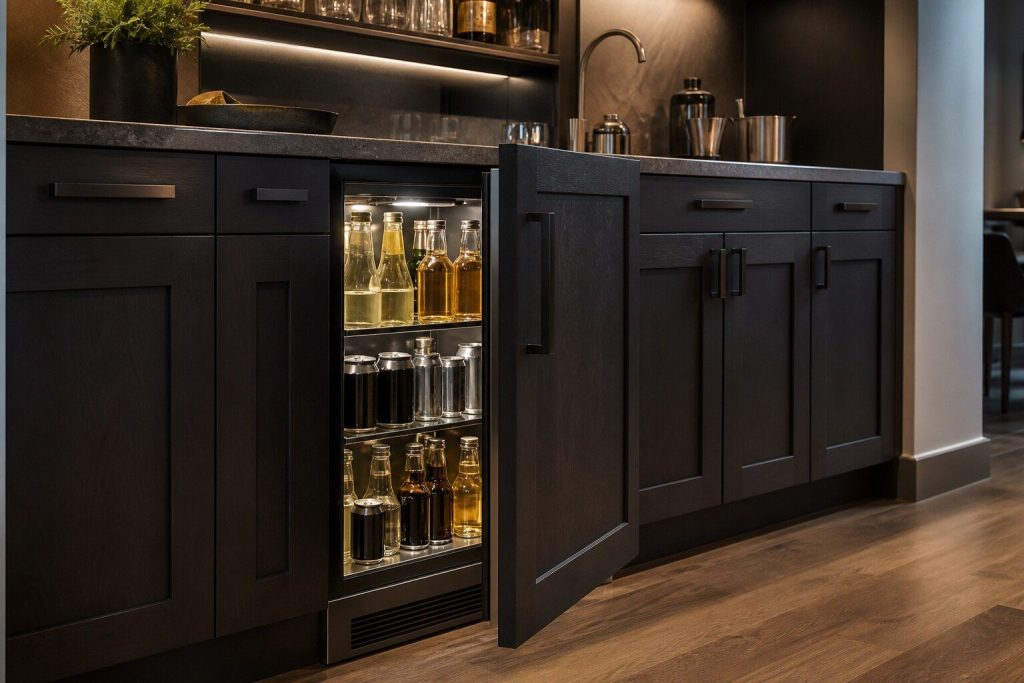
24-inch panel-ready beverage centers · bar refrigerators with ice makers Beverage centers
The undercounter appliance that works hardest and gets thought about least. A beverage center in a South Florida house is opened dozens of times a day, often sits in a bar or a covered outdoor kitchen rather than in the conditioned part of the house, and is expected to hold temperature through all of it. Monogram builds these as 24-inch panel-ready units, some with an ice maker inside.
- 24-inch panel-ready beverage centers and bar refrigerators
- Ambient temperature is part of the problem, not an excuse
- Units with an ice maker inside have two things to check
-
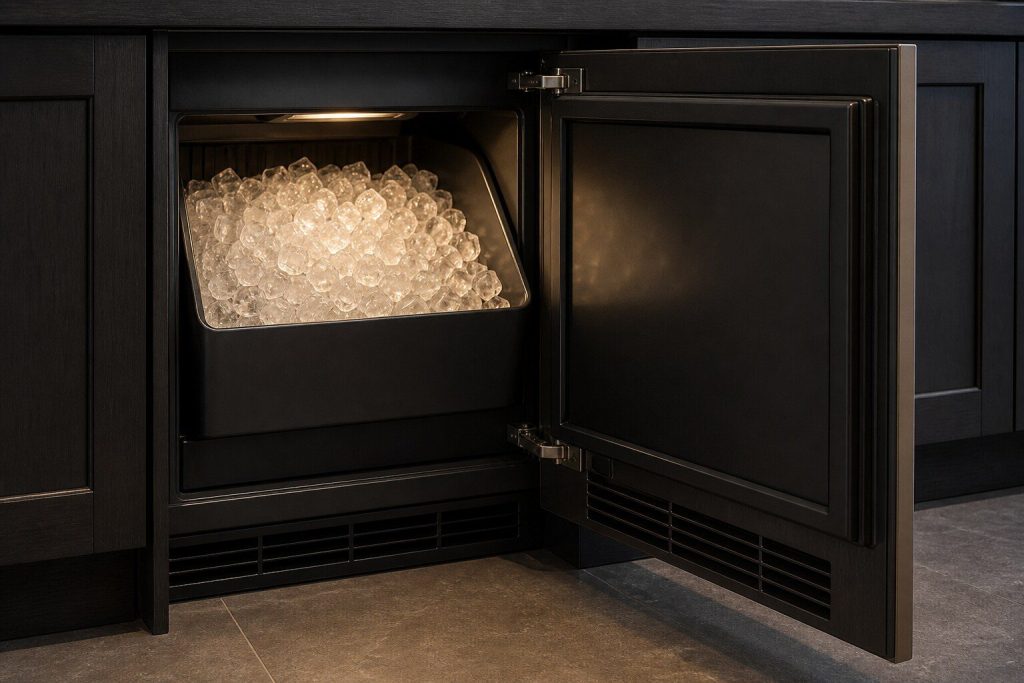
15-inch undercounter clear ice and nugget ice · in-cabinet ice makers Ice makers
A dedicated ice maker is a small refrigeration plant with a water circuit running through it, and in Miami the water circuit is what fails. Monogram kitchens take 15-inch undercounter units — clear ice and nugget ice — alongside the ice makers built into refrigerators and bar cabinets, and the two kinds fail in completely different ways.
- 15-inch undercounter clear-ice and nugget-ice machines
- Local water is hard on every part of the water circuit
- A drain that does not drain is the commonest undercounter problem
-
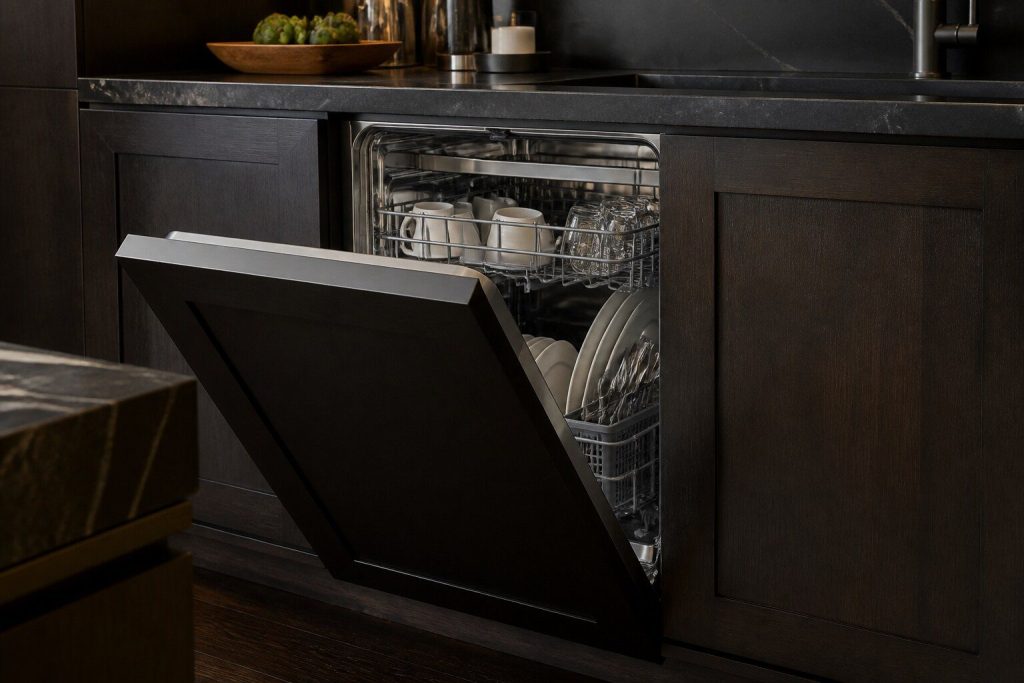
24-inch fully integrated · panel-ready and stainless Dishwashers
Monogram's dishwasher line is short and consistent: 24-inch fully integrated machines, panel-ready or stainless, with the controls hidden on the top edge of the door. That hidden control panel is the reason most owners never see the code their machine is showing — it is displayed while the door is open, which is exactly when nobody is looking.
- 24-inch fully integrated, panel-ready or stainless
- The C-code family is displayed on the top edge of the door
- Drainage is the largest single category of call
-
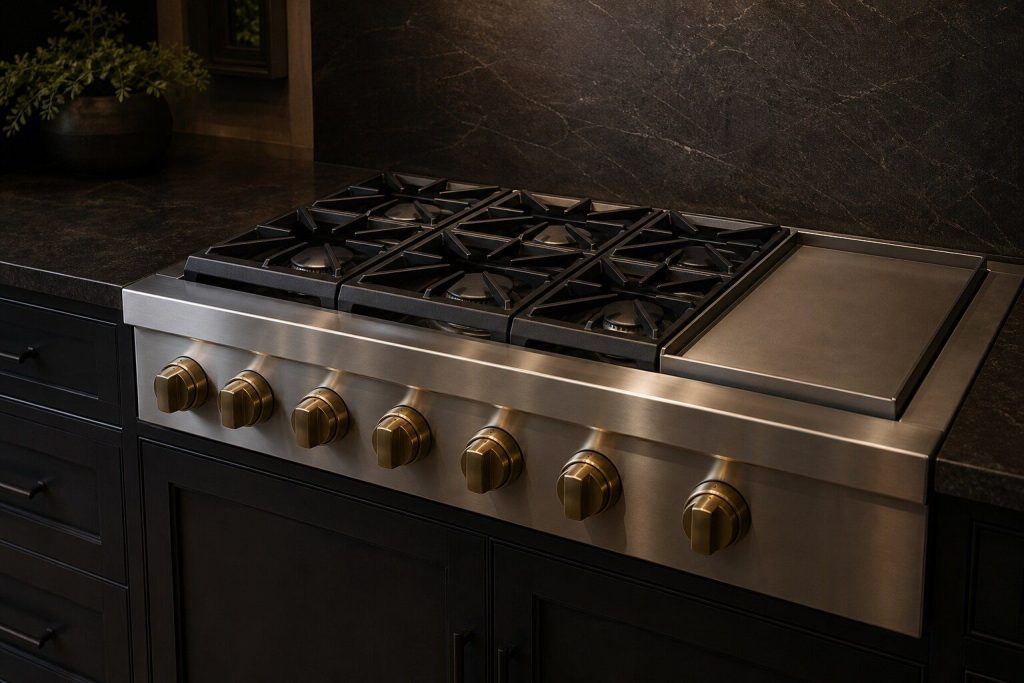
30, 36 and 48-inch · dual-fuel, all-gas and induction Professional ranges
Monogram does not make an ordinary range. The line is professional: 30, 36 and 48 inches, dual-fuel with a gas top over an electric oven, all-gas throughout, or induction — with griddles and grills on the wider models. A 48-inch dual-fuel range is a gas appliance, an electric appliance and a ventilation problem in one piece of steel, and the diagnosis starts by working out which of the three is talking.
- Dual-fuel, all-gas and induction, 30 to 48 inches
- Griddle and grill sections are their own repair
- The F-code family covers the oven side, not the burners
Free before paid
Several of these end without a visit
A magnet on the base of a pan settles most induction complaints. A strip of paper closed in a door settles most seal questions. DE on a refrigerator display is demonstration mode and clears by unplugging. A dishwasher that will not start is usually a door it does not trust. We would rather you found that out here than paid somebody to tell you.
Before you call
Questions we are asked about the work
The display says something that is not on your list.
Send us a photograph. The manufacturer says plainly in its own range table that it cannot list every code for every model past and present, and we publish what is published rather than filling the gaps.
It is intermittent. Is it worth booking?
Yes, and note the rhythm before you do — time of day, after a self-clean cycle, only when the house is full. Intermittent problems have patterns and the pattern is usually the diagnosis.
Can you diagnose it over the phone?
We can narrow it, and we will, because it saves us both a visit that was never needed. What we will not do is name a part and a price down a telephone line.
Do I need the model number even for a symptom?
Yes. On this make it decides which form of the appliance you have, and half these pages give a different answer depending on that.
In more detail
Why symptom pages carry more weight on this make
Because six appliances have nothing else
The manufacturer publishes code tables for refrigeration, dishwashers, ranges and wall ovens, microwaves and Advantium. For wine cabinets, beverage centers, standalone ice makers, warming drawers, ventilation and the hearth oven it publishes nothing. On those appliances the observable behavior is the entire diagnostic path, and a page that describes it properly is worth more than a code list would be.
And because plenty of codes are not errors
tC and tF are TurboCool and TurboFreeze running. LOC is child lockout. OFF means the oven is too hot for self-clean. Cup Open is a reminder to add detergent. A capital DE is showroom mode and a lower-case dE is a repair. Reading a display correctly is half of what these pages are for.
What we ask for
The model number, whatever is showing, how long it has been doing it, and how the appliance is installed. With those four we can usually name the likely part and the band it falls in before anybody leaves the house.
The model number, and a sentence about what it is doing.
Add a photograph of anything on the display. That is usually enough for us to name the likely part and the band it falls in before anybody leaves the house.
This article is based on:
- Official manufacturer documentation
- Internal repair procedures
- Technician repair history
- Company quality standards