- “The condenser is the first suspect and it is free to check”
- “A dropped door panel produces this too”
- “The sealed system is last, not first”
Symptom
Monogram refrigerator not cooling
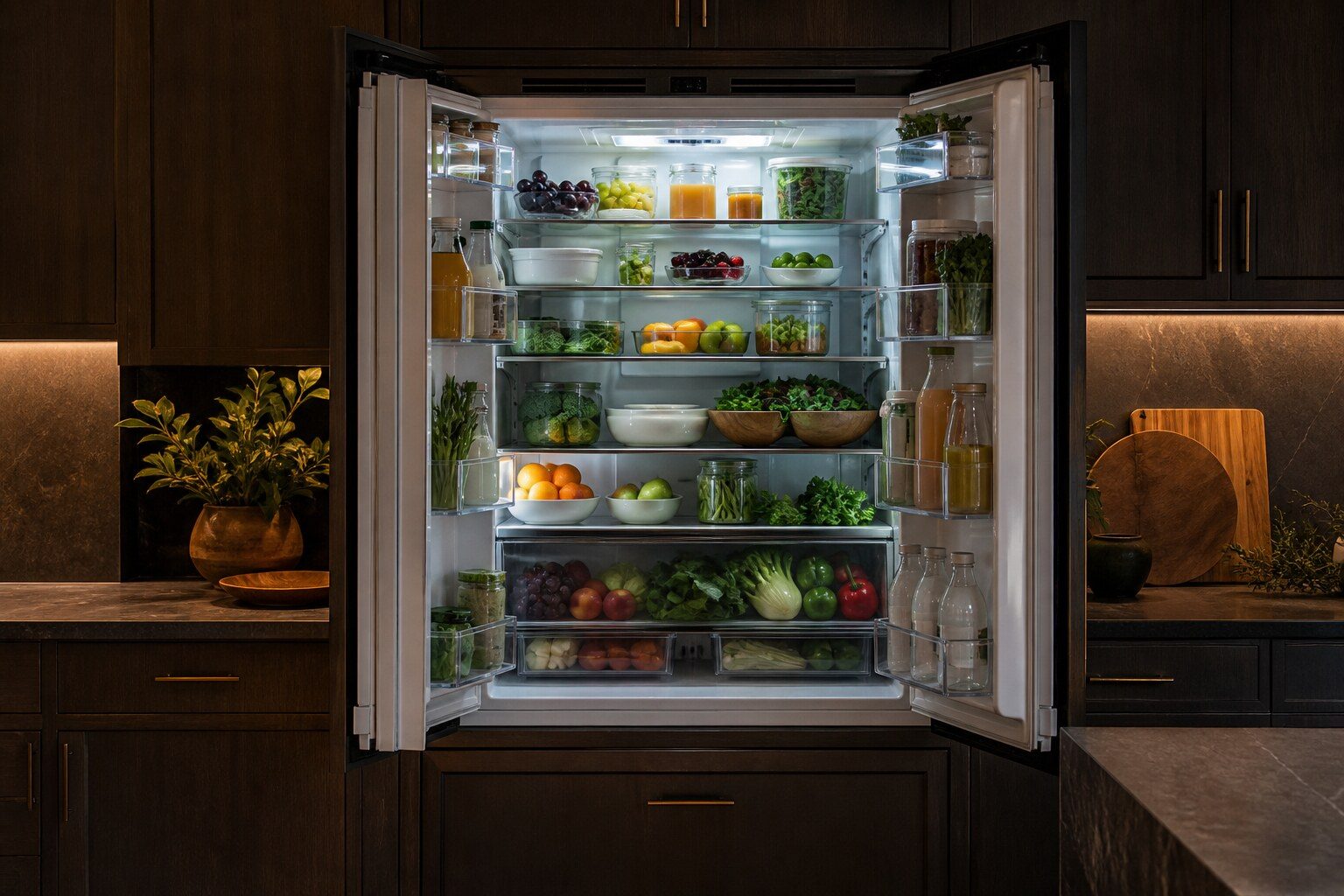
The call we take more often than any other. On built-in refrigeration the first suspect is almost never the compressor — it is the condenser behind the grille above the door, which in a Miami kitchen collects salt, cooking aerosol and dust until it can no longer shed heat, with nothing on the display to say so.
- From $95 diagnostic, credited to the repair
- 59 cities and neighborhoods covered
- OEM parts available on order
- In writing the price, before anything is opened
Six ordinary causes
What this usually turns out to be
Cheapest and commonest first, which is also the order we check them in. They sit hundreds of dollars apart, and only the unit settles which one is yours.
-
Demonstration mode
DE on the display. The appliance is doing exactly what it was told and nothing is wrong with it. Unplugging for a minute or two clears most of them.
Diagnostic visit from $95 -
The condenser
Salt air, dust and cooking grease on the coil behind the grille until it cannot shed heat. The most common finding in this city and the cheapest to correct.
Condenser cleaning service from $135 -
A door that has stopped sealing
A heavy custom panel settles over years, the seal stops meeting the cabinet along its top edge, and humid air walks in all day.
Panel alignment and door adjustment from $145 -
The defrost circuit
Ice on the evaporator that never clears, so air stops moving through it. The cabinet warms up while the compressor runs continuously.
Defrost system repair from $195 -
A fan or a sensor
Cold that is being made and not delivered looks identical from the front to cold that is not being made at all.
Temperature sensor replacement from $165 -
The sealed system
Real, expensive, and quoted far more often than it happens. Everything above is eliminated first and it is reached with gauges, not by elimination alone.
Sealed system repair from $695
In five minutes
Before you call anybody
None of it needs tools, and all of it makes the visit shorter.
-
01
Read the display
FF means the freezer is warming and the food is what to check first. CC means the temperature is not what it was set to. DE and dE are different things and the case is what tells them apart.
-
02
Measure both compartments
With a thermometer on a middle shelf, not by hand and not off the display. The display and the shelf disagreeing is itself a diagnosis.
-
03
Look at the grille
Above the door on a built-in, at the bottom on an undercounter unit. If you cannot see through it, that is your afternoon.
-
04
Close a strip of paper in the door
At several points around the perimeter. Where it pulls out freely, the seal is not sealing there.
How it shows up
What people describe when they call

A shortcut
Narrow it down before anybody arrives
A description of the behaviour leaves a few possible causes. A code names the subsystem before anybody opens anything, which is why it is worth photographing before it clears.
If there is no code at all
ZIR361NPRII
ZIC363IPVRH
ZIDI240HII
ZIDS240NSS
ZIP364IPVII
ZWE23NSYSS
ZIS480NNII
ZISB480DNII
ZISS480DNSS
ZIBS240NSS
ZIFI240HII
The data plate is inside the cabinet, upper left wall or behind the grille. All models
In more detail
About Monogram refrigerator not cooling
The two checks that cost nothing
Look for a mode before you look for a part. DE in capitals on the display is demonstration mode — lights and controls alive, cooling switched off deliberately, which is how a showroom floor model behaves and how one occasionally arrives in a house. Then look at the load: a cabinet packed to the back wall blocks the vents the cold arrives through, and misses temperature with nothing broken at all.
What it usually means, by the kind of Monogram appliance
Monogram sells one appliance in several forms, and the same behavior points at different things on each of them. A built-in side-by-side and an integrated column are not the same service situation, and a dual-fuel range and an induction range fail in different halves.
- Built-in side-by-side — Serviced from the front through the grille above the door. The condenser and the air path to it are what to look at first, and they are reachable without moving anything.
- Integrated column — Establish which cabinet. A refrigerator column and the freezer column beside it are two independent machines, and the healthy one tells you nothing about the other.
- Undercounter and drawer units — These breathe through a grille a few inches tall at the bottom of the door, and they are often installed somewhere warmer than a kitchen. Ambient is part of the diagnosis rather than an excuse.
Why the condenser comes first here and not somewhere else
A built-in refrigerator does not vent out of the back of the room. It breathes through a grille into the kitchen it is standing in, which means the coil behind that grille takes everything a kitchen produces — and in a house within a few miles of the water, salt as well. It runs hotter, it runs longer, and the first thing most people notice is a power bill rather than a temperature.
What changes when the cabinet is panel-ready
The door is heavy and the hinge was shimmed for its weight on the day the kitchen was fitted. Doors settle. A gasket that no longer meets the cabinet along its whole length lets humid August air in continuously, and the defrost circuit — sized for ordinary use — never catches up. Frost that comes back within days of being cleared is very often this, and the repair is an adjustment rather than a part.
This article is based on:
- Official manufacturer documentation
- Internal repair procedures
- Technician repair history
- Company quality standards

Before you book
Questions about Monogram refrigerator not cooling
It is running constantly and it is still not cold.
That usually means cold is being made and not delivered, or the machine cannot shed the heat it is producing. Ice on the evaporator, a stopped fan or a blocked condenser all give exactly this. It is also a good sign for the repair — continuous running means the compressor is alive.
Someone quoted me a compressor over the phone.
Nobody can reach that conclusion without measuring at the appliance. It is the most over-diagnosed repair on a cold appliance in this city.
Where we do it
Across Miami-Dade, Broward, and Palm Beach
Same terms everywhere we go: an on-site diagnostic first, the price agreed in writing, and the exact figure confirmed once we have seen the unit.
Neighborhoods people ask for by name