Common Problems
A Door That No Longer Seals: The Paper Test and the Panel Behind It
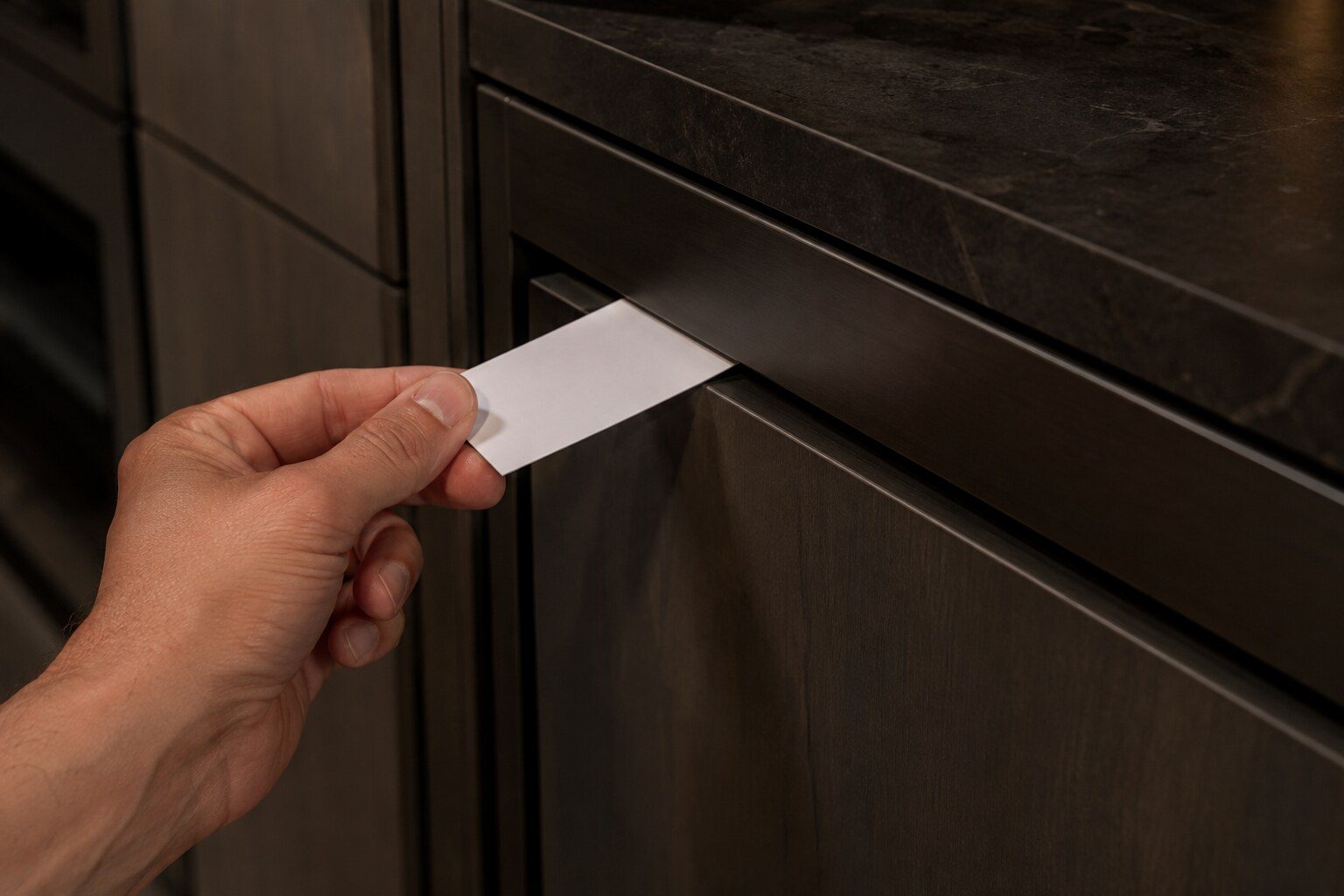
Close a strip of paper in the door and pull it out, at several points around the perimeter and at several heights. Where it slides out freely, the seal is not meeting the cabinet there. That is the same test a technician does and it takes two minutes. What you do next depends on where it fails: a gap along the top edge on one side almost always means the door has dropped rather than that the gasket has gone, and on panel-ready doors that is the usual story — a heavy custom panel, hinges shimmed for its weight years ago, and a door that has settled a few millimeters since. A gasket that has hardened or taken a permanent fold fails everywhere rather than in one place. Fitting a new gasket to a door that no longer closes true wastes the part, so the door is checked first.
The full guide
The problem nobody books, behind several that people do
Nobody calls a repair company about a door. They call about frost that keeps coming back, about a cabinet that runs constantly, about a compartment that will not hold its temperature, about a power bill. A surprising share of all four is a door that stopped sealing eighteen months ago.
It is the quietest problem in the kitchen because nothing changes suddenly. A gasket hardens over years. A door settles a millimeter at a time. There is no moment at which anything is obviously wrong, and the appliance never says a word — it simply works harder, all day, and the consequences arrive somewhere else.
Two minutes, and you have the answer
Tear a sheet of paper into strips. Close one in the door at the top corner nearest the hinge, shut the door properly, and pull it straight out. It should drag. Do it at both top corners, the middle of each side, both bottom corners and the middle of the bottom.
Where the paper comes out with no resistance, the seal is not meeting the cabinet at that point. That is the entire test, it is what a technician does, and it costs nothing.
What the pattern means
It fails at one place, usually a top corner. The door has moved. Gaskets do not fail in one corner; doors drop in one corner. This is by far the most common result on integrated cabinetry, and it is an adjustment rather than a part.
It fails everywhere, or almost. The gasket has hardened or taken a permanent set. That is a part, and it is model-specific — a near-fit seals in some places and not in others, which is the problem you started with.
It grips everywhere and the cabinet still misbehaves. Then the door is not the story and something else is, and that is worth knowing too. Half the value of this test is the times it comes back clean.
Why panel-ready doors do this
The door on most of these cabinets carries a custom panel that belongs to the kitchen rather than to the appliance. It is heavy, and the hinges were shimmed for its exact weight on the day the kitchen was fitted. Everything after that is gravity.
Two things accelerate it. A remodel that replaces the panels with heavier ones — a thicker material, a different core, a bigger slab of stone-look laminate — and nobody re-shims the hinge or re-tensions the springs. And years of a door being opened with a full door bin on it, which is a load the hinge sees every time.
The visible symptom is a line that no longer matches the run: the top of one door sitting a fraction below its neighbor. Cabinetmakers see it and call it settling. It is settling, and it is also a refrigeration problem.
What it is actually costing
Every door opening in an August kitchen puts moist air into a cold cabinet, and the defrost circuit exists to remove what that leaves behind. It was sized for a door that opens and shuts.
A door that no longer seals along part of its length is a door that is permanently, slightly open. The circuit runs more often, the evaporator ices anyway, airflow through it falls, the cabinet warms, the compressor runs longer — and the first thing anybody notices is frost returning within days of being cleared. On a wine cabinet the same leak shows up as a cabinet that cannot hold its band, and on a freezer as ice on the back wall.
That is the argument for treating this as a real service call rather than a cosmetic one. The adjustment is an hour. The consequences are the expensive pages on this site.
When we look at the whole run
Integrated cabinetry drifts together, because the doors were all hung in the same week and they all carry panels. Doing one door and leaving three is a false economy: the travel and the setup are the fixed cost and the doors are the marginal one. If one has dropped, the others are worth testing while somebody is standing there with the shims out.
The same visit is the right time to look at the dishwasher, which has the same problem with worse consequences — a panel-ready dishwasher door that has dropped seals unevenly along the bottom and leaks onto a floor rather than into a cabinet.
When an adjustment is not enough
When the hinge itself is worn. There is a difference between a door that is out of adjustment and a door whose hinge has play in it, and you can feel it: lift gently at the handle and see whether there is movement that was not there when the kitchen was new. An adjustment on a worn hinge buys a few months and then the door drops again, and we would rather say that than come back twice.
The same test, on the other appliances
Doors drift across a whole integrated run, and the paper test works on all of them. Doing the kitchen in one go takes ten minutes.
Freezer columns. The same story as refrigeration and with sharper consequences: a leak here shows up as frost on the back wall that returns within days of being cleared.
The dishwasher. Worse consequences than any of them. A panel-ready dishwasher door that has dropped seals unevenly along the bottom edge, and it leaks onto a floor rather than into a cabinet. Do the paper test along the bottom especially, and check whether the door holds its position when you let it go at halfway.
Wine cabinets. Here the seal is doing more than keeping cold in — it is holding a humidity band, and a leak shows up as a cabinet that cannot hold its zones rather than as anything visible.
Ovens. A door leaking at the top edge runs the top of the cavity cool, which arrives as uneven baking rather than as a door complaint. It also heats a kitchen that is already warm.
What a technician does that the paper test does not
The test finds the gap. It does not find why.
The measurements that follow are the hinge geometry against specification, the actual weight on the door, whether the shims match that weight, and whether the cabinet itself is level — which matters more than it sounds on a floor that has been replaced since the kitchen was fitted.
Then the repair is an adjustment, a re-shim, a re-tension, a new gasket, or a hinge. Those are five different outcomes at five different prices, and picking between them by eye is how people end up buying a gasket that does not solve the problem.
The remodel conversation
If a kitchen has been refaced, this page is more likely to apply to it than not, and it is worth raising with whoever did the work.
New panels are frequently heavier than the ones they replace. Almost nobody re-shims an appliance hinge or re-tensions a dishwasher door spring afterwards, because it is not part of a cabinetmaker's job and it is not obvious that it should be. The doors look perfect on handover and settle over the following year.
Asking a fitter to set the appliance doors for the new panels is a reasonable request and it costs almost nothing at that stage. Asking a refrigeration technician to do it two years later is this page.
What good looks like afterwards
The paper drags at every point around every door. The panel lines match their neighbors across the run. No condensation beading inside a cabinet near a door edge, and no frost in one corner of a freezer.
And on refrigeration, one more thing worth watching for a fortnight: the cabinet should run less. A door that had been leaking was giving the defrost circuit and the compressor work they were not designed for, and the difference after a proper adjustment is usually audible.
If it turns out to be a repair
What this leads to, and what it costs
Every job on this site is priced the same way: an on-site diagnostic first, the figure agreed in writing before anybody starts.
-
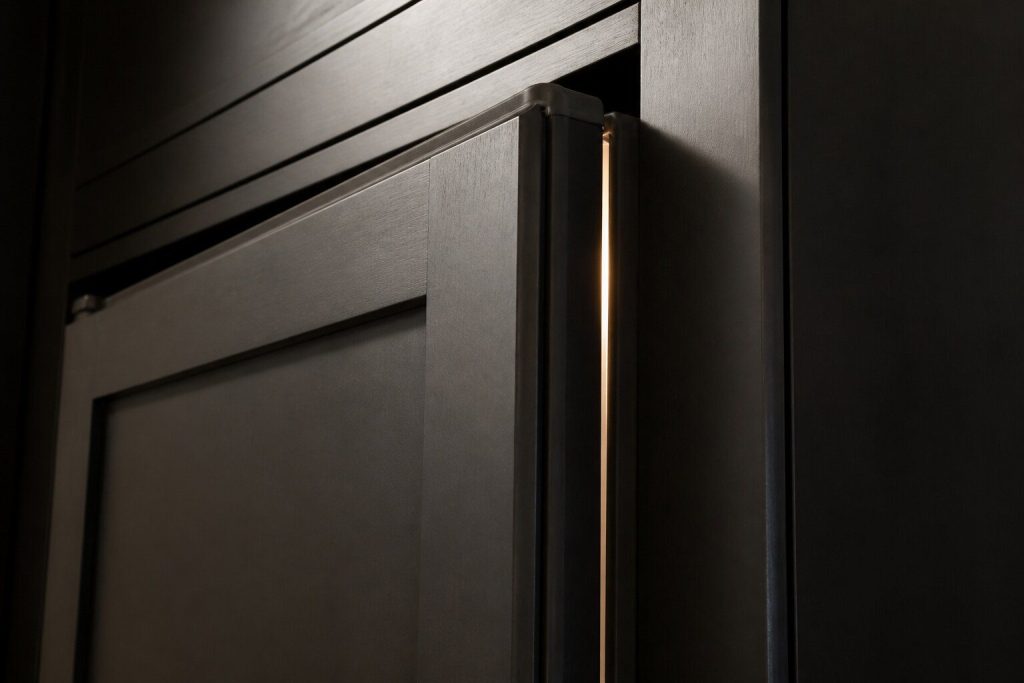
A line of light, a panel out of true, a gasket that has given up Refrigerator door not sealing
The problem that almost nobody calls about and that causes several of the problems people do call about. On integrated cabinetry the door carries a custom panel on hinges shimmed for its weight, and doors settle. What you see is a line that no longer matches the run; what the appliance sees is humid air, all day, every day.
- A dropped door is behind many defrost calls
- Panels changed in a remodel are a common cause
- The paper test settles it in two minutes
-
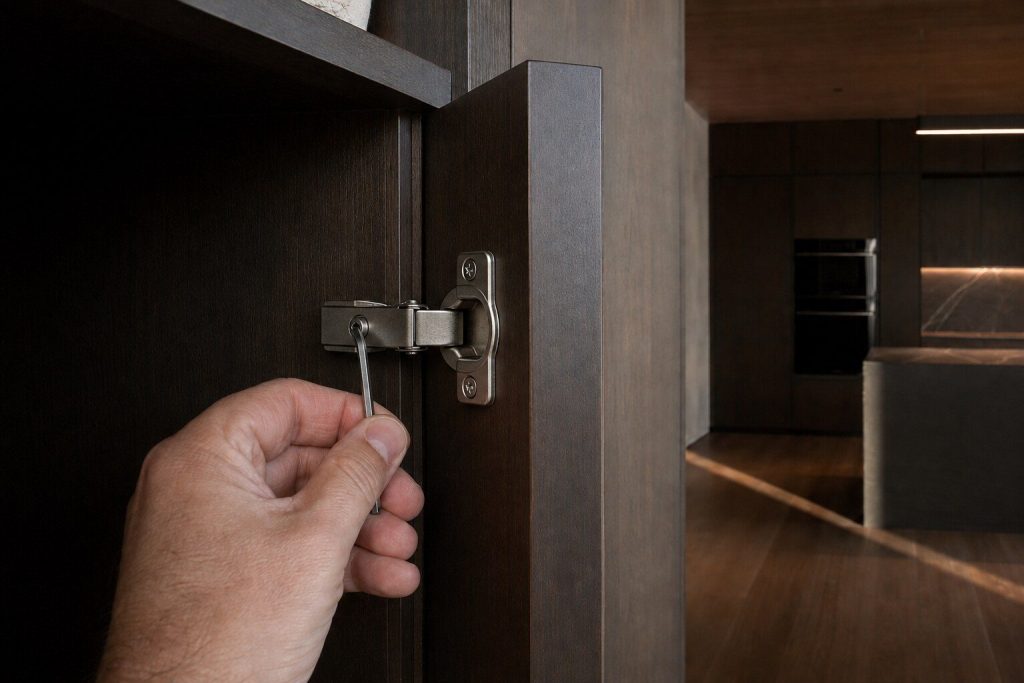
from $145 Panel alignment and door adjustment
The job that only exists on built-in kitchens, and the one owners most often wait too long to book. A custom door panel is heavy, the hinges were shimmed for it on installation day, and over years the door settles. What starts as a line of light along a cabinet becomes humid Florida air walking into a refrigerator all day, and then a defrost circuit that never catches up.
- Hinges, springs and shims set back to specification
- The seal checked along its whole length, not by eye
- Panel lines put back level with the run
-

from $165 Door seal replacement
A gasket is a wear part and it fails gradually, which is why it is almost never the thing people call about. It hardens, it takes a permanent set where it has been folded, and it stops meeting the cabinet along part of its length. On a cold appliance that is a defrost problem in waiting; on an oven it is heat and money going into the room.
- Tested along the whole length, not eyeballed
- Hinge and alignment checked at the same time
- The commonest cause of a defrost circuit that never rests
-
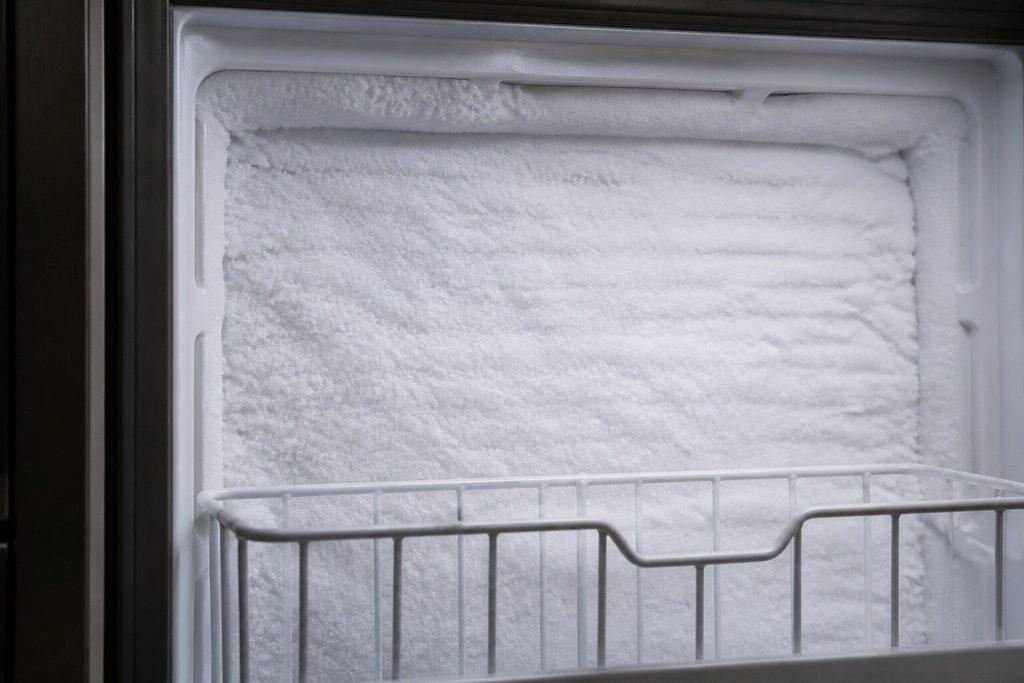
Ice that comes back after you clear it Frost building up in the freezer
Frost you clear and that returns within days is a defrost cycle that is no longer completing, or humid air getting in faster than the cycle can remove it. Both are ordinary and both are fixable, but they are different jobs — and where the frost sits is what tells them apart.
- An even coat on the back wall is the circuit
- A patch by one edge of the door is the seal
- Photograph it before you clear it
Questions people ask about this
It looks fine to me.
A gap that lets air through is smaller than a gap you can see, especially on a dark cabinet in a bright kitchen. That is the whole reason for the paper test — it finds what the eye does not.
Can a new gasket fix a door that has dropped?
No, and this is where money gets wasted on this repair. A new seal on a crooked door seals in some places and not in others, which is the same as not sealing. The door and the seal are checked together.
We had the kitchen refaced and it started after that.
Then that is very likely it. Replacement panels are often heavier than the originals and almost nobody re-shims the hinges or re-tensions the door springs afterwards. Setting them for the panel that is actually on the door now usually resolves it with no parts at all.
Is it worth a service call for a small gap?
On a refrigerator or a freezer, yes, and sooner rather than later. A door that no longer closes true feeds humid air into the cabinet every hour of every day, and the defrost circuit inherits work it was never sized for. That arrives months later as frost that keeps coming back and a compressor that never rests.
Common Problems
More guides like this one
-
A Monogram Ice Maker That Has Stopped: Cabinet, Water, Module, In That Order
Half of these are not ice maker problems at all. Production is a function of how cold the cabinet is, and the free checks come first for a reason.
Read more -
The Accent Lighting on a Professional Range, and Why It Goes Alone
Lighting on these ranges is its own circuit with its own driver. Lights that have gone while everything cooks perfectly is not a sign of anything larger.
Read more -
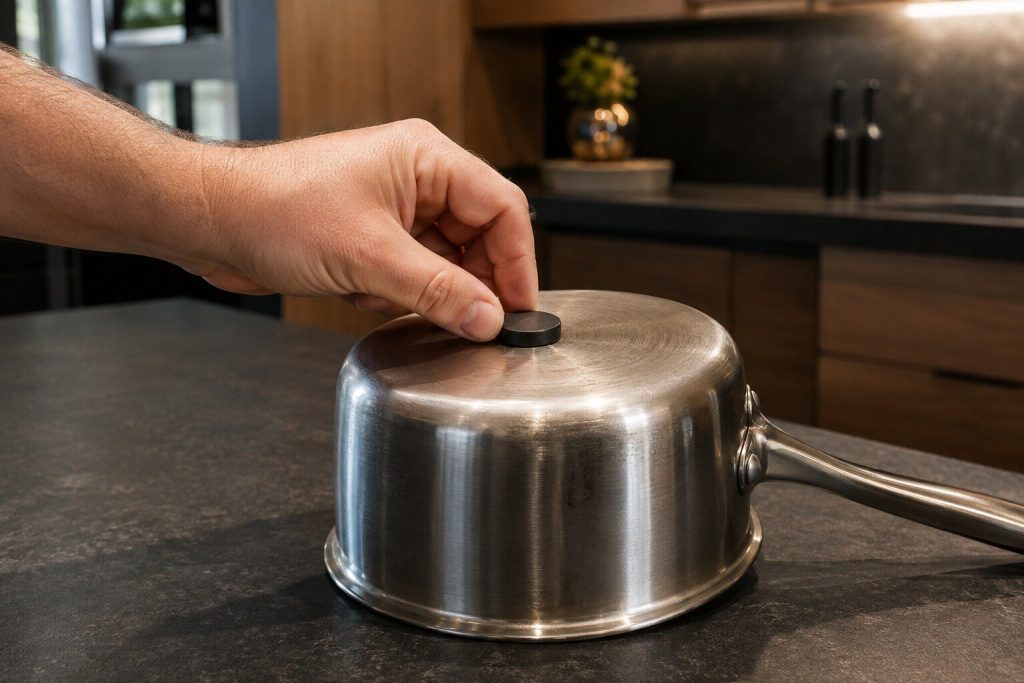
An Induction Zone That Will Not Start: The Five-Second Test First
A magnet on the base of the pan settles most of these before anybody leaves the house. What is left divides into three prices.
Read more
Tell us the model number and what it is doing.
This article is based on:
- Official manufacturer documentation
- Internal repair procedures
- Technician repair history
- Company quality standards