Common Problems
A Monogram Ice Maker That Has Stopped: Cabinet, Water, Module, In That Order
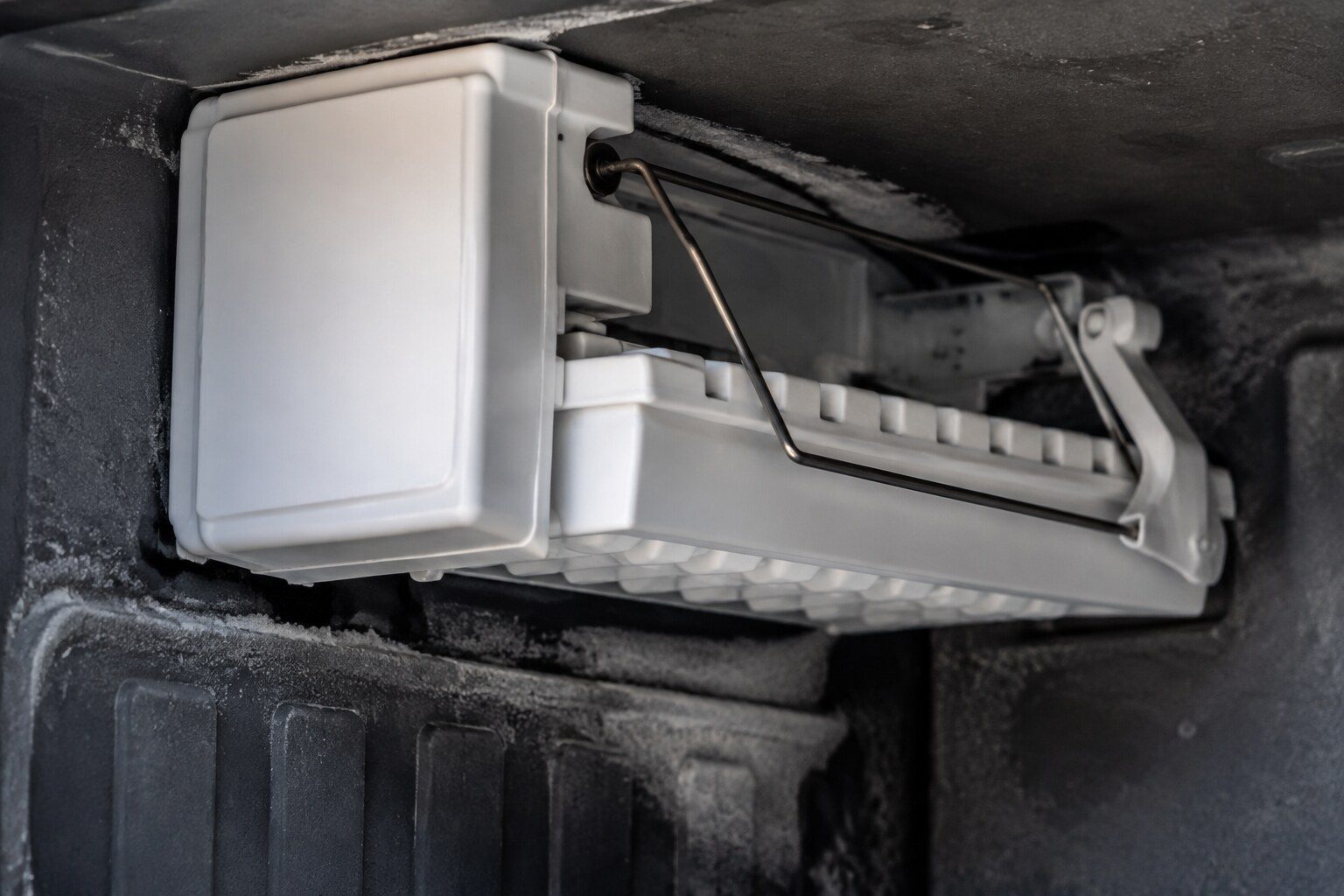
Work it in three stages and stop as soon as one of them explains it. First the cabinet: put a thermometer in the middle of the freezer and give it several hours. Ice production falls as the compartment drifts up and stops well before the food is at risk, so a freezer sitting above zero Fahrenheit is the answer and the ice maker is innocent. Second the water: check that the supply valve under the sink or behind the cabinet is fully open, change a filter that is anywhere near its date, and look for a plug of ice in the fill tube at the back of the compartment. Third the module itself: check that the feeler arm, on models that have one, is down rather than up, and watch a full cycle if you can. CI on the display means the ice maker is not operating and says nothing about which of the three stages is responsible.
The full guide
The order is the whole thing
An ice maker inside a refrigerator does not make cold. It borrows it. The module is a tray, a heater, a motor and a thermostat bolted into a compartment that somebody else is refrigerating, and it produces ice at the rate that compartment allows. That single fact reorders the entire diagnosis, and it is the reason so many of these calls end without a part.
Production falls as the freezer drifts up, and it stops altogether at a temperature where the food is still perfectly safe. So a household can have a freezer that is doing its job by any ordinary measure and an ice maker that has quietly given up, and nothing on the display connects the two.
Stage one: what the cabinet is actually holding
Put a thermometer in the middle of the load rather than in the door, and leave it for several hours. The door is the warmest place in the compartment and the least representative. Zero Fahrenheit is the number to hold, and a cabinet sitting five degrees above it will keep food safe while making very little ice.
If it is warm, this page ends here and a different one begins — the condenser behind the grille, the door seal, the defrost circuit. Those are the reasons a built-in freezer drifts, and in this climate the coil is the first suspect every time.
Stage two: water, and the three places it stops
The supply valve. Under the sink or behind the cabinet, and the single most common finding on this call. Old saddle valves silt closed on hard water over years, and any valve can be knocked half shut while somebody is working under a sink. It costs nothing to look.
The filter. The interval printed on a cartridge assumes gentler supply than South Florida provides. A filter past its useful life restricts flow enough that a fill never completes, and the machine simply gives up rather than reporting anything. If the dispenser has also slowed, that is the same story told twice.
The fill tube. At the back of the compartment, where the water enters the tray. If an earlier fill dribbled rather than filled — a partly blocked valve, a moment of low pressure — the dribble froze where it stood, and now every fill after it hits a plug of ice. Clearing it is easy. Finding out why it dribbled is the part that stops it happening again.
Stage three: the module
Now, and not before. Watch a full cycle if you can: the tray fills, the water freezes, the motor turns and the cubes drop. Where it stops is what has failed.
A tray that fills and never harvests is a motor, a thermostat or the harvest heater. A tray that never fills, with water proved to be arriving at the valve, is the inlet valve itself. And a module that runs its cycle perfectly into a bin that is already full is not a problem at all — bins fill, and the arm or the sensor stops production exactly as it should.
Two things specific to a Monogram kitchen
There may be two machines. Many of these kitchens have both a module inside the refrigerator and a dedicated undercounter machine in the island or the bar. They share a name and almost nothing else: the undercounter unit has its own refrigeration, its own drain and its own cleaning cycle, and none of the checks on this page apply to it. Which one you mean is the first thing we ask.
The dedicated machines are GE-badged. In Monogram's own current catalog the 15-inch undercounter clear-ice and nugget-ice machines are sold under the GE badge. That is not a downgrade and it is not a mistake on the invoice — it is simply how that company sells them, and it matters when somebody is looking for parts or a manual and finding nothing under Monogram.
When to stop and call
When the cabinet is holding zero, water is proved to be arriving, the fill tube is clear, and a cycle still does not complete. At that point it is the module or the valve, both are measurable, and neither is an expensive repair by the standards of the rest of this site. What is worth avoiding is arriving at that conclusion by ordering a module first — which is what happens when the order on this page is worked backwards.
What the ice itself is telling you
If there is some ice, look at it before deciding anything, because the shape of a cube is a diagnosis.
Hollow cubes, or cubes with a crater in the top. The fill was short. Water arrived, froze at the edges and there was not enough of it to finish the middle. That points at the supply, the valve or a restricted filter rather than at the module.
Small but properly formed cubes. Usually the fill again, metering less than it should.
Full cubes but very few of them. The cabinet, not the water. Production rate follows freezer temperature.
Cubes fused into a solid block. They have partly melted and refrozen, which means the compartment warmed at some point — an outage, a door left open, or a cabinet that has been drifting. Not an ice maker problem at all.
Cloudy or off-tasting cubes. The filter, or ice that has sat in the bin for months absorbing the freezer around it. Ice is not permanent; a bin that turns over slowly always produces poor ice.
The bin, and two things people miss
Ice makers stop when they think the bin is full, and they can be wrong about that in both directions.
On models with a wire feeler arm, the arm rides on the ice and lifts to stop production. A bag of peas leaning on it, or an arm that has been knocked upward and left there, stops production completely with nothing wrong. That is the single fastest thing to check after temperature.
On models with an optical or electronic sensor, a build-up of frost across the sensor can read as a full bin. Emptying the bin and wiping the sensor area is free and occasionally is the whole answer.
And a bin that has been sitting full for months should be emptied anyway — the cubes at the bottom have fused, they taste of everything else in the compartment, and they take up the space production needs.
Seasonal, and worth knowing
Two things change with the calendar here in ways people read as failures.
In August the cabinet spends more of its time recovering from door openings, so production genuinely falls. It is the appliance working correctly in harder conditions.
And in a house that has been empty for months, the first weeks back are the worst — the filter has stood full of water, the fill tube may be partly frozen from a dribbled fill, and the bin holds fused ice from last season. Flushing several gallons through the dispenser, emptying the bin completely and letting the machine run for a day resolves most of it.
The point at which to book
When the cabinet holds zero, water is proved to be arriving at the appliance, the fill tube is clear, and a full cycle still does not complete.
At that point it is the inlet valve or the module, both are measurable, and neither is expensive by the standards of the rest of this site. What is worth avoiding is arriving at that conclusion by ordering parts in the wrong order — which is exactly what happens when this page is read from the bottom up.
If it turns out to be a repair
What this leads to, and what it costs
Every job on this site is priced the same way: an on-site diagnostic first, the figure agreed in writing before anybody starts.
-
Ice maker not making ice
An ice maker that has stopped completely. Half of these are not ice maker problems at all — production is a function of how cold the host cabinet is, and a module fitted into a cabinet that has drifted warm makes exactly as much ice as the one it replaced.
- Check the cabinet temperature first
- Then prove the water actually arrives
- CI on the display is a starting point
-
Monogram refrigerator error code CI
Monogram refrigerator error code CI: Check the ice maker for proper operation. Which machines can actually raise it, where the number lives on this make, and what to do next.
What this one means -
Ice makers
A dedicated ice maker is a small refrigeration plant with a water circuit running through it, and in Miami the water circuit is what fails. Monogram kitchens take 15-inch undercounter units — clear ice and nugget ice — alongside the ice makers built into refrigerators and bar cabinets, and the two kinds fail in completely different ways.
- 15-inch undercounter clear-ice and nugget-ice machines
- Local water is hard on every part of the water circuit
- A drain that does not drain is the commonest undercounter problem
-
Ice maker repair
Ice makers built into a refrigerator or a bar cabinet borrow their cold from the cabinet they live in, so a good proportion of these calls are really temperature calls. The rest are water: the supply, the valve, the fill tube and the module, in that order of how often they are the answer.
- Cabinet temperature checked before the module
- The water supply proved rather than assumed
- CI on the display is a starting point, not a diagnosis
Questions people ask about this
The display shows CI. Does that not tell you what is wrong?
It tells you the ice maker is not operating. It does not distinguish between a cabinet that is too warm to make ice, a supply that has stopped and a module that has failed, and those are three different visits at three different prices. It is a starting point rather than a diagnosis.
It made ice yesterday and none today.
Then start with the water. A supply that has stopped is the most common overnight change — a valve knocked while somebody was working under the sink, or a saddle valve that has finally silted closed. It is free to check.
How much ice should it actually make?
Less than most people expect, and much less in August. Production depends on freezer temperature and on how often the door is opened, and a household that empties the bin every evening through a Miami summer is often asking for more than the appliance was ever specified to produce.
Should I replace the whole ice maker?
Not before the first two stages have been eliminated. A module fitted into a cabinet that has drifted warm makes exactly as much ice as the one it replaced, and that is a genuinely common way to spend money on nothing.
Common Problems
More guides like this one
-
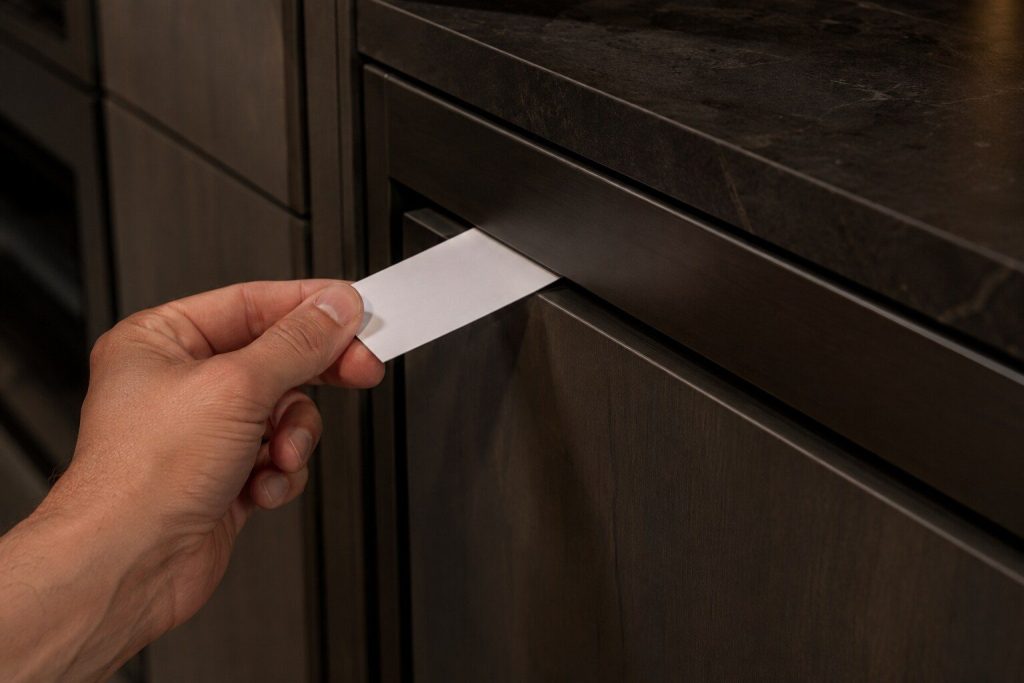
A Door That No Longer Seals: The Paper Test and the Panel Behind It
Two minutes of paper decides whether to call anybody. On integrated cabinetry the door is usually the problem and the gasket usually is not.
Read more -
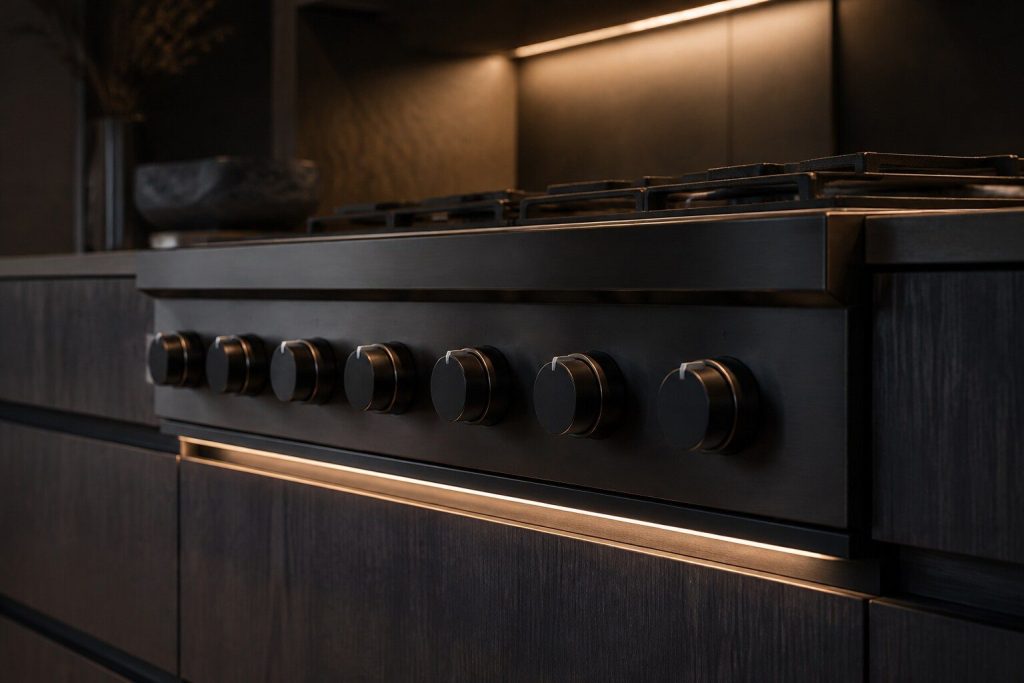
The Accent Lighting on a Professional Range, and Why It Goes Alone
Lighting on these ranges is its own circuit with its own driver. Lights that have gone while everything cooks perfectly is not a sign of anything larger.
Read more -
An Induction Zone That Will Not Start: The Five-Second Test First
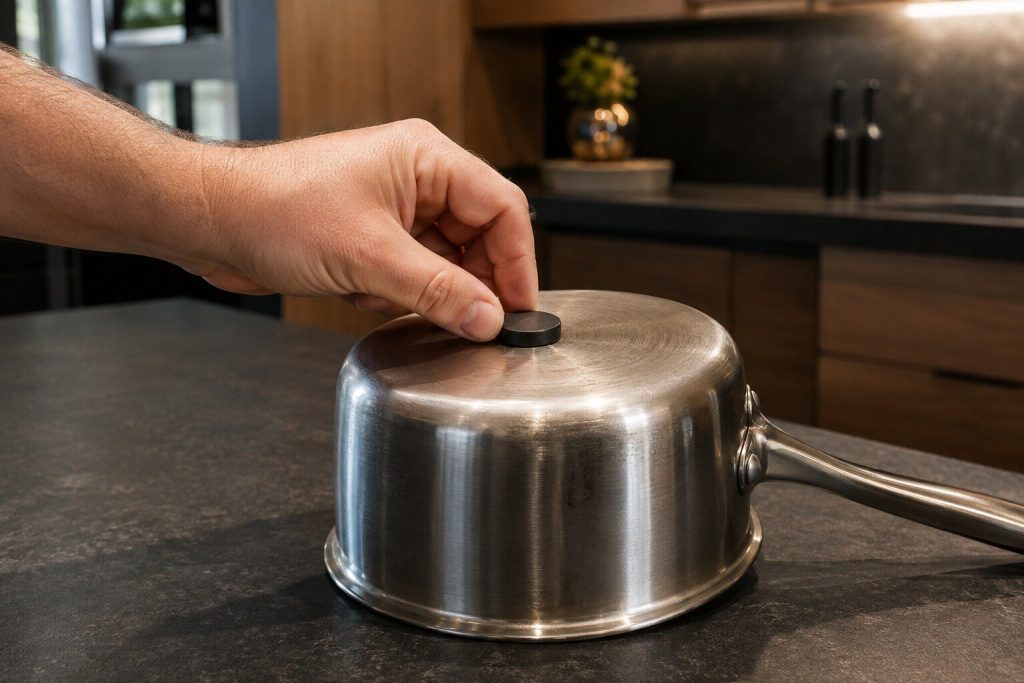
A magnet on the base of the pan settles most of these before anybody leaves the house. What is left divides into three prices.
Read more
Tell us the model number and what it is doing.
This article is based on:
- Official manufacturer documentation
- Internal repair procedures
- Technician repair history
- Company quality standards