Common Problems
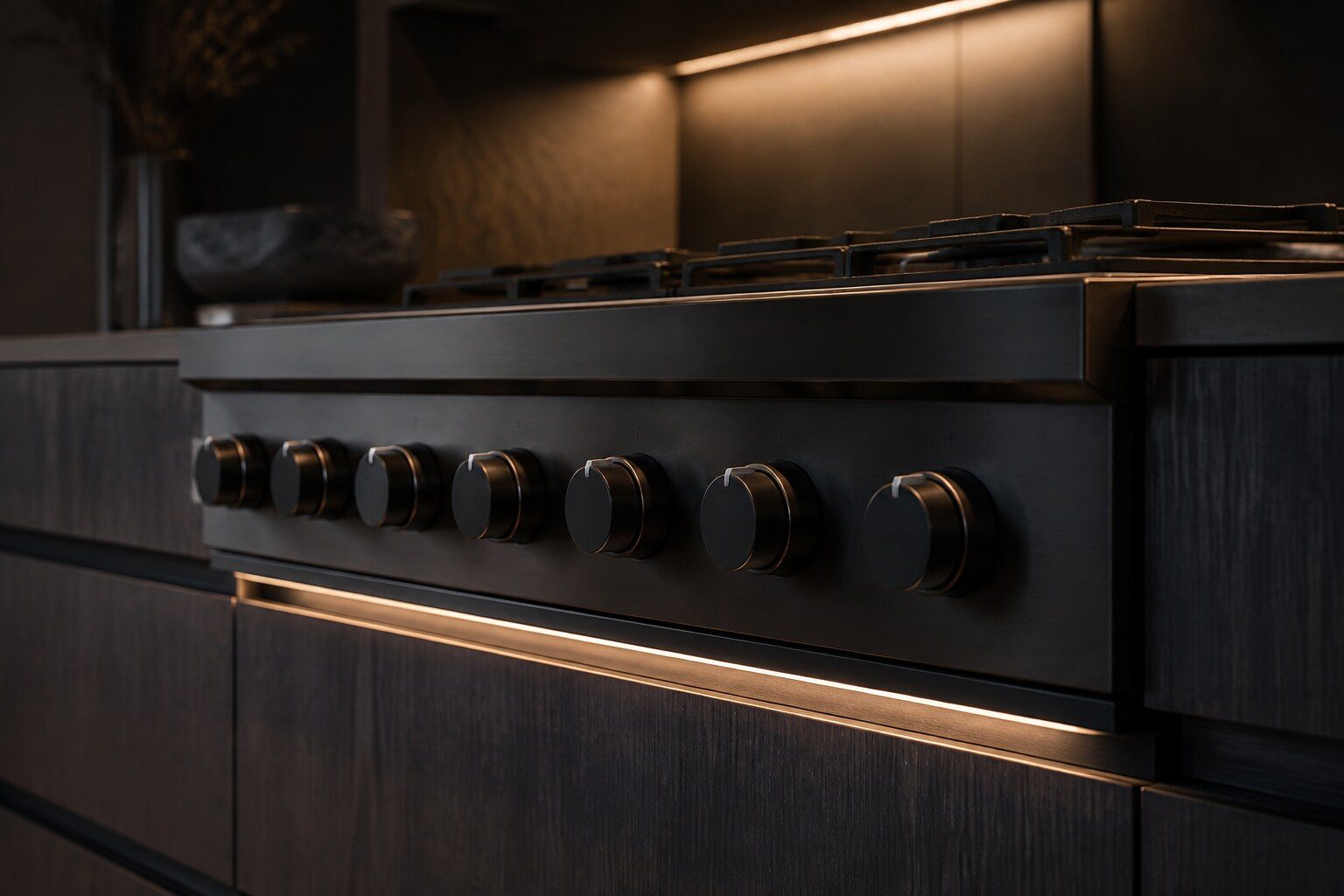
The Accent Lighting on a Professional Range, and Why It Goes Alone
Accent and control lighting on a professional range runs on its own low-voltage circuit fed by a driver, separate from the burners, the oven and the electronics that run them. So lighting that has failed while the range cooks perfectly is almost always the driver or the strip itself, and it is a small repair that says nothing about anything else. What is worth attention is the opposite case: lighting that failed at the same moment as something else — a display that went dim, a control that reset itself, an oven that stopped mid-cycle. Two things going together point upstream at the supply or at the board feeding both, and that is a different conversation. Check the breaker properly, check whether a wall dimmer or a switched circuit is involved, and note whether anything else changed on the same day.
The full guide
A small question with a useful answer
Nobody books a service call for lighting, and they should not have to worry about it either. This page exists because the question that matters is not "how do I fix the lights" but "does this mean something else is wrong", and the answer to that is genuinely informative.
On a professional range the accent lighting, the control illumination and any under-panel glow run on a low-voltage circuit of their own, fed by a driver. That driver takes mains in and gives the strips what they need. It is separate from the burners, separate from the oven, separate from the boards that run the cooking side.
Separate is the whole point. It means lighting that has failed on its own has told you nothing about the rest of the appliance, and you can stop worrying.
Driver or strip
Two things fail and the pattern tells you which.
Everything on one circuit goes at once. That is the driver. It is a component with a defined job and a defined replacement, and heat is what ages it — an enclosure a few inches from a cavity that reaches self-clean temperatures is not a gentle place for electronics.
Some of it goes and some of it stays. That is the strip or a connection in it. On balance this is the more common of the two and often the less expensive.
It flickers rather than failing. A driver on its way out, or a connection that has worked loose. A range is a hot environment with real vibration from doors and drawers, and connections there do loosen. Flicker is worth attending to rather than living with, because a driver failing untidily can take other things sharing its supply with it.
The case that does matter
If the lighting went at the same time as anything else — the display dimmed, a control reset itself, an oven stopped mid-cycle, a clock lost its time — then do not read this as a lighting problem. Two things failing together are usually one thing failing upstream.
That upstream thing is generally one of three: the supply itself, a board that feeds both, or a connector that has corroded. In this climate the third one is far more common than people expect. Salt air gets into a kitchen and it gets into connectors, and a connector with resistance in it behaves exactly like a component that has failed — intermittently, under load, and worse when things are hot.
So the useful thing to notice is not the lights. It is whether anything else changed on the same day.
Two free things to rule out
The breaker, properly. Off, a pause, on. A range is usually on a double-pole breaker, and one leg tripped gives the appliance half of what it expects — which produces exactly the kind of partial, confusing symptom this page is about. A glance at a panel does not find a breaker that has tripped to the middle.
Whether anything is switched or dimmed. Some kitchens put the range's circuit or an adjacent lighting circuit behind a wall switch or a dimmer, added during a remodel, and neither is a good idea near appliance electronics. If the lights came back when somebody touched a switch, that is your answer and it is a wiring conversation rather than an appliance one.
Why we would still want the model number
Because the lighting arrangement differs across the line. A Statement range with an articulating display, a Minimalist with flush controls and a Professional rangetop with a lit control bezel do not share a driver, a strip or a way in. Knowing which one is in your kitchen decides whether the part is on the van.
And because on this site the answer to a small question is allowed to be that it is a small repair. Not everything is a symptom of something larger, and saying so plainly is worth as much as the rest of the archive.
The same argument, on the hood above
Ventilation lighting behaves the same way and produces the same question, so it is worth putting them together.
On a hood, the lights and the blower are separate circuits. Lights working with a dead fan means power is arriving and the problem is downstream — the blower motor, its capacitor or the speed control. Lights dead with a working fan is the lamp circuit or its driver, and it says nothing about the ventilation.
The one that matters is both together, because that points upstream at the supply or at the control board serving both. Same logic, different appliance.
There is also a false alarm specific to the current chimney hoods: automatic mode. A hood with air quality sensors decides for itself when to run, and an owner who has left it in automatic reports a dead fan when the hood has simply concluded the air is clean. Run it manually at full speed before assuming anything.
Why heat is the enemy of these circuits
Lighting drivers on a range live a few inches from a cavity that reaches self-clean temperatures, in an enclosure with limited air. That is a hard life for a small power supply, and it is why lighting is one of the more common minor failures on cooking appliances generally.
It is also why a driver that has begun to fail often shows itself first as flicker at high oven temperatures and normal behavior when the oven is cold. If that pattern sounds familiar, it is the driver rather than a connection, and it is worth mentioning because it is diagnostic.
What we would do on a visit
Confirm the split first: lights only, or lights plus something else. Then power at the appliance, then the driver's output, then the strip. On a hood, the same order with the blower's capacitor added.
The reason it is worth a technician rather than an afternoon is access. These strips sit behind trim and fascia panels that were fitted before the appliance went into its opening, and getting to them without marking a brushed stainless or brass surface is most of the skill involved. On the Designer collection pieces in brass or titanium that is not a small consideration — the finish is the appliance.
And the honest scale of it
This is a small repair. If it arrived alone, it can wait until something else needs doing, and combining it with an annual maintenance visit is a sensible way to handle it.
What should not wait is the version where the lights went with something else, or where anything is flickering. Both of those are worth a look sooner, and both are cheaper before whatever is failing takes something with it.
If it turns out to be a repair
What this leads to, and what it costs
Every job on this site is priced the same way: an on-site diagnostic first, the figure agreed in writing before anybody starts.
-
30, 36 and 48-inch · dual-fuel, all-gas and induction Professional ranges
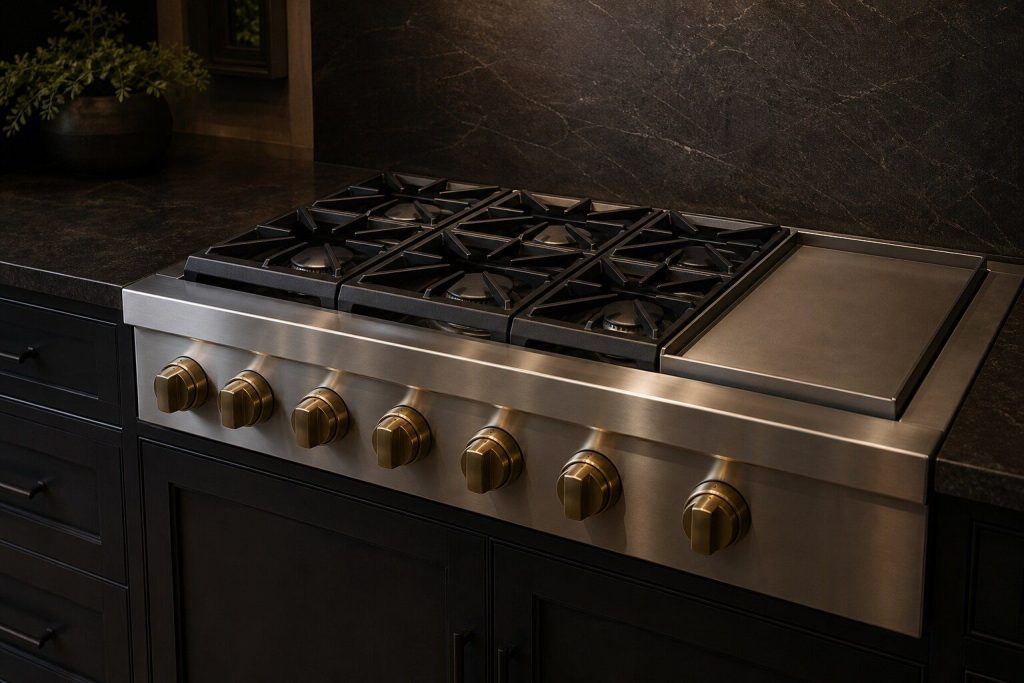
Monogram does not make an ordinary range. The line is professional: 30, 36 and 48 inches, dual-fuel with a gas top over an electric oven, all-gas throughout, or induction — with griddles and grills on the wider models. A 48-inch dual-fuel range is a gas appliance, an electric appliance and a ventilation problem in one piece of steel, and the diagnosis starts by working out which of the three is talking.
- Dual-fuel, all-gas and induction, 30 to 48 inches
- Griddle and grill sections are their own repair
- The F-code family covers the oven side, not the burners
-
from $295 Appliance control board repair
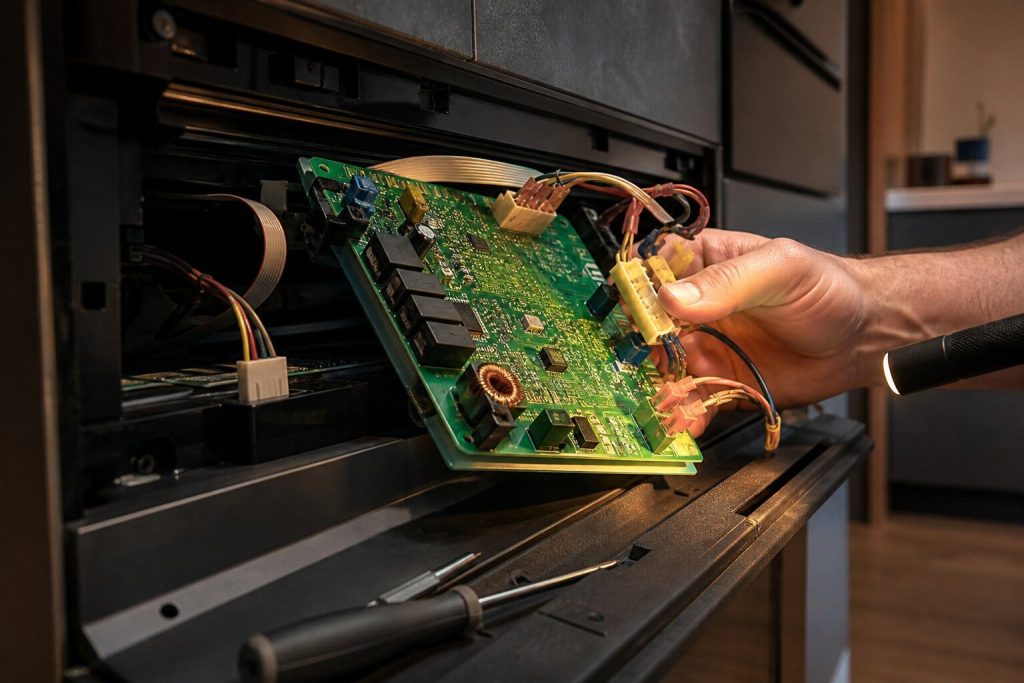
The repair reached last and reached for first by the internet. A control board is expensive, frequently blamed and comparatively rarely the problem — most of what gets called a board failure is a sensor, a harness or a connector that has corroded in coastal air. Boards are condemned here by measurement.
- Everything the board depends on tested first
- Connectors and harnesses are the usual real cause
- Codes that name the control taken seriously, not literally
-
from $155 Range hood blower and light repair
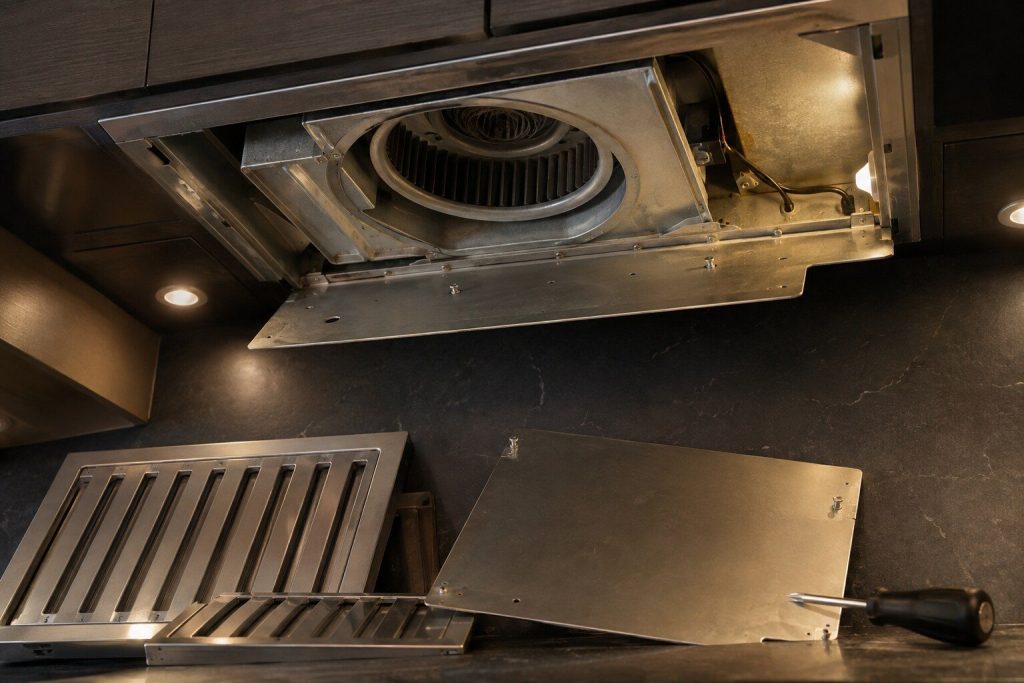
The fan is dead, the lights are out, or the controls have stopped responding. On the current chimney hoods there is one more possibility worth knowing before booking: automatic mode can be holding the fan off because the air quality sensor believes the air is clean, which reads exactly like a dead blower.
- Automatic mode ruled out first
- Blower, capacitor and speed control measured
- Lights and fan are separate circuits
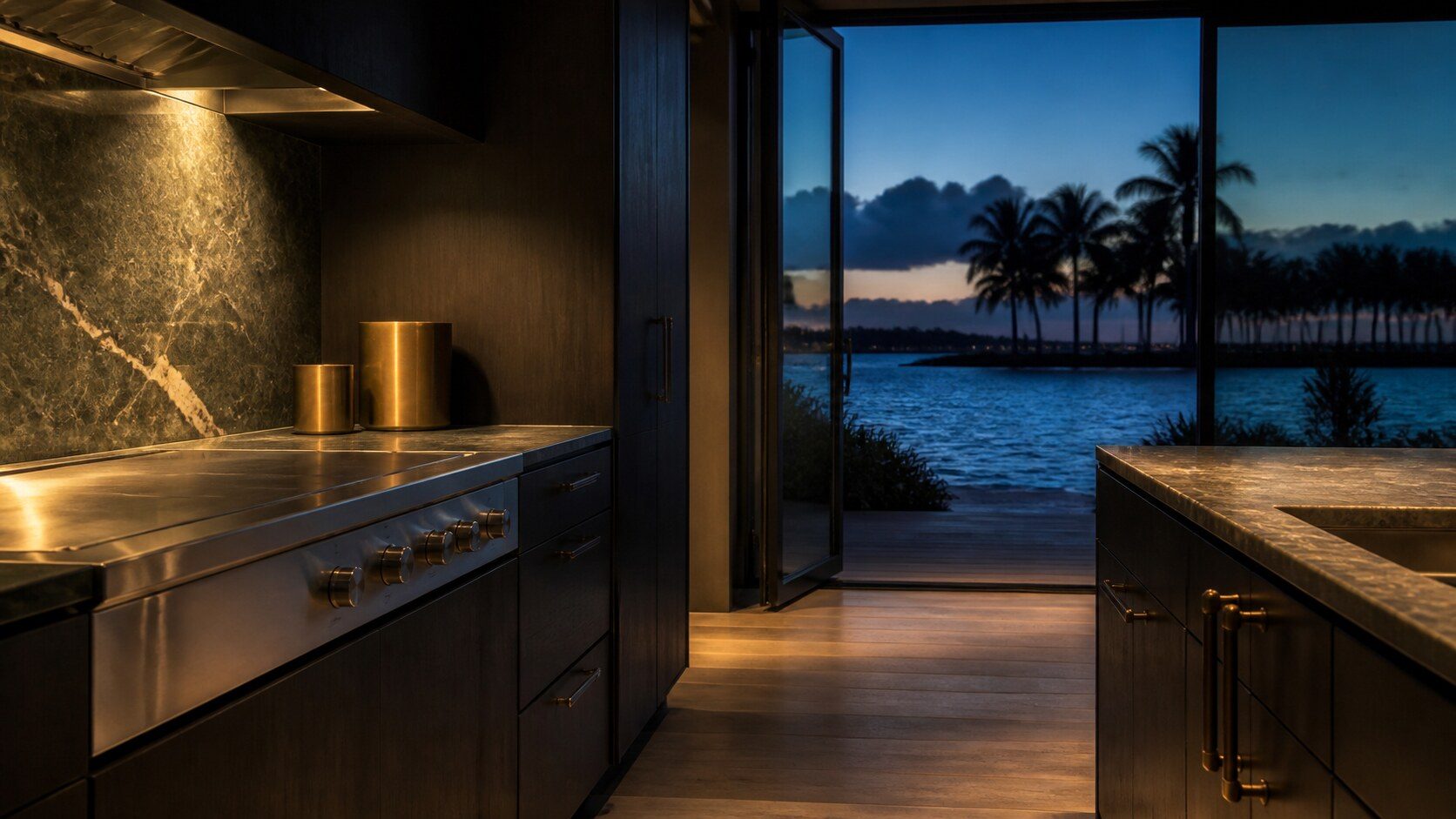
Questions people ask about this
Can I change the LEDs myself?
On most of these they are not lamps in sockets — they are strips or modules with a driver, fitted behind trim, and getting to them means taking part of the fascia off. It is not a bulb change and we would rather do it than have a control panel scratched.
Some of the lights work and some do not.
That points at the strip rather than the driver, because a failed driver takes everything on that circuit at once. Partial failure is the more likely of the two and often the cheaper.
Is this worth fixing at all?
That is a fair question and the answer is usually yes but not urgently. What we would not do is leave it if it arrived together with anything else, because two failures on one day are usually one failure upstream.
The lights flicker rather than fail.
Flicker is a driver going or a connection that has loosened with heat and vibration — a range is a hot, moving environment for electronics. It is worth attending to, because a driver that is failing can take other things on its circuit with it.
Common Problems
More guides like this one
-
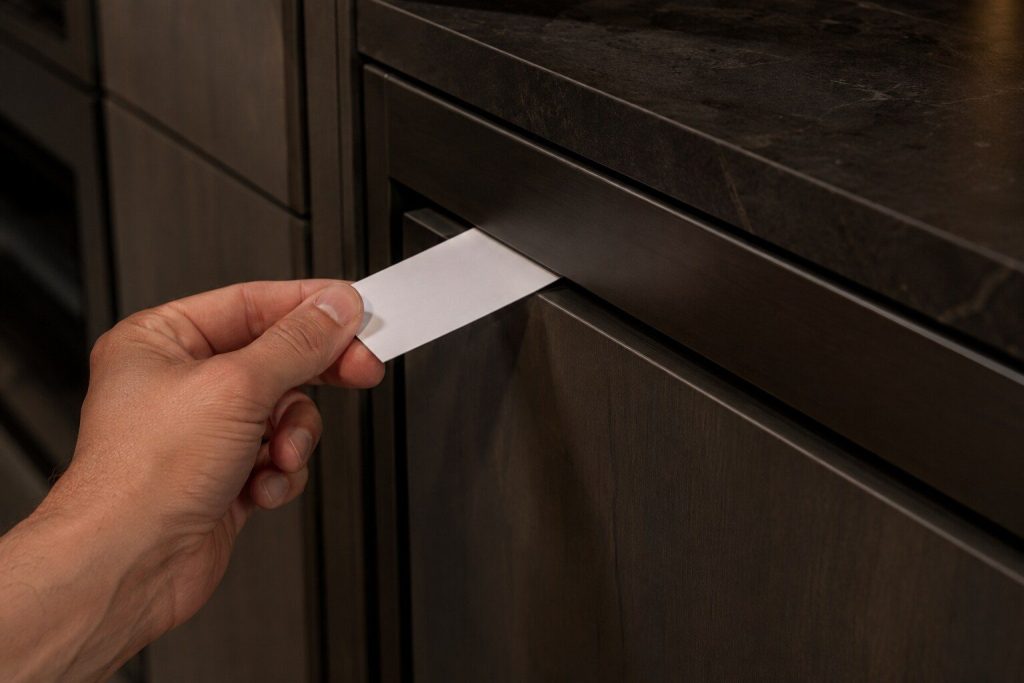
A Door That No Longer Seals: The Paper Test and the Panel Behind It
Two minutes of paper decides whether to call anybody. On integrated cabinetry the door is usually the problem and the gasket usually is not.
Read more -
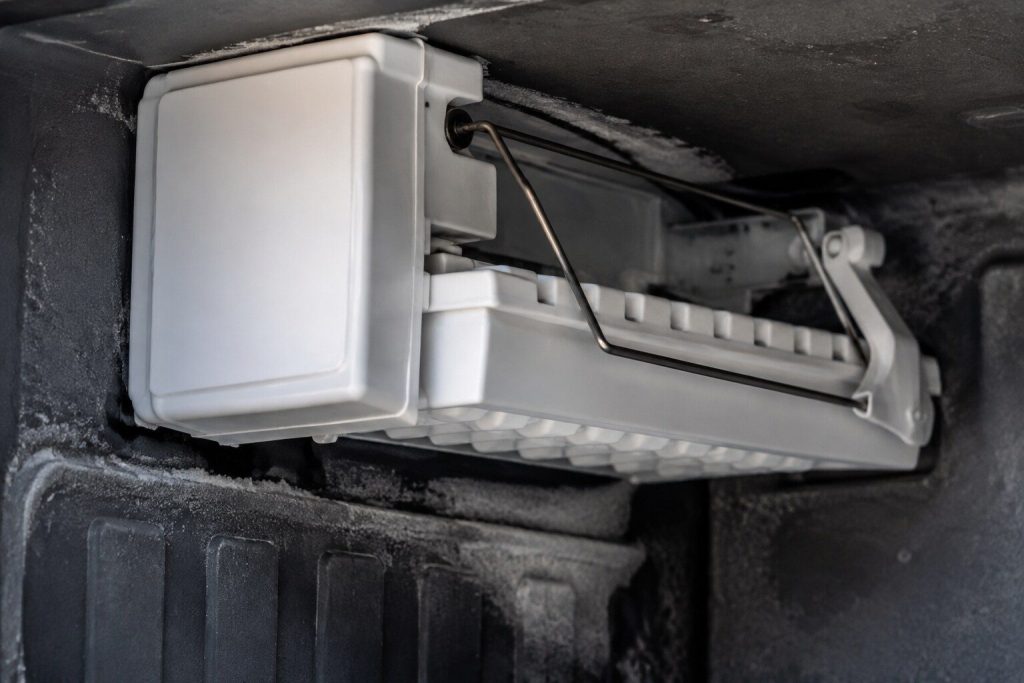
A Monogram Ice Maker That Has Stopped: Cabinet, Water, Module, In That Order
Half of these are not ice maker problems at all. Production is a function of how cold the cabinet is, and the free checks come first for a reason.
Read more -
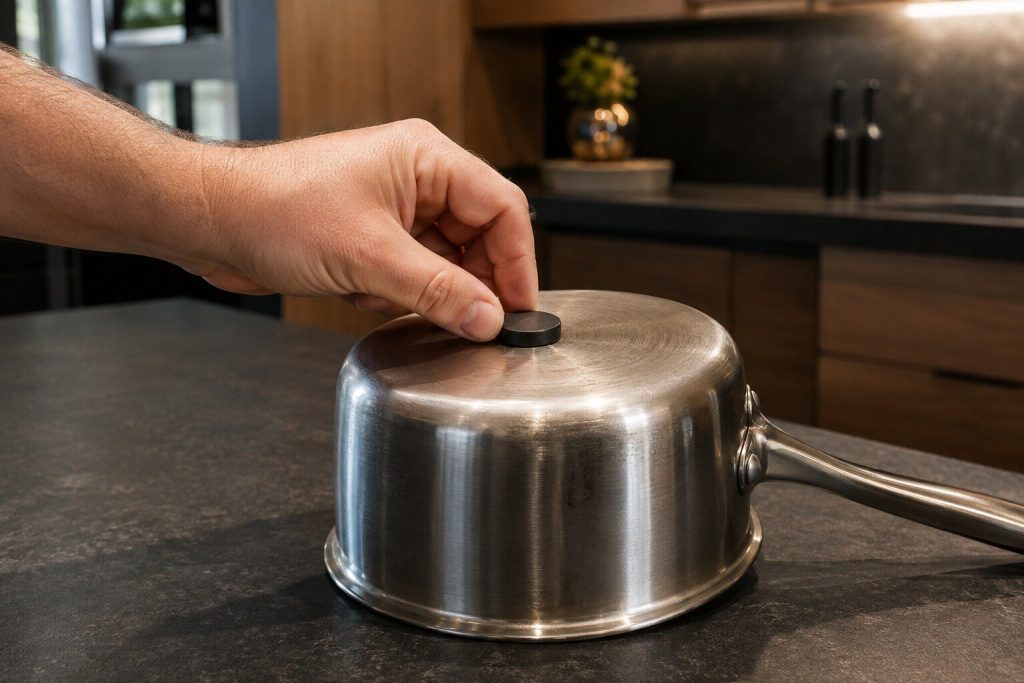
An Induction Zone That Will Not Start: The Five-Second Test First
A magnet on the base of the pan settles most of these before anybody leaves the house. What is left divides into three prices.
Read more
Tell us the model number and what it is doing.
This article is based on:
- Official manufacturer documentation
- Internal repair procedures
- Technician repair history
- Company quality standards