Common Problems
A Monogram Dishwasher That Will Not Start: Four Things Before the Latch
Press the door firmly closed and try again — on a panel-ready machine that alone starts a surprising number of them. Then open the door and read the top edge, because a delay start showing 1H or 2H means the machine is waiting deliberately and looks exactly like a dead one, and Cup Open means it will not begin until the detergent cup is latched. Then check the power: there is often an isolating switch in the cabinet under the sink that gets knocked, and the breaker is worth cycling properly rather than glancing at. Only after those four is the door latch or its switch the suspect, and the giveaway there is a door that no longer holds its position when you let go of it halfway.
The full guide
An integrated machine hides everything
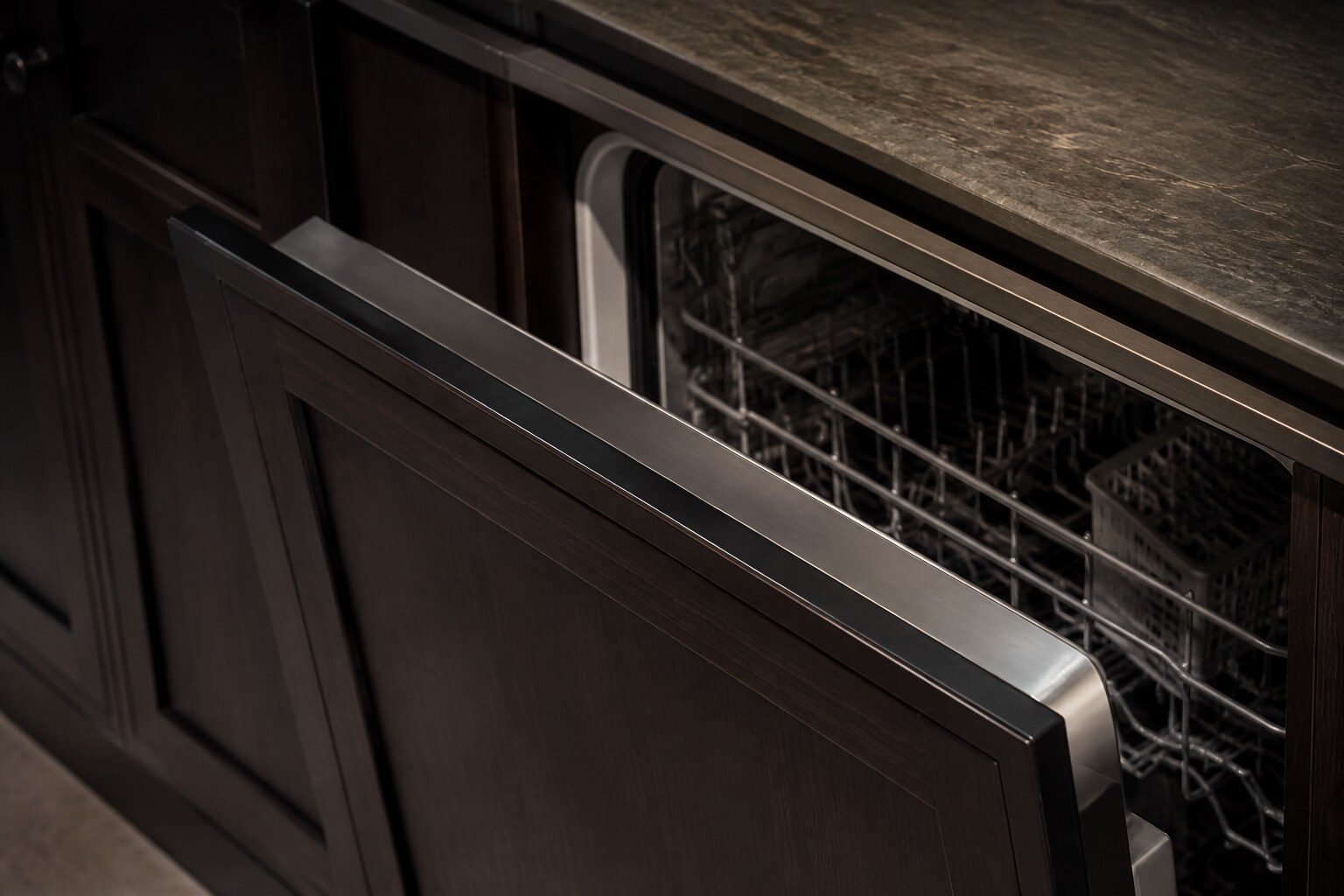
There is no light on the front, no display facing the room, and no sound you would notice from the next chair. A Monogram dishwasher that has refused to start and one that has finished a cycle two hours ago present themselves to the kitchen in exactly the same way: as a cabinet door.
That is why this call so often arrives with the words "it is completely dead". Nearly always it is not. It is waiting, or locked out, or unconvinced about its own door, and the machine has said so on a panel that faces the ceiling.
Push the door, then read the edge
Push it shut properly. Not at the corner — at the middle, firmly. A door carrying a heavy custom panel can feel closed while sitting a millimeter short of the latch, and the machine will not run on a door it does not trust. On panel-ready machines this alone starts a real share of them.
Then open it and read the top edge. Four things live there that look like a failure and are not:
- 1H, 2H, or a similar pair — a delay start. Somebody set it, or a hand brushed the pad. The machine is waiting on purpose.
- Cup Open — the detergent cup has not been latched. It is a reminder, and the cycle will not begin until it is closed.
- PF — the power was interrupted. Choose a cycle, press start, done.
- PrS — the pressure sensor is sending an invalid signal, and the machine will not start or will cancel. That one is a service call, and it is the only one on the list that is.
Then the two ways power goes missing
Kitchens like these very often have an isolating switch in the cabinet under the sink, serving the dishwasher and the disposer. It exists so a plumber can work safely and it is at exactly the height where a stored bottle knocks it. Look before you assume.
Then the breaker, and cycle it properly: fully off, a pause, fully on. Breakers trip to a middle position that looks identical to "on" from three feet away, and that is the most common false negative anybody gets in a breaker panel.
Now the door, which is where these usually end
Open the door and let go of it at the halfway point. It should stay exactly where you left it. That is what the springs and cables are for, and it is how the door was set up on installation day.
If it falls open, the springs or cables have weakened. And on a panel-ready machine there is a specific reason that happens: a remodel put a heavier custom panel on the door and nobody re-tensioned anything for it. The door then drops fast every time it is released, the latch takes the impact, and after a year or two it stops engaging cleanly.
So a door that falls open is not a separate annoyance. It is the reason the machine will not start, and correcting the balance is part of the repair rather than an extra.
Latch, or switch?
They fail differently and it is worth knowing which you have. A latch that has broken mechanically will not hold the door shut at all — the door springs back. A latch that engages perfectly while its switch has failed gives you a machine that is closed, silent and unresponsive, which is the version that reads as a dead appliance.
Both are modest parts. The reason this page puts them last is that a great many people arrive here having already been told, by a search result, that a dishwasher which will not start needs a control board. Boards are expensive, frequently blamed, and comparatively rarely the answer — and a control that has been told the door is open behaves exactly like a control that has failed.
The one thing not to ignore
If, while you were looking, there was water on the floor in front of the machine, or the cabinet base beside it felt damp, stop. A dishwasher that will not start and a dishwasher that has been leaking are sometimes the same story, because a door that has been dropping has also been sealing unevenly along its bottom edge. On these kitchens the floor costs more than any repair on this site.
The sequence that catches almost all of them
Done in order, this takes about four minutes and resolves the large majority of these calls without anybody coming out.
Push the door firmly shut at the middle and press Start. If nothing, open the door and read the top edge — delay, Cup Open, PF, PrS, or nothing at all. If the display is dark entirely, the appliance has no power and the question is the switch under the sink and then the breaker. If the display lights and the machine still refuses, latch the detergent cup, close the door and try again. If it still refuses, open the door and let it go at halfway to see whether it holds its position.
By the end of that you know whether you have a power problem, a message, or a door — and those are three different conversations with three different prices.
Why the door is so often the answer on this line
Because these are fully integrated machines and the door is carrying furniture.
A panel-ready dishwasher door has a custom panel screwed to it, and the springs or cables that balance the door were tensioned for that panel's weight. Every time the kitchen changes, the panel may change. Every year, the springs relax a little. Neither event produces an obvious symptom on the day.
What it produces eventually is a door that drops rather than settles, a latch taking an impact instead of a close, and after a year or two a latch mechanism that no longer engages cleanly every time. The machine then refuses to start, intermittently at first and then permanently.
So a door that falls open is not a separate annoyance to mention in passing. It is the cause, and correcting the balance is part of the repair rather than an extra.
What "no power" looks like on an integrated machine
There is no light on the front, so a dead appliance and a sleeping one are indistinguishable from the room. Open the door: if the panel on the top edge is completely dark, that is a power question.
Two places to look. The isolating switch in the cabinet under the sink, if the kitchen has one — it is at exactly the height where stored bottles knock it, and it is switched off far more often than anybody admits. Then the breaker, cycled fully off and on rather than glanced at.
If the machine has power and refuses, it is a message or a door, and that is a much better position to be in.
The advice we would push back on
A search for this symptom returns a great deal about control boards, and boards are expensive, frequently blamed and comparatively rarely the answer.
The reason they get blamed is structural: a board is what is left when nothing else has been measured. A control that has been told the door is open behaves exactly like a control that has failed, and telling those apart takes a meter and ten minutes rather than a part and an afternoon.
Every input the board reads gets tested before the board is condemned, and in this climate the finding is very often a connector that has corroded rather than anything on the board at all.
The thing not to ignore while you are down there
If there is water on the floor in front of the machine, or the base of the cabinet beside it feels damp, that changes the priority entirely. A dishwasher that will not start is an inconvenience; a dishwasher that has been leaking into a joinery run is flooring, and in these kitchens the flooring is the expensive part of the room.
A door that has been dropping has often been doing both.
If it turns out to be a repair
What this leads to, and what it costs
Every job on this site is priced the same way: an on-site diagnostic first, the figure agreed in writing before anybody starts.
-
Dishwasher will not start
On a fully integrated machine a dishwasher that will not start looks exactly like a cabinet door doing nothing, and the reason is usually that the appliance does not believe its door is shut. The latch is what fails; the door balance is usually why.
- The machine will not run on a door it does not trust
- A delay start reads as a dead machine
- Panel weight is part of the diagnosis
-
Monogram dishwasher: Cup Open is a reminder to latch the detergent cup
Monogram — an indicator rather than a code. The detergent cup has not been closed. It is a reminder to add detergent and latch the cup, not a failure.
What the machine is telling you -
Monogram dishwasher: PF on a dishwasher means the power was interrupted
Monogram — an indicator rather than a code. A power failure has occurred. Not a problem with the machine — a note that the supply was interrupted mid-cycle.
What the machine is telling you -
Dishwasher door latch repair
A dishwasher that will not start is often a dishwasher that does not believe its door is shut. On a panel-ready machine the door carries a heavy custom panel on springs sized for it, and when those weaken the door drops fast, seals unevenly along the bottom and stops latching reliably.
- Latch, switch and door springs together
- Panel weight is part of the diagnosis
- Prevents the slow leak that follows
Questions people ask about this
It hums but does not fill.
That is not this page — a machine that responds has started. Check the water supply valve under the sink and look for H2O on the top edge of the door, which is the machine saying not enough water is arriving.
It started working again by itself.
An intermittent latch or a door balance that is going, almost always. It will come back, and it is cheaper to deal with before it does something to the floor.
The display shows PF.
The power was interrupted. Select the cycle and options you want and press Start — it runs normally. After a summer storm this is the commonest thing on any display in this city.
Could it be the control board?
It could, and it very rarely is. A control that has been told the door is open behaves exactly like a control that has failed, and the door is a fraction of the cost. Everything that talks to the control gets tested before the control is condemned.
Common Problems
More guides like this one
-
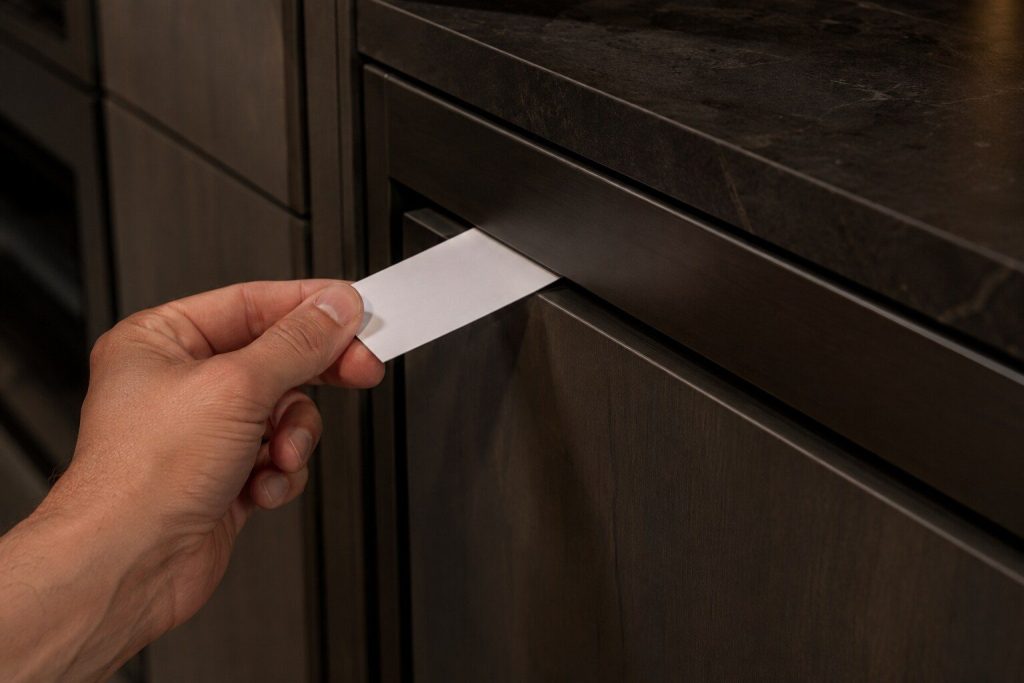
A Door That No Longer Seals: The Paper Test and the Panel Behind It
Two minutes of paper decides whether to call anybody. On integrated cabinetry the door is usually the problem and the gasket usually is not.
Read more -
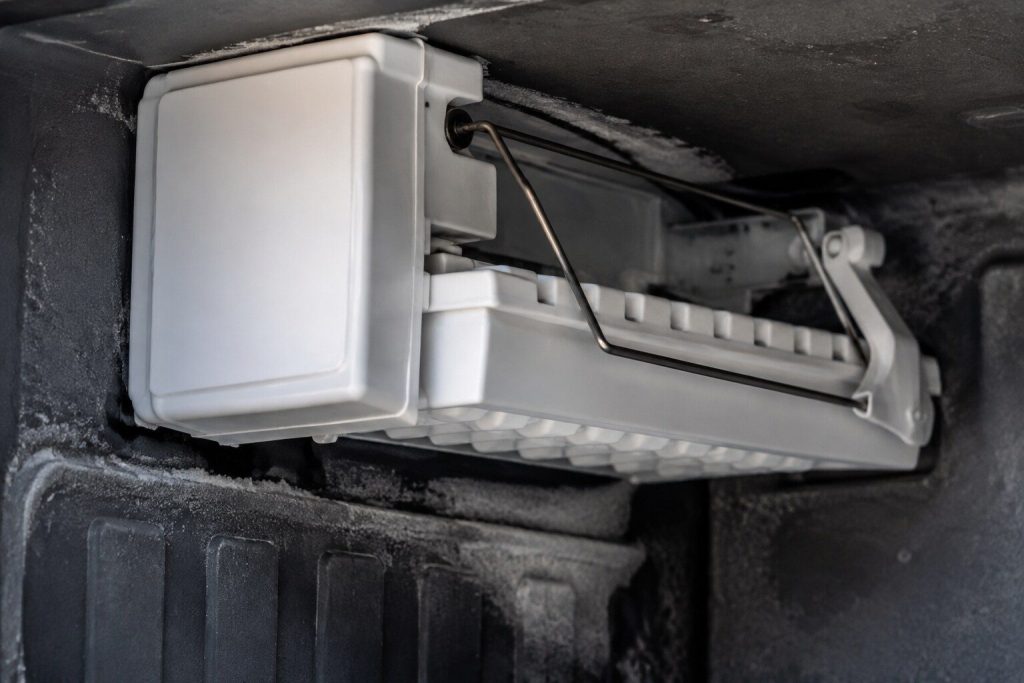
A Monogram Ice Maker That Has Stopped: Cabinet, Water, Module, In That Order
Half of these are not ice maker problems at all. Production is a function of how cold the cabinet is, and the free checks come first for a reason.
Read more -
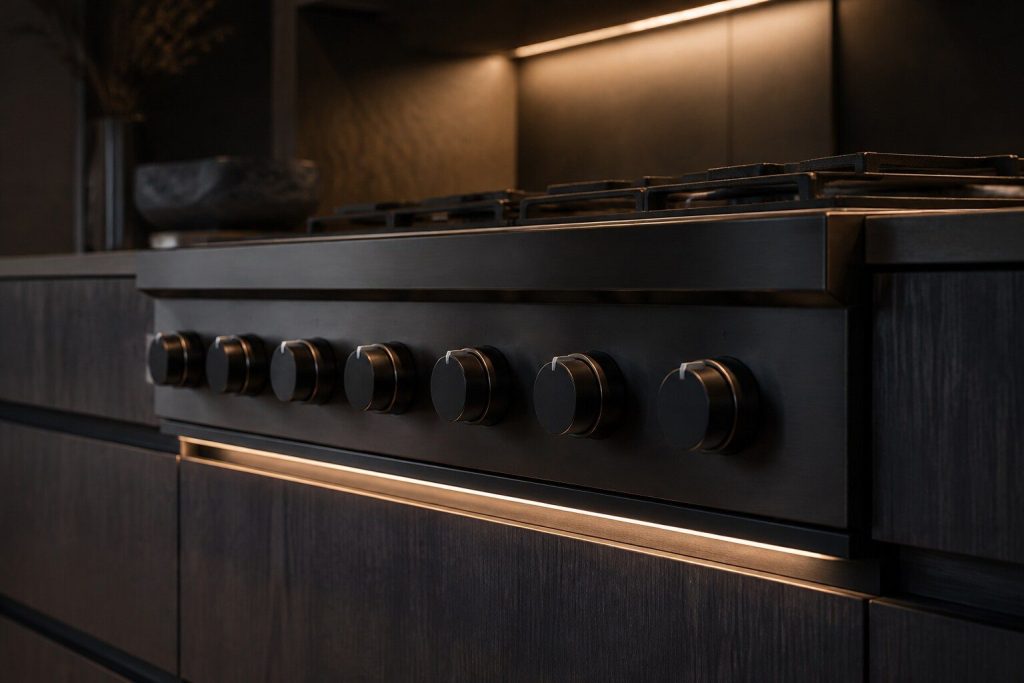
The Accent Lighting on a Professional Range, and Why It Goes Alone
Lighting on these ranges is its own circuit with its own driver. Lights that have gone while everything cooks perfectly is not a sign of anything larger.
Read more
Tell us the model number and what it is doing.
This article is based on:
- Official manufacturer documentation
- Internal repair procedures
- Technician repair history
- Company quality standards