Troubleshooting
Measuring What a Cabinet Is Actually Holding, Not What It Says
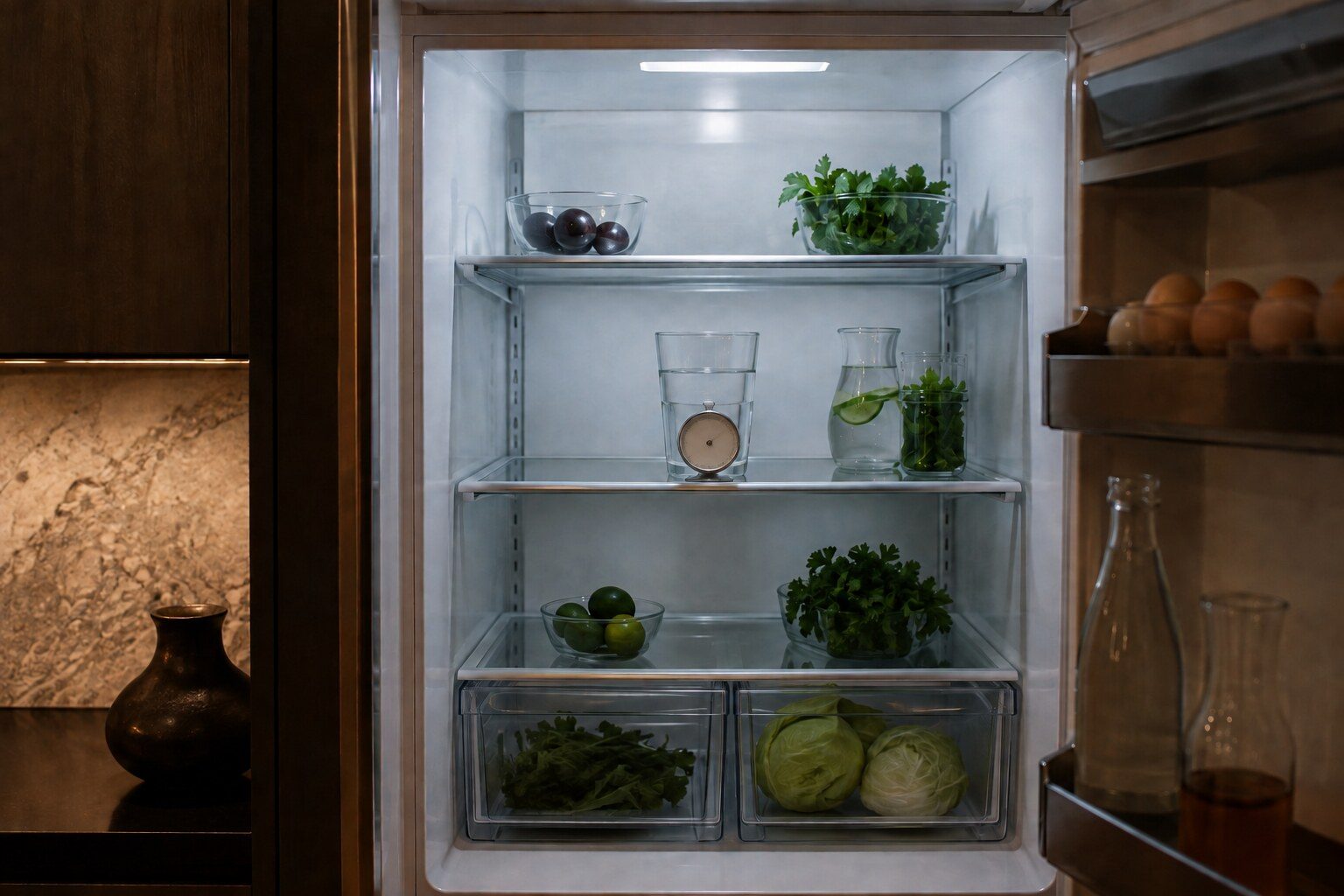
Put a thermometer in the middle of the compartment rather than in the door, and leave it for at least four hours with the door closed as normal. The door is the warmest and least representative place in any cabinet. Read it without opening the door if the thermometer allows, or open and read within a few seconds. Target 37 to 38 Fahrenheit in a refrigerator and zero in a freezer, and take the reading twice at different times of day rather than once. Then compare it with what the appliance is displaying. Agreement means the cabinet is doing what it says. Disagreement is a diagnosis in itself: the control is holding faithfully to a number that does not match the shelf, which points at the sensor rather than at the refrigeration. On a pair of integrated columns, measure the cabinet that is misbehaving rather than its twin, because they are two independent machines.
The full guide
Every other page here asks for this number
Read almost any page on this site about a cabinet that is not cold enough and the first thing it asks for is a measurement. This is that measurement, done in a way that means something — because most of the readings people arrive with were taken in the door, after ten minutes, once.
It matters because the number decides which conversation follows. A cabinet holding its target is not a refrigeration problem no matter what the food is doing. A cabinet three degrees out has drifted. A cabinet ten degrees out has something wrong with it. And a cabinet whose display and shelf disagree has a completely different problem from all three.
Where to put it, and why not the door
Put the thermometer on a middle shelf, at middle depth, and leave it there.
The door is the warmest place in any refrigerator and it swings the most, because it is what moves and what the room air reaches first. A reading taken in the door and compared against a target written for the middle of a cabinet will condemn a perfectly healthy appliance.
The back wall is the opposite mistake. On most cabinets that is where the cold arrives, and a thermometer pressed against it reads the supply air rather than the compartment.
If your thermometer has a probe, stand it in a small glass of water. Water damps out the momentary swings that every door opening causes, and what you get is much closer to the temperature the food is actually experiencing — which is the number anybody cares about.
How long, and how many times
Four hours minimum, and use the kitchen normally while it sits there. The point is not to catch the cabinet at its best.
Read it twice on different parts of the day, and this matters more here than in most places. A cabinet that holds overnight and drifts in the afternoon is telling you about the room rather than about itself — and undercounter refrigeration in a bar area that is only air-conditioned when somebody is standing in it does exactly that. Two readings turn an argument into a fact.
The targets
Refrigerator: 37 to 38 Fahrenheit. Colder than 34 and things at the back start freezing; much above 40 and the food safety clock speeds up considerably.
Freezer: zero Fahrenheit. Food stays safe a good deal warmer than that, but texture does not, and ice production stops well before anything is unsafe. Ice cream is the most sensitive instrument most kitchens own.
Wine storage: whatever the zones are set to, but the number matters less than the stability. A cabinet holding two degrees off target is doing its job; one sawing four degrees twice a day is not, even when the average looks right.
The finding that is worth the whole exercise
Write down what the shelf says and what the display says.
They agree, and both are on target. The cabinet is fine, and whatever brought you here is elsewhere — airflow, the door, the load, or an expectation rather than a problem.
They agree, and both are off. The cabinet is genuinely not reaching its set point, and the ordinary ladder applies: condenser, door, defrost, fans, then the sealed system.
They disagree. This is the interesting one. The control is holding faithfully to a number it believes, and the shelf says otherwise. The appliance is not failing to cool — it is being lied to, by a temperature sensor that has drifted. That is a defined, measurable, inexpensive repair, and it is completely invisible without a thermometer.
On paired columns, measure both and label them
The most common wasted visit on this make is the wrong cabinet. Two integrated columns look like one appliance from the front of a finished kitchen, and they are two complete refrigerators sharing an opening and a pair of matched panels — separate compressors, separate controls, separate model plates.
So measure both, write down which is which, and when you call, read the plate on the cabinet that is misbehaving. That one sentence saves more time than everything else on this page.
More than one place, when the answer is confusing
If the middle shelf reads correctly and the food still misbehaves, measure in three places instead of one: middle shelf, top shelf, and the bottom of the crisper.
Top warm, middle correct. Air is not reaching the top of the compartment. On these cabinets the cold arrives through vents that are easy to block with a tall box or a shelf loaded solid to the back wall, and that is a free fix.
Bottom cold enough to freeze, middle correct. Common in bottom-freezer cabinets and integrated columns, where the coldest air enters low. Items at the back of the lowest shelf freeze while the cabinet is holding its target perfectly. Moving what is sensitive is the answer, not adjusting the whole cabinet warmer.
All three the same and all three wrong. The cabinet is genuinely off, and the ordinary ladder applies.
Three readings instead of one turns "the refrigerator is not working properly" into a specific statement, and specific statements are what shorten a visit.
The freezer, and the instrument nobody thinks of
Zero Fahrenheit is the target, and a thermometer in the middle of the load will tell you.
What will also tell you, for free, is ice cream. It is the most temperature-sensitive thing most kitchens own: at zero it is firm and scoops with effort, at ten degrees it is soft and scoops easily, and at twenty it is close to soup. A freezer where the ice cream has gone noticeably softer over a season has drifted, whatever the display says, and that is worth measuring properly.
Ice production is the other tell. It falls with cabinet temperature and stops well before food is at risk, so an ice maker that has slowed is often the first evidence that a freezer is drifting.
What a wine cabinet needs instead
Do not judge a wine cabinet the way you judge a refrigerator. The number matters less than the stability, and one reading tells you nothing about stability.
Photograph the display three or four times across two days and put a thermometer on a middle shelf in each zone. What you are looking for is the shape: a cabinet holding steadily two degrees off target is doing its job; one sawing four degrees twice a day is not, even when the average is exactly right.
A daily rhythm — warmer every afternoon, recovering overnight — is usually the room rather than the appliance, and in a bar area that is only air-conditioned when somebody is in it, that is exactly what you would expect to find.
Writing it down is the point
Every number on this page is more useful in a pair than on its own. Set point against actual. Morning against afternoon. Top against middle. Display against shelf.
A single reading from a thermometer in a door, taken once, is what most people arrive with, and it is very close to no information at all. Five minutes of writing things down turns a service call from a description into a diagnosis, and quite often it means there is no service call to make.
If it turns out to be a repair
What this leads to, and what it costs
Every job on this site is priced the same way: an on-site diagnostic first, the figure agreed in writing before anybody starts.
-
Refrigerator not cooling
The call we take more often than any other. On built-in refrigeration the first suspect is almost never the compressor — it is the condenser behind the grille above the door, which in a Miami kitchen collects salt, cooking aerosol and dust until it can no longer shed heat, with nothing on the display to say so.
- The condenser is the first suspect and it is free to check
- A dropped door panel produces this too
- The sealed system is last, not first
-
Freezer column not cold enough
A freezer column that has drifted up while the refrigerator column beside it is perfect. It is the clearest illustration of what a paired column installation actually is: two independent machines behind one wall of matched panels, sharing nothing but an opening.
- Paired columns are two appliances
- Zero Fahrenheit is the number to hold
- Ice cream is usually what reports it
-
Monogram refrigerator error code CC
Monogram refrigerator error code CC: Check the temperature controls, because the refrigerator temperature is not what it was asked for. Which machines can actually raise it, where the number lives on this make, and what to do next.
What this one means -
Temperature sensor replacement
A sensor is a resistor that reports temperature, and when it drifts the appliance obeys it faithfully — running a cabinet warm, an oven cold, or throwing a code that names the circuit outright. It is one of the most satisfying repairs on the list because the part is measurable: either it reads what it should at a known temperature or it does not.
- Measured against specification, not swapped on suspicion
- The wiring between sensor and control checked too
- Covers both refrigeration and cooking
Questions people ask about this
Which thermometer should I use?
Anything that reads to a degree and can sit unattended. A cheap dial thermometer in a glass of water is fine and is arguably better than a probe, because the water damps out the swings a door opening causes and gives you a reading that means something.
The two columns read differently. Is one broken?
Not necessarily — they are two independent machines with two set points, and a refrigerator column and a freezer column are supposed to read differently. What matters is whether each is holding its own target. If both are refrigerator columns and one is three degrees warmer, that is worth a look.
It reads correctly but the food spoils quickly.
Then measure in more than one place. A cabinet that is correct at the middle shelf and warm at the top is an airflow problem rather than a refrigeration one, and that is a different repair. Packed shelves blocking a vent are the usual cause.
How much swing is normal?
A degree or two either side of the set point through a defrost cycle is ordinary. Four or five degrees, repeatedly, is not — and on a wine cabinet even that much matters, because the whole point of that appliance is stability rather than a number.
Troubleshooting
More guides like this one
-
The Temperature Probe and the Sous-Vide Probe: Two Sockets, Two Jobs
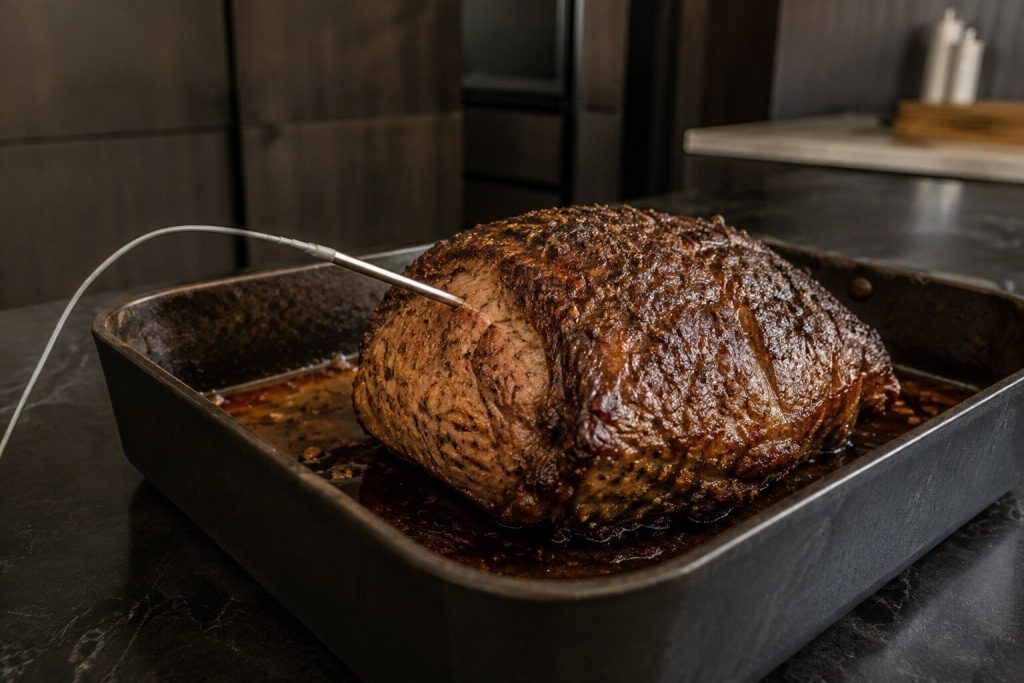
A feature guide that doubles as a repair guide, because FD is the probe circuit and most probe complaints are a lead that has been trapped in a door.
Read more -
Taking an Oven Door Off: When It Is Worth It and When to Stop
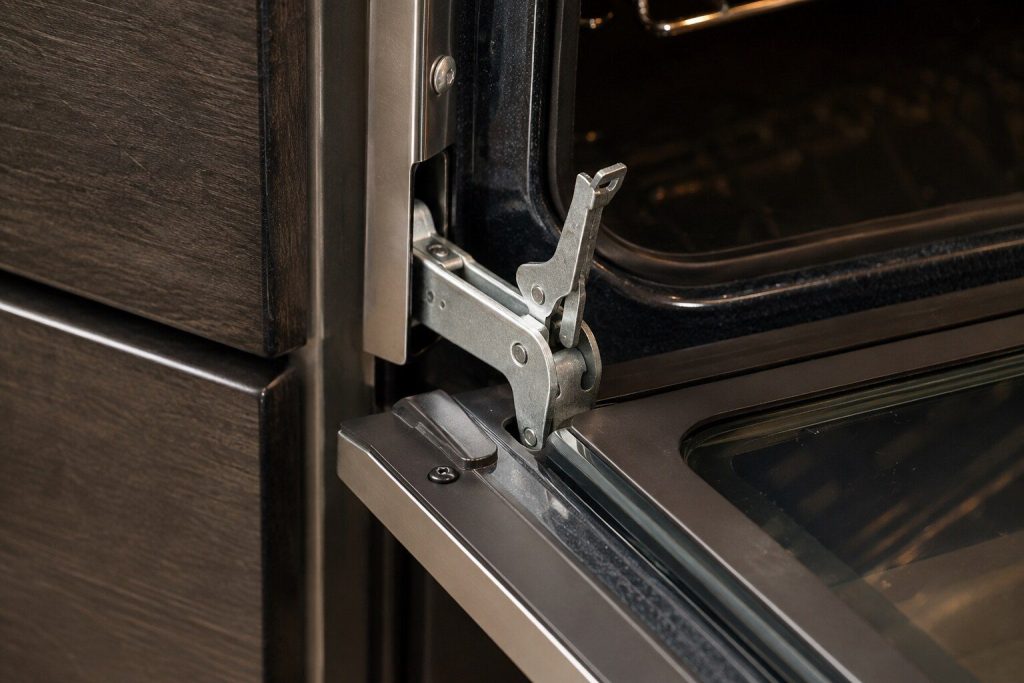
The sequence is the easy part. The hinge locks and the stop condition are what decide whether this should be attempted at all.
Read more -
Locked Controls on a Monogram Appliance: Where the Lock Hides on Each One
Four different appliances, one problem, and no repair at the end of it. A wet cloth across a touch panel switches these on more often than people do.
Read more
Tell us the model number and what it is doing.
This article is based on:
- Official manufacturer documentation
- Internal repair procedures
- Technician repair history
- Company quality standards