Troubleshooting
The Temperature Probe and the Sous-Vide Probe: Two Sockets, Two Jobs
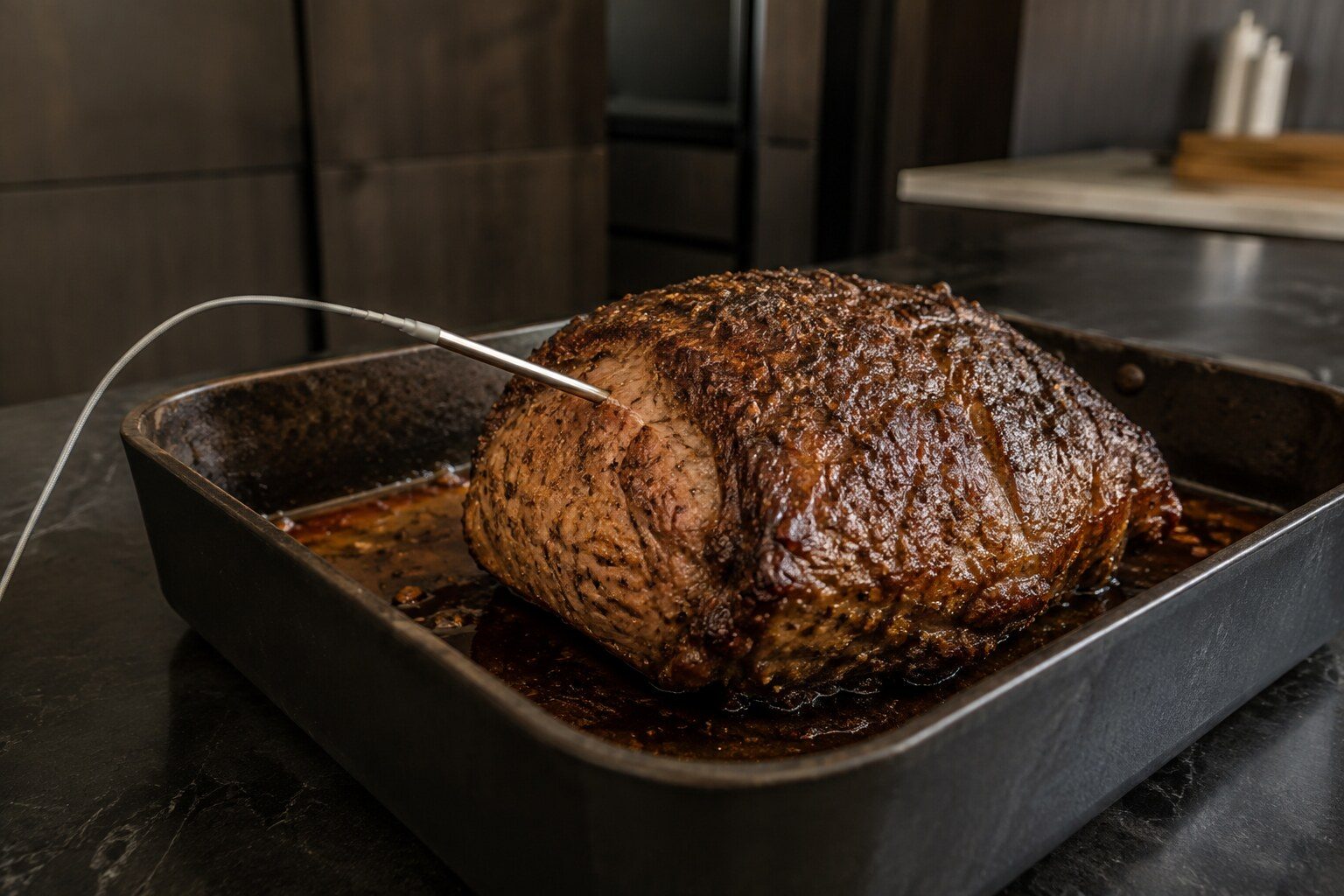
The temperature probe plugs into a socket in the cavity wall and reads the internal temperature of what you are cooking, so the oven can hold or stop on a food temperature rather than a clock. Push it into the thickest part of the food, avoiding bone and fat, plug it firmly into the socket, and set a target on the panel — the oven holds until the food reaches it. The sous-vide probe is a different accessory doing a different job, used with the low-temperature modes to hold a water bath rather than to read a roast. If the display shows FD, the manufacturer's table gives that as the probe or its receptacle needing replacement. Before assuming a part, unplug the probe entirely and run the oven: if FD goes away, the probe or its lead is the suspect rather than the oven, and a lead that has been trapped in a closing door is the commonest reason.
The full guide
Cooking to a temperature rather than to a clock
A timer measures how long an oven has been on. A probe measures what is happening inside the food. Those are not close to the same thing, and on a large roast in a busy kitchen the difference is the difference between a good result and an argument.
The probe plugs into a socket in the cavity wall and reports the internal temperature of whatever it is stuck into. The oven can then hold until that number is reached and stop, or hold at a low temperature once it is. Everything the oven does with that information depends on the tip being where you think it is.
Getting the reading right
Into the thickest part, angled so the tip finishes at the center of the mass. Away from bone, which conducts heat and reads high. Away from a seam of fat, which reads differently from meat. And not touching the pan, which is the most common mistake and produces readings that are simply the pan.
If a probe has been reading badly and the placement was right, it is worth knowing that a probe is a consumable rather than a permanent part of the appliance. They are cheap and they wear.
The one habit that saves the part
Route the lead so the door does not close on it.
It sounds trivial and it is the reason most probes fail. The lead is thin, the door is heavy, and a lead crushed slightly every time a door shuts eventually goes open or intermittent inside its insulation with nothing visible on the outside. If your probe has stopped working and you have never thought about where the lead sits, that is very likely the story.
The other habit is the one people learn once: take the probe out before a self-clean cycle. Out of the socket and out of the cavity. Self-clean runs the oven far above anything the probe or its lead was built for, and a probe left in comes out as scrap.
The sous-vide probe is a different accessory
Monogram's low-temperature cooking uses a separate probe, and it is worth being clear that they are not interchangeable. One reads the inside of a roast. The other supports the water-bath modes, where the appliance is holding a bath at a precise low temperature for hours.
Nothing else in this fleet has that second one, which is why it gets a paragraph rather than a footnote. It also means that when somebody rings to order "the probe", the first question is which of the two.
FD, and the test that costs nothing
The manufacturer's range and wall-oven table lists FD as the probe or the probe receptacle needing replacement. That is honest and it is also two very different repairs, so the useful move is to separate them yourself before anybody comes out.
Unplug the probe completely and run the oven.
FD goes away. The oven is fine, and the probe or its lead is the suspect. That is a part you can buy, and it is the cheaper of the two outcomes by a wide margin.
FD stays. The socket in the cavity wall or the wiring behind it is the problem. That is a service call, and on a built-in oven it means the appliance may need to come forward.
If you have a second probe, a known-good one settles it completely.
Why this page is in the troubleshooting section
Because most searches for how to use a probe are made by somebody whose probe has stopped doing something. The feature is straightforward. What is not obvious, and what nothing in the manual says, is that a large share of probe complaints are mechanical damage to a thin lead in a door — and that the single most useful diagnostic step is to take the accessory out of the equation entirely and see what the oven says then.
Target temperatures are the useful half
A probe is only worth having if you know what to set it to, and the numbers people carry around are often the ones from a recipe rather than the ones for the food.
The two things worth internalizing are carry-over and rest. A large roast keeps cooking after it leaves the oven — the outside is far hotter than the center and the heat keeps moving inward — so pulling at the target means finishing above it. On a big piece of meat that difference can be several degrees, which is the entire distance between medium-rare and medium.
That is what the probe is actually for. Not precision for its own sake, but the ability to stop at a number rather than at a time, in an oven whose cavity is bigger than a recipe assumed and whose convection may or may not have been on.
The oven holds, which is the feature people miss
Most owners use the probe as a thermometer with an alarm. On these ovens it can do more than that: set a probe target and the appliance will hold rather than simply telling you it has arrived — which matters when the food is ready and the rest of the meal is not.
Combined with the low-temperature modes, that turns the oven into something that can be left. For a household cooking for numbers, that is the single most useful thing on the control panel and it is buried in a menu.
Why the socket is worth protecting
The receptacle in the cavity wall is inside an oven. It sees self-clean temperatures if the probe has been left in, it sees steam, and it sees anything that gets spilled up the side of the cavity.
Two habits keep it alive. Take the probe out before self-clean, every time. And do not use the socket as a place to store the probe between uses — a probe left plugged in permanently gets its lead crushed by the door far more often than one that lives in a drawer.
Replacing a probe is inexpensive. Replacing a receptacle means the oven comes forward on a built-in installation, and that is a different afternoon.
What FD does not mean
It does not mean the oven has a temperature problem. The oven's own sensor, the one that controls the cavity, is a completely separate circuit — that one is F3 and F4.
This trips people up because both are "temperature sensors" in ordinary language. They are not the same part, they are not in the same place, and they do not affect the same things. An oven with a bad probe circuit cooks perfectly on every setting that does not use the probe. An oven with a bad cavity sensor does not cook properly at all.
If your oven is showing FD and also cooking badly, those are two findings rather than one, and it is worth saying so when you call.
If it turns out to be a repair
What this leads to, and what it costs
Every job on this site is priced the same way: an on-site diagnostic first, the figure agreed in writing before anybody starts.
-
Monogram oven error code FD
Monogram oven error code FD: The probe or the probe receptacle may need replacing. Which machines can actually raise it, where the number lives on this make, and what to do next.
What this one means -
Wall ovens
Monogram's wall ovens come in two design languages — Statement, with its heavy handles and brass, and Minimalist, which is flush and handle-less — plus French-door models, in-oven cameras, warming drawers, and the Advantium 5-in-1 that cooks with halogen light as well as microwave energy. They share a control platform and an F-code family, and they are all installed into cabinetry, which is where the repair difficulty lives.
- Single, double and French-door wall ovens in 27 and 30 inches
- Advantium 5-in-1 comes in 120 V and 240 V versions that fail differently
- F codes name the sensor, the keypad or the door latch
-
Professional ranges
Monogram does not make an ordinary range. The line is professional: 30, 36 and 48 inches, dual-fuel with a gas top over an electric oven, all-gas throughout, or induction — with griddles and grills on the wider models. A 48-inch dual-fuel range is a gas appliance, an electric appliance and a ventilation problem in one piece of steel, and the diagnosis starts by working out which of the three is talking.
- Dual-fuel, all-gas and induction, 30 to 48 inches
- Griddle and grill sections are their own repair
- The F-code family covers the oven side, not the burners
Questions people ask about this
Can I leave the probe in during a self-clean cycle?
No, and this is the fastest way to destroy one. Take it out and take it out of the cavity entirely. Self-clean takes the oven far above anything the probe was built for, and a probe left in comes out as scrap.
The oven shows FD and no probe is plugged in.
Then the receptacle in the cavity wall or its wiring is the suspect rather than the probe, and it is a service call. Doing the test the other way round — unplug and see whether it goes — is what separates the two, and it costs nothing.
My readings are wrong by a lot.
Check where the tip is sitting first. Against bone, in a pocket of fat, or touching the pan gives a reading that has nothing to do with the food. If the placement is right and it still reads badly, the probe is a consumable and replacing it is inexpensive.
Is the sous-vide probe the same part?
No. They are different accessories with different jobs — one reads a roast, the other supports the low-temperature water-bath modes. They are not interchangeable and ordering one when you meant the other is a common mistake.
Troubleshooting
More guides like this one
-
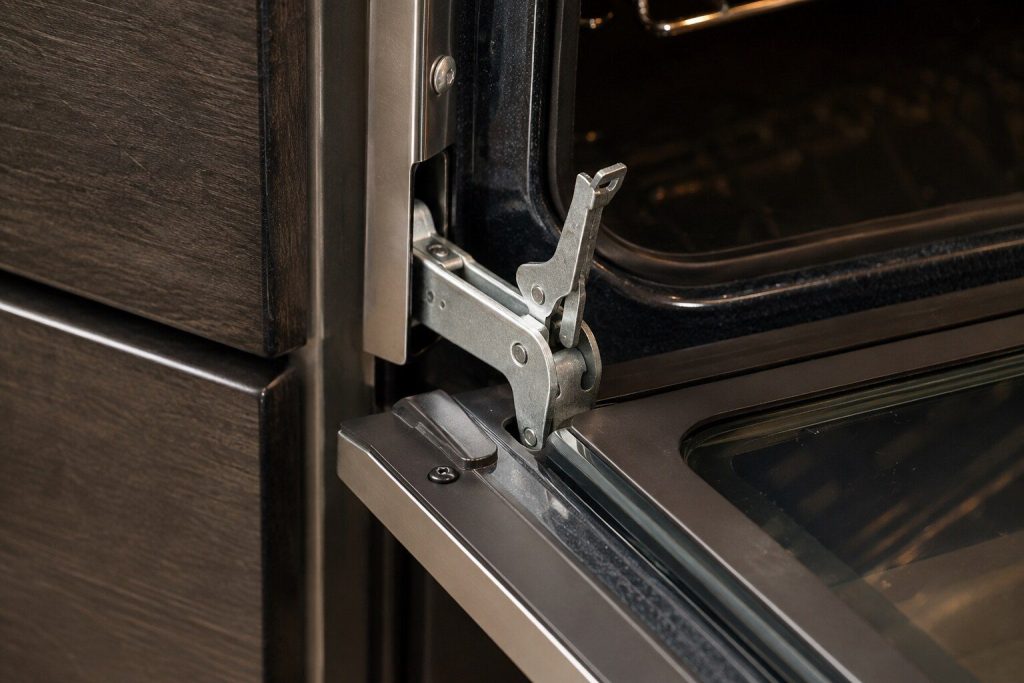
Taking an Oven Door Off: When It Is Worth It and When to Stop
The sequence is the easy part. The hinge locks and the stop condition are what decide whether this should be attempted at all.
Read more -
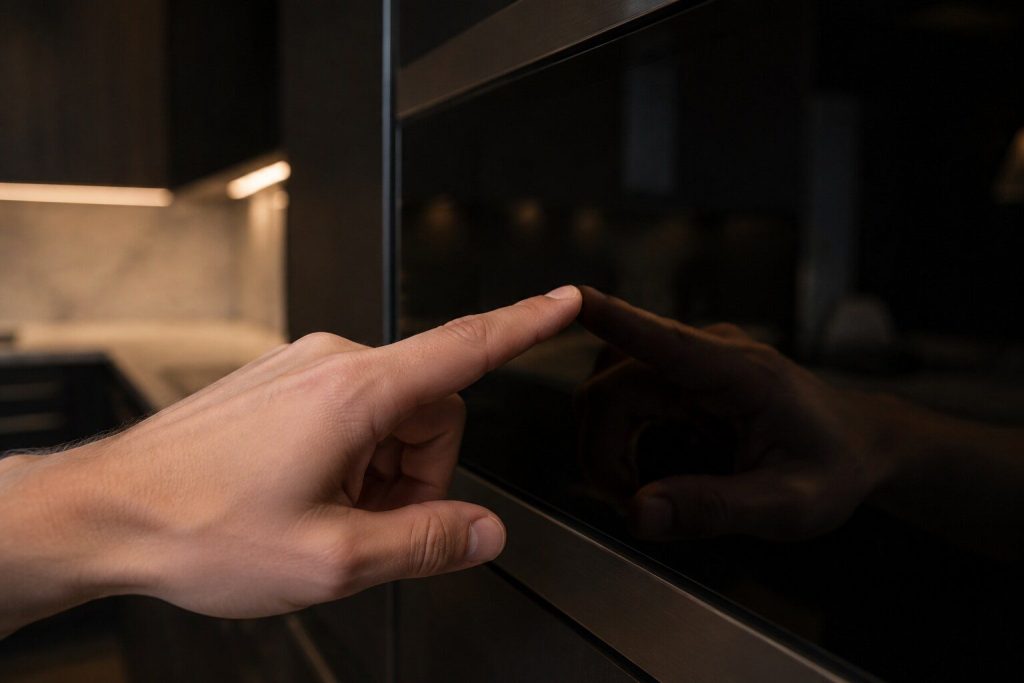
Locked Controls on a Monogram Appliance: Where the Lock Hides on Each One
Four different appliances, one problem, and no repair at the end of it. A wet cloth across a touch panel switches these on more often than people do.
Read more -
Connecting a Monogram Appliance to SmartHQ, and What It Is Worth
Worth having for one thing this site genuinely cares about: an alert that a cabinet has drifted, days before anybody opens the door. It diagnoses nothing.
Read more
Tell us the model number and what it is doing.
This article is based on:
- Official manufacturer documentation
- Internal repair procedures
- Technician repair history
- Company quality standards