Common Problems
Two Machines Make Ice in a Monogram Kitchen, and They Fail Differently
Establish which appliance you mean before anything else. The ice maker inside a refrigerator or a freezer column is a module bolted into a compartment somebody else is cooling: it has one water line, no drain, no compressor and no cleaning cycle, and it stops when the cabinet drifts warm or when water stops arriving. A dedicated 15-inch undercounter machine is a complete refrigeration appliance with its own sealed system, its own water line, its own drain and a descaling cycle of its own, and it stops on scale, on ambient temperature and on a drain that has blocked. Almost nothing you check on one applies to the other, so the first question is always which cabinet — and in a Monogram kitchen there is a good chance both exist.
The full guide
Same words, two appliances
Ask somebody about their ice maker and you may be talking about either of two machines that have almost nothing in common. General articles collapse them, and that is why so much of what is written about ice makers is unhelpful on any particular one.
The module. A tray, a fill valve, a small heater and a motor, bolted into a freezer compartment or a door. It has one water line in. It has no drain, because it has nothing to drain. It has no compressor, because the cabinet around it is the refrigeration. And it has no cleaning cycle of its own.
The undercounter machine. A refrigeration appliance in its own right, fifteen inches wide, with its own sealed system, its own condenser and fan, its own water line, a drain that goes to a pipe or a pump, and a descaling cycle on the panel.
Everything downstream of that distinction differs, including which of our own pages is the right one to read next.
Why the module fails, in order
Production is a function of the cabinet's temperature, so the cabinet comes first and it comes free. A freezer that has drifted up will keep food perfectly safe and make very little ice, and there is nothing on any display connecting those two facts. Zero Fahrenheit, measured in the middle of the load, over several hours.
Then water. The supply valve — silted closed on hard water, or knocked half shut during other work under the sink. The filter, past its useful life on local supply well before the date printed on it. And the fill tube at the back of the compartment, where a fill that dribbled instead of filling has frozen into a plug that blocks every fill after it.
Only then the module itself: the harvest motor, its thermostat, the heater that releases the cubes. Those are measurable, and they are the smallest part of the caseload.
Why the undercounter machine fails, in a different order
Here the cabinet question does not exist, and two new ones appear.
Scale. Every gallon of South Florida water that goes through a freezing cycle leaves its mineral behind, on the evaporator plate, in the valve and along the tubing. On a clear-ice machine the ice is made by freezing slowly in a moving film of water, so anything that interrupts that film produces exactly the classic complaint: cubes that get smaller and cloudier, cycles that take longer, and a bin that never fills. Descaling on schedule restores it completely. Left long enough, it does not fully recover.
The drain. The machine has to get rid of meltwater continuously, and most bar installations do it by gravity with a fall that was marginal on the day it was built. When the line blocks or the pump stops, water stands in the bin. It is the most common undercounter finding in this climate, and it becomes a smell before anybody calls it a problem.
Ambient. A machine in a bar area that is air-conditioned only when somebody is standing in it is working against a room its specification did not assume, and the grille at the bottom of the door is its entire ventilation system.
The nugget machines are different again
Nugget ice is made by a different mechanism — an auger driving soft ice out of a chilled cylinder rather than a plate freezing a film of water. It has its own noises, its own wear parts and its own response to scale, which tends to show up as production rate and sound rather than as cube clarity. If your machine makes the soft chewable ice, some of what is written about clear-ice machines does not apply to it.
What to tell us when you call
Which machine. The model number off that machine rather than off its neighbor. Whether it is making no ice at all or poor ice slowly. And on an undercounter unit, whether there is water standing in the bin that is not going down.
Those four sentences decide the visit. They are also the reason this page exists as its own guide rather than as a paragraph inside another one — because on this site the two appliances have separate pages, separate prices and separate lists of what to check, and every general article on the internet has them as one thing.
What a full bin actually looks like
Before deciding anything has stopped, it is worth knowing what normal production looks like on this equipment, because expectations are the commonest cause of this call.
A built-in ice maker in a refrigerator produces in batches, on a cycle governed by freezer temperature. In a Miami August, with a household opening the door thirty times a day, the cabinet spends more of its time recovering than a cabinet in a cooler climate does, and production drops accordingly. That is the appliance working correctly in harder conditions.
So a household that empties the bin every evening and finds it half full the next day may be asking for more than the appliance was ever specified to make. The honest answer there is a dedicated undercounter machine rather than a repair, and we would rather say so than take money for a module.
When there are two and only one has stopped
This is where the distinction on this page pays for itself.
If the undercounter machine has stopped and the module in the refrigerator is fine, nothing about the healthy one is evidence about the other. They share a water supply at best, and often not even that.
If they have both stopped at once, the shared thing is worth finding first — a supply valve, a filter on a common line, or a house that lost water pressure during other work. Two independent machines failing the same week usually have one external cause, and that is a much better outcome than two repairs.
The water question that applies to both
Local water is hard, and hardness works on ice makers in two different ways.
On a module, it clogs. The fill valve meters less, the tube furs, and the fills get short. Symptoms are hollow or half-formed cubes long before there is no ice at all.
On an undercounter machine, it scales. Mineral builds on the evaporator plate, the freezing film is interrupted, and the cubes get smaller and cloudier while the cycle takes longer. That is recoverable with descaling if it is caught, and it is progressively less recoverable if it is not.
Both are the same water doing the same thing to two different mechanisms, and both are reasons the filter interval on this site is shorter than the one printed on a cartridge.
The drain, which only one of them has
Worth repeating because it is the single most common undercounter finding in this climate and it does not exist as a concept on the other appliance.
An undercounter machine has to get rid of meltwater continuously. Most bar installations rely on gravity with a fall that was marginal on the day it was built. When the line blocks or the pump stops, water stands in the bin, and standing water in a warm cabinet becomes a smell within weeks.
If your ice tastes or smells wrong and the machine is an undercounter unit, look at the water level in the bin before you look at anything else.
What to have ready
The model number, from the machine that has stopped. Whether it makes no ice or poor ice. Whether the ice is cloudy, small, hollow or misshapen, because each of those points somewhere different. And on an undercounter unit, whether there is water standing in the bin.
Four sentences, and they decide almost the whole visit.
If it turns out to be a repair
What this leads to, and what it costs
Every job on this site is priced the same way: an on-site diagnostic first, the figure agreed in writing before anybody starts.
-
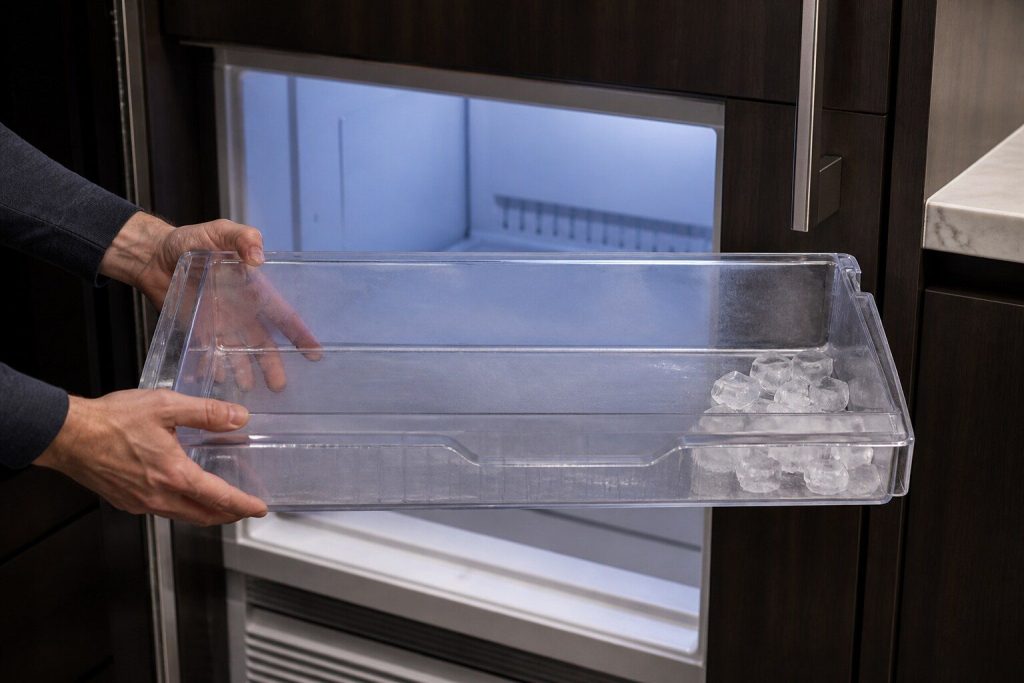
The bin is empty and nothing is happening Ice maker not making ice
An ice maker that has stopped completely. Half of these are not ice maker problems at all — production is a function of how cold the host cabinet is, and a module fitted into a cabinet that has drifted warm makes exactly as much ice as the one it replaced.
- Check the cabinet temperature first
- Then prove the water actually arrives
- CI on the display is a starting point
-
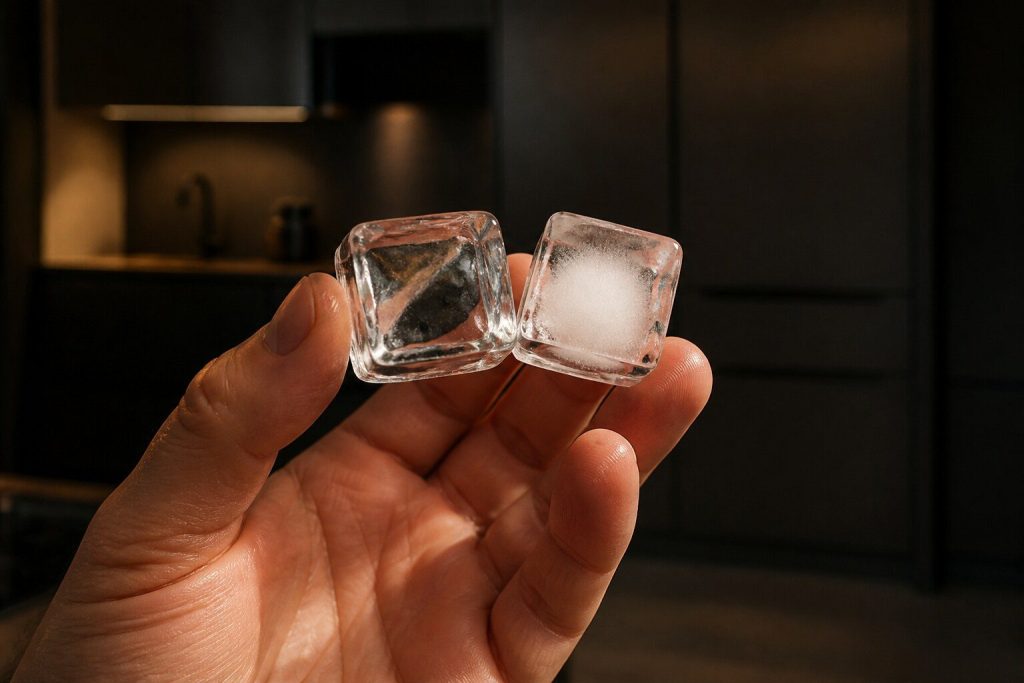
It works, but not properly Ice that is small cloudy or slow
Production that has tapered rather than stopped, with cubes that have got smaller and cloudier. On a standalone machine that is the signature of scale in the water circuit, and on local water it is not a matter of if but of when.
- Small and cloudy is scale, almost always
- Clear ice depends on moving water
- Descaling restores output without parts
-
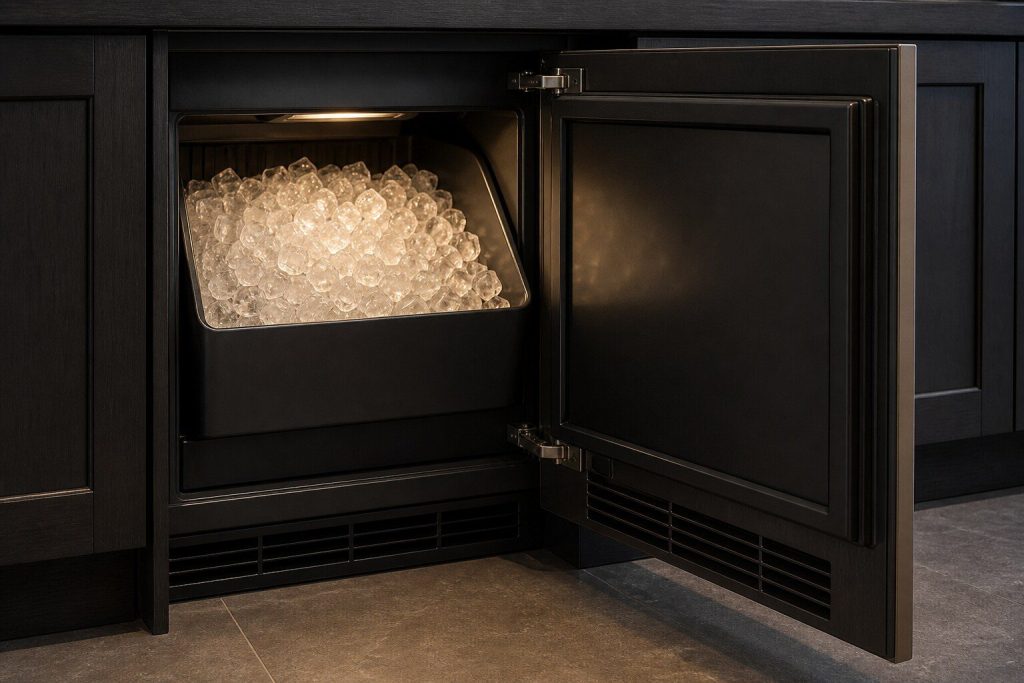
15-inch undercounter clear ice and nugget ice · in-cabinet ice makers Ice makers
A dedicated ice maker is a small refrigeration plant with a water circuit running through it, and in Miami the water circuit is what fails. Monogram kitchens take 15-inch undercounter units — clear ice and nugget ice — alongside the ice makers built into refrigerators and bar cabinets, and the two kinds fail in completely different ways.
- 15-inch undercounter clear-ice and nugget-ice machines
- Local water is hard on every part of the water circuit
- A drain that does not drain is the commonest undercounter problem
-
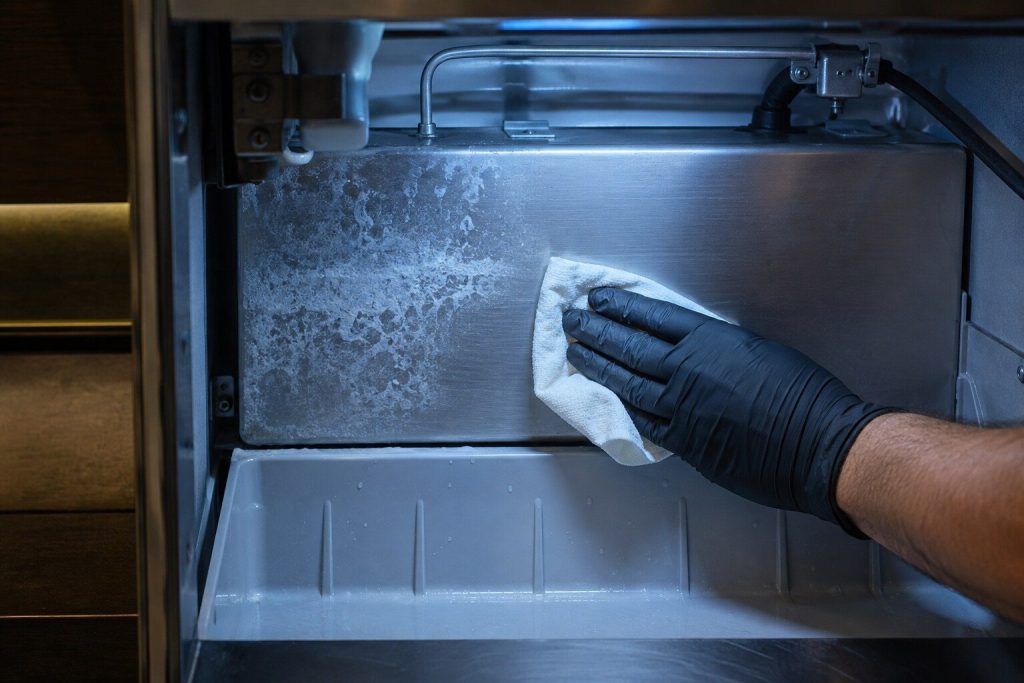
from $175 Ice machine cleaning and descaling
The service a standalone ice machine needs on schedule and almost never gets. Every gallon of hard South Florida water that goes through a freezing cycle leaves its mineral behind — on the evaporator plate, in the valve, along the tubing. Production tapers, cubes get small and cloudy, and nothing on the machine says why.
- Descale, sanitize and replace the filter
- Production measured before and after
- Restores output without replacing anything
Questions people ask about this
How do I tell which one I have?
If the ice comes out of a compartment inside a refrigerator or a freezer, it is a module. If there is a separate 15-inch door in the island or the bar that opens onto a bin of ice and nothing else, that is an undercounter machine. Many of these kitchens have both.
Why is my undercounter machine badged GE?
Because that is how it is sold. In Monogram's own current catalog the 15-inch clear-ice and nugget-ice machines carry the GE badge. It is not a mistake and it is not a downgrade — but it matters when somebody is searching for a manual or a part and finding nothing under Monogram.
The freezer is cold and the ice maker is not working.
Then measure it rather than judging it, because ice production stops at a temperature where food is still perfectly safe. A thermometer in the middle of the load for a few hours, and zero Fahrenheit is the number. If it is holding zero, move on to the water.
My ice tastes wrong and looks cloudy.
On a module, that is usually the filter and the length of time cubes have sat in the bin absorbing the freezer. On an undercounter clear-ice machine it is scale in the water circuit, and descaling recovers it completely.
Common Problems
More guides like this one
-
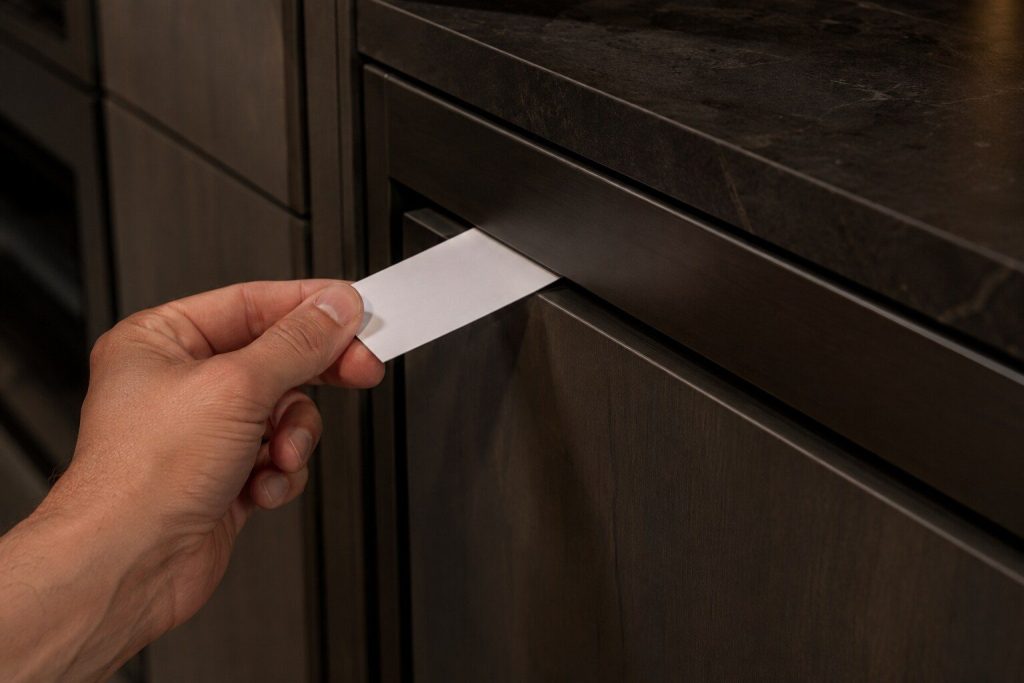
A Door That No Longer Seals: The Paper Test and the Panel Behind It
Two minutes of paper decides whether to call anybody. On integrated cabinetry the door is usually the problem and the gasket usually is not.
Read more -
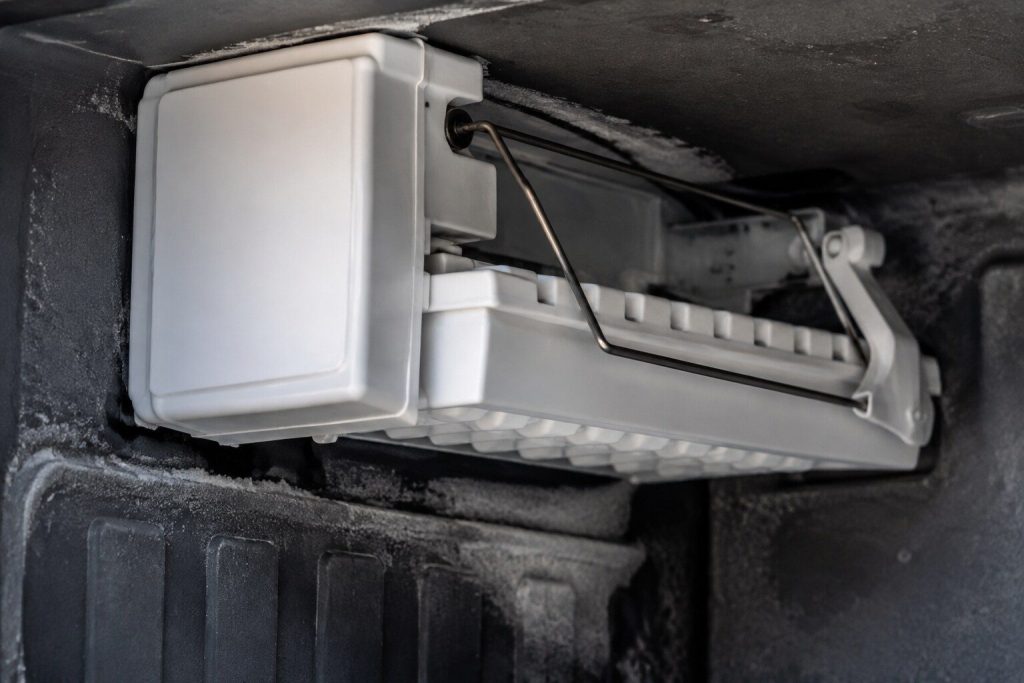
A Monogram Ice Maker That Has Stopped: Cabinet, Water, Module, In That Order
Half of these are not ice maker problems at all. Production is a function of how cold the cabinet is, and the free checks come first for a reason.
Read more -
The Accent Lighting on a Professional Range, and Why It Goes Alone
Lighting on these ranges is its own circuit with its own driver. Lights that have gone while everything cooks perfectly is not a sign of anything larger.
Read more
Tell us the model number and what it is doing.
This article is based on:
- Official manufacturer documentation
- Internal repair procedures
- Technician repair history
- Company quality standards