Common Problems
LEAK DETECTED on a Monogram Dishwasher: What It Saw and What to Do
Do not reset it and run another cycle. LEAK DETECTED means a sensor in the base tray under the machine has found water, and the control canceled the cycle to stop that water reaching the floor. Turn the machine off at the breaker or the switch under the sink, shut the water supply valve, and put a towel and a sheet of paper under the front edge. Then look for the obvious things you can see without moving anything: water on the floor in front, a damp cabinet base beside it, a door that no longer holds its position, and a detergent cup or a rinse aid reservoir that has been overfilled. On a fully integrated machine everything else is behind a panel and behind cabinetry, and it is worth a visit rather than a guess, because the flooring under one of these kitchens costs more than the repair does.
The full guide
The machine did not warn you. It stopped.
That distinction is worth the whole page. Most messages an appliance shows are advisory — a code, a beep, an indicator, and the machine carries on doing what it was doing. LEAK DETECTED is not one of those. The control has ended the cycle, it will not start another, and on machines with the Floor Protect feature it will refuse until somebody has looked.
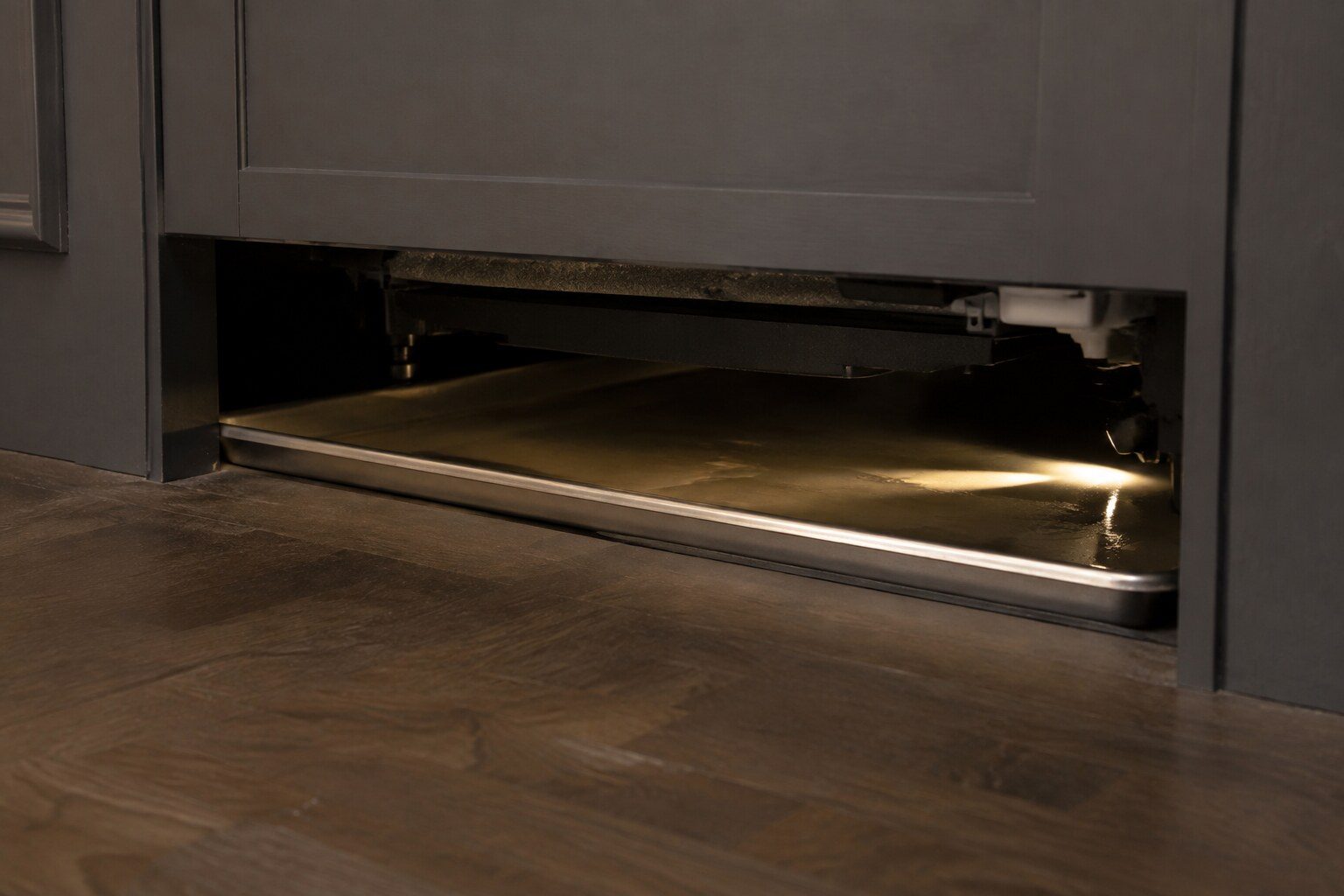
It did that because of a float in the base tray: a shallow steel pan under the tub that catches anything escaping from above it. Nothing else in the machine can see water. The sensor is there because that tray is where every leak, from every source, eventually arrives — the door seal, a hose clamp, the pump seal, the fill valve, the sump gasket. By the time water is on your kitchen floor, that tray has been holding it for a while.
Why this matters more on this machine than on most
A freestanding dishwasher leaks onto a floor you can see, next to a machine you can pull out. Neither is true here. A Monogram dishwasher is fully integrated: it sits in a cabinet run, it carries a custom panel that belongs to the kitchen, and the sides of it are joinery rather than air. Water that escapes has two places to go, and both of them are expensive — into the base of the cabinet beside it, and under the floor covering.
In a South Florida kitchen the floor is very often engineered wood or a large-format tile on a wood subfloor, and neither forgives a slow leak. We have been called to machines that had been cleared and restarted for three weeks. The dishwasher repair was ordinary. The cabinet base and two boards were not.
The four things worth checking yourself
The door, and how it holds. Open it and let go at the halfway point. It should stay there. A door that drops has tired springs or cables, and on a panel-ready machine that is usually because a heavier custom panel went on during a remodel and nobody re-tensioned anything. A door that has been dropping seals unevenly along the bottom edge, and water runs down the inside of the door and into the tray rather than out onto the floor — which is why it can go on for months invisibly.
The dispenser. An overfilled rinse aid reservoir will foam a machine over, and so will detergent packed into a cup that was blocked from opening. Both put water where it should not be and neither has damaged anything. If somebody has been generous with a bottle recently, that is worth knowing before anybody takes a panel off.
The supply connection. Under the sink, on the hot line. A compression fitting that has been disturbed by other work weeps a little at a time. You can see this one, which makes it the best possible outcome.
The floor of the cabinet beside it. Run a hand along the base of the neighboring cabinet, at the back if you can reach. Damp chipboard swells before it stains, so it often feels wrong before it looks wrong.
What we do that you cannot
Everything after that means the machine comes out of the run, and on an integrated installation that is a planned operation rather than a pull. The services are isolated, the panel comes off in an order, the floor is protected, and the machine is drawn forward on its feet rather than dragged. The tray is emptied and dried, the machine is run with the tray visible, and we watch where the water arrives from — because the tray tells you there is a leak and nothing about where.
Then it is a short list: the door gasket, the sump gasket, a hose or a clamp, the fill valve, or the pump seal. Most of them are inexpensive parts. The work is the access and the reassembly, and the panel going back level with the run is part of the job rather than a courtesy.
Do not let a reset become the routine
Cutting power for thirty seconds clears the message on most of these machines. It does not empty the tray and it does not fix anything. If clearing it has become something the household does on a Tuesday, the tray has been wet for a long time and the question is no longer whether there is a leak.
That is the honest advice, and it is the reason this page exists rather than a shorter one: every forum answer to this phrase is about how to make the message go away. The message is the appliance doing the one genuinely protective thing it can do.
Where the water usually comes from
Once the machine is out and the tray is dry, the list is short and it is worth knowing what is on it.
The door seal, at the bottom. The commonest on panel-ready machines, and it is a door problem rather than a gasket problem more often than not. A door carrying a heavy custom panel drops over years, seals unevenly along its lower edge, and lets water run down the inside of the door into the tray rather than out onto the floor — which is exactly why it can go on for months with nothing visible in the room.
A hose or a clamp. Age, heat and vibration. Slow, and at the back of the machine where nothing is visible.
The sump gasket. Where the tub meets the pump assembly. A weep rather than a flow.
The fill valve or its connection. On the supply side, and the one place you may be able to see something yourself, under the sink.
The pump seal. Reached last, and the reason the machine came out.
Most of those are inexpensive parts. On this appliance the work is the access and the reassembly.
Overfilling, which leaves no damage at all
Worth ruling out before anybody takes a panel off, because it is genuinely common and costs nothing.
Too much rinse aid, or detergent packed into a cup that could not open fully, foams a machine over. Foam escapes where water would not, reaches the base tray, and trips the float exactly as a leak would. Nothing has failed and nothing needs replacing.
The tell is usually a recent change: a new bottle of something, a different detergent, somebody being generous with a dispenser. If that lines up with when the message started, say so — it changes what we look for.
What the base tray actually is
A shallow steel pan under the tub, sloped so that anything escaping from above collects at one point, with a float sitting in it. That is the entire sensing system.
It is worth understanding for two reasons. First, it explains why the sensor is right and your eyes are wrong — the tray fills long before anything reaches a floor. Second, it explains why a reset does nothing useful: the message is a state of the tray, and clearing the message does not empty the tray.
On machines with the Floor Protect with Alert feature, the tray also stops the machine starting again, which is the strongest thing an appliance in this kitchen can do to protect the room it is in.
After the repair
Two things worth doing while somebody is there.
Have the door balance set. If the leak came from a door that had dropped, correcting the springs for the panel that is actually fitted is what stops it happening again. Replacing a gasket on a door that still drops is a repair with a timer on it.
Have the cabinet base checked. Damp chipboard swells before it stains, so it often feels wrong before it looks wrong, and knowing early whether the joinery has taken water is worth far more than finding out at a remodel.
Neither adds much to a visit. Both are the difference between a repair and a repeat.
If it turns out to be a repair
What this leads to, and what it costs
Every job on this site is priced the same way: an on-site diagnostic first, the figure agreed in writing before anybody starts.
-
Monogram dishwasher LEAK DETECTED error code
Monogram dishwasher error code LEAK DETECTED: A possible leak has been detected and the cycle has been canceled. Which machines can actually raise it, where the number lives on this make, and what to do next.
What this one means -
Monogram dishwasher error code 999
Monogram dishwasher error code 999: On machines with the Floor Protect with Alert feature, a possible leak has been detected and the machine will not start. Which machines can actually raise it, where the number lives on this make, and what to do next.
What this one means -
Dishwasher leaking
On a fully integrated dishwasher a leak is invisible until the cabinetry has taken it, and in these kitchens the flooring and the joinery are the expensive part of the room. A door that has dropped is the most common cause and the least dramatic one.
- A dropped door seals unevenly along the bottom
- LEAK DETECTED means the machine canceled on purpose
- This is the one not to leave
-
Dishwasher pump replacement
When the drain path is clear and the machine still will not empty, the drain pump is what is left. On a fully integrated machine the job includes getting the appliance out of a cabinet run and its panel off without marking anything, which is a real part of the work.
- Only after the drain path has been proved clear
- Wash pump and drain pump are different problems
- Panel and cabinetry handled as part of the job

Questions people ask about this
There is no water anywhere. Is the sensor wrong?
Almost certainly not, and this is the most common thing people tell us. The sensor sits in the base tray under the tub, which is exactly where a leak arrives first and exactly where you cannot see. Water can sit in that tray for days without a drop reaching the kitchen floor.
Can I clear it and finish the load?
You can. On most machines cutting power for thirty seconds clears the message. What it does not do is empty the tray, so the next cycle puts more water into a tray that already has some. If it is a real leak, the load is the least of what it will cost you.
It says 999 rather than LEAK DETECTED.
Same family. On machines with the Floor Protect with Alert feature, 999 is a possible leak and the machine will not start. On machines without it, 999 means the control needs a reset. Which one you have decides whether this is a plumbing conversation or a two-minute one.
How much water does it take to set it off?
Less than you would expect — the sensor is a float and it only has to lift. That is the point of it. A weeping hose clamp that puts a few tablespoons an hour into the tray will trip it long before anything appears in the room.
Common Problems
More guides like this one
-
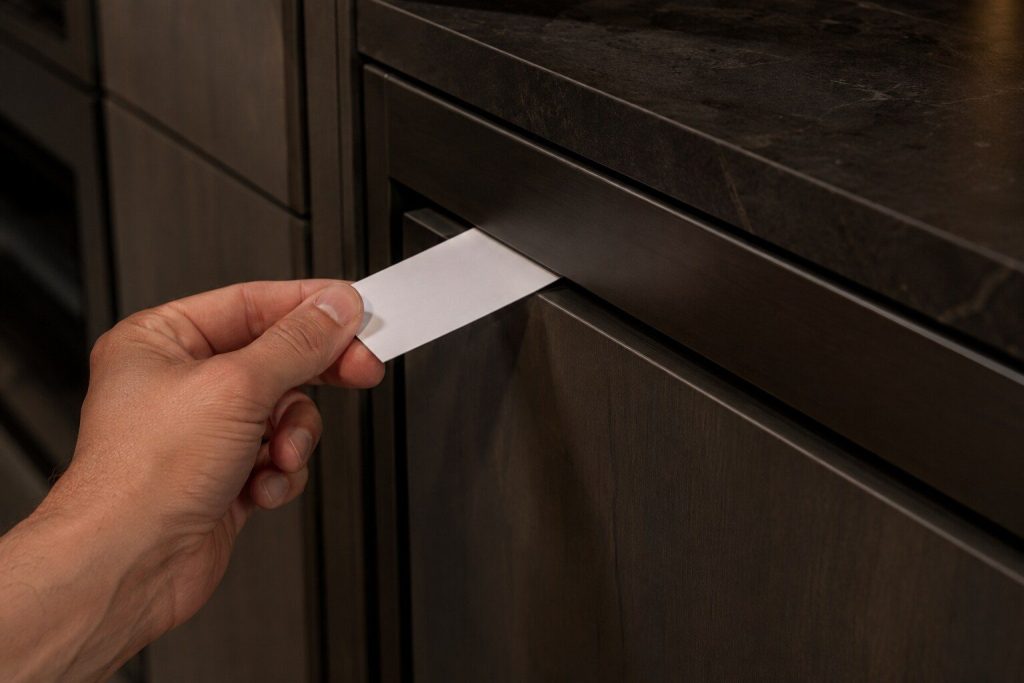
A Door That No Longer Seals: The Paper Test and the Panel Behind It
Two minutes of paper decides whether to call anybody. On integrated cabinetry the door is usually the problem and the gasket usually is not.
Read more -
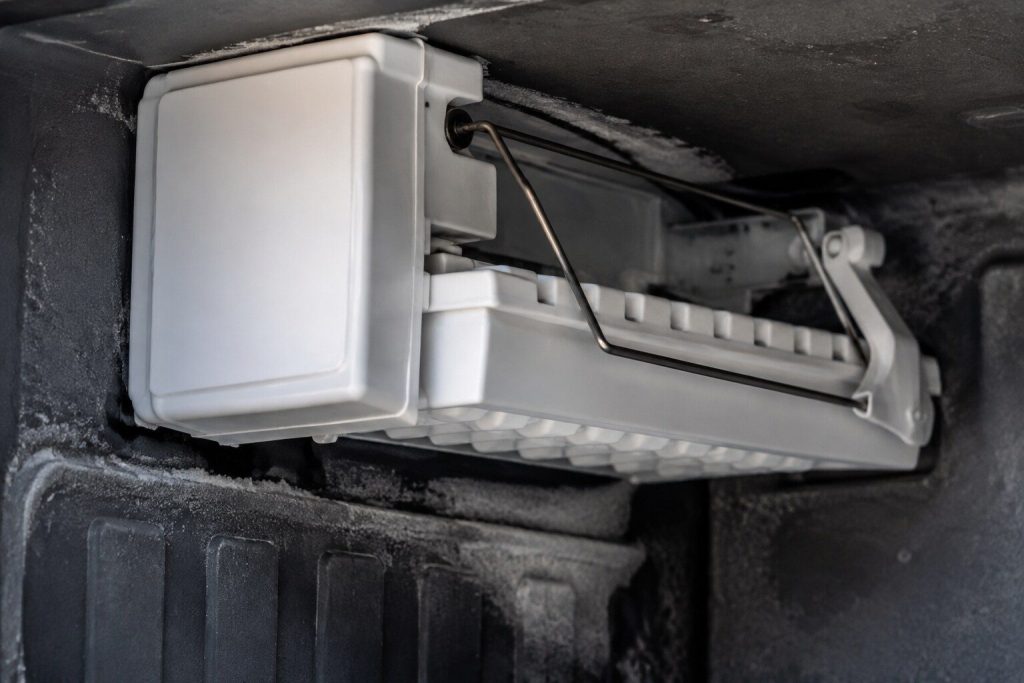
A Monogram Ice Maker That Has Stopped: Cabinet, Water, Module, In That Order
Half of these are not ice maker problems at all. Production is a function of how cold the cabinet is, and the free checks come first for a reason.
Read more -

The Accent Lighting on a Professional Range, and Why It Goes Alone
Lighting on these ranges is its own circuit with its own driver. Lights that have gone while everything cooks perfectly is not a sign of anything larger.
Read more
Tell us the model number and what it is doing.
This article is based on:
- Official manufacturer documentation
- Internal repair procedures
- Technician repair history
- Company quality standards