Common Problems
An Oven That Climbs to 180 and Stops: What That Number Is Telling You
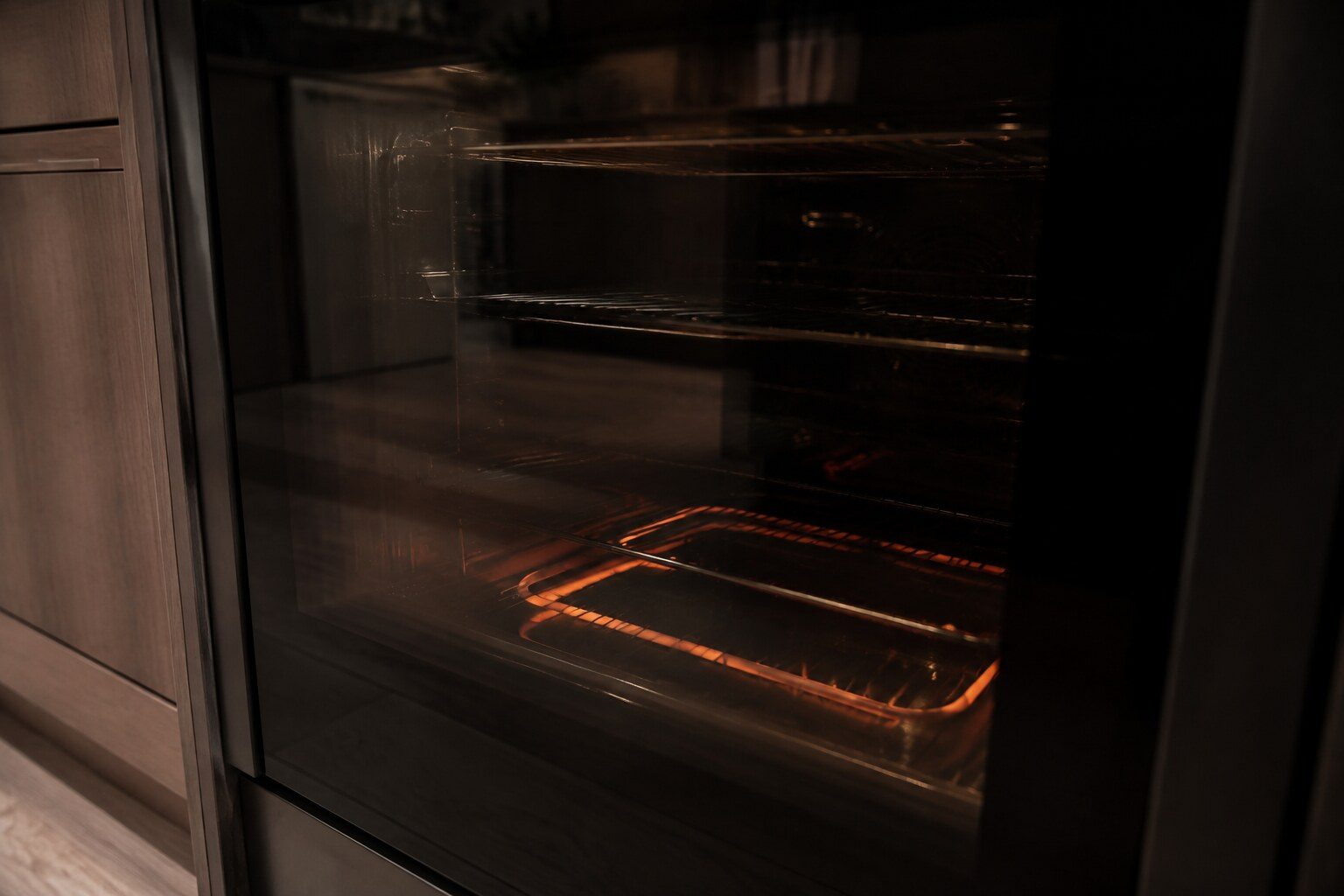
An oven that reaches a low temperature and holds there is still producing heat, which is useful information: the control is working, the door is closed, the appliance has power. What it is not doing is producing enough heat, and on a dual-fuel range or an electric wall oven that points at one of three things. A bake element that has failed while the broil element still works will preheat slowly to a plateau and stop. A temperature sensor reading high tells the control it has arrived when it has not, and the control obeys. And a convection element or fan that has stopped changes how the cavity behaves at every setting. On an all-gas range the equivalent list is the oven burner, its igniter and the gas valve, where a weak igniter glows without drawing enough current to open the valve fully. Measure what it actually reaches with a separate thermometer before assuming anything, because the number on the display is one of the things under suspicion.
The full guide
A plateau is a diagnosis. A dead oven is a question.
There is a real difference between an oven that does nothing and an oven that climbs to 180 and stays there, and it is worth understanding before you read another word about it. An oven that does nothing has a supply problem, a control problem or a door it does not believe is shut. An oven that climbs and plateaus has none of those: the control called for heat, something produced heat, and the cavity reached the temperature that heat can hold against everything leaking out of it. Then it stopped rising, because that is all the heat there is.
That narrows the list to three things on an electric oven, and to three different things on a gas one.
On a dual-fuel range, or any wall oven: three suspects
One element working, one not. Most of these ovens have a bake element at the bottom and a broil element at the top, and they are separate circuits doing separate jobs. Preheat on many models uses both. If one has failed open, preheat becomes a slow climb driven by the survivor, and the cavity settles wherever that single element can hold it. This is the commonest cause by a wide margin and it is a defined, inexpensive repair.
Elements fail in two ways. Sometimes visibly — a blister, a break, a scorch mark where the element enters the cavity wall. Often not: the resistance simply goes open somewhere along the coil, and looking at it tells you nothing. It is measured cold with a meter, against a published figure, in about a minute.
A sensor reading high. The oven's temperature sensor is a resistor whose value changes with heat, and the control believes it completely. A sensor that has drifted high tells the control the cavity is at 350 when it is at 180, so the control stops asking for heat. Everything about the appliance looks healthy; it has simply been lied to. This one usually comes with F3 or F4 if the circuit has gone open or short, and with no code at all if it has merely drifted.
A convection element or fan that has stopped. On models with true convection, the third element lives behind the back wall with a fan in front of it. When the fan stops the element can overheat and shut itself down; when the element goes the fan moves air that is no hotter than the cavity. Either way, modes that depend on it underperform while conventional bake looks nearly normal — which is a useful thing to notice, because it points straight at the back wall.
On an all-gas range: a different three
The oven has a burner rather than an element, and the list changes completely.
A weak igniter. This is the classic, and it is counter-intuitive. On these ovens the igniter does two jobs: it glows hot enough to light the gas, and it draws enough current to open the safety valve. As it ages it keeps glowing and stops drawing. So you see a bright orange glow, the gas never fully arrives, and the oven produces a fraction of the heat it should. An igniter that looks perfect can be the whole problem, which is why it is measured rather than looked at.
The safety valve. Less common, and it presents identically.
Airflow and the burner itself. Ports partly blocked after years of spills give a small, lazy flame that will heat a cavity slowly to a plateau and no further.
Measure it before you believe it
The number on the display is one of the things under suspicion, so do not let it be the evidence. Put an oven thermometer in the middle of the cavity, set the oven to 350, and read it after twenty minutes at temperature rather than at the beep. Then do it again at 450.
Three shapes come out of that, and they mean different things:
- A steady offset at both temperatures — the oven is out by 25 or 30 everywhere. That is calibration, these ovens have an offset setting for exactly that, and it is not a failure at all.
- A plateau at both settings, at the same low number — the oven is heat-limited. One element, one igniter, one burner. This page.
- Correct at 350 and short at 450 — it has enough heat for a small demand and not a large one, which usually means the same thing in a milder form. Worth catching early.
Why the model number decides what we bring
A 48-inch dual-fuel range and a 48-inch all-gas range look identical across a kitchen and share almost nothing behind the oven door. One takes an element and the other takes an igniter. On the wall-oven side, the single, double, French-door and camera-equipped models share a control platform but not their part numbers, and a double oven has two of everything including two sensors — so which cavity is misbehaving is half the answer.
That is the reason the first question on this site is always the model number and the installation, and it is not paperwork. It is the difference between a repair that finishes on the first visit and one that does not.
What we would do about it
Measure the cavity, read whatever code exists, and then measure the parts rather than replace them in order of price. On the electric side that is both elements, the sensor against its published curve, the harness and the terminal blocks — because a burnt terminal is a common finding on an oven that has run hot for years, and fitting a new element to a burnt block simply moves the problem. On the gas side it is the igniter's current draw under load, which is the only test that distinguishes a weak igniter from a good one.
Either way it is a defined repair with a defined part, and it is a good deal less expensive than the conversations further down this site.
If it turns out to be a repair
What this leads to, and what it costs
Every job on this site is priced the same way: an on-site diagnostic first, the figure agreed in writing before anybody starts.
-
Oven not heating
An oven that responds to the controls and produces no heat. On a dual-fuel range this affects the electric oven while every gas burner keeps working perfectly, which confuses people into thinking half the appliance is fine. It is.
- Bake and broil are different elements
- On a dual-fuel range the top is unaffected
- F codes name the circuit that is talking
-
Monogram oven error code F3
Monogram oven error code F3: The manufacturer's table gives this as the oven sensor needing replacement. Which machines can actually raise it, where the number lives on this make, and what to do next.
What this one means -
Monogram oven error code F2 or F20
Monogram oven error code F2 or F20: Shown as F2 or F20. Which machines can actually raise it, where the number lives on this make, and what to do next.
What this one means -
Oven element replacement
An oven that will not reach temperature, browns on one side, or has visibly failed at a connection. Bake and broil elements are measurable parts — either the resistance is in specification or it is not — which makes this one of the few problems where the diagnosis is unambiguous.
- Elements measured, not swapped on suspicion
- The wiring and terminals checked as well
- Calibration verified afterwards
-
Professional ranges
Monogram does not make an ordinary range. The line is professional: 30, 36 and 48 inches, dual-fuel with a gas top over an electric oven, all-gas throughout, or induction — with griddles and grills on the wider models. A 48-inch dual-fuel range is a gas appliance, an electric appliance and a ventilation problem in one piece of steel, and the diagnosis starts by working out which of the three is talking.
- Dual-fuel, all-gas and induction, 30 to 48 inches
- Griddle and grill sections are their own repair
- The F-code family covers the oven side, not the burners
Questions people ask about this
The cooktop works perfectly, so the appliance has power.
On a dual-fuel range that tells you nothing about the oven, because the top is gas and the oven is electric. They are two systems in one frame with two separate supplies and two separate lists of what can go wrong. On an all-gas range it is genuinely useful — it proves gas is reaching the appliance.
Is 180 significant, or is it just where mine stops?
It is not a magic number. What matters is the shape of the behavior: a climb to some low plateau and then nothing. Yours might stop at 200 or 250. An oven with one working element and one that has failed will reach whatever that single element can hold against the losses of the cavity, and then sit there.
Can I still use it below the plateau?
You can, and we would rather you did not for long. An element failing at a terminal, which is the common way this happens, gets hotter at the connection as it degrades — and that is a connection inside a cabinet. It is worth looking at before it becomes something else.
Would a code have told me?
Sometimes and not always. F3 and F4 name the temperature sensor circuit outright and F2 reports an over-temperature event. An element that has simply failed open often shows no code at all, because nothing the control monitors is out of range — it is just asking for heat and not getting it.
Common Problems
More guides like this one
-
A Door That No Longer Seals: The Paper Test and the Panel Behind It
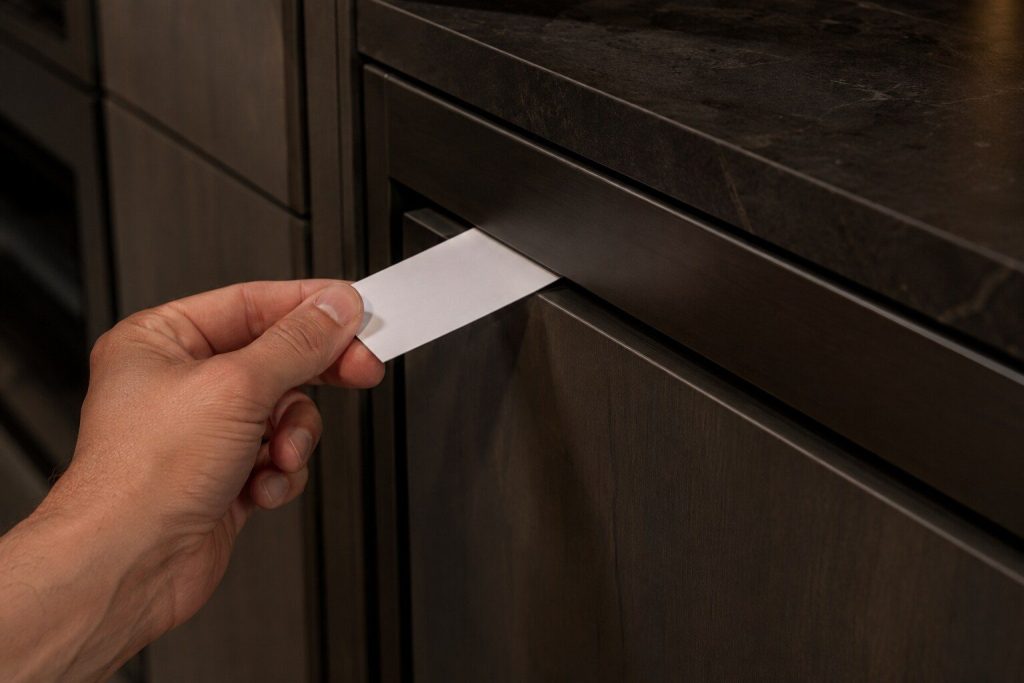
Two minutes of paper decides whether to call anybody. On integrated cabinetry the door is usually the problem and the gasket usually is not.
Read more -
A Monogram Ice Maker That Has Stopped: Cabinet, Water, Module, In That Order
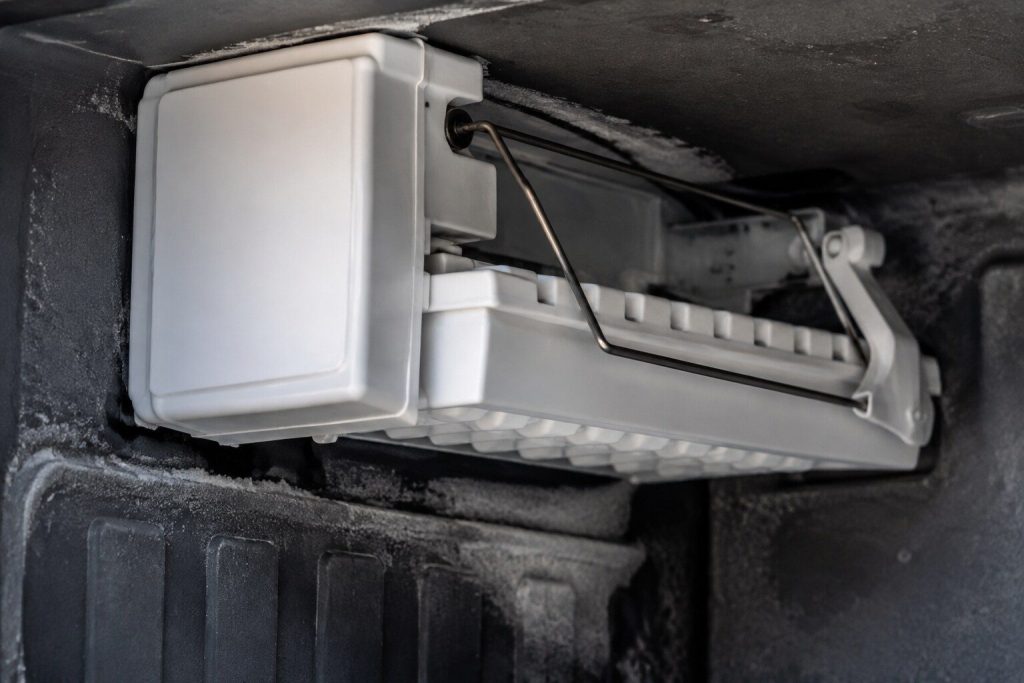
Half of these are not ice maker problems at all. Production is a function of how cold the cabinet is, and the free checks come first for a reason.
Read more -
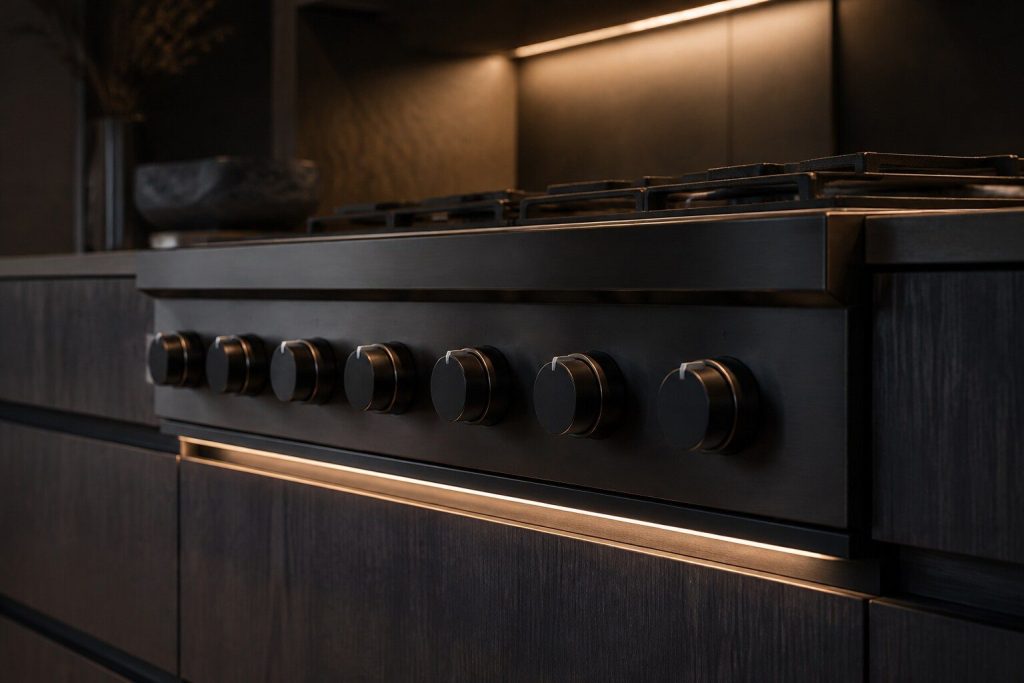
The Accent Lighting on a Professional Range, and Why It Goes Alone
Lighting on these ranges is its own circuit with its own driver. Lights that have gone while everything cooks perfectly is not a sign of anything larger.
Read more
Tell us the model number and what it is doing.
This article is based on:
- Official manufacturer documentation
- Internal repair procedures
- Technician repair history
- Company quality standards