Common Problems
Standing Water in a Monogram Dishwasher, and the Display You Have Never Seen
Open the door and read the top edge before you do anything else — on a fully integrated machine that is where the control panel lives, and the code narrows the job immediately. C1 means the drain took longer than two minutes, C3 means it did not drain at all, C5 means it finished suspiciously fast. Then work the path in order: unscrew the filter in the floor of the tub and clean it, take the cap off the air gap on the counter if the sink has one, check that the drain hose behind the machine still rises into a high loop before it drops, and run the garbage disposer. If a disposer has been replaced since the dishwasher last drained properly, check that its knockout plug was removed — a plug left in place blocks the drain completely and is a five-minute fix. Only when the whole path is proved clear is the pump worth suspecting.
The full guide
The most useful sentence on this site
On a fully integrated dishwasher the control panel is on the top edge of the door. It faces upward. You can only see it with the door open, which is exactly when nobody is looking, because by then everybody is looking at the water.
So the single most common thing we are told on this call is that the machine showed nothing. It almost always showed something. C1, C2, C3, C5 and FTD are all drainage messages and they say different things — how long the pump ran, whether it ran at all, whether it stopped too soon — and any one of them shortens this page to a paragraph.
Open the door. Read the edge. Photograph it.
Then the path, cheapest first
Water leaves a dishwasher by one route, and it can be stopped at five points along it. They are listed here in the order of how much they cost to check, which is not the same as the order of how likely they are — but it is close.
The filter
A cylinder standing in the floor of the tub, under the lower spray arm, with a flat screen beneath it. It unscrews by hand. No tool, no manual, no skill.
Most of these have never been out. Over years the mesh seals with a film of grease and starch, water stops passing through at the rate the pump expects, and the machine cannot empty in the time its control allows — which is precisely what C1 reports. Rinsing it under a tap fixes a startling number of these calls, and it is worth doing every few months regardless.
The sump under it
With the filter out, the sump and the pump inlet are visible. This is where things too big for the filter end up: a shard from a broken tumbler, the paper label off a jar, a fruit sticker, a small bone. Any of them stops the pump dead, and a pump straining against an obstruction sounds exactly like a pump failing — which is why perfectly good pumps get replaced.
The air gap
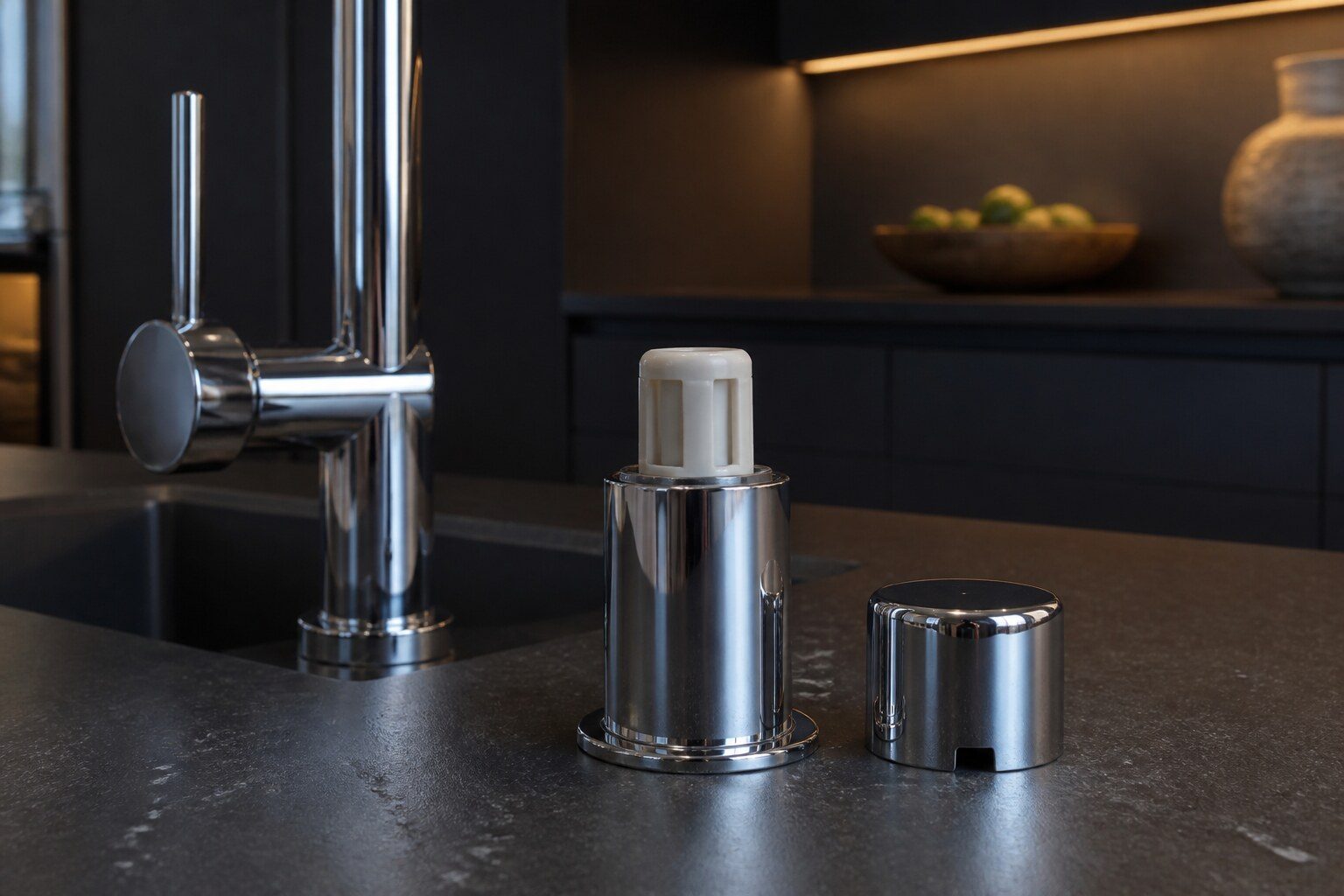
If the sink has a small chrome cylinder beside the tap, that is an air gap, and it is part of the drain path. The cover twists off and the cap underneath lifts out. They pack solid with the same residue as the filter, and when they do the machine cannot push water past them. The manufacturer names this as the first thing to check for C1, and it is free.
The hose and its loop
Behind the machine, the drain hose has to rise to a high loop before it drops to its connection under the sink. That loop is not decoration — it is what stops water from the sink siphoning backwards into the dishwasher. Two things go wrong: the hose gets kinked when the appliance is pushed back into its opening, and the loop is lost when somebody reroutes the plumbing during other work. The second shows up as dirty water appearing in a clean machine, which reads as a drain problem and is really a backflow one.
The disposer, and the plug
A garbage disposer ships from the factory with a knockout plug sealing the dishwasher inlet. It is there so the disposer can be installed without a dishwasher. If a disposer has been replaced and nobody punched that plug out, the dishwasher has nowhere to send its water — from the first cycle after the installation, permanently.
It is one of the most common causes of this complaint in any kitchen, and it is not a dishwasher problem at all. If the timing lines up with plumbing work, check this before anything else.
What is left after that
The drain pump, the check valve in it, and the control that runs it. Those are a visit, and on an integrated machine that visit includes getting the appliance out of the cabinet run and back with the panel aligned — which is a real part of the work and is priced as work rather than hidden.
The reason it comes last is not politeness. A pump replaced because an air gap was blocked is a part bought for nothing, and we would rather tell you to unscrew a filter than sell you an afternoon.
The one warning worth printing
If water is appearing outside the machine as well as standing inside it, stop reading this page and read the one about leaks. A dishwasher that will not drain is an inconvenience. A dishwasher leaking into a cabinet run is flooring, and in these kitchens flooring is the expensive part of the room.
The codes, and what separates them
All five drainage messages describe the same event from different angles, and knowing which one you have narrows the visit before it starts.
C1 — the pump ran for more than two minutes trying to empty. Water is leaving, slowly. That points at restriction: a loaded filter, an air gap, a partly blocked hose.
C2 — the total pump-out exceeded about seven minutes. The same story further along.
C3 — it did not drain at all. Blunter, and more likely to be a hard blockage or the pump itself.
C5 — the pump-out finished too quickly, which usually means there was less water in the machine than there should have been. That is a fill question rather than a drain one, and the supply valve is where it starts.
FTD, sometimes shown as F56 — failure to drain, on the machines that use that notation.
Photograph whichever you have. It is two seconds and it is most of the information a technician needs before arriving.
Why the disposer plug catches so many people
It is worth its own paragraph because it is not intuitive and it is genuinely common.
A garbage disposer arrives from the factory with a knockout plug sealing its dishwasher inlet, so it can be fitted in a kitchen that has no dishwasher. Removing that plug is a step in the disposer's installation instructions, and it is the step that gets missed.
When it is missed, the dishwasher has nowhere to send its water — from the very first cycle after the plumbing work, permanently. The machine is fine. The dishwasher installer is fine. The disposer is fine. The plug is a coin-sized disc that takes ten seconds to knock out.
If your dishwasher stopped draining around the time anything happened under the sink, check this before anything else on this page.
The habits that stop it recurring
Scrape, do not rinse. These machines do not need pre-rinsed dishes, and detergent works better with something to act on. What they do need is bones, peel, skins and the last inch of a bowl removed, because that is what ends up in the filter.
Clean the filter every few months. It unscrews. Two minutes.
Run the hot tap before a cycle in a house with a long pipe run. It is not a drainage matter, but it is on the same short list of free habits.
Do not use drain products. They do not reach the blockage — most of these are above any chemical — and they are hard on seals and pump components.
When the machine has to come out
If the whole path is proved clear and it still will not empty, the drain pump or its check valve is next, and on an integrated machine that means the appliance comes out of the cabinet run.
That is a planned operation rather than a pull: services isolated, panel off in an order, floor protected, machine drawn forward on its feet. Putting it back level with the run is part of the job. It is the reason the figure for a pump replacement on this site sits above the same job on a freestanding machine, and the pages say so rather than hiding it in the parts price.
If it turns out to be a repair
What this leads to, and what it costs
Every job on this site is priced the same way: an on-site diagnostic first, the figure agreed in writing before anybody starts.
-
Dishwasher not draining
The most common dishwasher call there is, and on these machines it usually comes with a code nobody has seen — the display is on the top edge of the door, visible only when the door is open. C1, C2, C3 and C5 all describe drainage and they mean different things.
- Read the top edge of the door first
- The filter unscrews and most owners never have
- A disposal knockout plug is a real cause
-
Monogram dishwasher error code C1
Monogram dishwasher error code C1: The pump out during drain has exceeded two minutes. Which machines can actually raise it, where the number lives on this make, and what to do next.
What this one means -
Monogram dishwasher error code C3
Monogram dishwasher error code C3: The dishwasher will not drain. Which machines can actually raise it, where the number lives on this make, and what to do next.
What this one means -
Dishwasher drain repair
Water standing in the bottom at the end of a cycle is the most common dishwasher call there is, and on these machines it usually comes with a code nobody has seen — the display is on the top edge of the door. C1, C2, C3 and C5 all describe drainage and they mean different things.
- The C code read before anything is opened
- Filter, air gap and hose before the pump
- The disposal knockout plug is a real cause

Questions people ask about this
There is always a little water in the bottom. Is that normal?
A small amount in the sump is normal and keeps the seals from drying out. A pool that covers the filter is not.
It stopped draining right after we replaced the garbage disposer.
Then it is almost certainly the knockout plug. A new disposer ships with a plug sealing the dishwasher inlet, and if the installer did not punch it out the machine has nowhere to send its water. It is one of the most common causes there is and it costs nothing to fix.
Should I pour anything down it?
No. Drain products do not reach the blockage — most of these are in the filter or the air gap, above any chemical — and they are hard on seals and pump components. Everything on this page is mechanical.
It drains but the dishes come out dirty.
That is a different complaint. Wash performance is about spray arms, water temperature and scale rather than about drainage, and it has its own page on this site.
Common Problems
More guides like this one
-
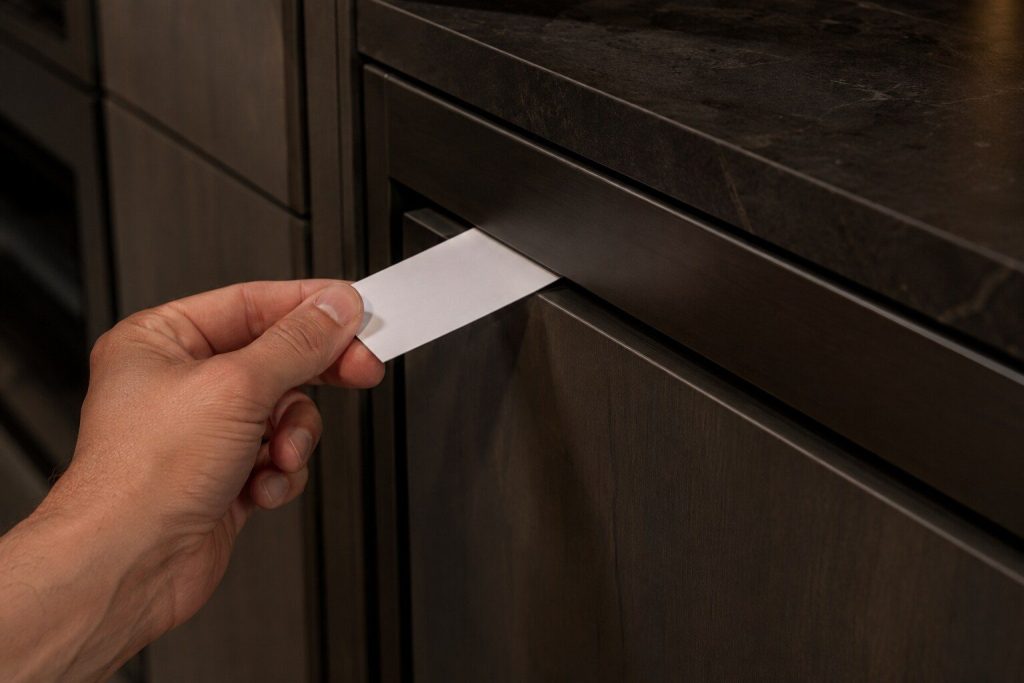
A Door That No Longer Seals: The Paper Test and the Panel Behind It
Two minutes of paper decides whether to call anybody. On integrated cabinetry the door is usually the problem and the gasket usually is not.
Read more -
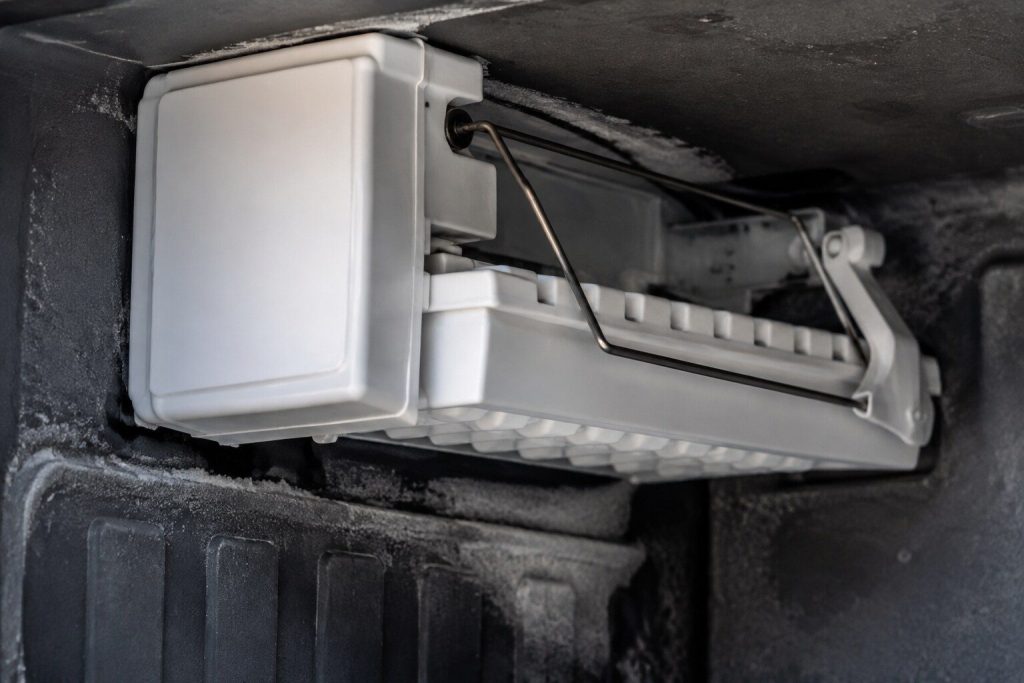
A Monogram Ice Maker That Has Stopped: Cabinet, Water, Module, In That Order
Half of these are not ice maker problems at all. Production is a function of how cold the cabinet is, and the free checks come first for a reason.
Read more -
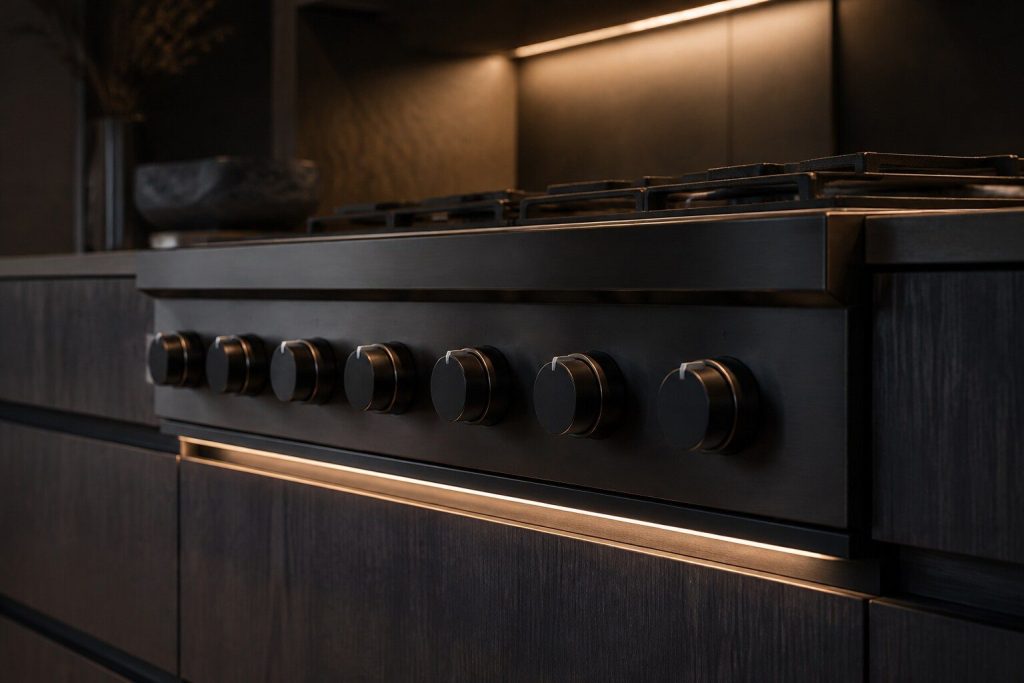
The Accent Lighting on a Professional Range, and Why It Goes Alone
Lighting on these ranges is its own circuit with its own driver. Lights that have gone while everything cooks perfectly is not a sign of anything larger.
Read more
Tell us the model number and what it is doing.
This article is based on:
- Official manufacturer documentation
- Internal repair procedures
- Technician repair history
- Company quality standards