Safety & Risks
Mold in the Folds of a Door Seal: Getting It Out Without Wrecking the Gasket
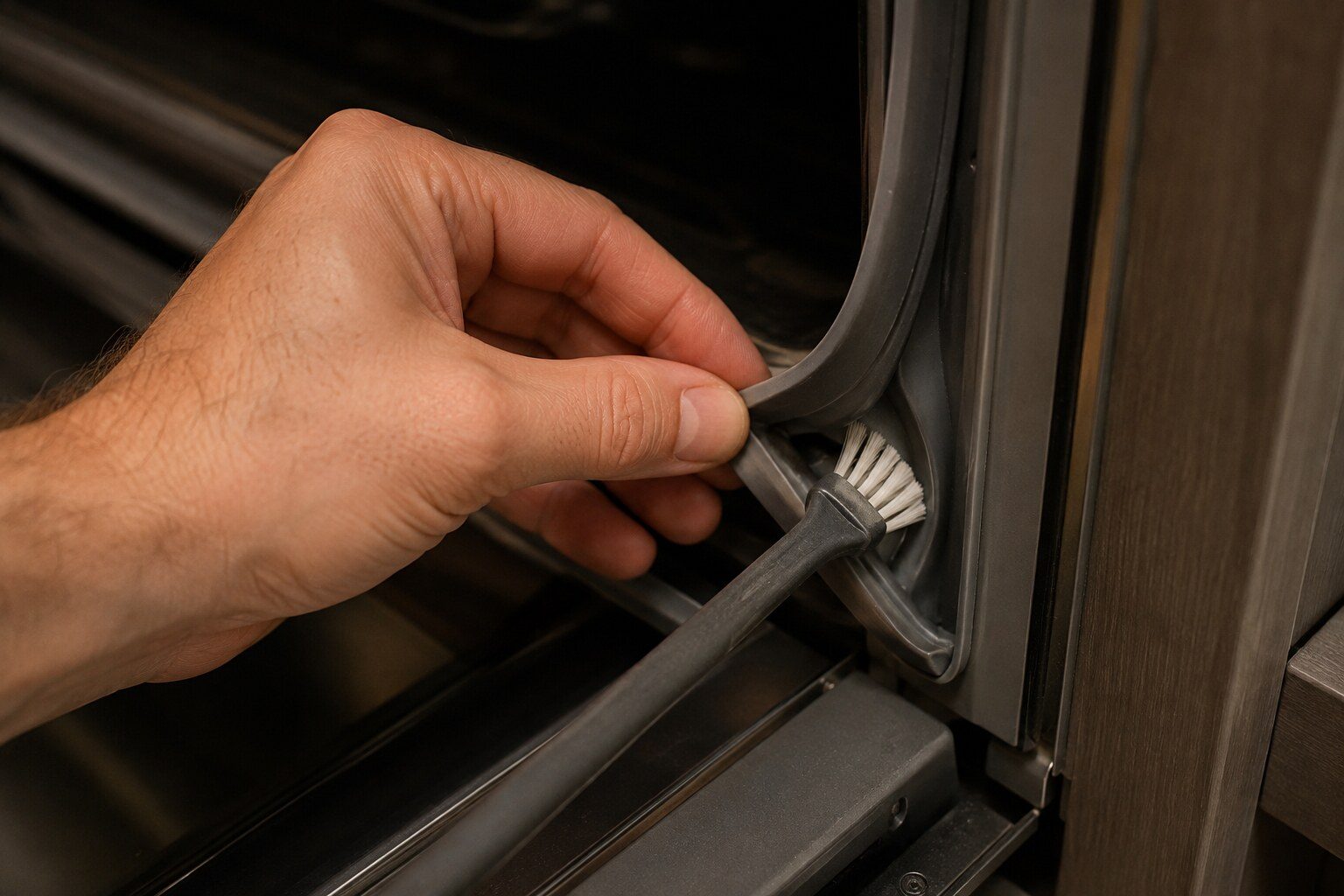
Use warm water with a little dish soap, a soft brush — an old toothbrush is ideal — and open the folds of the gasket out with your fingers as you work, because that is where it grows and where nothing reaches by wiping. Work all the way round, rinse with a clean damp cloth, and then dry it properly, which is the step that decides whether it comes back. For anything stubborn, a solution of white vinegar and water or a paste of baking soda is safe on the rubber. What is not safe is bleach or any chlorine cleaner, which hardens the gasket and shortens its life, or anything abrasive, which scores the surface and gives the next lot of mold somewhere to hold on. The same method works on a dishwasher door seal and on a wine cabinet, and all three have the problem for the same reason: a soft fold that stays damp in a room at seventy percent humidity.
The full guide
A humidity problem that belongs to this city
A door gasket is a soft polymer with folds in it, pressed against a cabinet for most of its life, in a kitchen where the ambient humidity sits around seventy percent for months at a time. Those folds hold moisture, they see very little air, and they are dark. Nothing about that is a defect in the appliance; it is the environment doing what the environment does.
Three appliances in a Monogram kitchen get it, for slightly different reasons. Refrigeration, because the cold surface condenses whatever humid air reaches it. Dishwashers, because the seal is warm and wet and shut for most of the day. And wine cabinets with glass doors, because a door heater keeping condensation off the glass does nothing for the gasket underneath it.
The method, which is boring and works
Warm water with a little dish soap, and a soft brush.
The part that makes the difference is not the product. It is opening the folds. Run a finger along the gasket and pull each fold apart as you work — that is where it grows, and wiping the visible face of a seal cleans the one part of it that was not the problem. An old toothbrush gets into the corners, which are the deepest folds and the worst-ventilated part of the whole run.
For anything that will not shift, diluted white vinegar or a paste of baking soda left on for a few minutes are both safe. Neither is dramatic. Both work with patience, which is what this job takes.
Then rinse with a clean damp cloth, because soap left in a fold holds moisture — and then dry it, properly, into every fold. That last step is the one that decides whether you are back here in a month.
What not to use, and why it matters more than it sounds
Bleach and chlorine cleaners. They kill the mold and they attack the polymer. A gasket that has been bleached repeatedly hardens, and a hardened gasket takes a permanent set and stops meeting the cabinet along part of its length.
At that point a hygiene job has become a refrigeration one: humid air enters the cabinet continuously, the defrost circuit inherits work it was never sized for, and frost starts coming back within days of being cleared. The seal then needs replacing, and it needed replacing because of the cleaning.
This is the single most common way we see gaskets damaged, and it is always done by somebody being conscientious.
Anything abrasive. A scouring pad scores the surface, and a scored surface holds the next lot of mold far better than a smooth one did.
The finding hiding inside the cleaning
Where the mold is tells you something.
Mold evenly distributed around a gasket is ordinary — humidity, folds, time. Mold concentrated along one section, particularly along the top edge on one side, usually means that part of the door is not closing properly. Warm room air is reaching a cold surface there and condensing, which is precisely the environment mold wants, and precisely the thing that makes a defrost circuit work harder.
So when you have finished cleaning, do the paper test: close a strip of paper in the door and pull it out, at several points all the way round. Where it slides out freely, the seal is not sealing there.
If that lines up with where the mold was, you have found something more useful than a clean gasket.
Keeping it away
Dry the seal after cleaning, and after any spill. Thirty seconds.
Leave the dishwasher door ajar after a cycle. A latch position rather than wide open is enough, and it does more for that seal than any product does.
On glass-doored wine cabinets, look at the door heater. If condensation is forming and staying on the inside of the glass, the heater may not be working, and everything downstream of that is damp.
And deal with a door that has dropped. In a house at this humidity, a seal that is not meeting the cabinet is not merely inefficient. It is a permanently damp fold in a dark warm-ish place, and it will grow whatever is going.
The three appliances, and what differs between them
Refrigeration. Cold surface, humid room, and folds that never see air. The mold is usually along the hinge side and in the corners, where the fold is deepest. On panel-ready doors it also collects where a dropped door has stopped meeting the cabinet, which is the diagnostic finding worth having.
Dishwashers. Worst of the three, because the seal is warm and wet and shut for twenty-three hours a day. The bottom edge and the corners at the base of the door are where it starts. The single most effective preventative on this one is not a product — it is leaving the door on the latch rather than closed after a cycle, so the tub and the seal dry.
Wine cabinets with glass doors. Add a door heater to the picture. Its job is keeping condensation off the glass, and when it fails the glass beads, the water runs down and the seal underneath stays wet permanently. Mold on a wine cabinet gasket, with condensation on the inside of the glass, is two findings rather than one.
What it is not
It is worth saying, because people worry.
A black line along a gasket is not a sign that the appliance is contaminated inside. Refrigeration cabinets are cold, dry-ish and hostile to most growth; the gasket is the exception because it is soft, folded and damp. Nothing about a mouldy seal means the interior needs stripping.
And it is not a manufacturing defect. Every gasket in every kitchen in a humid city does this to some degree. The difference between one that needs a wipe twice a year and one that is black is airflow, drying and whether the door is closing properly.
A schedule that works
Every couple of months. A wipe with warm soapy water into the folds, and dried. Five minutes for a whole kitchen if it is done as a routine rather than as a response.
After any spill. Milk down the inside of a door is the classic — it gets into the fold and it is forgotten about, and it is a far better food source than anything else that ends up there.
Whenever the cabinet is emptied anyway. A defrost, a holiday, a delivery of anything large. The seal is easier to reach with the shelves out.
When the cleaning stops working
Two answers, and they are the two that matter.
The seal is not drying because the door is not closing. Do the paper test. Warm air reaching a cold surface condenses there and nothing you clean will change that until the door does.
The gasket has been damaged by cleaning. A seal that has been bleached repeatedly hardens and takes a permanent set, and a hardened gasket has folds that no longer close and surfaces that no longer wipe smooth. At that point the mold has somewhere to hold on that soap cannot reach, and replacement is the honest answer.
The second one is entirely preventable and it is the reason this page is firm about products. The people whose gaskets we replace early are almost never the ones who ignored them.
If it turns out to be a repair
What this leads to, and what it costs
Every job on this site is priced the same way: an on-site diagnostic first, the figure agreed in writing before anybody starts.
-
from $165 Door seal replacement
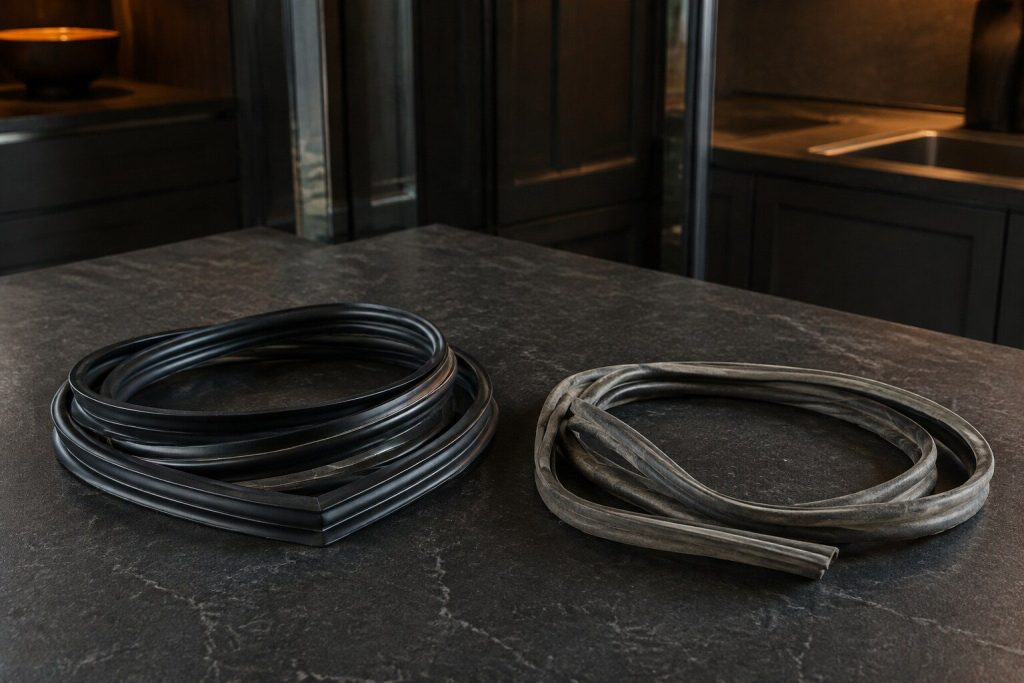
A gasket is a wear part and it fails gradually, which is why it is almost never the thing people call about. It hardens, it takes a permanent set where it has been folded, and it stops meeting the cabinet along part of its length. On a cold appliance that is a defrost problem in waiting; on an oven it is heat and money going into the room.
- Tested along the whole length, not eyeballed
- Hinge and alignment checked at the same time
- The commonest cause of a defrost circuit that never rests
-
A line of light, a panel out of true, a gasket that has given up Refrigerator door not sealing
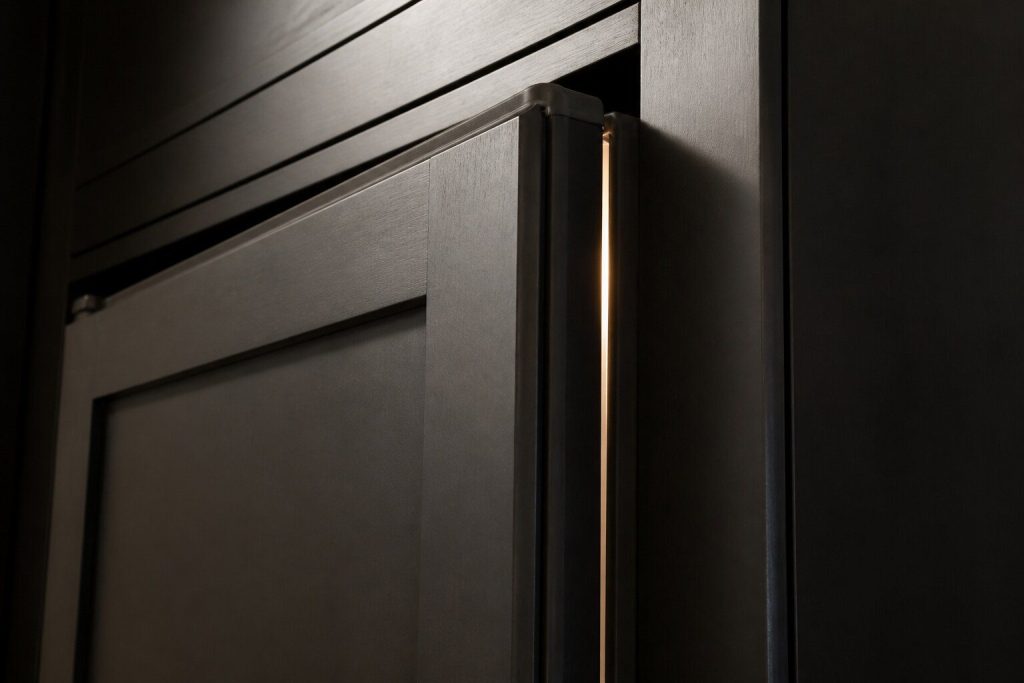
The problem that almost nobody calls about and that causes several of the problems people do call about. On integrated cabinetry the door carries a custom panel on hinges shimmed for its weight, and doors settle. What you see is a line that no longer matches the run; what the appliance sees is humid air, all day, every day.
- A dropped door is behind many defrost calls
- Panels changed in a remodel are a common cause
- The paper test settles it in two minutes
-
24-inch fully integrated · panel-ready and stainless Dishwashers
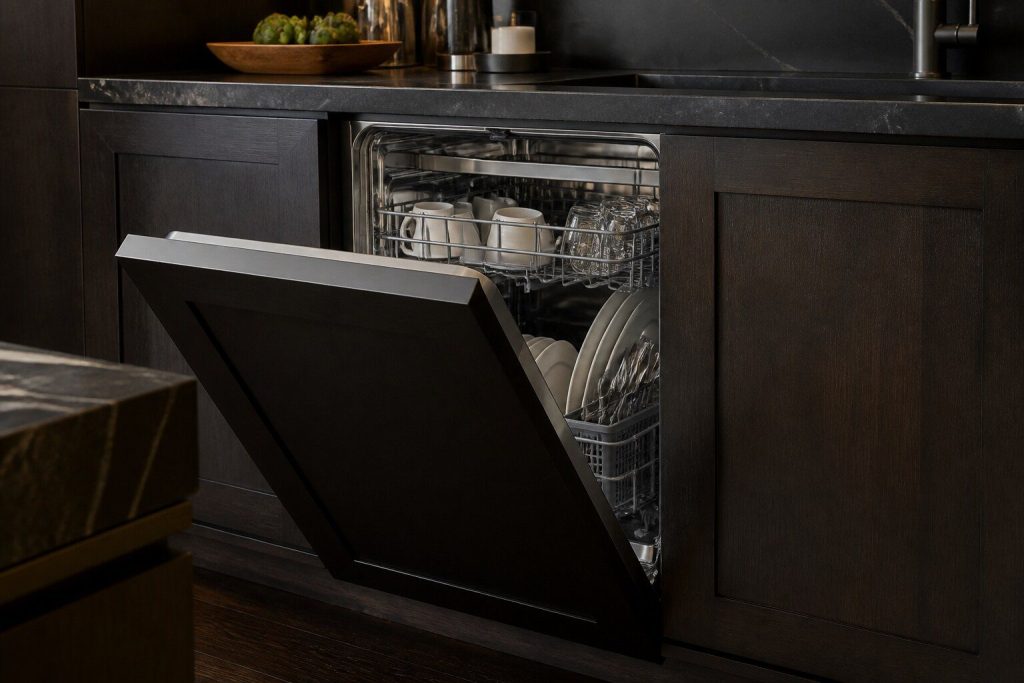
Monogram's dishwasher line is short and consistent: 24-inch fully integrated machines, panel-ready or stainless, with the controls hidden on the top edge of the door. That hidden control panel is the reason most owners never see the code their machine is showing — it is displayed while the door is open, which is exactly when nobody is looking.
- 24-inch fully integrated, panel-ready or stainless
- The C-code family is displayed on the top edge of the door
- Drainage is the largest single category of call
-

24-inch wine column · 30-inch wine sommelier · panel-ready wine reserve Wine storage
Wine storage is the appliance where a small problem is an expensive one, because the damage happens to the contents rather than to the machine. A cabinet that has drifted four degrees or lost its humidity will look and sound completely normal for months. Monogram's wine storage runs from a 24-inch panel-ready reserve up to a 30-inch fully-integrated sommelier cabinet, and all of it is built in.
- 24-inch wine columns and reserves, and a 30-inch sommelier cabinet
- Temperature stability matters more than the number itself
- Vibration and light are part of the diagnosis
Questions people ask about this
Why not bleach? It is what everybody uses.
Because the gasket is a flexible polymer and chlorine attacks it. It works on the mold and it hardens the rubber, and a hardened gasket stops meeting the cabinet along its length — which turns a cleaning problem into a defrost problem and then into a replacement. It is the single most common way people damage a seal while looking after it.
It comes back within weeks.
Then it is either not being dried, or the fold is staying damp because the door is not sealing properly and warm room air is condensing there. Do the paper test: close a strip in the door and pull. Where it comes out freely, the seal is not meeting the cabinet, and that is the real problem.
Is it a health problem?
It is a hygiene problem in a place food passes through, which is reason enough to deal with it. What we would add is that a gasket black along one section is also a diagnostic finding — it is telling you where the door is not closing, and that has a cost attached to it beyond the cleaning.
My dishwasher seal is worse than the refrigerator.
Usually is. A dishwasher seal is warm, wet and shut for most of the day, which is a better environment for it than a cold cabinet. The method is the same, and leaving the door ajar after a cycle does more for it than any product.
Safety & Risks
More guides like this one
-
An Oven That Smells of Burning: Which Smells Are Normal and Which Are Not
Four different smells with four different meanings, and one of them is a reason to switch the appliance off at the breaker before reading any further.
Read more -
After an Outage: How Long the Food in a Built-In Actually Lasts
Four hours closed for a refrigerator, twenty-four to forty-eight for a freezer depending on how full it is — and the clock only runs if the door stays shut.
Read more
Tell us the model number and what it is doing.
This article is based on:
- Official manufacturer documentation
- Internal repair procedures
- Technician repair history
- Company quality standards