Appliance
Monogram dishwashers
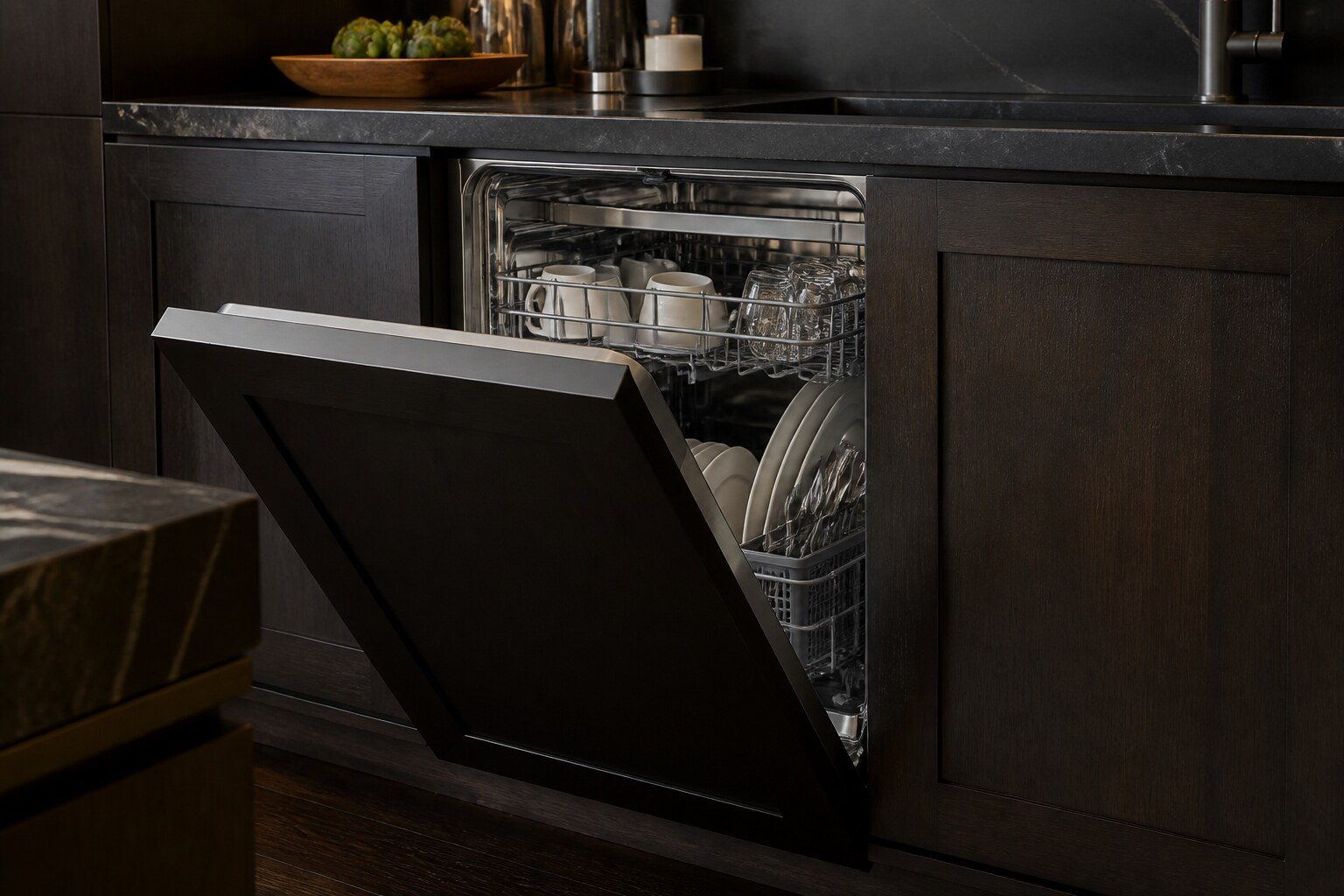
Monogram's dishwasher line is short and consistent: 24-inch fully integrated machines, panel-ready or stainless, with the controls hidden on the top edge of the door. That hidden control panel is the reason most owners never see the code their machine is showing — it is displayed while the door is open, which is exactly when nobody is looking.
- 4 symptoms we are called out to
- From $95 diagnostic, credited to the repair
- 59 cities and neighborhoods covered
- OEM parts available on order
The short version
What this equipment is, for a repair
Configurations
24-inch fully integrated · panel-ready and stainless
Access
Planned before the visit, not discovered on arrival
Parts
OEM, available on order
Diagnostic
From $95, credited to the repair
What goes wrong with it
Symptoms we are called out to on Monogram dishwashers
Each one covers the likely causes in the order they are worth checking, and what to do in five minutes before booking anything.
-
Water standing in the bottom at the end of a cycle Dishwasher not draining
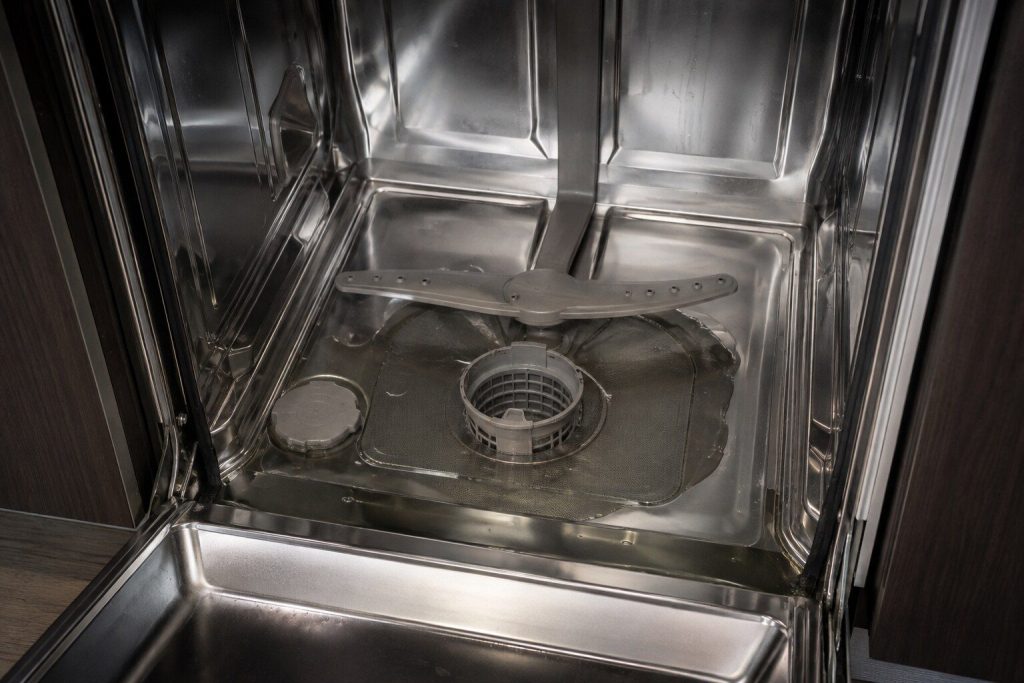
The most common dishwasher call there is, and on these machines it usually comes with a code nobody has seen — the display is on the top edge of the door, visible only when the door is open. C1, C2, C3 and C5 all describe drainage and they mean different things.
- Read the top edge of the door first
- The filter unscrews and most owners never have
- A disposal knockout plug is a real cause
-

It runs, and the load is not clean Dishes not coming out clean
When a dishwasher stops washing well the cause is usually water rather than the machine: spray arms scaled so they turn slowly, a filter that has never been removed, hard water filming the glassware, or inlet water too cold for the detergent to activate.
- Hard water is the local villain
- The spray arms come out and should
- C6 means the water arriving is too cold
-

Nothing happens when you press start Dishwasher will not start
On a fully integrated machine a dishwasher that will not start looks exactly like a cabinet door doing nothing, and the reason is usually that the appliance does not believe its door is shut. The latch is what fails; the door balance is usually why.
- The machine will not run on a door it does not trust
- A delay start reads as a dead machine
- Panel weight is part of the diagnosis
-
Water where a fully integrated machine hides it Dishwasher leaking
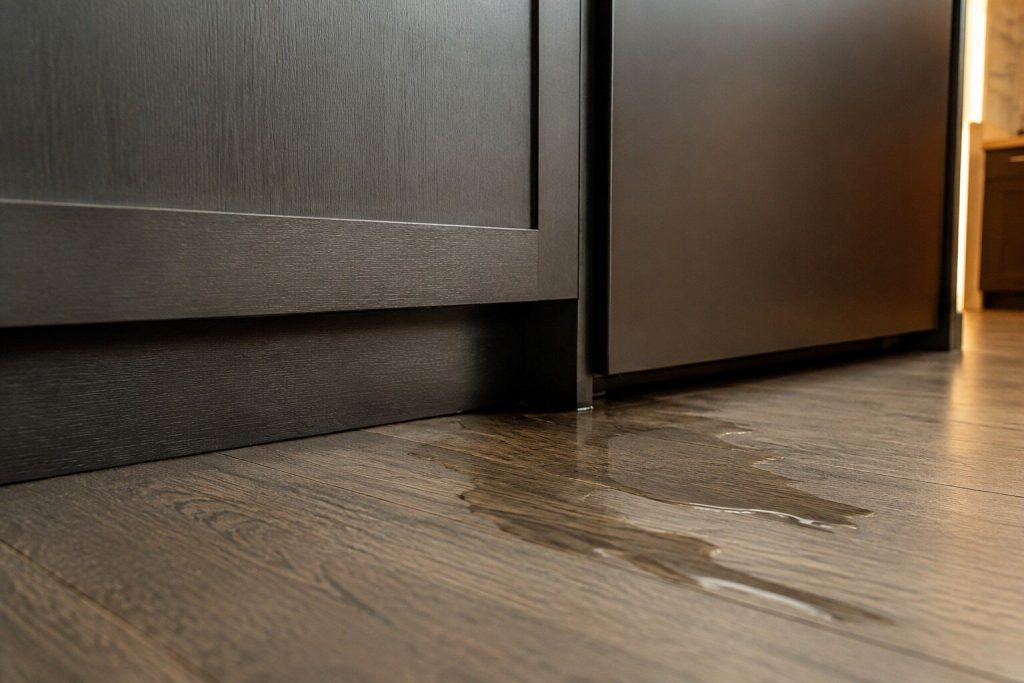
On a fully integrated dishwasher a leak is invisible until the cabinetry has taken it, and in these kitchens the flooring and the joinery are the expensive part of the room. A door that has dropped is the most common cause and the least dramatic one.
- A dropped door seals unevenly along the bottom
- LEAK DETECTED means the machine canceled on purpose
- This is the one not to leave
What we do on it
Repairs we carry out on Monogram dishwashers
Starting figures for this equipment in South Florida. The exact cost is confirmed after an on-site diagnostic — and this is not the whole list of what can go wrong, so call if your problem is not here.
-
from $95 Diagnostic visit
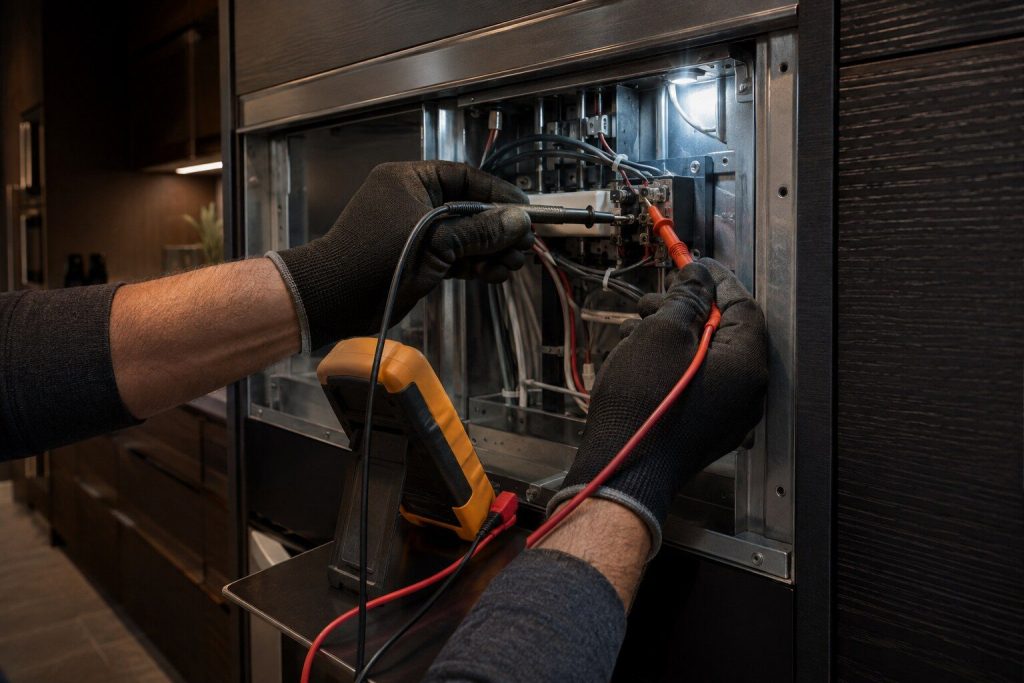
Nothing is named until something has been measured. On built-in appliances the visit also has to plan its own access before it starts: a column comes out from the front, a panel-ready door comes apart in an order, and a wall oven that has to move needs two people and a plan. We do that thinking before we arrive rather than in your kitchen.
- The model number first, because it decides the access
- What the appliance reports, read against the published table
- Credited toward the repair when you go ahead
-
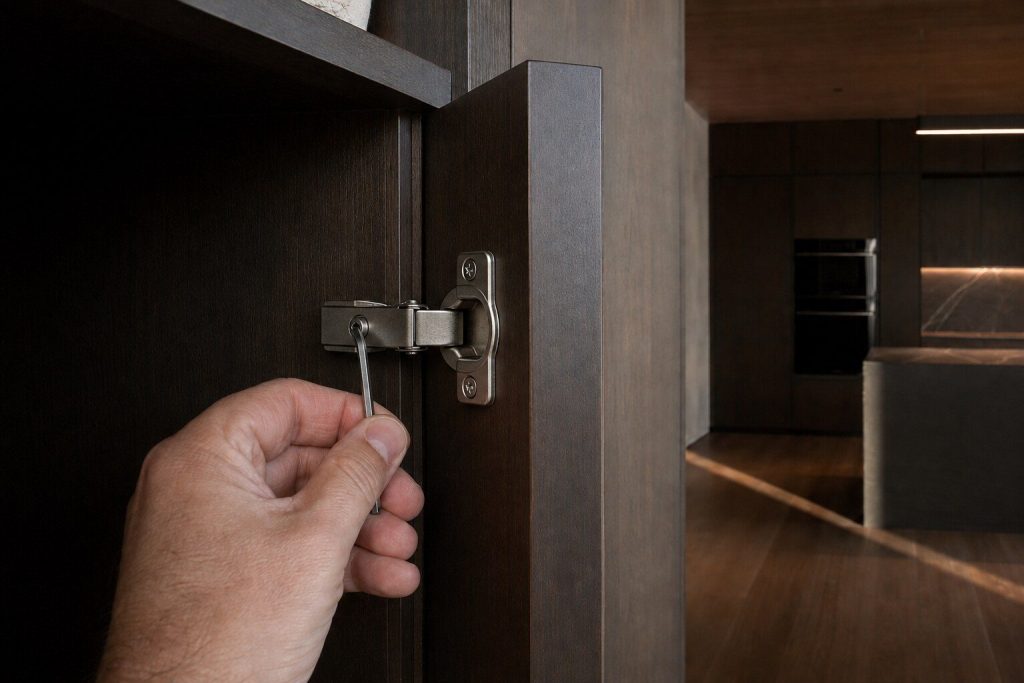
from $145 Panel alignment and door adjustment
The job that only exists on built-in kitchens, and the one owners most often wait too long to book. A custom door panel is heavy, the hinges were shimmed for it on installation day, and over years the door settles. What starts as a line of light along a cabinet becomes humid Florida air walking into a refrigerator all day, and then a defrost circuit that never catches up.
- Hinges, springs and shims set back to specification
- The seal checked along its whole length, not by eye
- Panel lines put back level with the run
-
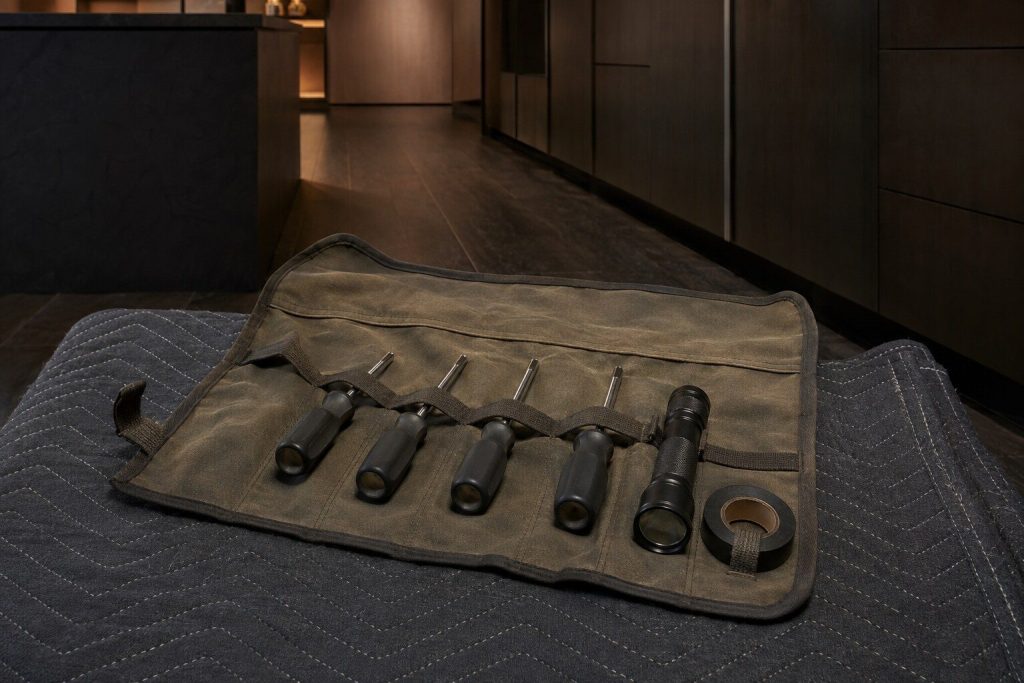
from $145 Appliance maintenance
The visit that exists to stop the other visits. On built-in appliances in a salt-air climate the two things that shorten life are both invisible: a condenser that has silted up behind its grille, and door seals that have quietly stopped sealing. Neither shows on a display. Both are cheap to deal with and expensive to ignore.
- Condensers cleaned and airflow checked
- Seals, hinges and panel alignment across the kitchen
- Filters, drains and water circuits attended to
-
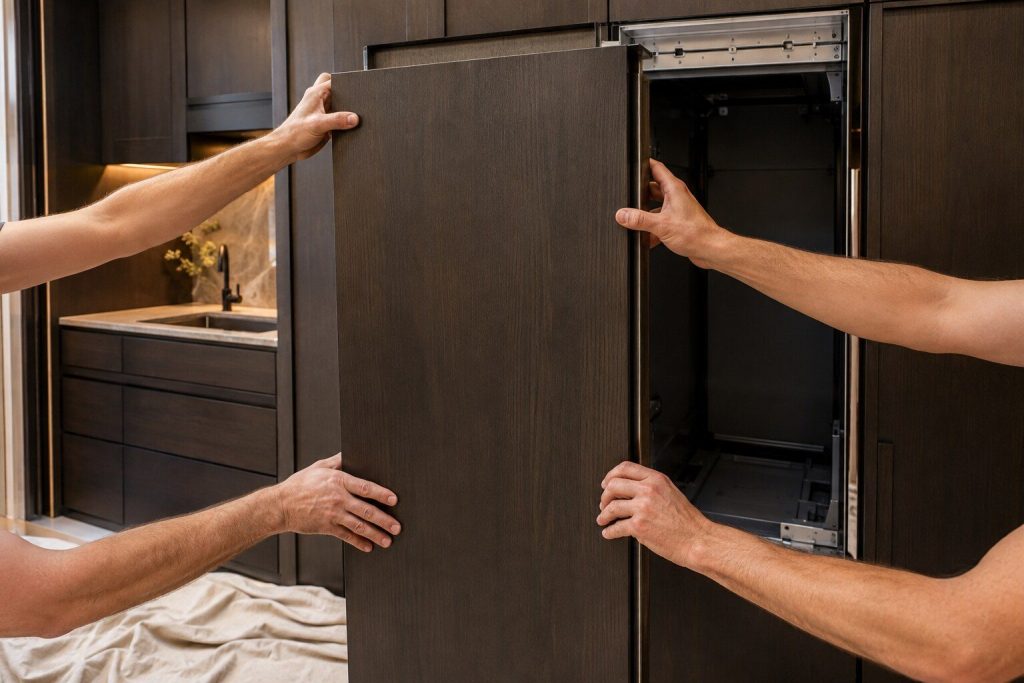
from $175 Appliance installation
Built-in appliances are installed once and lived with for twenty years, and most of the long-term problems we are called to were decided on installation day: a clearance that was shaved, a drain that has no fall, a hood ducted through one elbow too many. Getting it right the first time is cheaper than any of the repairs it prevents.
- Clearances and ventilation to the specification, not to the opening
- Water, gas and drain connections tested under pressure
- Panels hung and doors set level with the run
-

from $165 Door seal replacement
A gasket is a wear part and it fails gradually, which is why it is almost never the thing people call about. It hardens, it takes a permanent set where it has been folded, and it stops meeting the cabinet along part of its length. On a cold appliance that is a defrost problem in waiting; on an oven it is heat and money going into the room.
- Tested along the whole length, not eyeballed
- Hinge and alignment checked at the same time
- The commonest cause of a defrost circuit that never rests
-
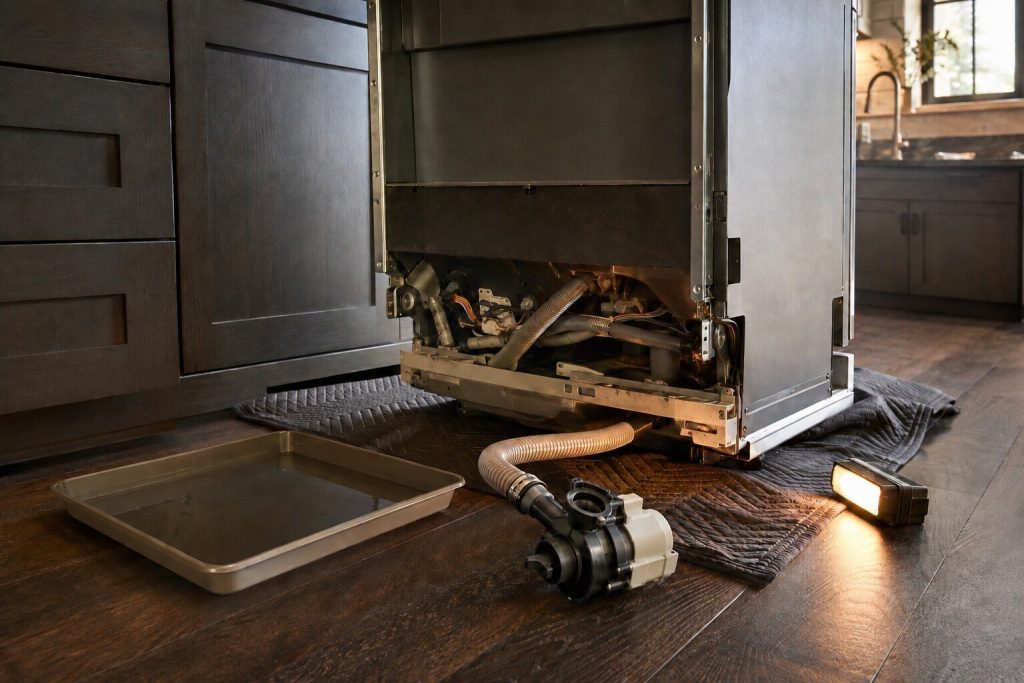
from $155 Dishwasher drain repair
Water standing in the bottom at the end of a cycle is the most common dishwasher call there is, and on these machines it usually comes with a code nobody has seen — the display is on the top edge of the door. C1, C2, C3 and C5 all describe drainage and they mean different things.
- The C code read before anything is opened
- Filter, air gap and hose before the pump
- The disposal knockout plug is a real cause
-
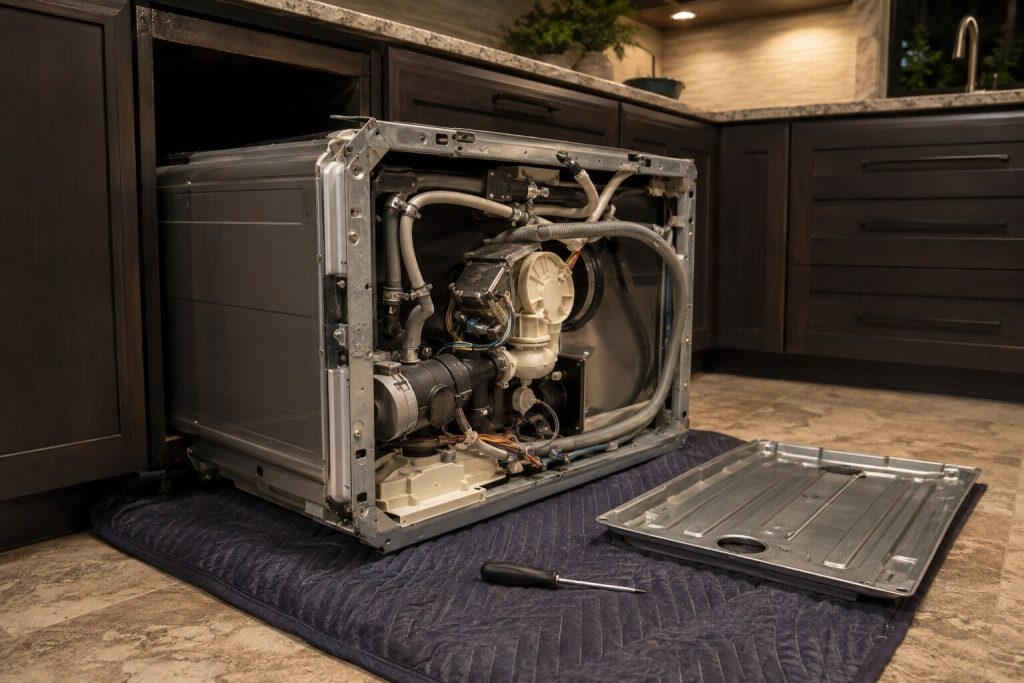
from $265 Dishwasher pump replacement
When the drain path is clear and the machine still will not empty, the drain pump is what is left. On a fully integrated machine the job includes getting the appliance out of a cabinet run and its panel off without marking anything, which is a real part of the work.
- Only after the drain path has been proved clear
- Wash pump and drain pump are different problems
- Panel and cabinetry handled as part of the job
-
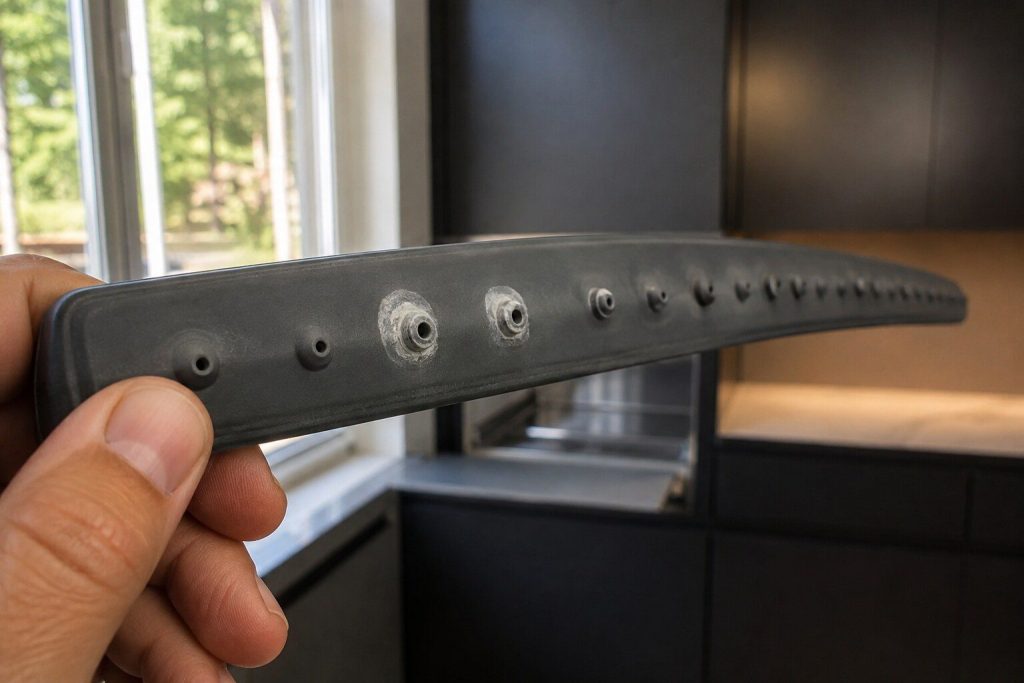
from $135 Dishwasher wash performance service
Clean dishes are the product, and when they stop being clean the cause is usually water rather than the machine: spray arms scaled up so they turn slowly, a filter left in for two years, hard water that films glassware, or an inlet temperature too low for the detergent to work.
- Spray arms, filter and inlet temperature
- Hard water treated as a cause, not an excuse
- Rinse aid and detergent set for local supply
-
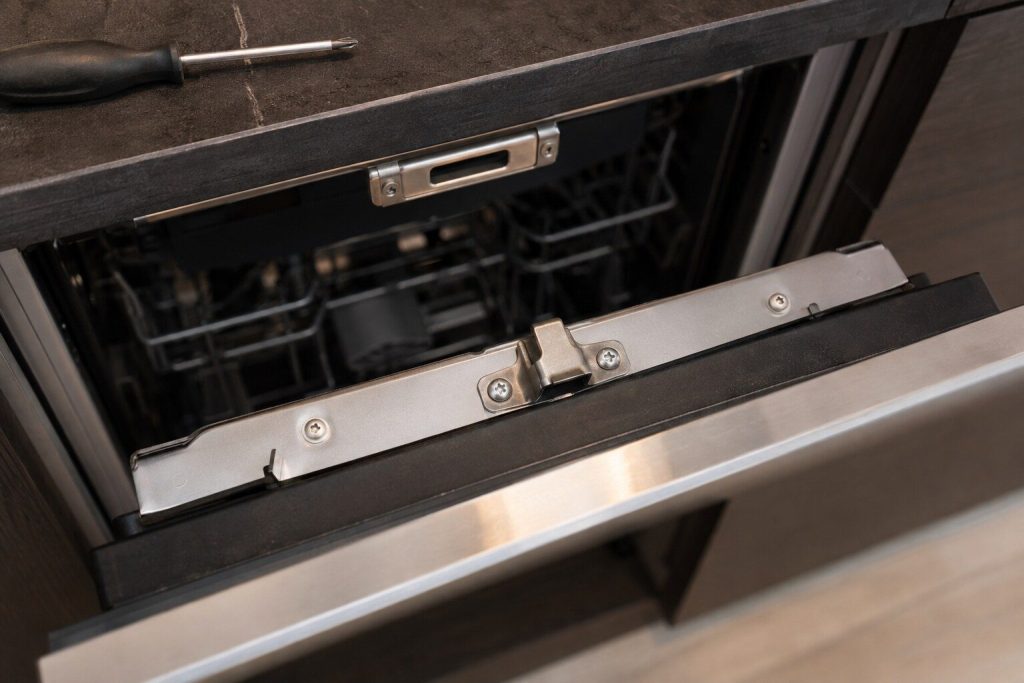
from $145 Dishwasher door latch repair
A dishwasher that will not start is often a dishwasher that does not believe its door is shut. On a panel-ready machine the door carries a heavy custom panel on springs sized for it, and when those weaken the door drops fast, seals unevenly along the bottom and stops latching reliably.
- Latch, switch and door springs together
- Panel weight is part of the diagnosis
- Prevents the slow leak that follows
-
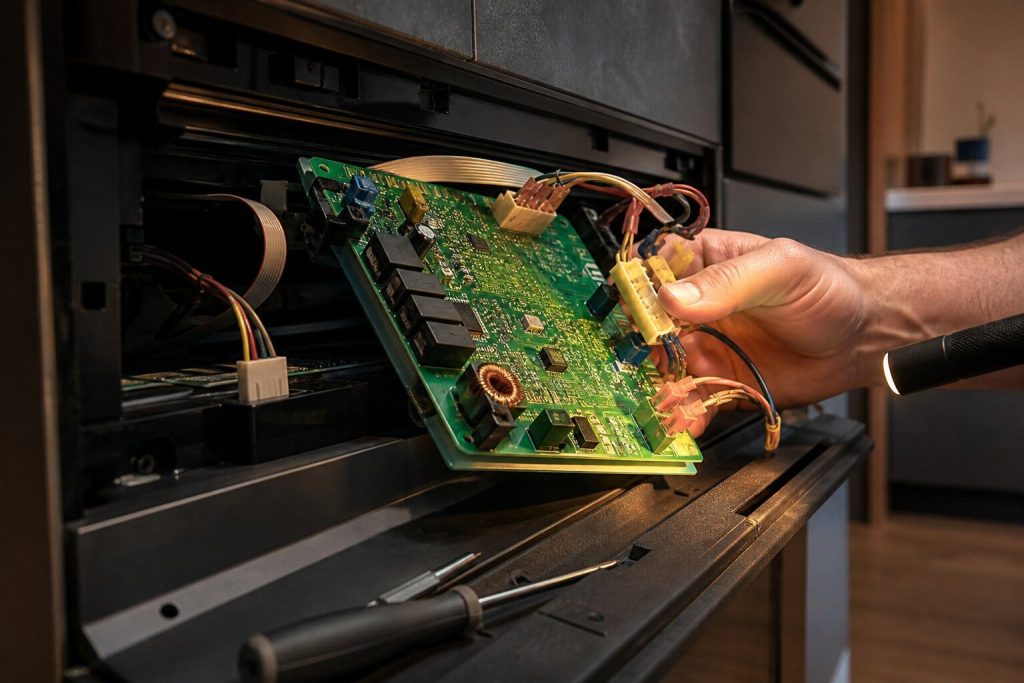
from $295 Appliance control board repair
The repair reached last and reached for first by the internet. A control board is expensive, frequently blamed and comparatively rarely the problem — most of what gets called a board failure is a sensor, a harness or a connector that has corroded in coastal air. Boards are condemned here by measurement.
- Everything the board depends on tested first
- Connectors and harnesses are the usual real cause
- Codes that name the control taken seriously, not literally
In more detail
About Monogram dishwashers
A short line, built one way
Monogram sells 24-inch fully integrated dishwashers in two trims — panel-ready and stainless — and the engineering underneath them is common. That is good news for repair: the parts, the problem patterns and the code table are consistent across the line rather than varying model by model. It also means that when we say a symptom is typical of this machine, we mean this machine specifically and not a category.
The hidden control panel changes how these are diagnosed
The controls sit on the top edge of the door, so they are only visible when the door is open. A fully integrated machine that has stopped mid-cycle looks, to the room, like a cabinet door. The code that would tell you what happened is there, on the top edge, and most owners have never seen it. If you take one thing from this page: open the door and read the display before you call anybody, and tell us what it says.
Drainage, filters and Miami water
The largest category of dishwasher call is water that will not leave. The filter at the bottom of the tub is the first thing to check and the thing most owners have never removed — it unscrews. After that: the air gap on the counter if the installation has one, the drain hose and whether it still has its high loop, and the disposal connection, where a knockout plug left in place at installation time is a genuine and surprisingly common cause. Hard water contributes at every step, filming glassware and scaling the spray arms so they turn slower than they should.
Before you book
Model number, whatever the top edge of the door is showing, whether water is standing and how much, and whether the machine is panel-ready. That last one matters: it decides how the door comes apart.
This article is based on:
- Official manufacturer documentation
- Internal repair procedures
- Technician repair history
- Company quality standards
Before you book
Questions about Monogram dishwashers
There is water standing in the bottom at the end of the cycle.
That is the most common dishwasher call there is, and on these machines it usually comes with a code you have not seen because the display is on the top edge of the door. Open the door and look before you do anything else — C1, C2, C3 and C5 all describe drainage and they mean different things. The order of checks is the filter, the air gap on the countertop if the installation has one, the drain hose and its high loop, and then the pump. The first two are things you can do yourself in ten minutes and they resolve a fair proportion of these calls.
The dishes come out clean but not dry.
On a fully integrated machine that is usually working as designed and not a problem. These use condensation drying rather than an exposed heating element — the load is dried against the cool stainless tub — which is quieter, gentler on the machine and genuinely less effective on plastics than the old approach. What makes it worse is rinse aid that has run out and opening the door too early. If metal and glass are also coming out wet, and they used to come out dry, then something has changed and it is worth a look.
What do the C codes mean?
They are the GE Appliances dishwasher code family, which is what Monogram runs. C1 through C8 mostly describe water: how long it took to drain, whether it drained at all, whether the machine over-filled after a power cut, whether the incoming water is too cold. There are also codes that are not problems — a delay start showing as 1H or 2H is the machine waiting, not complaining. Our code archive has each one on its own page with what it means and what to check first.
The custom panel on the door has started to sit crooked.
Worth fixing, and not only cosmetically. A panel-ready dishwasher door is balanced by springs sized for the weight of the panel that was fitted to it. When a panel shifts or a spring weakens the door drops fast, the seal stops meeting the tub evenly along the bottom edge, and you get a slow leak onto the floor of a kitchen where the floor is often the expensive part. It is an adjustment, and it is much cheaper than what a leak underneath a cabinet run costs.
Where we do it
Across Miami-Dade, Broward, and Palm Beach
Same terms everywhere we go: an on-site diagnostic first, the price agreed in writing, and the exact figure confirmed once we have seen the unit.
Neighborhoods people ask for by name