Maintenance & Prevention
Hood Filters in a Miami Kitchen: Far More Often Than the Manual Says
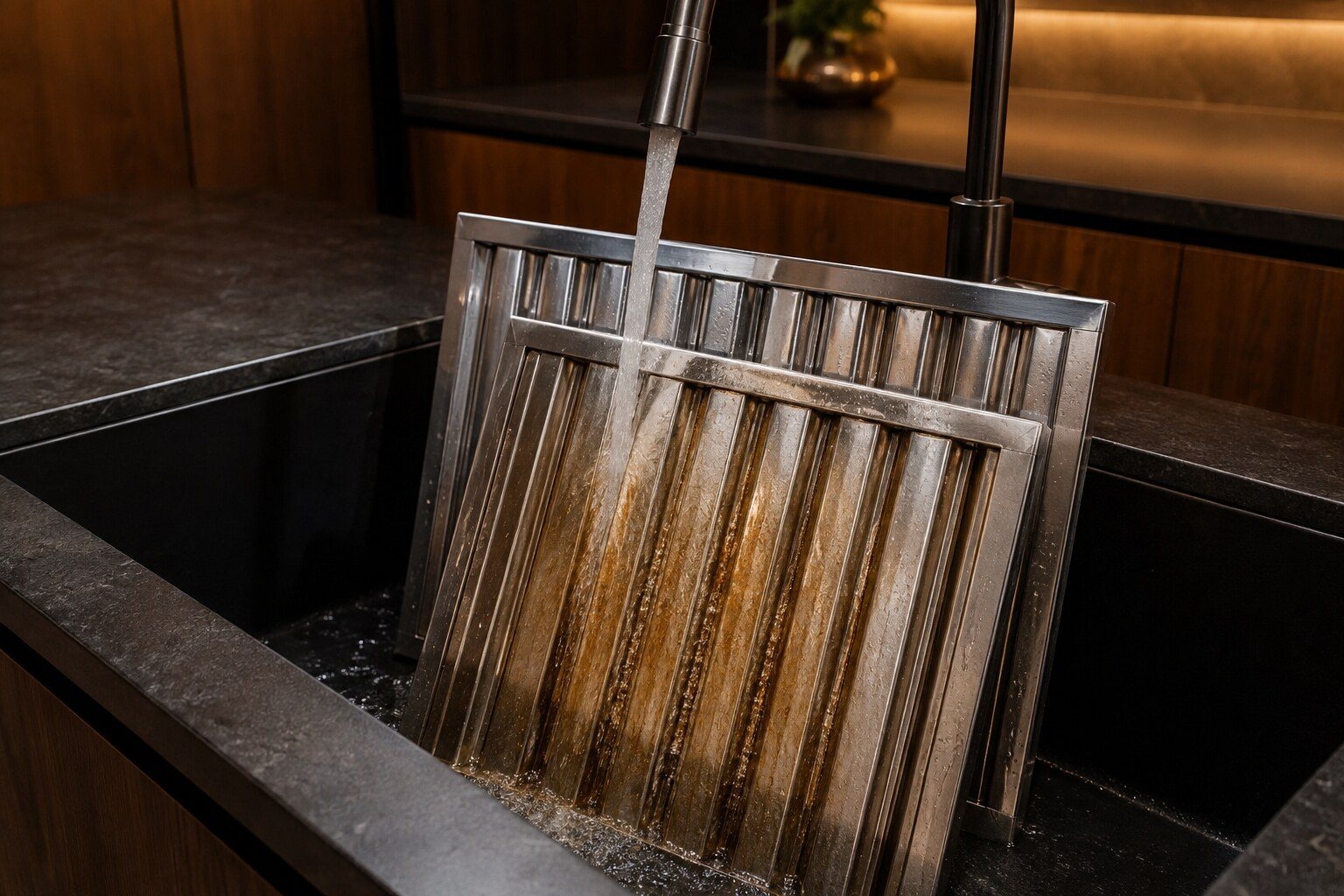
Every few weeks for a hood over a professional range that gets used, and monthly at the outside. That is considerably more often than most manuals suggest, and the reason is local: grease and high humidity together stay tacky rather than drying, so a filter here loads faster and holds what it catches more stubbornly than the same filter in a dry climate. Baffle and mesh filters both lose a startling share of their airflow long before they look dirty, which is why an interval on a diary beats waiting for a symptom. Most of these are dishwasher-safe on their own cycle without other items — check your model, because some Designer and custom inserts use finishes that should be washed by hand. What matters as much as the interval is what happens when it is missed: grease migrates past a saturated filter into the blower housing and the duct, and cleaning it there is a job rather than a chore.
The full guide
The quietest failure in the kitchen
Nothing tells you a hood has lost half its airflow. The fan sounds identical, the lights work, and the controls respond. The only evidence is indirect: a film that starts appearing on the cabinet doors beside the range, and a kitchen that smells faintly of last night's dinner in the morning.
By then it has usually been going on for a year, and the grease that a saturated filter stopped catching has gone somewhere — into the blower housing, into the first few feet of duct, and onto everything in a line above the range.
Why the manual's interval is wrong here
Manuals are written for a general market. This is not a general climate.
Grease alone dries to a hard film that a filter holds and a dishwasher removes. Grease in air at seventy percent humidity stays tacky for far longer, and tacky grease collects dust, which makes a paste, which blinds the filter mesh in a way clean grease does not. The same hood over the same cooking in Denver and in Coral Gables does not need the same interval, and it is not close.
Then add what these hoods sit over. A professional range with a grill or a griddle puts out more aerosol than any four-burner range does, and the grill in particular is a grease source in a category of its own. Hood filters over an indoor grill load faster than anywhere else in a house.
The interval that is honest
Every few weeks for a hood over a professional range with a grill or a griddle in regular use.
Monthly at the outside for ordinary cooking on a range that gets used most evenings.
Quarterly is fine for a kitchen where the range is used at weekends.
That will read as excessive to anybody who has owned a mass-market hood. It is not excessive; the mass-market hood was also overdue and nobody noticed, because it was moving a fraction of the air these do and there was less to lose.
Looking at them is not a test
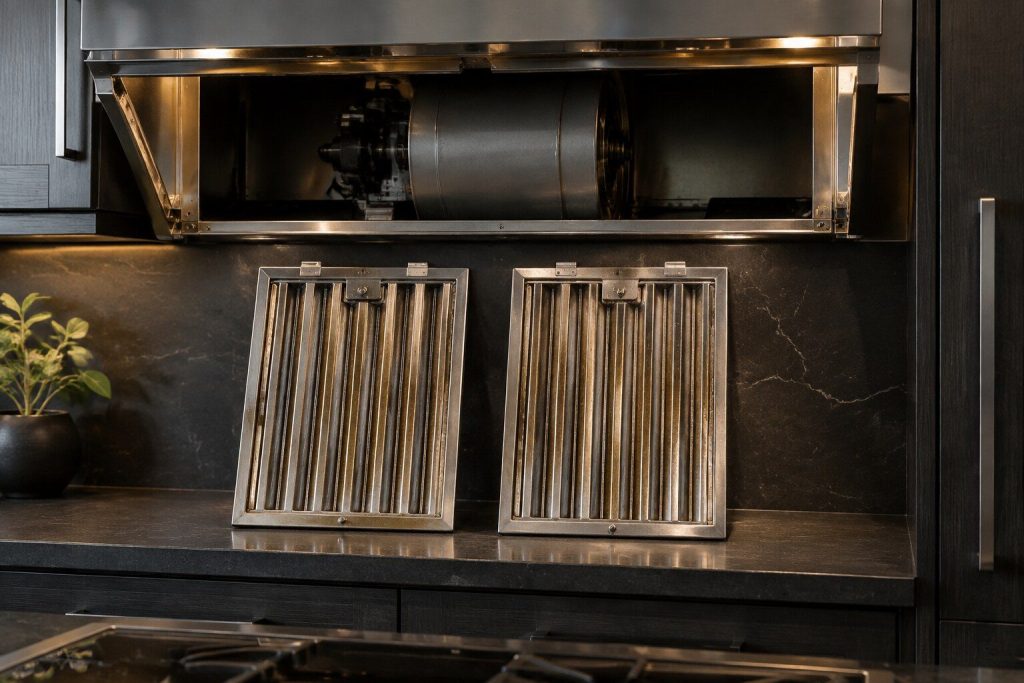
A steel baffle filter with a film on it looks like a steel baffle filter. The color barely changes, and against a stainless hood in a bright kitchen the eye has nothing to go on.
The test that works takes five seconds: put the fan on full and hold a sheet of kitchen paper flat against the filters. It should stay there on its own. If it drifts down, the hood is not moving the air it should — and the filters are the first place to look, though not the only one.
Doing them
Cold hood, cold range. Baffle filters release with a spring catch or a small handle, and they are heavier than they look — support them as they come free, because a dropped baffle lands on a glass or an enameled cooktop.
Most steel filters go through a dishwasher on their own, on a hot cycle, with nothing else in the machine. Check your model first: some of the Designer collection finishes and some custom inserts should be washed by hand, and a dishwasher cycle will dull a brass or titanium surface permanently in one go.
Dry them properly before refitting. Water trapped inside a baffle drips onto the cooktop afterwards, and it finds the burner caps.
The thing worth looking at while they are out
The housing behind them, and the fan. That is where grease goes once a filter has stopped catching it, and it is the difference between a maintenance interval that is working and one that is not.
Clean steel behind the filters means your interval is right. A film on the housing means the filters have been left too long, and the honest response is to shorten the interval rather than to clean the housing once and carry on.
If a clean filter does not fix it
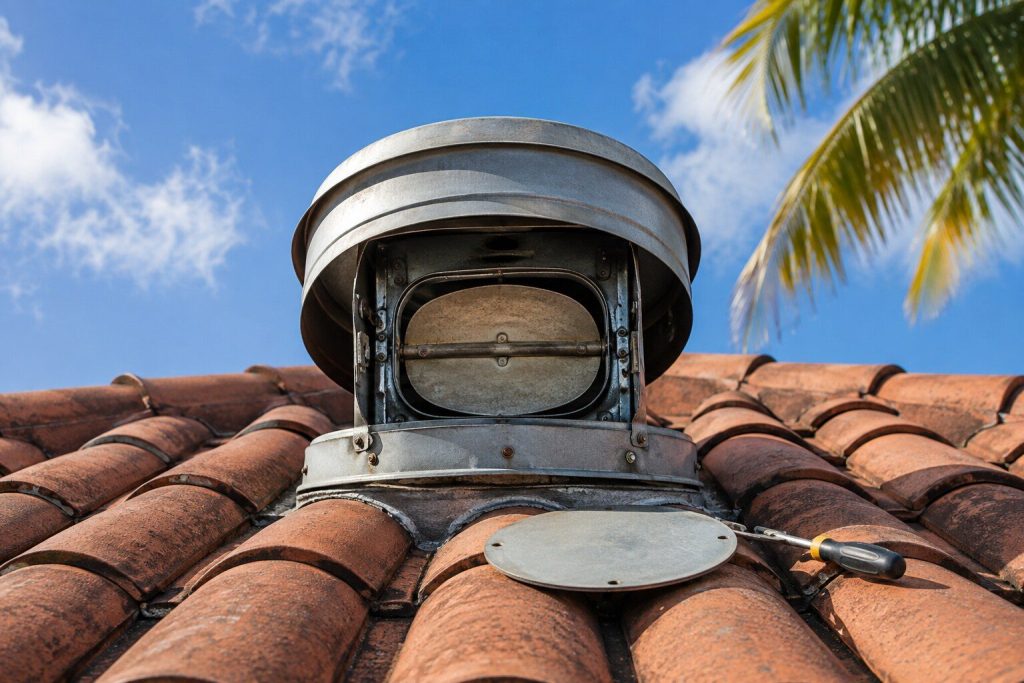
Then the airflow is being lost further along, and there are three places it goes: the duct run itself, the cap on the roof or the wall at the end of it, and the make-up air a tightly sealed air-conditioned house cannot supply. A damper stuck shut, a run with one elbow too many, or a house with nowhere for replacement air to come from will all defeat a perfectly clean hood.
Cracking a window while the hood runs is a free test of the last one, and in newer construction here it is the answer more often than anybody expects.
The two filters people confuse
Worth separating, because half of the questions about hood filters are about the wrong one.
Grease filters — the steel baffles or mesh panels you can see under the hood. They are washable, they are what this page is about, and they last the life of the appliance if they are looked after.
Charcoal filters — only present on recirculating installations, where the hood filters the air and returns it to the room rather than sending it outside. They cannot be washed and they are replaced, typically once or twice a year. If your hood ducts outside, you do not have them and nothing on the internet about charcoal filters applies to you.
Most Monogram installations are ducted, which is the better arrangement by a distance. If you are not sure which you have, look for a duct leaving the top of the chimney, or ask whether there is a cap on the roof or the wall.
Doing the housing, once a year
While the filters are out, look at the blower housing and the fan behind them. That is where grease goes once a filter has stopped catching it, and it is the difference between an interval that is working and one that is not.
Clean steel behind the filters means the schedule is right. A film means the filters were left too long, and the useful response is to shorten the interval rather than to clean the housing once and carry on as before.
Cleaning a housing properly is a degreaser, patience and a torch, and on a professional hood over a grill it is a job worth having done as part of an annual visit rather than attempted from a stepladder with the range still warm.
What a saturated filter costs
It is not only smell. Three things happen and none of them is dramatic on any given evening.
Airflow falls, which is what this page is about.
Grease reaches the duct. A duct with grease in it is harder to clean, it reduces airflow permanently, and in a run with elbows it accumulates at the elbows. This is the reason hoods over indoor grills are a different maintenance proposition from hoods over four-burner ranges.
The blower works harder. A fan pulling against resistance draws more current and runs hotter, and motors that run hot for years do not last as long as motors that do not.
The rest of the airflow story
If clean filters do not restore the kitchen, the airflow is going somewhere else, and it is worth knowing the order to look.
The duct run. Every elbow costs. A run that goes up, across and out through three bends has considerably more resistance than a short vertical one, and nothing about that can be changed without joinery.
The termination outside. A wall or roof cap with a damper that has stuck, corroded in salt air, or been taken over by birds. Completely invisible from inside the house and a common finding here.
Make-up air. A powerful hood removes a great deal of air, and a tightly sealed air-conditioned house has nowhere for it to come from. The free test is to crack a window while the hood runs: if it suddenly pulls, the house is the problem rather than the appliance, and in newer construction here that is the answer more often than anybody expects.
If it turns out to be a repair
What this leads to, and what it costs
Every job on this site is priced the same way: an on-site diagnostic first, the figure agreed in writing before anybody starts.
-
from $175 Range hood duct and airflow service
The hood runs and the kitchen still smells of last night. Airflow goes missing in three places and only one of them is the appliance: the filters, the duct and the cap at the end of it, and the make-up air a tightly sealed air-conditioned house cannot supply.
- Filters, duct and termination all checked
- Make-up air treated as a real cause
- Airflow measured rather than judged by ear
-
The fan runs and the kitchen still smells Range hood not pulling air
Airflow goes missing in three places and only one of them is the appliance: the filters, the duct and the cap at the end of it, and the make-up air that a tightly sealed air-conditioned house cannot supply. Nothing on the hood reports any of it.
- Filters lose airflow long before they look dirty
- The termination outside is invisible from inside
- A sealed house cannot supply the air
-
Wall chimney · island · professional · custom brass and titanium inserts Range hoods
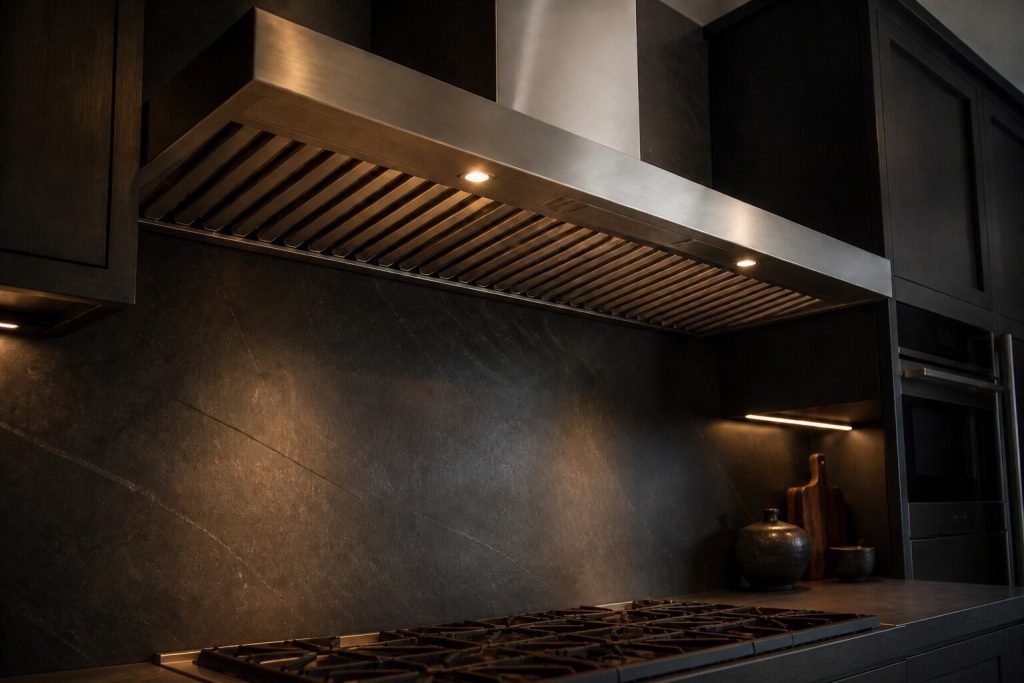
Ventilation is the appliance most likely to be quietly failing in a house that has no complaints about it. Monogram's hoods run from 30-inch wall-mounted chimneys with air quality sensors up to 48-inch professional hoods and custom inserts in brass and titanium — and over a professional range in a closed-up Florida house, a hood that has lost half its airflow is a problem for the whole kitchen.
- Wall chimney, island, professional and custom insert hoods
- Air quality sensors on the current chimney models
- Grease-laden filters cost airflow long before they look dirty

Questions people ask about this
Can I put them in the dishwasher?
Most steel baffle and mesh filters, yes — on their own, on a hot cycle, without dishes. Check the manual for your model first: some of the Designer collection and custom-insert finishes should be washed by hand, and a dishwasher will dull them permanently.
Mine look clean. Do they still need doing?
Yes, and this is the point most people miss. A baffle filter loses a large part of its throughput to a film you cannot see against steel. Looking at it is not a test; the test is whether a sheet of kitchen paper held against it stays there with the fan on full.
What about charcoal filters?
Those are for recirculating installations rather than ducted ones, and they are replaced rather than washed — they cannot be cleaned. If your hood vents outside, you do not have them.
The kitchen still smells after cleaning them.
Then the airflow is being lost somewhere else: the blower housing, the duct run, the cap outside, or make-up air. A clean filter on a strangled duct is a clean filter on a hood that still does not work.
Maintenance & Prevention
More guides like this one
-

A Year in a Monogram Kitchen: What to Do and When
The calendar the service pages imply and never state in one place, written for built-in equipment in a coastal city.
Read more -

The Filter in the Floor of the Tub: Two Minutes, No Tools
The highest-value thing an owner can do for this appliance, and most have never done it. Quarter turn, lift, rinse.
Read more -
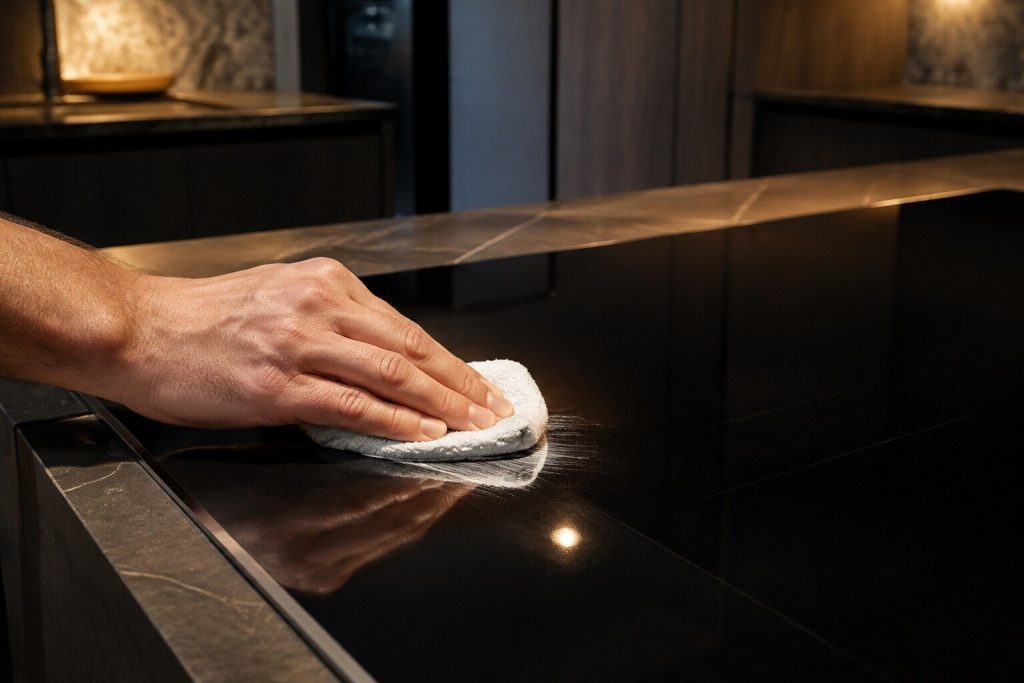
Cleaning Induction Glass Without Marking It
Sugar comes off hot and everything else comes off cold, which is the opposite of what most people assume. And two common products do permanent damage.
Read more
Tell us the model number and what it is doing.
This article is based on:
- Official manufacturer documentation
- Internal repair procedures
- Technician repair history
- Company quality standards