Maintenance & Prevention
The Filter in the Floor of the Tub: Two Minutes, No Tools
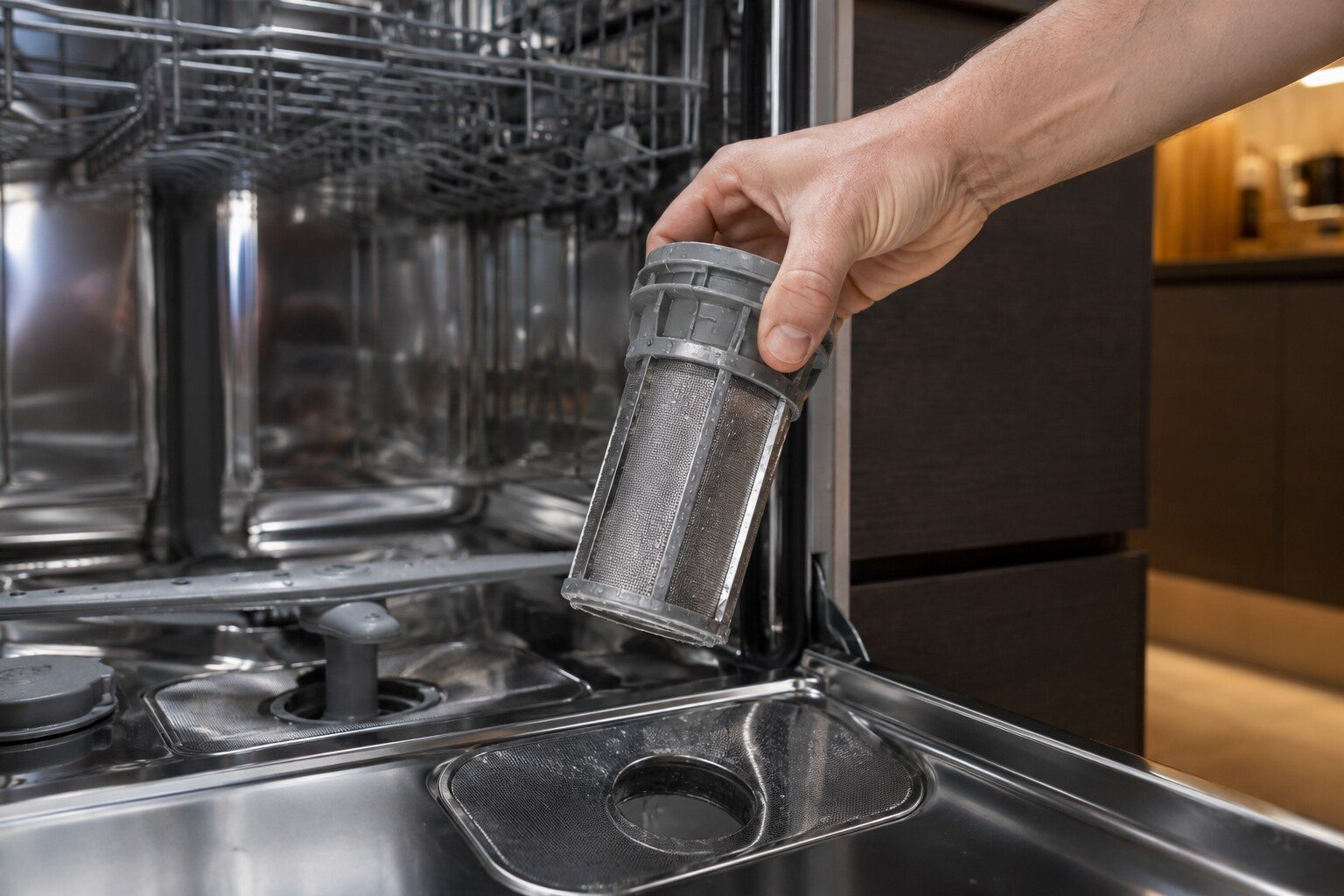
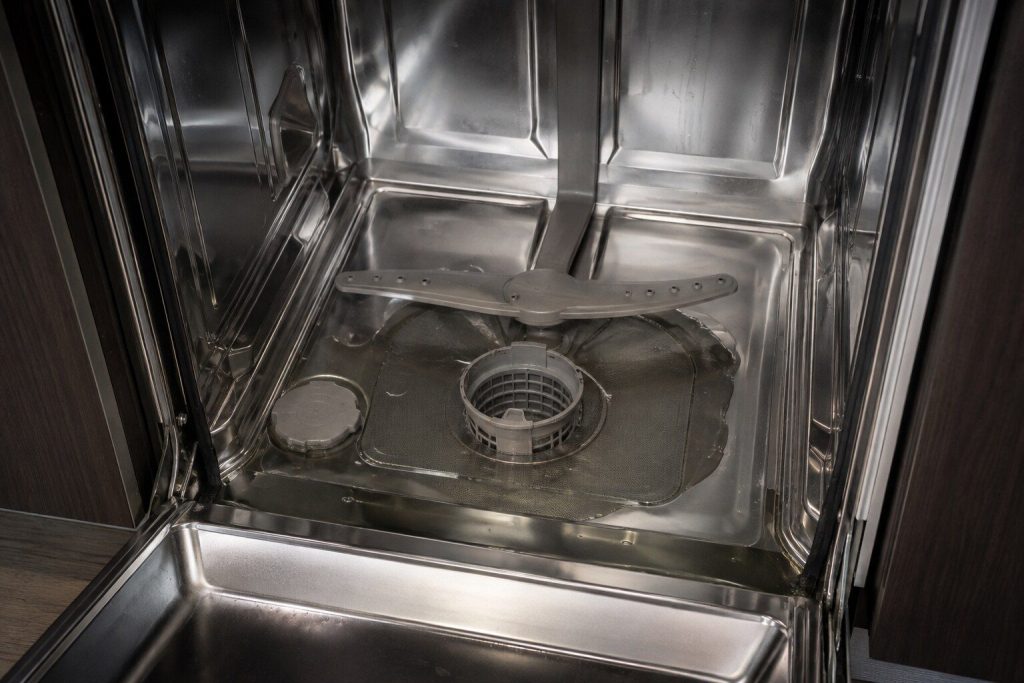
Take the lower rack out, look at the floor of the tub under where the lower spray arm sits, and you will find a cylinder standing in a flat mesh screen. The cylinder turns about a quarter turn counter-clockwise and lifts straight out — no tool, no force. The flat screen underneath usually lifts out with it or after it. Rinse both under a warm tap, use a soft brush on the mesh if there is a film on it, and look into the sump underneath while they are out, because that is where anything too big for the filter ends up. Put the screen back flat, drop the cylinder in, and turn it clockwise until it seats. Every few months is a reasonable interval for a household that uses the machine daily, and it prevents most of the drain and wash-performance complaints on this site.
The full guide
The single best two minutes anybody spends on this appliance
There is nothing else on this site with the same ratio of effort to benefit. It takes two minutes, it needs no tools, and it prevents a good proportion of both the complaints people call us about on a dishwasher: water that will not drain, and dishes that come out gritty.
And most of these filters have never been out. Not neglected exactly — simply unknown. The machine is silent, integrated, panel-ready, and behaves like a cabinet door, and nothing about it suggests there is a serviceable part in the floor of it.
What it is doing down there
The filter catches food that comes off the load so it is not pumped back over the dishes. That is the whole job, and it works well, which is the problem: everything it catches stays there.
Over a year the mesh takes on a film of grease and starch that water no longer passes through freely. The machine keeps trying, the pump keeps pulling, and two things happen. Drainage takes longer than the control expects, which is exactly what a C1 or C2 message reports. And the wash water carries what the filter can no longer hold, which comes back onto the load as grit.
So this one part sits behind two entirely different complaints, and neither of them looks like a filter problem from the outside.
Getting it out
Roll the lower rack out. Look at the floor of the tub, under where the lower spray arm sits. There is a cylinder standing there in a flat mesh screen.
The cylinder turns about a quarter turn counter-clockwise and lifts straight out. Hand pressure. If it will not move, check you are not turning the spray arm above it, and if it is genuinely stuck pour warm water over it and wait a minute — hardened grease is the usual reason, and force is how the tabs break.
The flat screen underneath comes out too, either with the cylinder or after it.
Cleaning them properly
Warm tap, soft brush on the mesh. What you are removing is a film rather than debris, and water alone runs straight over it.
Running the parts through a dishwasher cycle sounds sensible and does very little, because a wash cycle is what put the film there in the first place.
While they are out, look down
With the filter removed you can see the sump and the pump inlet. This is where things too big for the mesh end up: a shard from a broken tumbler, the paper label off a jar, a fruit sticker, a small bone. Any one of them stops a pump dead, and a pump straining against an obstruction sounds exactly like a pump failing — which is how perfectly good pumps get replaced.
Fingers, not tools, and mind the glass.
Seat it properly on the way back
The screen goes back flat, the cylinder drops in, and it turns clockwise until it stops. This bit matters. A filter that is sitting proud lets debris past it straight to the pump, which is worse than a dirty filter that is doing its job.
How often, honestly
Every few months for a household running the machine most days. Twice a year for lighter use. And once now, whatever the answer to that is, because the first one is always the worst one.
If the machine has also been draining slowly, do this before you book anything. It resolves a real share of those calls, and we would rather tell you that than come out and unscrew something you could have unscrewed yourself.
What comes off it tells you something
Look at what is on the mesh before you rinse it away, because it is a fair description of how the machine is being used.
A grey-brown film and very little solid. Normal, and the interval is about right. This is grease and starch out of the wash water, which is exactly what the filter is for.
Visible food. Plates are going in with too much on them. These machines do not need dishes rinsed — modern detergent needs something to work on — but they do need bones, skins, peel and the last inch of a bowl of cereal scraped off. What the filter catches is what the spray arms were pushing around the load.
Grit and sand. Almost always from produce, and in a house with a garden or a beach habit it is worth knowing that a filter fills faster.
A white chalky deposit. Scale, from local water. That is the same deposit forming inside the spray arms and on the heating element, and it is the argument for descaling the machine rather than only cleaning the filter.
Glass. Stop and be careful with your hands, and check the sump properly. A tumbler that broke three months ago leaves fragments that migrate for a long time afterwards.
The two things people do that make it worse
Running the filter through a cycle instead of cleaning it. The film on the mesh was deposited by wash water. More wash water does not remove it. Thirty seconds with a brush does.
Leaving it out. It happens — the filter comes out, gets put on a windowsill, and the machine runs without it for a week because nothing complains. What is happening in that week is that everything the filter would have caught is going straight to the drain pump, and the pump is the expensive component in this conversation. If the filter is out, the machine does not run.
While the rack is out anyway
Two more minutes buys the rest of the wash performance.
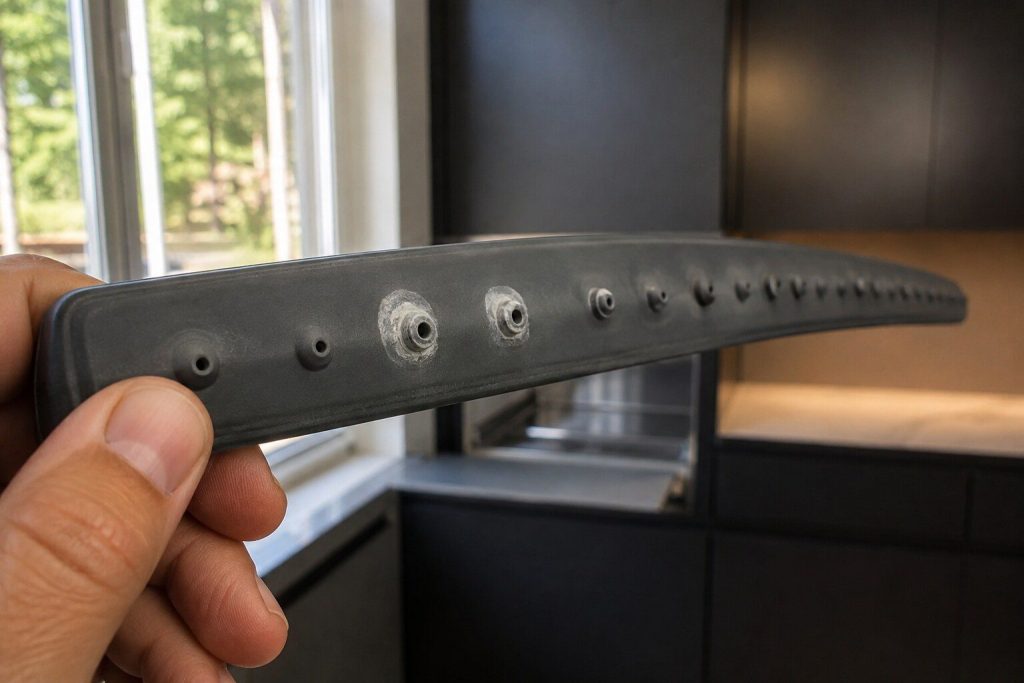
Take the lower spray arm off and hold it to the light. It lifts or unscrews depending on the model. Blocked jets are invisible from above and they change the spray pattern completely — an arm that turns slowly covers half the load.
Look at the door gasket folds. They are warm, damp and shut for most of the day, which is a better environment for mold than anything in the refrigerator. Warm soapy water and a soft brush, folds opened out.
Check the rinse aid. An empty reservoir is the single most common reason glassware suddenly starts spotting, and people almost never look.
None of that is a repair. All of it is what a wash-performance visit begins with, and doing it yourself twice a year means the visit is about something real when it happens.
If it turns out to be a repair
What this leads to, and what it costs
Every job on this site is priced the same way: an on-site diagnostic first, the figure agreed in writing before anybody starts.
-
from $135 Dishwasher wash performance service
Clean dishes are the product, and when they stop being clean the cause is usually water rather than the machine: spray arms scaled up so they turn slowly, a filter left in for two years, hard water that films glassware, or an inlet temperature too low for the detergent to work.
- Spray arms, filter and inlet temperature
- Hard water treated as a cause, not an excuse
- Rinse aid and detergent set for local supply
-

It runs, and the load is not clean Dishes not coming out clean
When a dishwasher stops washing well the cause is usually water rather than the machine: spray arms scaled so they turn slowly, a filter that has never been removed, hard water filming the glassware, or inlet water too cold for the detergent to activate.
- Hard water is the local villain
- The spray arms come out and should
- C6 means the water arriving is too cold
-
Water standing in the bottom at the end of a cycle Dishwasher not draining
The most common dishwasher call there is, and on these machines it usually comes with a code nobody has seen — the display is on the top edge of the door, visible only when the door is open. C1, C2, C3 and C5 all describe drainage and they mean different things.
- Read the top edge of the door first
- The filter unscrews and most owners never have
- A disposal knockout plug is a real cause
-
24-inch fully integrated · panel-ready and stainless Dishwashers
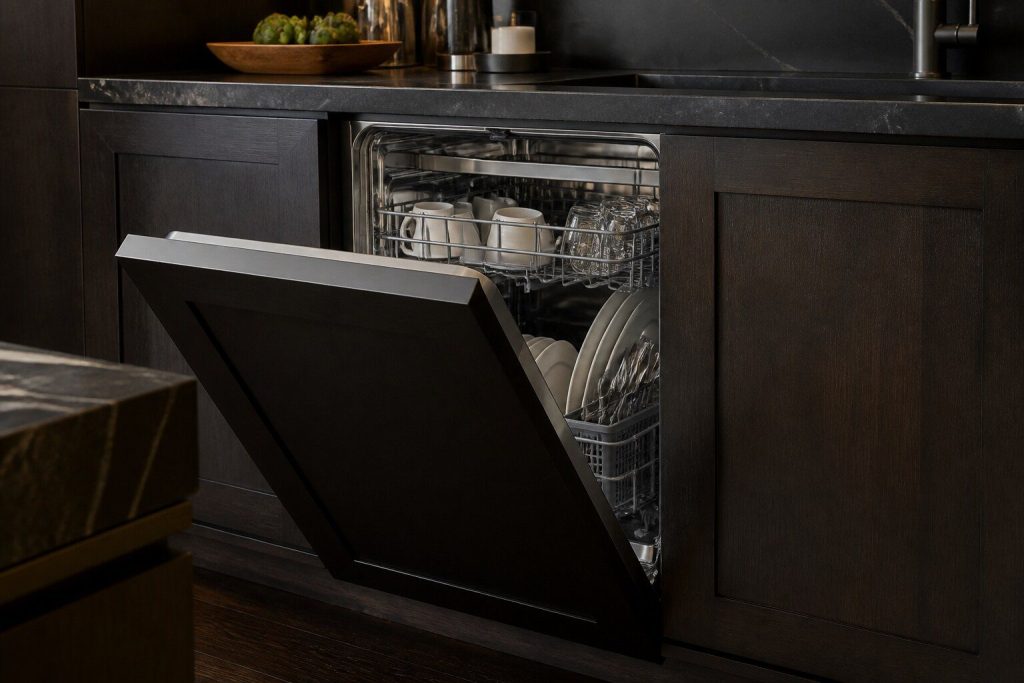
Monogram's dishwasher line is short and consistent: 24-inch fully integrated machines, panel-ready or stainless, with the controls hidden on the top edge of the door. That hidden control panel is the reason most owners never see the code their machine is showing — it is displayed while the door is open, which is exactly when nobody is looking.
- 24-inch fully integrated, panel-ready or stainless
- The C-code family is displayed on the top edge of the door
- Drainage is the largest single category of call
Questions people ask about this
Is it dishwasher-safe?
It lives in a dishwasher, so yes in the sense that nothing will dissolve — but running it through a cycle does not clean it, because the film on the mesh is exactly what a wash cycle leaves behind. Warm water, a soft brush and thirty seconds does more than a cycle will.
Mine will not turn.
Check you are turning the right part and not the spray arm above it, and turn counter-clockwise. If it is genuinely stuck, a film of hardened grease is usually the cause and warm water poured over it first will free it. Do not lever it.
How do I know when it needs doing?
Before you notice. By the time a machine is draining slowly or leaving grit on the load, the filter has been restricting flow for a while. Every few months on a diary is better than waiting for a symptom.
There is a smell even after cleaning it.
Then look at the sump under the filter, at the door gasket folds, and at the drain hose. Standing water and residue in any of the three produce a smell that a clean filter does not fix.
Maintenance & Prevention
More guides like this one
-

A Year in a Monogram Kitchen: What to Do and When
The calendar the service pages imply and never state in one place, written for built-in equipment in a coastal city.
Read more -
Hood Filters in a Miami Kitchen: Far More Often Than the Manual Says
Grease plus humidity stays tacky, collects dust, and migrates past a saturated filter into the blower housing. That is when it stops being a chore.
Read more -
Cleaning Induction Glass Without Marking It
Sugar comes off hot and everything else comes off cold, which is the opposite of what most people assume. And two common products do permanent damage.
Read more
Tell us the model number and what it is doing.
This article is based on:
- Official manufacturer documentation
- Internal repair procedures
- Technician repair history
- Company quality standards