Appliance
Monogram ice makers
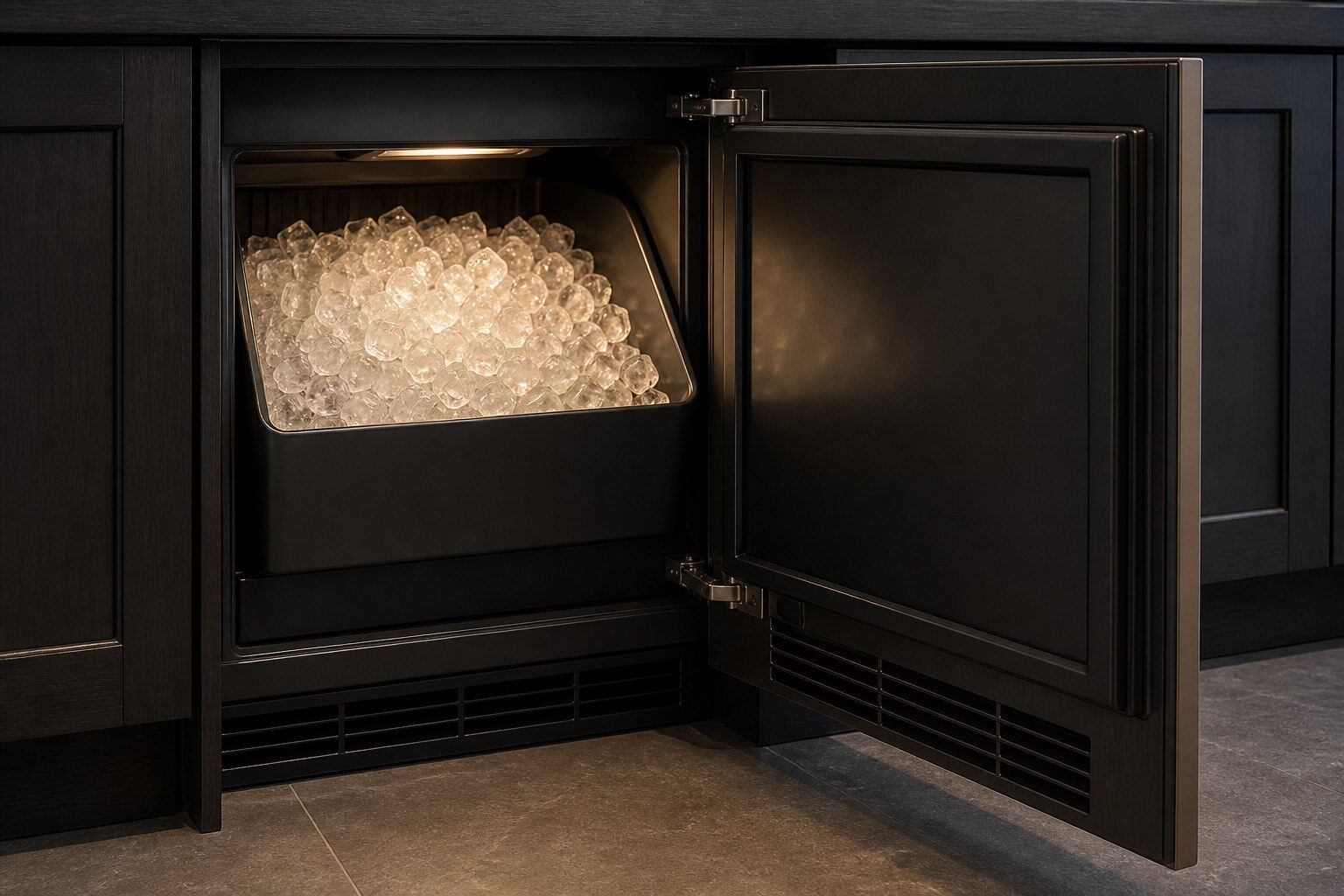
A dedicated ice maker is a small refrigeration plant with a water circuit running through it, and in Miami the water circuit is what fails. Monogram kitchens take 15-inch undercounter units — clear ice and nugget ice — alongside the ice makers built into refrigerators and bar cabinets, and the two kinds fail in completely different ways.
- 3 symptoms we are called out to
- From $95 diagnostic, credited to the repair
- 59 cities and neighborhoods covered
- OEM parts available on order
The short version
What this equipment is, for a repair
Configurations
15-inch undercounter clear ice and nugget ice · in-cabinet ice makers
Access
Planned before the visit, not discovered on arrival
Parts
OEM, available on order
Diagnostic
From $95, credited to the repair
What goes wrong with it
Symptoms we are called out to on Monogram ice makers
Each one covers the likely causes in the order they are worth checking, and what to do in five minutes before booking anything.
-
The bin is empty and nothing is happening Ice maker not making ice
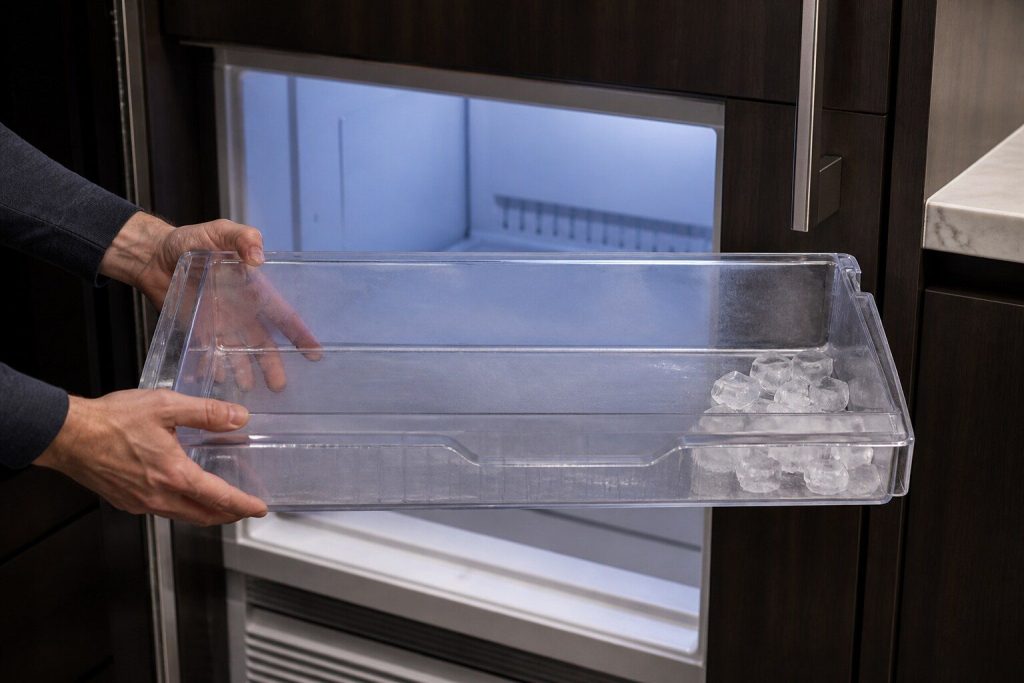
An ice maker that has stopped completely. Half of these are not ice maker problems at all — production is a function of how cold the host cabinet is, and a module fitted into a cabinet that has drifted warm makes exactly as much ice as the one it replaced.
- Check the cabinet temperature first
- Then prove the water actually arrives
- CI on the display is a starting point
-
It works, but not properly Ice that is small cloudy or slow
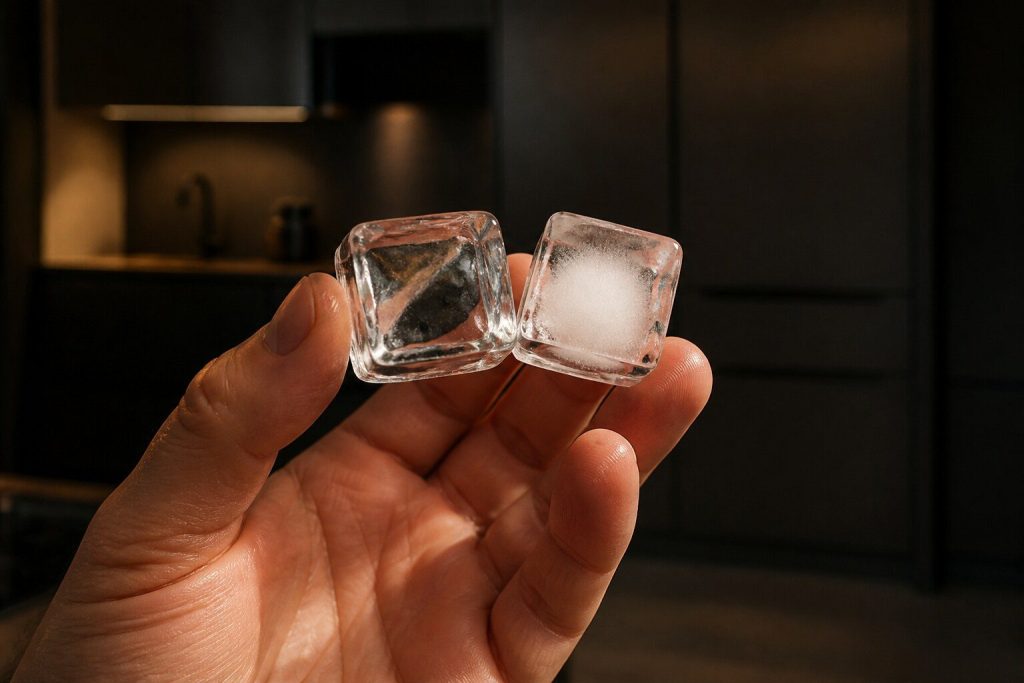
Production that has tapered rather than stopped, with cubes that have got smaller and cloudier. On a standalone machine that is the signature of scale in the water circuit, and on local water it is not a matter of if but of when.
- Small and cloudy is scale, almost always
- Clear ice depends on moving water
- Descaling restores output without parts
-
The ice is melting and not going anywhere Water standing in the ice bin
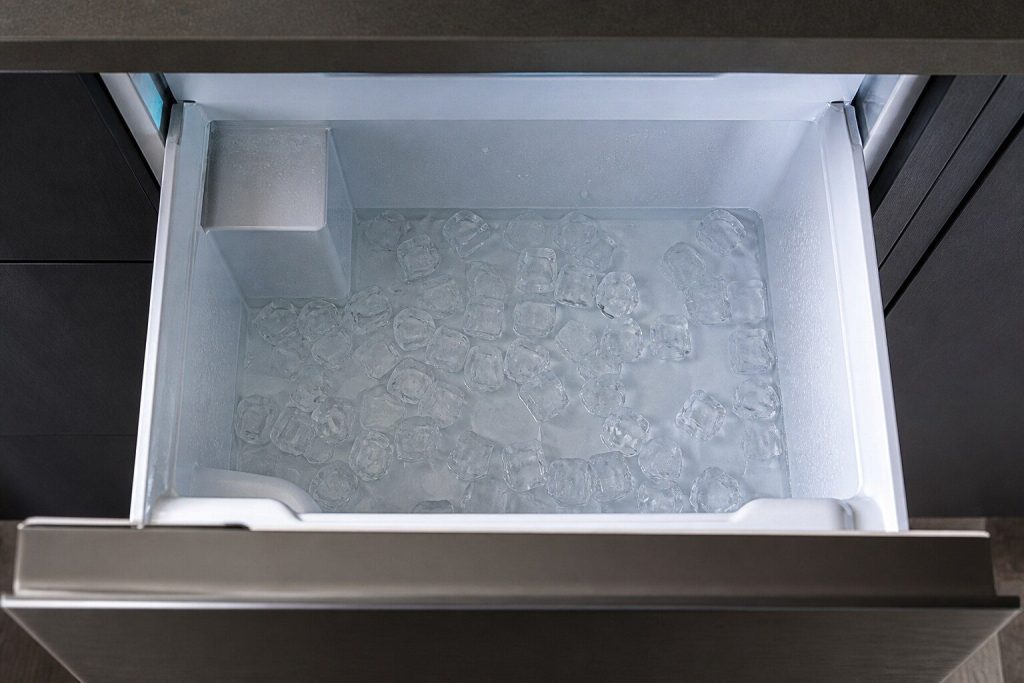
Meltwater in an ice bin is normal — a bin is not a freezer and the machine expects to drain continuously. A level that does not go down is not normal, and in a warm cabinet it becomes a smell and then a hygiene job on top of a repair.
- Some meltwater is normal, a level is not
- Gravity drains lose their fall over years
- Deal with it before it becomes a smell
What we do on it
Repairs we carry out on Monogram ice makers
Starting figures for this equipment in South Florida. The exact cost is confirmed after an on-site diagnostic — and this is not the whole list of what can go wrong, so call if your problem is not here.
-
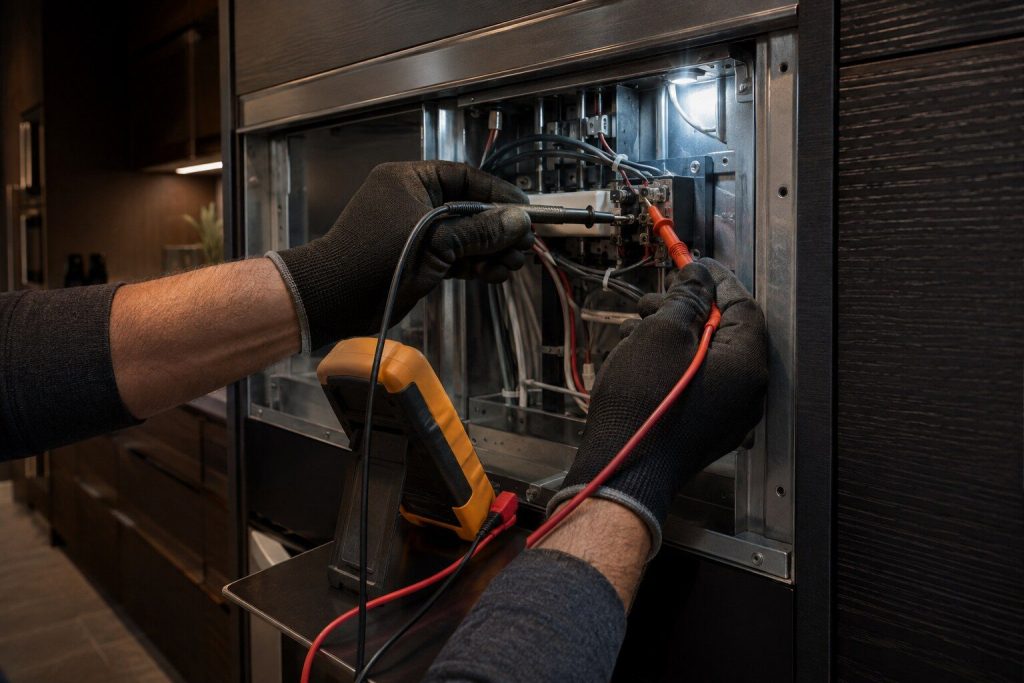
from $95 Diagnostic visit
Nothing is named until something has been measured. On built-in appliances the visit also has to plan its own access before it starts: a column comes out from the front, a panel-ready door comes apart in an order, and a wall oven that has to move needs two people and a plan. We do that thinking before we arrive rather than in your kitchen.
- The model number first, because it decides the access
- What the appliance reports, read against the published table
- Credited toward the repair when you go ahead
-
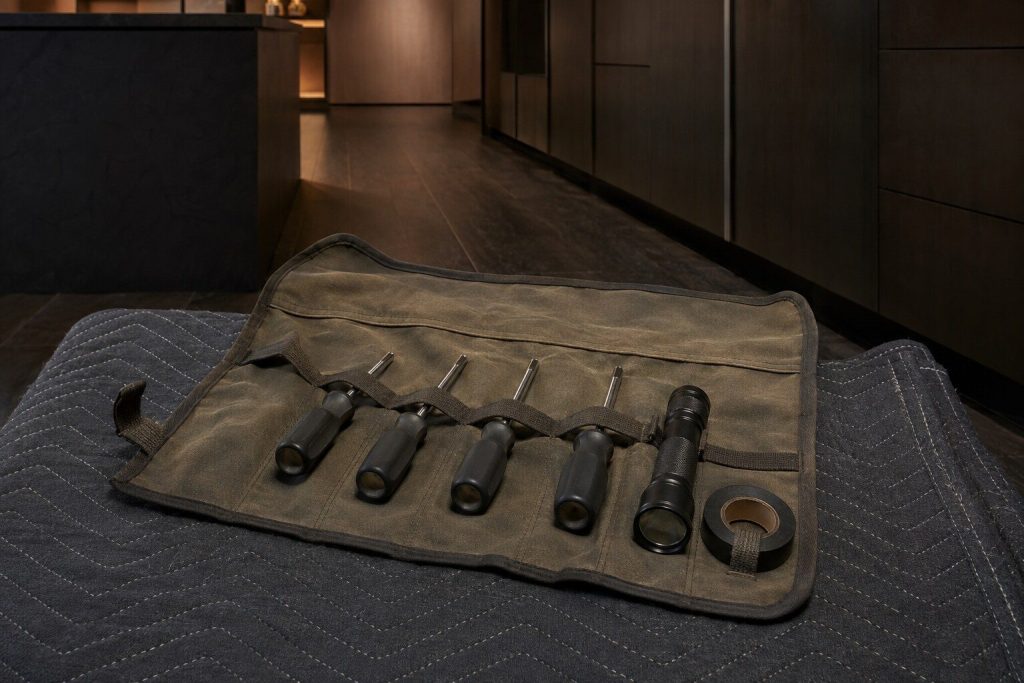
from $145 Appliance maintenance
The visit that exists to stop the other visits. On built-in appliances in a salt-air climate the two things that shorten life are both invisible: a condenser that has silted up behind its grille, and door seals that have quietly stopped sealing. Neither shows on a display. Both are cheap to deal with and expensive to ignore.
- Condensers cleaned and airflow checked
- Seals, hinges and panel alignment across the kitchen
- Filters, drains and water circuits attended to
-
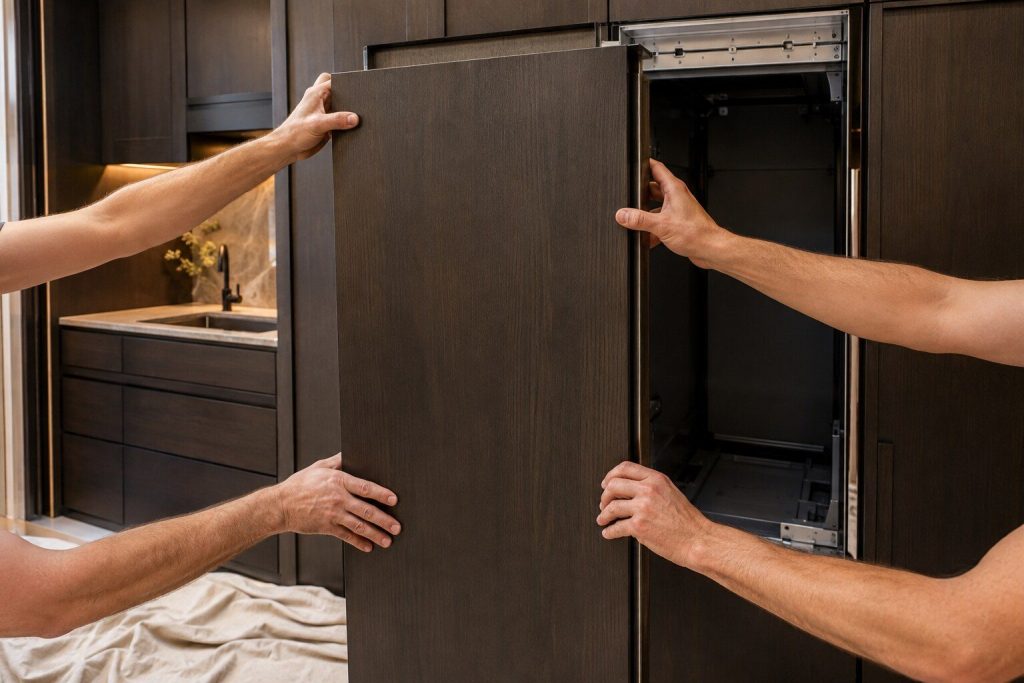
from $175 Appliance installation
Built-in appliances are installed once and lived with for twenty years, and most of the long-term problems we are called to were decided on installation day: a clearance that was shaved, a drain that has no fall, a hood ducted through one elbow too many. Getting it right the first time is cheaper than any of the repairs it prevents.
- Clearances and ventilation to the specification, not to the opening
- Water, gas and drain connections tested under pressure
- Panels hung and doors set level with the run
-
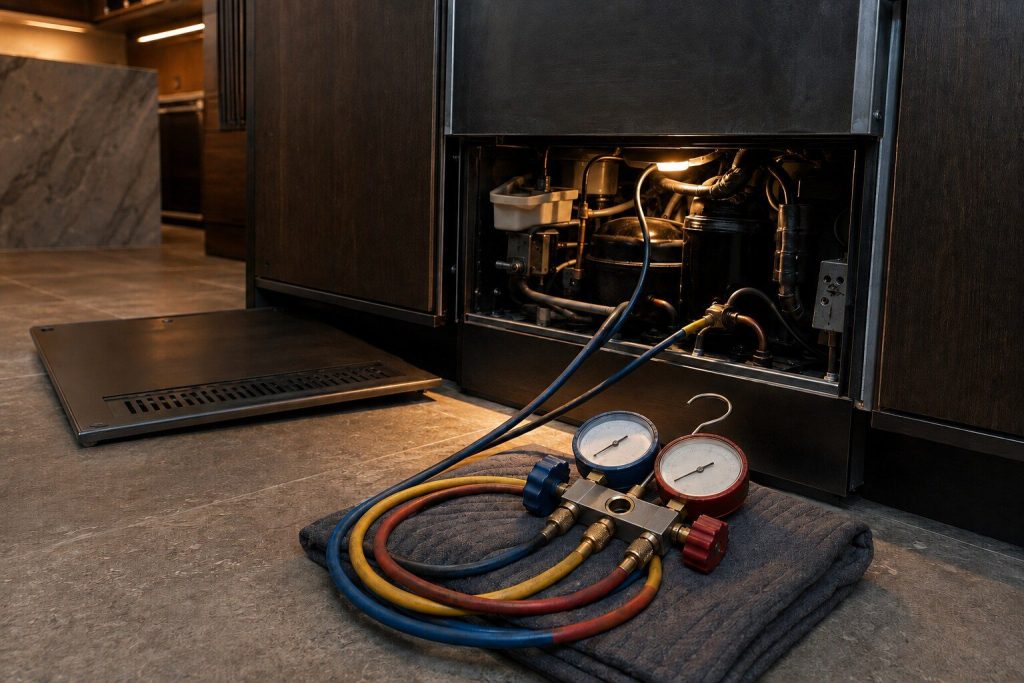
from $695 Sealed system repair
The refrigeration circuit itself — compressor, condenser, evaporator and the refrigerant between them. It is the largest repair on a cold appliance and the one most often reached for too early. On a built-in cabinet worth five figures it is usually still the right thing to do, which is not true of every make in this fleet.
- Reached by measurement, never by elimination
- Pressures and temperatures on the report
- Honest about when a cabinet is not worth it
-
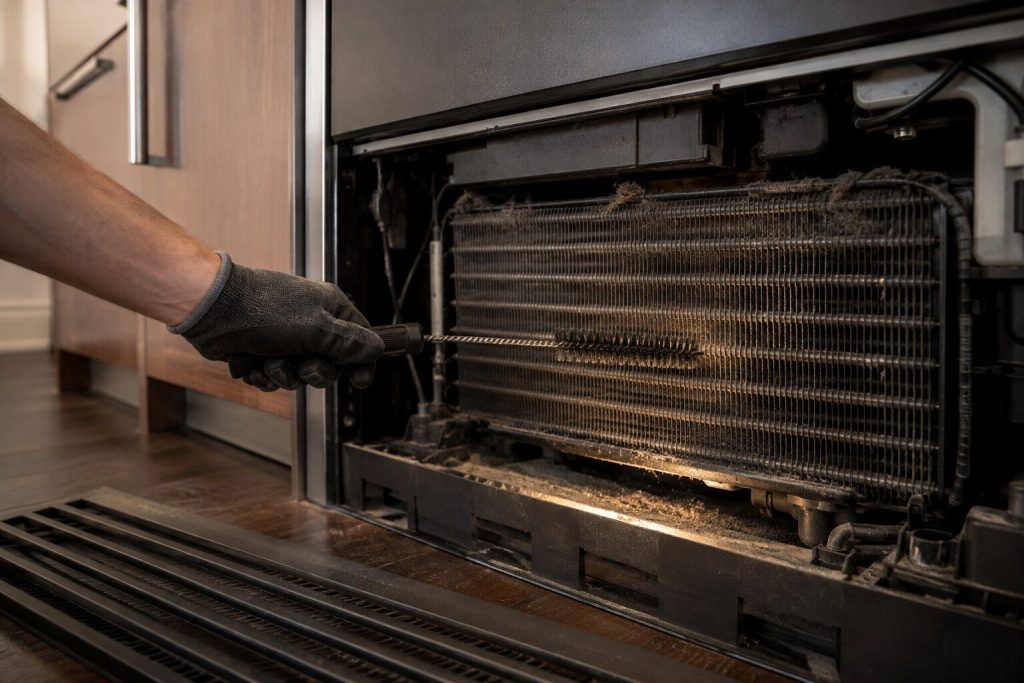
from $135 Condenser cleaning service
The cheapest service on this list and the one that prevents the most expensive one. A built-in condenser sits behind a grille in the kitchen, and in South Florida it collects salt, cooking aerosol and dust at a rate that surprises people. The appliance never complains. It just runs longer, hotter and shorter-lived.
- Coil, fan and air path on every cold appliance
- Nothing on the display ever reports this
- Directly extends compressor life
-
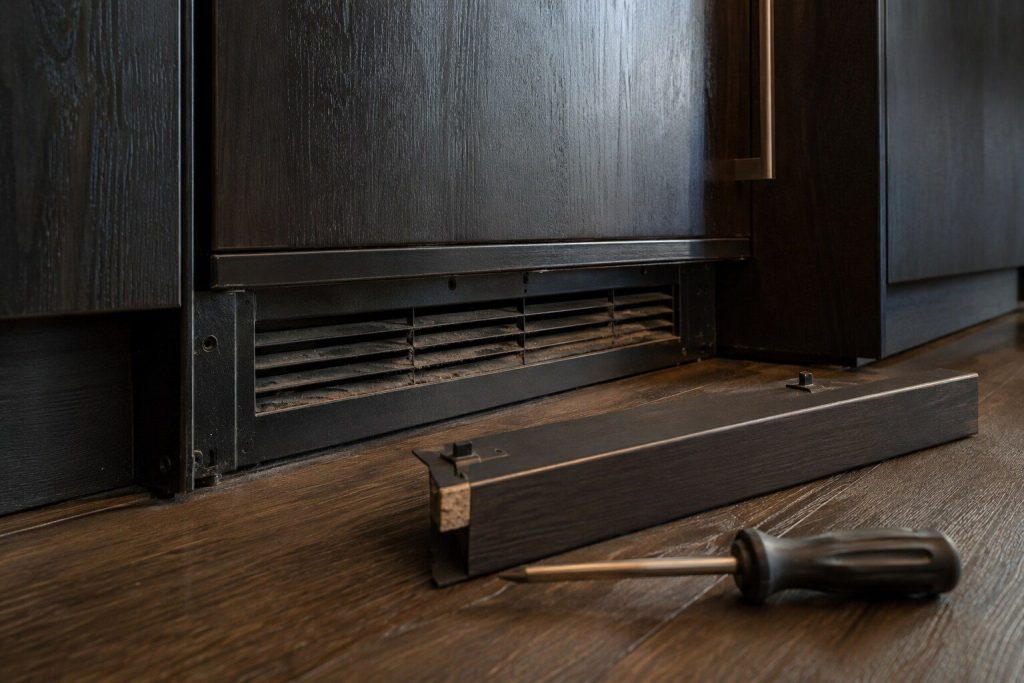
from $175 Undercounter refrigeration repair
Bar refrigerators, beverage centers, double-drawer units and undercounter cabinets share one engineering problem: they breathe through a grille a few inches tall at the bottom of a door, and they are very often installed somewhere warmer than a kitchen. Most of these calls are decided by air before they are decided by parts.
- Ventilation treated as part of the diagnosis
- Ambient temperature measured where the unit actually lives
- Drawer runners and seals on the drawer models
-
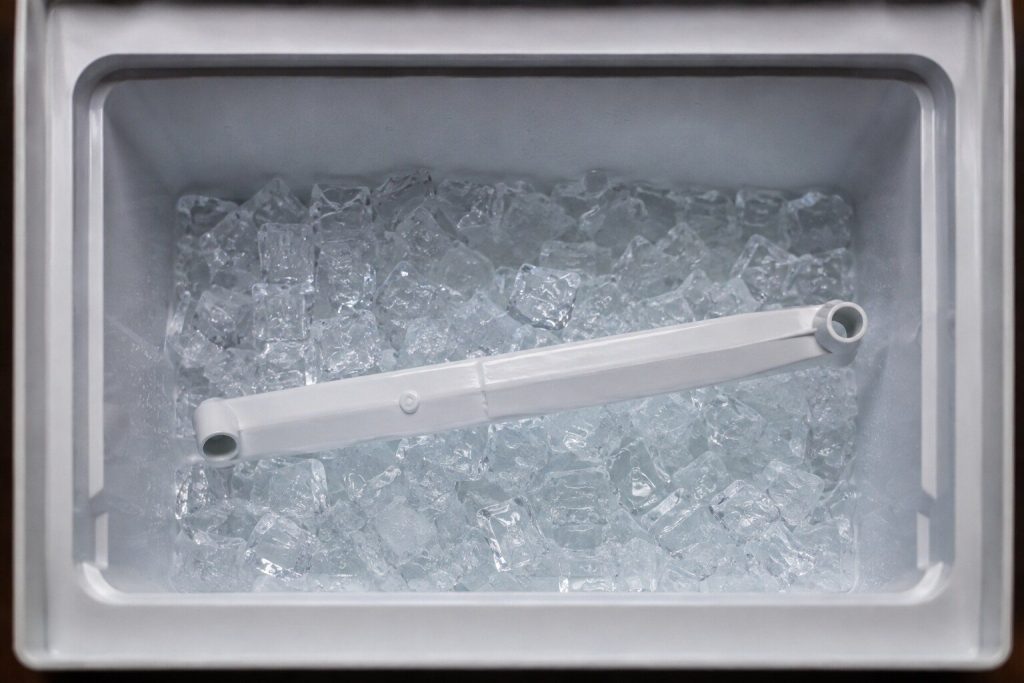
from $175 Ice maker repair
Ice makers built into a refrigerator or a bar cabinet borrow their cold from the cabinet they live in, so a good proportion of these calls are really temperature calls. The rest are water: the supply, the valve, the fill tube and the module, in that order of how often they are the answer.
- Cabinet temperature checked before the module
- The water supply proved rather than assumed
- CI on the display is a starting point, not a diagnosis
-
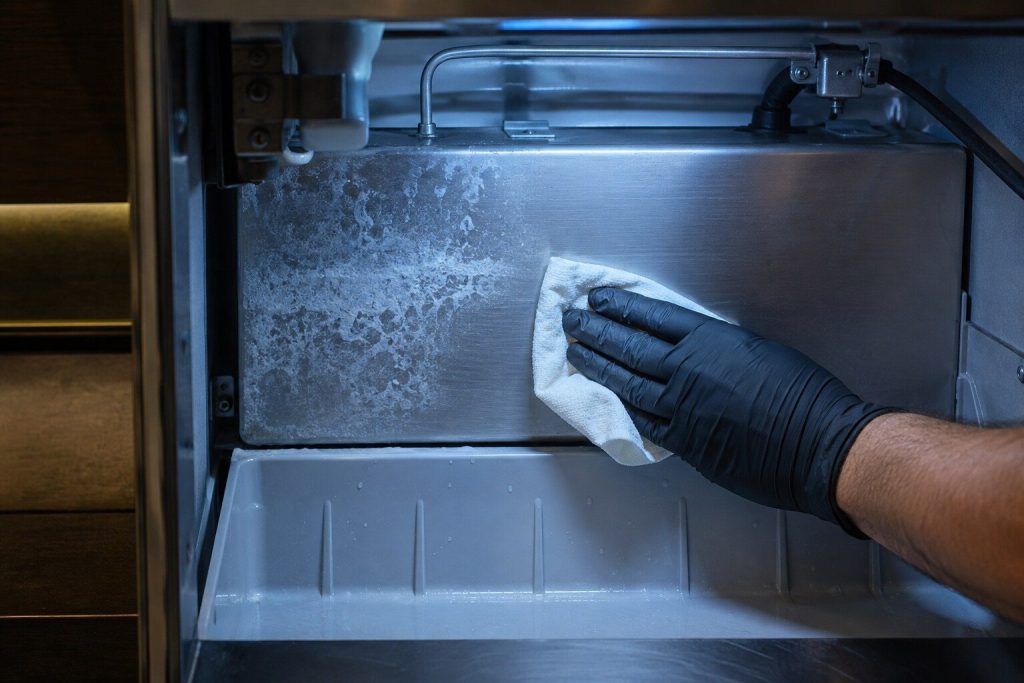
from $175 Ice machine cleaning and descaling
The service a standalone ice machine needs on schedule and almost never gets. Every gallon of hard South Florida water that goes through a freezing cycle leaves its mineral behind — on the evaporator plate, in the valve, along the tubing. Production tapers, cubes get small and cloudy, and nothing on the machine says why.
- Descale, sanitize and replace the filter
- Production measured before and after
- Restores output without replacing anything
-
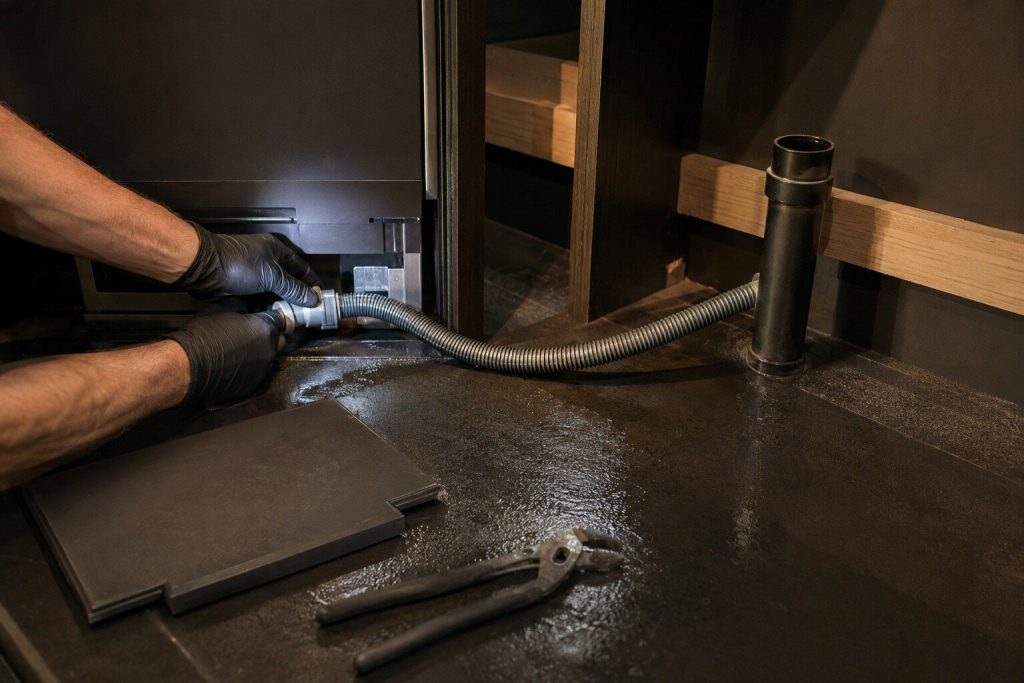
from $155 Ice maker drain and pump service
An undercounter ice machine has to get rid of meltwater, and most installations do it by gravity with a fall that was marginal on the day it was built. When the drain blocks or the pump stops, water stands in the bin — and standing water in a warm cabinet turns into a smell and then a hygiene job on top of a repair.
- Drain line, fall and pump all checked
- The commonest undercounter finding in this climate
- Deal with it before it becomes a smell
In more detail
About Monogram ice makers
Two different appliances that both make ice
In a Monogram kitchen there are usually two: the module inside the refrigerator or the bar cabinet, and a dedicated 15-inch undercounter machine — clear ice or nugget ice — installed in the island or the bar run. They share a name and nothing else. The module borrows its cold from the cabinet it lives in, so it fails when that cabinet drifts. The undercounter machine is a small standalone refrigeration plant with its own compressor, its own water circuit and its own drain, and it fails on the water side far more often than on the cold side.
Local water is the story
South Florida water is hard, and an ice machine puts every gallon of it through a freezing cycle that leaves the mineral behind. Scale builds on the evaporator plate, in the fill valve and along the tubing. The machine does not announce it — production simply tapers, the cubes get smaller and cloudier, and the cycle takes longer. Descaling on schedule is the single highest-value thing an owner can do for this appliance, and filters here are often finished well before the date printed on them.
The drain, and why we ask about it first
An undercounter ice maker has to get rid of meltwater. Most installations rely on gravity, some on a pump, and both fail quietly — a blocked line, a fall that was marginal on installation day, a pump that has stopped. Water then stands in the bin. Ask any technician what they find most often under a bar in this climate and it is that.
Before you book
Tell us whether it is a standalone machine or the ice maker inside another appliance, the model number, how long the ice has been poor rather than absent, and whether there is water standing in the bin. Those four decide almost the entire visit.
This article is based on:
- Official manufacturer documentation
- Internal repair procedures
- Technician repair history
- Company quality standards

Before you book
Questions about Monogram ice makers
Production has dropped and the ice looks cloudy or small.
On an undercounter machine that combination almost always points at the water side rather than the refrigeration: scale on the evaporator plate, a filter past its life, a fill valve that is metering less than it should, or a pump that is not circulating properly. Clear-ice machines make their ice by freezing slowly in a moving film of water, so anything that interrupts that flow produces exactly this — smaller, cloudier and less of it. A descale and a filter are the first move and often the only one.
There is water in the bottom of the bin.
Some meltwater is normal — an ice bin is not a freezer and the machine expects to drain. Standing water is not. It means the drain is blocked, the drain line has lost its fall, or the pump on a gravity-less installation has stopped. It is worth dealing with quickly because standing water in a warm cabinet becomes a smell, and then a hygiene job on top of a repair.
Is the ice maker inside my refrigerator the same repair?
No. An ice maker built into a refrigerator or a bar cabinet is a module that depends on the host cabinet's freezer temperature, so half of those calls are really temperature calls — the cabinet drifted up, and production fell with it. A standalone 15-inch machine has its own refrigeration and makes ice regardless of anything else in the kitchen. Which one you have decides the whole diagnosis, so tell us on the phone.
Where we do it
Across Miami-Dade, Broward, and Palm Beach
Same terms everywhere we go: an on-site diagnostic first, the price agreed in writing, and the exact figure confirmed once we have seen the unit.
Neighborhoods people ask for by name