Cost Expectations
What a Service Call Costs Here, and What the Diagnostic Fee Buys
A diagnostic visit starts at $95 and is credited against the repair if you go ahead, which is what makes it possible for a technician to tell you nothing is wrong instead of finding something. Beyond that, every figure on this site is a floor rather than a quote: what that job starts from on this equipment in this market. Four things move it. What has actually failed, which nobody knows until something is measured. Whether the part is a stocked item or an order, which decides whether this is one visit or two. How the appliance is installed, because panels, trim and front service on a built-in are real time and are priced as work rather than hidden in a parts markup. And whether the diagnosis stops at airflow or reaches the sealed system, which is the widest single split on this site. No final price is published anywhere here, because nobody can name one honestly before somebody has looked.
The full guide
The question the whole cost archive answers one job at a time
Somewhere on this site there are thirty-five pages, each explaining what one job starts from and what moves it. This page is the same argument made once, as a whole, for somebody who has not decided yet whether to call anybody.
What the diagnostic is, and why it is charged
It is an hour or so with the appliance, the rating plate, whatever is on the display, and whichever instrument the symptom calls for — a thermometer, a meter, a pressure gauge, an airflow reading. It ends with a written scope and a written figure, and it ends before anything is opened.
It is charged, and it is credited against the repair if you go ahead. Both halves of that matter.
A free diagnostic has to be paid for somewhere, and it gets paid for by finding something. That is not a cynical observation about the trade; it is arithmetic. A charged visit that comes off the bill is what makes it possible for a technician to spend an hour and then say that the cabinet is fine, the door was left ajar on Tuesday, and there is nothing to do. We would rather be able to say that.
What actually moves a figure on this equipment
What has failed. Obvious, and it is the one nobody knows in advance. "Refrigerator not cooling" spans airflow, defrost, a control and a sealed system, and those four are separated by measurement rather than by discussion. It is the widest single range on this site and it is why phone quotes are guesses.
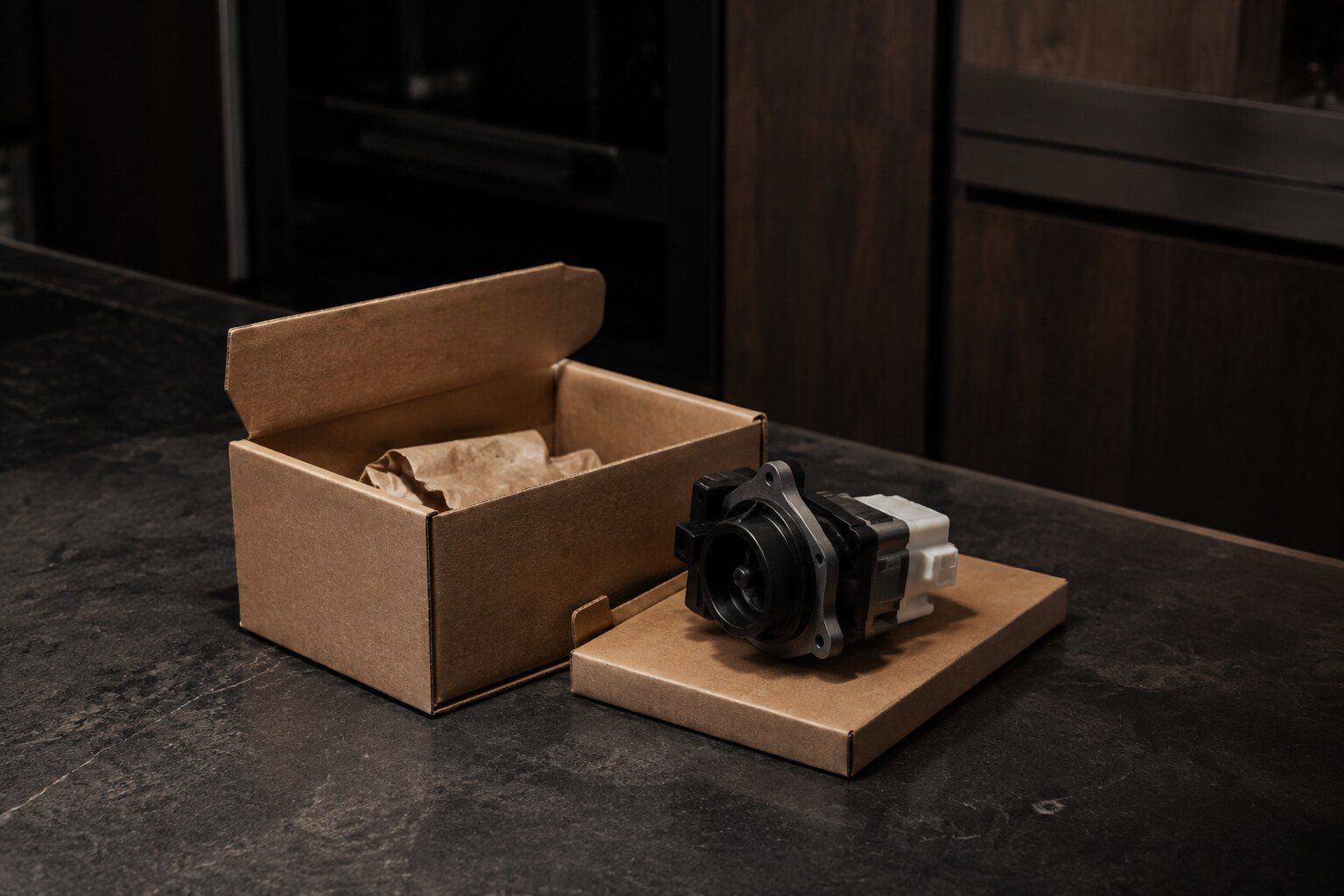
Whether the part is stocked. Monogram parts are lower-volume than mass-market equivalents. Some arrive next day; some are ordered. That decides whether this is one visit or two, and it is a question we answer before a repair is agreed rather than after.
How the appliance is installed. A freestanding appliance is pulled out. A built-in one is not. Panels, trim and sometimes a neighboring cabinet come off in an order and go back the same way, and on integrated joinery the cabinetry is part of the value of the room. That time is real work, and it is priced as work rather than hidden in a parts markup — which is the main reason several figures on this site sit above the same job on a mass-market brand.
Whether it is one appliance or two. Kitchens like these usually have several of ours in them. Looking at a second appliance on the same visit costs a fraction of a second visit, and it is worth mentioning when you book rather than when we are packing up.
Why no final price appears anywhere on this site
Because nobody can name one honestly before somebody has measured something, and a site that publishes a firm number is either guessing or building in room to be wrong.
Every figure here is a "from". The exact cost is confirmed after the on-site diagnostic and agreed with you in writing before anything is opened. That is not a hedge — it is the only way to price work that nobody has looked at yet, and it is the arrangement that lets a technician tell you the repair is smaller than expected as easily as larger.
Where the numbers come from, plainly
They are a researched market band for South Florida: what the same part and the same labor go for here, narrowed by what the part actually is on this equipment and by what the installation does to the time.
They are not an average of our invoices, and this site does not present them as one. There is a document behind every figure explaining what it was set against, and if one of them is ever wrong the document gets corrected first and the site follows it.
What we will tell you for free
Quite a lot, actually, because it saves us both a visit that was never needed.
A magnet on the base of a pan settles most induction complaints. A strip of paper closed in a door settles most seal questions. DE in capitals on a refrigerator display is demonstration mode and clears by unplugging. A dishwasher that will not start is usually a door it does not trust, and the code explaining it is on the top edge of that door where nobody looks.
Every one of those is on this site with the reasoning attached, and none of them is a service call. If your problem is one of them, we would rather you found that out here.
What a diagnostic finds that a phone call cannot
An example rather than an argument. "The refrigerator is not cold enough" is one sentence and four repairs.
If the condenser behind the grille is packed with salt and grease, the fix is an hour with brushes and the figure is the bottom of the list. If the evaporator fan has stopped, it is a modest part. If the defrost circuit is not completing, it is a heater, a sensor or a control and a cabinet that has to be cleared of ice properly. If the sealed system is leaking, it is the largest number on this site.
All four present identically from the front of the cabinet. They are separated by a thermometer, a meter and a set of gauges, in that order, and by nothing else. Anybody who names one of them down a telephone line is picking.
The diagnostic exists to do that picking with instruments, and to hand you the answer in writing before anything is opened.
Why some visits become two
Not everything is on the van, and it is fair to explain when and why.
Seals, sensors, elements, igniters, switches, capacitors and the common pumps travel with us, because they are what most calls end at. What does not travel is anything model-specific and low-volume: a particular control board, a hinge for a particular door, a panel-ready gasket profile, a part for the hearth oven.
On mass-market equipment nearly everything is stocked somewhere in the county. On this catalog a proportion of parts are ordered, and lead time is a real thing rather than an excuse. What we will do is find that out during the diagnostic and tell you before you commit, rather than discovering it afterwards.
Two visits worth combining
Kitchens like these usually have several of our appliances in them, and the travel and the setup are the fixed cost.
Looking at a second appliance on the same visit costs a fraction of a second visit. So does doing the annual condenser and seal work while somebody is already there for a repair. If something else in the kitchen has been mildly annoying for six months, that is the moment to mention it — not out of salesmanship, but because the arithmetic genuinely favors it.
What the fee does not cover
Parts, and any repair that follows. Both are quoted on the visit and agreed before they start.
And it does not cover work on an appliance that turns out to need a different trade. A gas supply problem is a gas utility question. A dedicated circuit that was never dedicated is an electrician. A drain with no fall under a bar is a plumber. We will tell you which of those you have and we will not charge to pretend otherwise.
The one number we will always give in advance
The diagnostic itself. Everything after that is a floor with reasons attached, and the exact figure is agreed in writing before a panel comes off.
That is the arrangement, it is on every page of this site, and it is the reason the cost archive reads as thirty-five explanations rather than a price list.
If it turns out to be a repair
What this leads to, and what it costs
Every job on this site is priced the same way: an on-site diagnostic first, the figure agreed in writing before anybody starts.
-
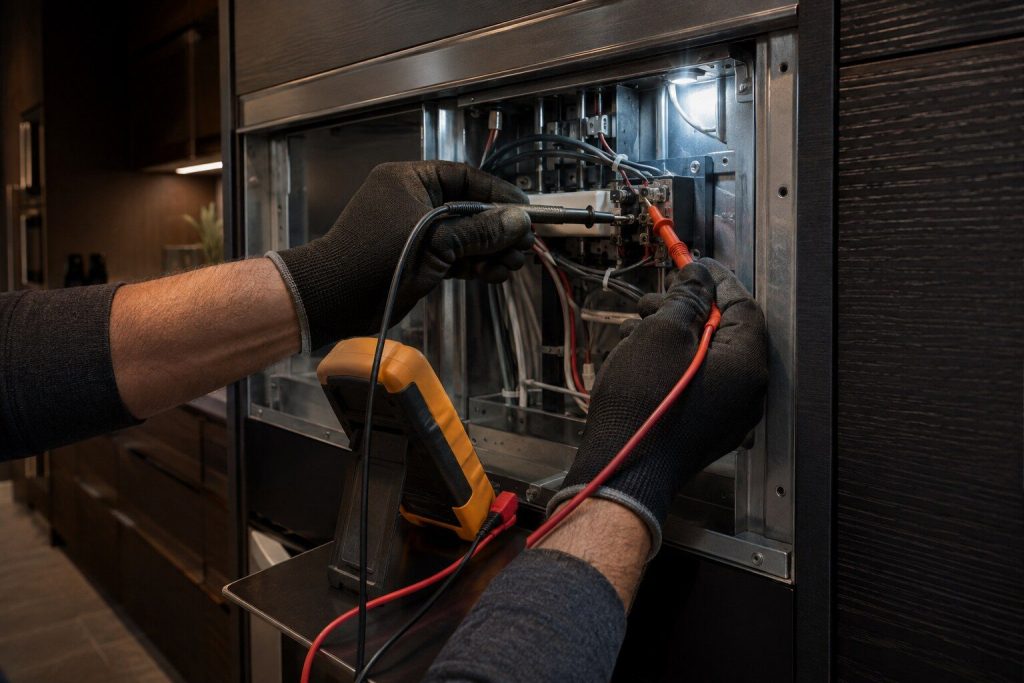
from $95 Diagnostic visit
Nothing is named until something has been measured. On built-in appliances the visit also has to plan its own access before it starts: a column comes out from the front, a panel-ready door comes apart in an order, and a wall oven that has to move needs two people and a plan. We do that thinking before we arrive rather than in your kitchen.
- The model number first, because it decides the access
- What the appliance reports, read against the published table
- Credited toward the repair when you go ahead
-
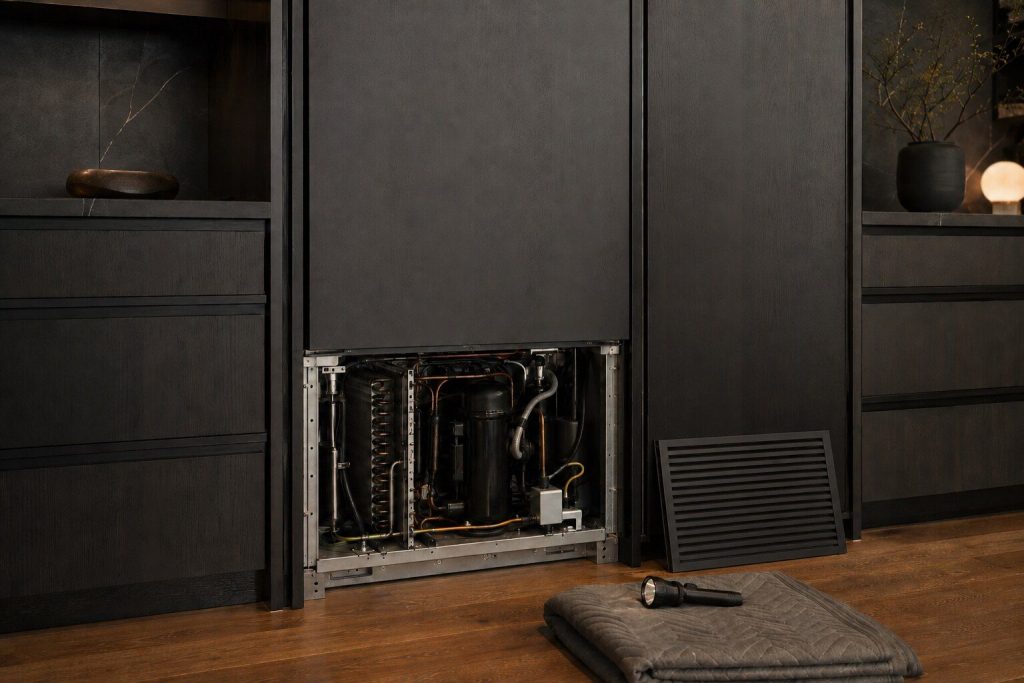
from $195 Column refrigeration repair cost
Integrated columns cost more to work on than any other cold appliance in the kitchen, and the difference is access rather than parts. Panels and trim come off in an order, the machine is served from the front, and the kitchen goes back the way the cabinetmaker left it.
- from $195, and the access is most of the difference
- Paired columns are quoted as two machines
- Panels and trim handled as part of the job
-
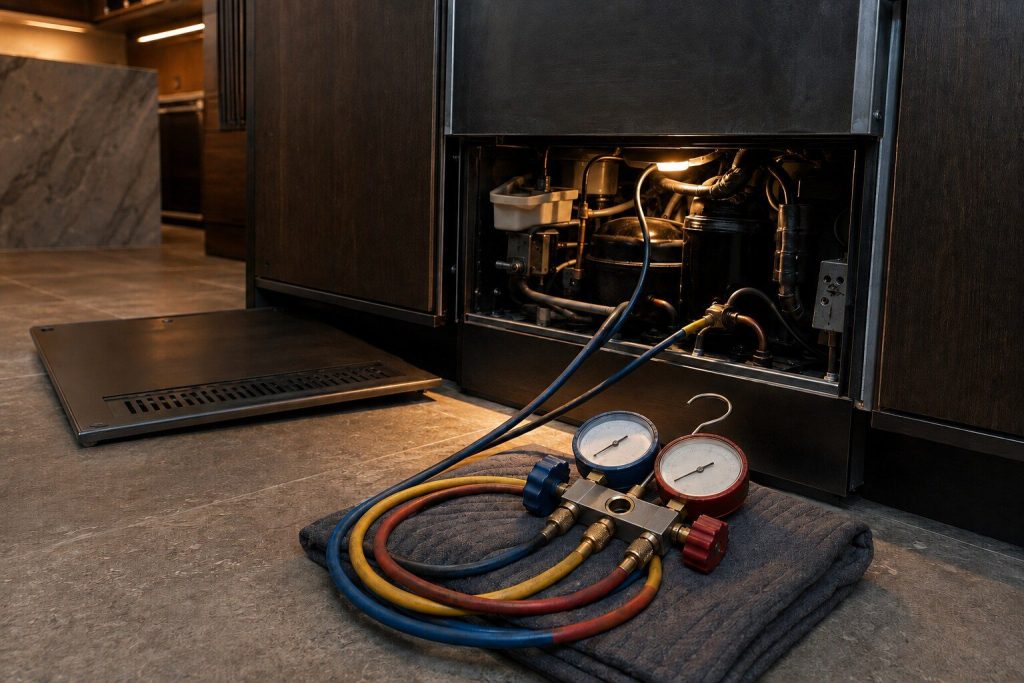
from $695 Sealed system repair cost
The largest repair on a cold appliance, and the one where the figure has to be honest before the work rather than after. On a five-figure integrated cabinet it is usually still the right decision — which is genuinely not true of every make.
- from $695, quoted in writing before starting
- Reached by measurement, never by elimination
- Honest about when a cabinet is not worth it
Questions people ask about this
Why will you not give me a price over the phone?
Because the honest answer to most symptoms is a range spanning four repairs, and picking one of them down a telephone line is guessing. What we will do for free is narrow it, tell you which band it is likely to fall in, and say when we think a visit is not needed at all.
Is the diagnostic fee really credited?
Yes. It comes off the repair if you go ahead, so a visit that leads to work costs nothing extra. What it covers if you do not go ahead is the diagnosis itself, which is the part that took the skill.
Why are your figures higher than some other sites quote?
Two reasons, and both are on the pages themselves. Built-in access is real time — panels, trim, front service and putting a kitchen back — and we price it rather than burying it. And the parts on this equipment are lower-volume than mass-market equivalents. Where a figure here is above a general market number, the page says why.
Where do your numbers come from?
They are a researched market band for South Florida — what the same part and the same labor go for here, narrowed by what the part actually is on this equipment and by what the installation does to the time. They are not an average of our invoices and we do not present them as one.
Cost Expectations
More guides like this one
-
How Long This Equipment Lasts, and When Repair Stops Being Sensible
The repair-or-replace line falls years later on built-in equipment, because replacement is a kitchen project rather than a delivery. Here is the arithmetic.
Read more
Tell us the model number and what it is doing.
This article is based on:
- Official manufacturer documentation
- Internal repair procedures
- Technician repair history
- Company quality standards