Appliance
Monogram microwaves
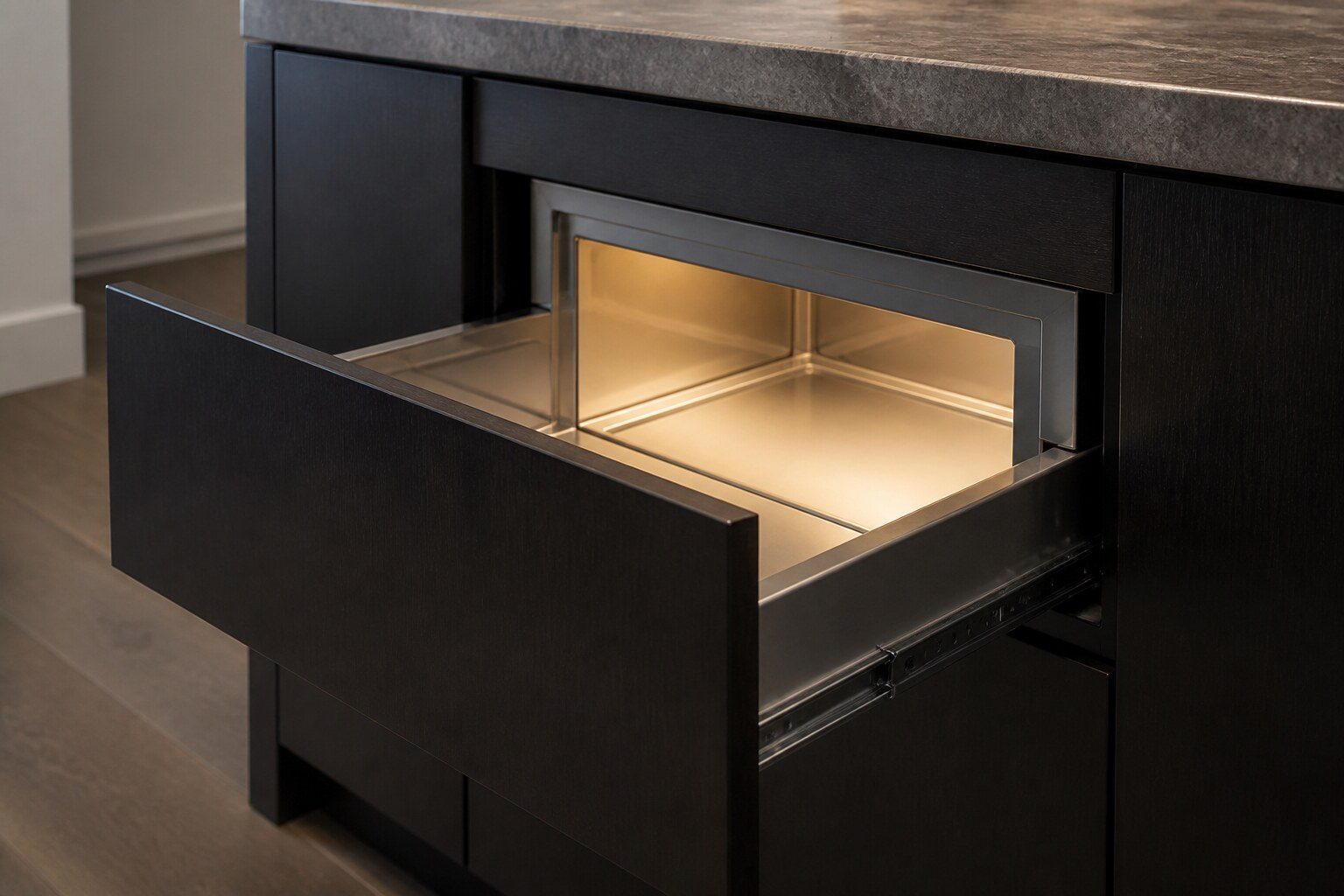
Monogram builds microwaves into cabinetry and into islands: a built-in unit that sits in a wall run, and a drawer model that opens downward from under a counter. The drawer is the one with its own repair profile, because it is the only microwave in the kitchen with a motorized opening mechanism that people lean on.
- 2 symptoms we are called out to
- From $95 diagnostic, credited to the repair
- 59 cities and neighborhoods covered
- OEM parts available on order
The short version
What this equipment is, for a repair
Configurations
Built-in microwaves · 24-inch microwave drawers
Access
Planned before the visit, not discovered on arrival
Parts
OEM, available on order
Diagnostic
From $95, credited to the repair
What goes wrong with it
Symptoms we are called out to on Monogram microwaves
Each one covers the likely causes in the order they are worth checking, and what to do in five minutes before booking anything.
-
It runs, and the results are pale Advantium not browning or cooking slowly
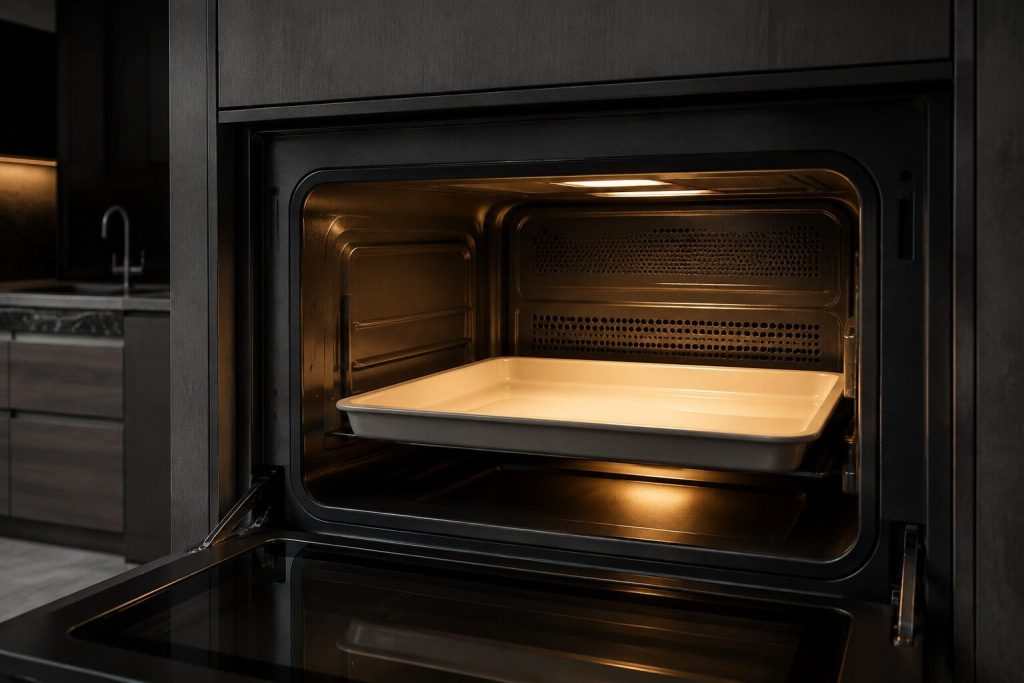
The Advantium cooks with halogen lamps above and below the food as well as with microwave energy, and the browning is the lamps. When one goes the oven still works — it just produces pale, slow results — which is why this goes unreported for months.
- The lamps are what brown, and they are serviceable
- 120 V and 240 V are different appliances
- Runs and does not heat at all is a different page
-
It will not open, or it opens partway Microwave drawer will not open
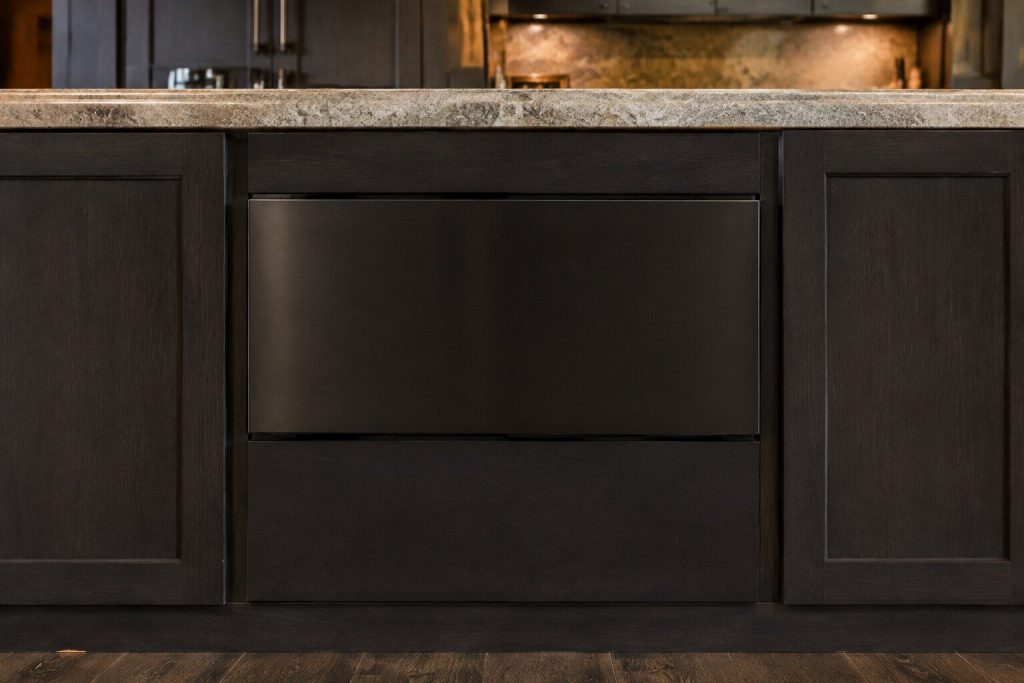
A microwave drawer opens on a motor and a drive, and it is the only microwave in the kitchen with a moving mechanism people lean on. Three complaints — will not open, opens partway, opens and will not run — and three different places to look.
- Rule out an obstruction first, for nothing
- A drawer not fully closed refuses to run
- Separate from anything on the cooking side
What we do on it
Repairs we carry out on Monogram microwaves
Starting figures for this equipment in South Florida. The exact cost is confirmed after an on-site diagnostic — and this is not the whole list of what can go wrong, so call if your problem is not here.
-
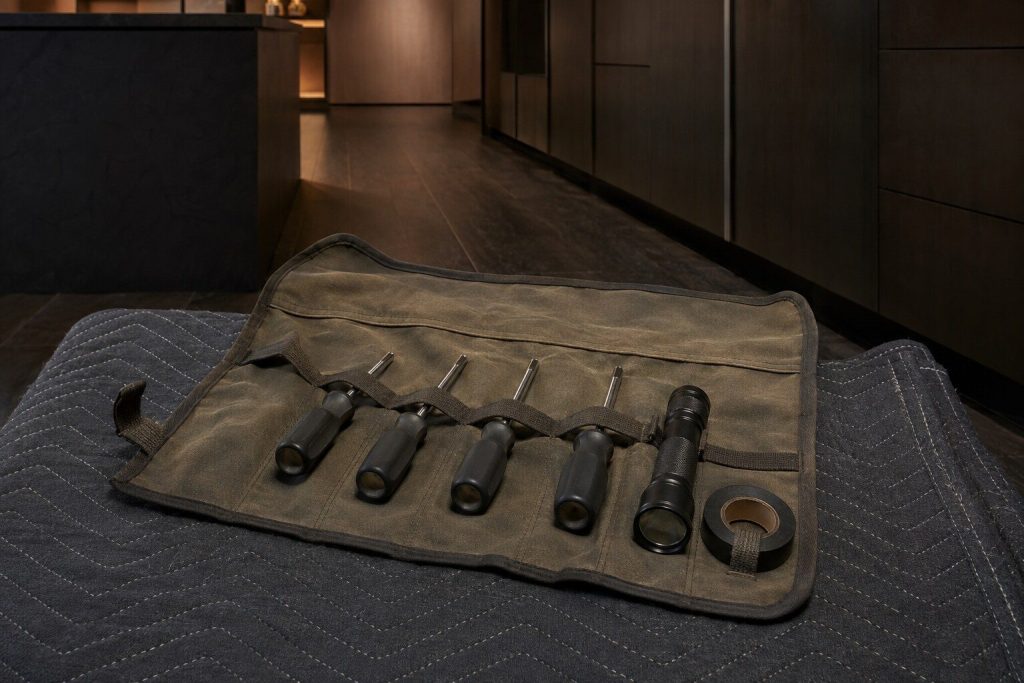
from $95 Diagnostic visit
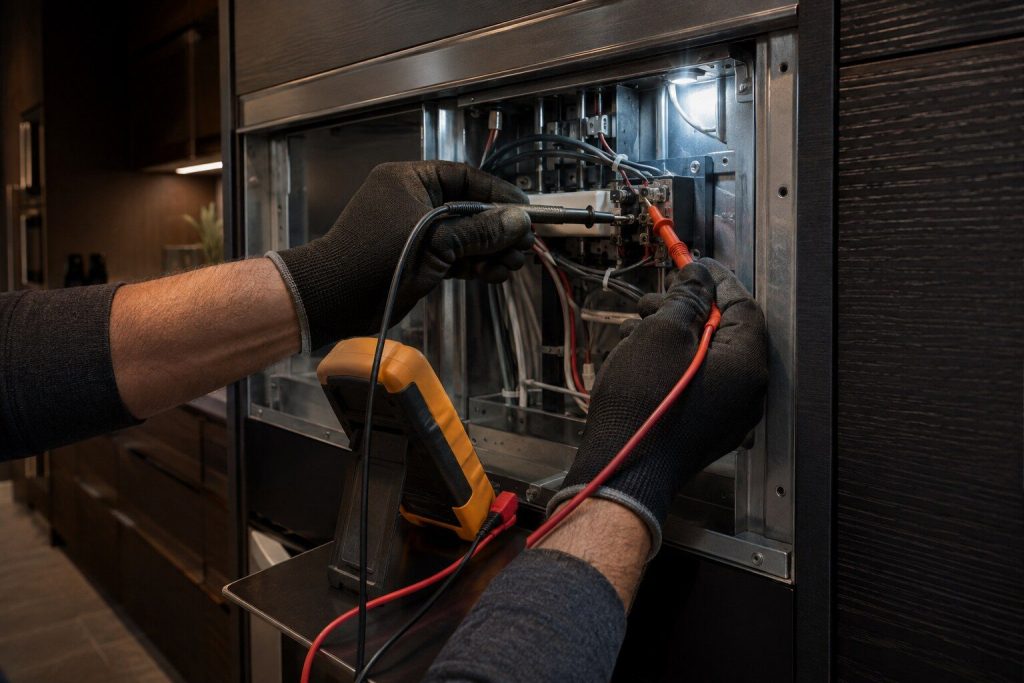
Nothing is named until something has been measured. On built-in appliances the visit also has to plan its own access before it starts: a column comes out from the front, a panel-ready door comes apart in an order, and a wall oven that has to move needs two people and a plan. We do that thinking before we arrive rather than in your kitchen.
- The model number first, because it decides the access
- What the appliance reports, read against the published table
- Credited toward the repair when you go ahead
-
from $145 Appliance maintenance
The visit that exists to stop the other visits. On built-in appliances in a salt-air climate the two things that shorten life are both invisible: a condenser that has silted up behind its grille, and door seals that have quietly stopped sealing. Neither shows on a display. Both are cheap to deal with and expensive to ignore.
- Condensers cleaned and airflow checked
- Seals, hinges and panel alignment across the kitchen
- Filters, drains and water circuits attended to
-
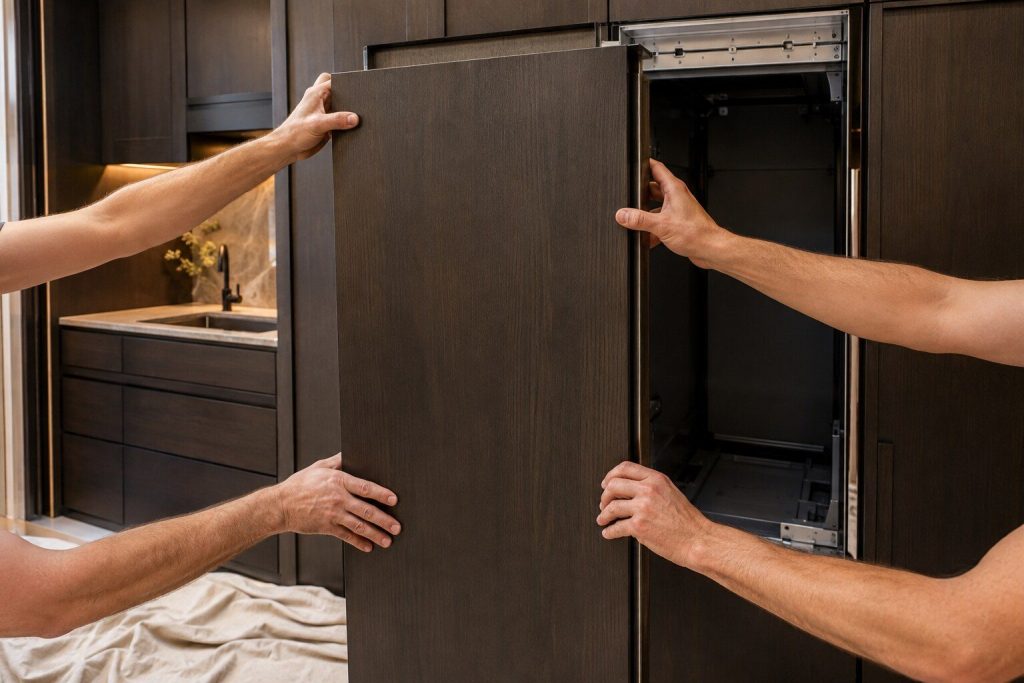
from $175 Appliance installation
Built-in appliances are installed once and lived with for twenty years, and most of the long-term problems we are called to were decided on installation day: a clearance that was shaved, a drain that has no fall, a hood ducted through one elbow too many. Getting it right the first time is cheaper than any of the repairs it prevents.
- Clearances and ventilation to the specification, not to the opening
- Water, gas and drain connections tested under pressure
- Panels hung and doors set level with the run
-
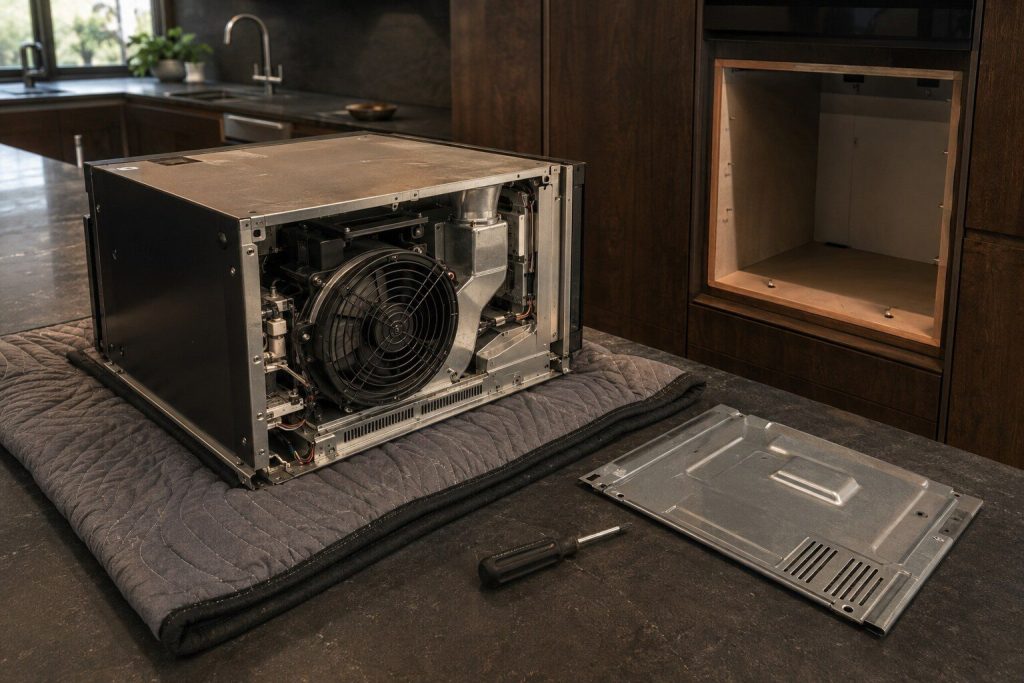
from $245 Advantium speed oven repair
The 5-in-1 speed oven cooks with halogen lamps above and below the food as well as with microwave energy, and it exists in a 120-volt and a 240-volt version that are genuinely different appliances with different code sets. The lamps are the part that most often needs attention.
- 120 V and 240 V read against different tables
- Halogen lamps are a serviceable part
- The high voltage side is never a home repair
-
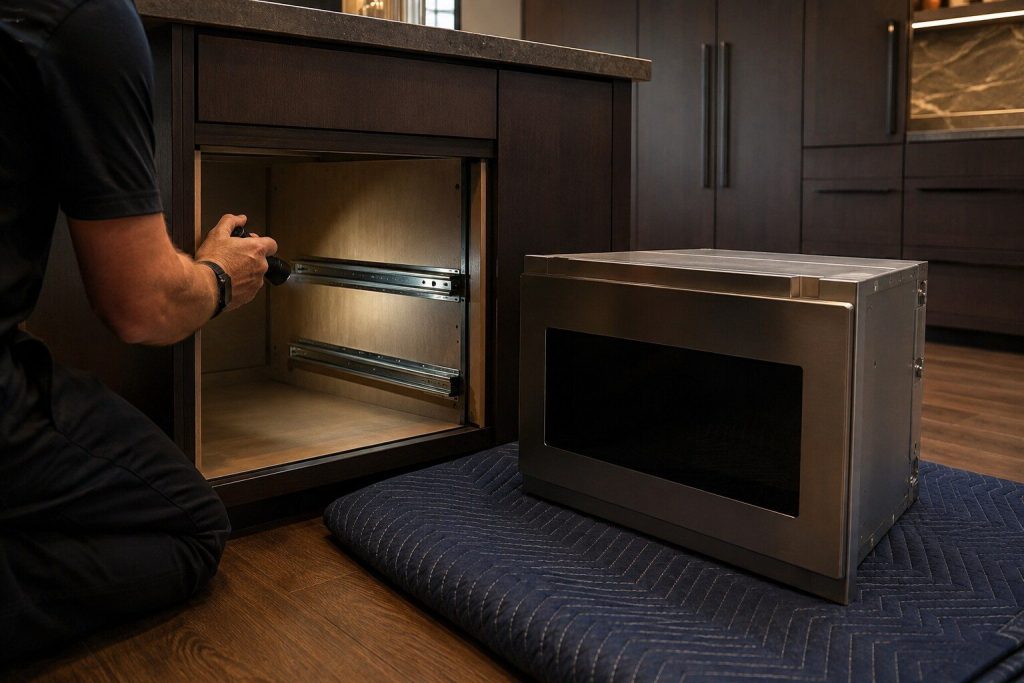
from $195 Microwave drawer mechanism repair
A microwave drawer opens on a motor and a drive, and it is the only microwave in the kitchen with a moving mechanism that people lean on. It will not open, it opens partway, or it opens and will not run — three complaints, three different places to look.
- Drive, sensing and obstruction checked in order
- A drawer not fully closed refuses to run
- Separate from anything on the cooking side
-
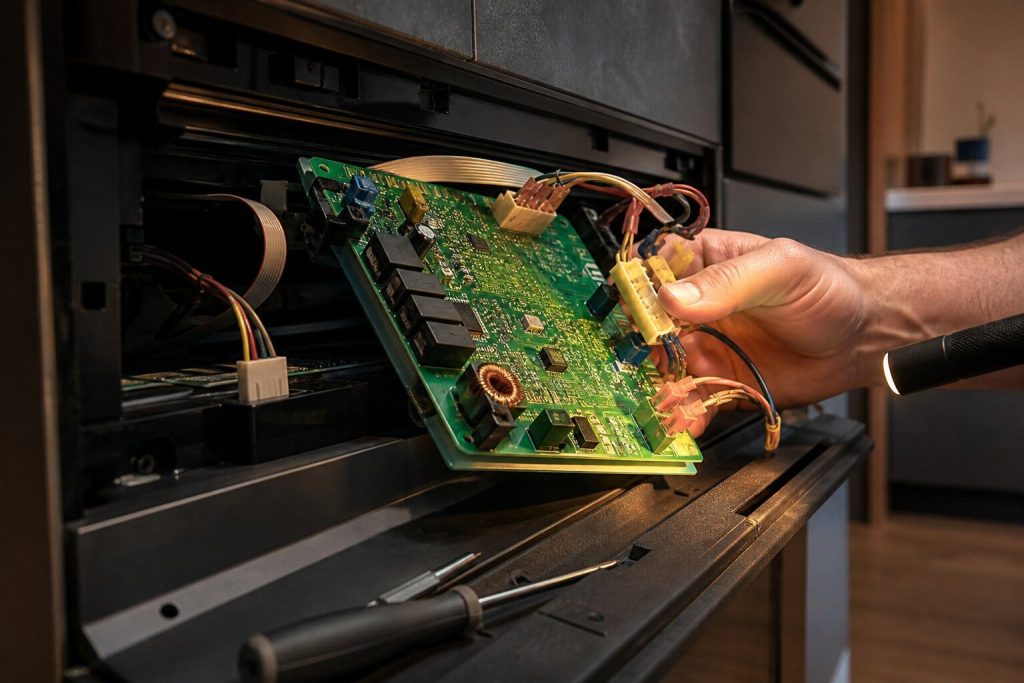
from $295 Appliance control board repair
The repair reached last and reached for first by the internet. A control board is expensive, frequently blamed and comparatively rarely the problem — most of what gets called a board failure is a sensor, a harness or a connector that has corroded in coastal air. Boards are condemned here by measurement.
- Everything the board depends on tested first
- Connectors and harnesses are the usual real cause
- Codes that name the control taken seriously, not literally
In more detail
About Monogram microwaves
Two shapes, two service profiles
Monogram's microwaves are built-in — a unit set into a wall run alongside the ovens — and a 24-inch drawer that opens downward from beneath a counter or an island. The cooking side of both is the same technology and the same set of problems. The drawer adds a motorized opening mechanism, position sensing and a set of complaints that no other microwave has: it will not open, it opens halfway, it opens and will not start.
The one problem that is dangerous to investigate
A microwave that runs but does not heat has a problem on the high voltage side — the magnetron, the transformer, the diode, the capacitor — or in the interlocks that allow it. The capacitor in that circuit stores a lethal charge and holds it after the appliance is unplugged. This is the one appliance in the kitchen where the correct advice really is to stop and call somebody, and we would rather say so plainly than be polite about it.
Built-in means trim, and trim means measurement
These are installed with a trim kit into a cabinet opening, and a replacement has to match the opening as well as the appliance. Where a unit is beyond economic repair — and on a microwave that point arrives sooner than on an oven — the useful question is what fits the hole without a cabinetmaker, and we will tell you honestly when that is the situation rather than selling a repair that costs most of a replacement.
Before you book
Model number, whether it is a built-in or a drawer, and which of the three it is doing: not heating, not opening, or not starting. Each of those goes to a different part of the appliance.
This article is based on:
- Official manufacturer documentation
- Internal repair procedures
- Technician repair history
- Company quality standards
Before you book
Questions about Monogram microwaves
It runs, the plate turns, and nothing gets hot.
That is the classic magnetron-side complaint, and it is one of the few appliance problems where the description alone is close to a diagnosis. The oven is doing everything except producing microwave energy — which means the magnetron, the high voltage circuit that feeds it, or the door interlocks that are supposed to permit it. It is not a repair to attempt at home under any circumstances: the capacitor in that circuit holds a dangerous charge long after the appliance is unplugged.
The drawer will not open, or opens partway and stops.
A microwave drawer opens on a motor and a drive, and both the mechanism and the sensing that tells the control where the drawer is can fail. Before booking, check the obvious: something in the drawer fouling the travel, or an object on the counter in front of it. After that it is the drive or the position sensing, and it is a genuine repair rather than an adjustment. It is also worth saying that a drawer which is not fully closed will refuse to run, and that reads as a dead appliance.
It has started making noise it did not make before.
Usually the cooling fan or, on a unit with ventilation duties, the blower. Neither is expensive on its own, and both are worth attending to, because a microwave that cannot cool itself will eventually take something more expensive with it. A loud buzz that arrives together with poor heating is a different and more serious signal — that combination points at the high voltage side.
Where we do it
Across Miami-Dade, Broward, and Palm Beach
Same terms everywhere we go: an on-site diagnostic first, the price agreed in writing, and the exact figure confirmed once we have seen the unit.
Neighborhoods people ask for by name